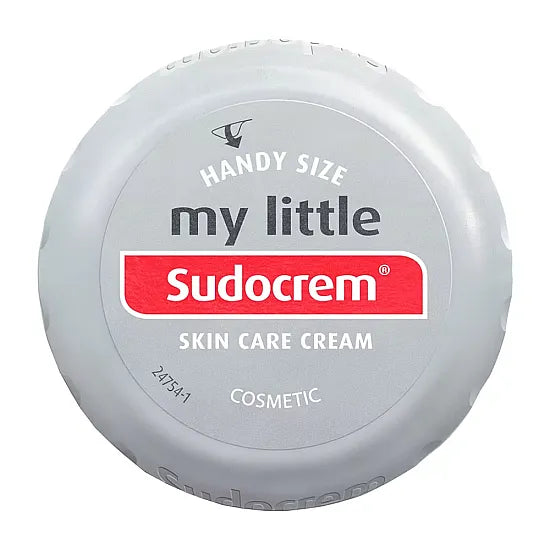
Sudocrem My Little Sudocrem - 22g
Sudocrem My Little Sudocrem - 22g
- ✔️ Creates a protective zinc oxide barrier against nappy irritants
- ✔️ Soothes sore, red nappy rash with mild antiseptic action
- ✔️ Compact 22g pot ideal for changing bags and travel
- ✔️ Suitable for newborns, babies, toddlers, and adults
- ✔️ Hypoallergenic lanolin formula conditions and softens skin
Price Checker
 Lowest price guarantee
 Includes FREE private prescription


Couldn't load pickup availability
What Is Sudocrem Nappy Rash Cream 22g?
If you've ever dealt with a sore, red nappy area on your little one, you'll know how distressing it can be — for both baby and parent. Sudocrem nappy rash cream has been a trusted household name in the UK for decades, and the My Little Sudocrem 22g pot brings that same trusted formula in a compact, handy size. At just £2.74, it's an affordable option for parents who want reliable skin protection without the bulk of a larger tub. You can find it alongside other trusted products in our baby and toddler collection.
Sudocrem is classified as an antiseptic healing cream. It's used primarily to treat and prevent nappy rash, but it also has a long history of use for minor skin complaints in both children and adults. The 22g size is ideal for your changing bag, travel, or simply keeping a spare pot at the grandparents' house.
How Does Sudocrem Work on Sore Skin?
Sudocrem works through a combination of active ingredients that target the key causes of nappy rash — moisture, friction, and bacterial or fungal irritation. Here's how each component contributes:
- Zinc oxide (15.25%): Forms a physical barrier on the skin surface, reducing contact with urine and faeces. It also has mild astringent and antiseptic properties that help calm inflamed skin.
- Benzyl alcohol (0.39%): Acts as a mild local anaesthetic, helping to soothe discomfort and pain in irritated skin.
- Benzyl benzoate (1.01%) and benzyl cinnamate (0.15%): Provide antiseptic action, helping to reduce the risk of infection in broken or sore skin.
- Hypoallergenic lanolin (4%): A skin-conditioning agent that helps soften and moisturise the affected area, supporting the skin's natural recovery.
Together, these ingredients create a protective, soothing, and mildly antiseptic barrier that helps the skin heal while preventing further irritation.
Who Should Use Sudocrem My Little Sudocrem?
This product is suitable for a wide range of people and situations. It's most commonly used for babies and toddlers, but it's by no means limited to the nursery. Sudocrem is appropriate for:
- Babies and toddlers experiencing nappy rash
- Adults with minor skin irritations, eczema flare-ups, or pressure sores
- Anyone with minor cuts, grazes, or superficial burns
- People prone to acne who want a gentle, topical soothing cream
It's worth noting that if a rash is severe, spreading, or accompanied by fever, you should seek medical advice rather than relying solely on an OTC cream.
How Does Sudocrem 22g Compare to Other Nappy Creams?
| Feature | Sudocrem My Little Sudocrem 22g | Bepanthen Nappy Care Ointment |
|---|---|---|
| Active ingredient | Zinc oxide 15.25% | Dexpanthenol 5% |
| Antiseptic action | Yes (benzyl alcohol, benzyl benzoate) | No |
| Pack size | 22g (travel/handbag size) | 30g (smallest available) |
| Price (approx.) | £2.74 | £3.50–£4.00 |
Is Sudocrem Suitable for Sensitive Skin and How Should It Be Stored?
Sudocrem nappy rash cream contains hypoallergenic lanolin, which is formulated to reduce the risk of allergic reactions. However, lanolin can still cause sensitivity in a small number of people. If you notice any worsening redness, swelling, or itching after application, discontinue use and speak to a pharmacist. You can browse our wider range of skin care products if you need an alternative.
Store the 22g pot below 25°C, away from direct sunlight, and keep the lid tightly closed after each use. Do not use after the expiry date printed on the base of the tub.
This product is a medicine. Speak to your doctor or pharmacist before using if you have an underlying medical condition or are taking other medicines.
Sudocrem My Little Sudocrem 22g specifications
| Treatment category | Antiseptic healing cream / Nappy rash treatment |
| Mechanism of action | Protective skin barrier, mild antiseptic, local anaesthetic, emollient |
| Effective for | Nappy rash, minor skin irritations, minor burns, eczema, acne |
| Suitable for | Babies, toddlers, children, adults |
| Active ingredients | Zinc oxide 15.25%, Benzyl alcohol 0.39%, Benzyl benzoate 1.01%, Benzyl cinnamate 0.15%, Lanolin (hypoallergenic) 4% |
| Pack size | 22g |
| UK classification | General Sale List (GSL) |
| Drug class | Topical antiseptic / Barrier cream |
| Preparation | Cream |
| Route of administration | Topical (skin) |
Specifications of Sudocrem My Little Sudocrem 22g
What Is Sudocrem My Little Sudocrem and What Is It Used For?
Sudocrem My Little Sudocrem 22g is a topical antiseptic healing cream used to treat and prevent nappy rash in babies and young children. It is also used by adults for a range of minor skin complaints. The NHS recognises nappy rash as a very common condition affecting most babies at some point, typically caused by prolonged skin contact with urine or faeces, friction, or sensitivity to products. Sudocrem's zinc oxide-based formula creates a protective barrier that helps manage these triggers effectively.
Beyond nappy rash, Sudocrem is commonly used for minor burns, superficial cuts and grazes, eczema, acne, and chilblains. Its versatility makes the compact 22g pot a practical addition to any first aid kit or changing bag.
What Do You Need to Know Before Using Sudocrem?
Before applying Sudocrem, there are some important points to be aware of. Do not use this product if you are allergic to any of its ingredients, particularly lanolin or any of the benzyl compounds.
Contraindications and warnings:
- Do not apply to the eyes or mucous membranes
- Do not use on deep wounds, puncture wounds, or serious burns without medical advice
- If the rash is infected (weeping, crusting, or spreading), consult a GP before use
- Discontinue use if skin irritation or allergic reaction occurs
- Keep out of reach of children — do not allow children to ingest the cream
- If you are pregnant or breastfeeding, consult your pharmacist before use, particularly regarding application near the breast area
Drug interactions:
- No clinically significant drug interactions are currently known for topical Sudocrem
- Avoid applying alongside other topical preparations on the same area without pharmacist guidance
How Should You Use Sudocrem Correctly?
Using Sudocrem correctly makes a real difference to how quickly the skin recovers. Always follow these steps for best results:
- Wash your hands thoroughly before and after application.
- Gently clean the affected area with mild soap and warm water, or use fragrance-free baby wipes.
- Pat the skin completely dry — moisture trapped under the cream can worsen irritation.
- Scoop a small amount of Sudocrem onto your fingertip — a pea-sized amount is usually enough.
- Apply in gentle circular movements over the affected area until a thin, translucent layer remains.
- Do not rub vigorously, especially on broken or very sore skin.
- Reapply at each nappy change, or as directed by your pharmacist or GP.
Dosage guidance by age and indication:
| Indication | Age Group | Dose | Frequency |
|---|---|---|---|
| Nappy rash | Newborn and above | Thin layer (pea-sized) | At each nappy change |
| Minor skin irritation | All ages | Thin layer | 2–3 times daily |
| Minor burns / grazes | Adults and children | Thin layer | Once or twice daily |
You can find further guidance on topical skin treatments in our creams and ointments collection.
What Are the Possible Side Effects of Sudocrem?
Sudocrem is generally very well tolerated. Side effects are uncommon, but it's important to know what to look out for.
Common side effects:
- Mild, temporary stinging or tingling on application to broken skin
- White residue on skin or clothing (cosmetic only, not harmful)
Less common side effects:
- Localised skin irritation or redness at the application site
- Contact dermatitis (allergic skin reaction), particularly in those sensitive to lanolin or benzyl compounds
- Rash or hives in rare cases of hypersensitivity
If you notice any worsening of symptoms or signs of an allergic reaction — such as swelling, severe itching, or difficulty breathing — stop use immediately and seek medical attention. The NHS advises that most nappy rashes clear up within a few days with appropriate treatment and good hygiene practices.
How Should You Store Sudocrem My Little Sudocrem?
Proper storage keeps the cream effective and safe to use. Follow these guidelines:
- Store below 25°C in a cool, dry place
- Keep away from direct sunlight and heat sources
- Always replace the lid firmly after use to prevent contamination and drying out
- Do not freeze
- Keep out of reach and sight of children
- Do not use after the expiry date printed on the base of the pot
- Do not transfer to another container
If you're looking for additional products to support your baby's skin health, explore our first aid range for complementary items.
References
Written and reviewed by our qualified team
Your safety and success are our highest priorities. Our medical team rigorously evaluates every product and piece of advice we provide, ensuring you receive only the most effective, science-backed solutions available.
Frequently Asked Questions
Where can I buy Sudocrem My Little Sudocrem 22g online in the UK?
You can buy Sudocrem My Little Sudocrem 22g directly from Cured Pharmacy online for just £2.74, with fast UK delivery. It's available without a prescription as a General Sale List medicine. No consultation is required — simply add it to your basket and check out.
How does Sudocrem nappy rash cream work on baby skin?
Sudocrem works by forming a protective barrier over the skin using zinc oxide, which reduces contact with moisture and irritants in urine and faeces. Its mild antiseptic ingredients — benzyl alcohol and benzyl benzoate — help prevent infection in sore or broken skin. Hypoallergenic lanolin softens and conditions the skin to support natural healing.
How do I apply Sudocrem to my baby step by step?
Clean and thoroughly dry the nappy area before application. Scoop a small, pea-sized amount onto your fingertip and apply in gentle circular movements until a thin, translucent layer covers the skin. Reapply at every nappy change for ongoing protection.
How often should I apply Sudocrem for nappy rash?
For nappy rash, apply Sudocrem at every nappy change to maintain a consistent protective barrier. For other minor skin complaints in adults or older children, two to three times daily is generally appropriate. Always follow the guidance on the packaging or speak to your pharmacist if unsure.
Is Sudocrem safe to use on newborns?
Yes, Sudocrem is generally considered suitable for use on newborns for nappy rash prevention and treatment. If your newborn has particularly sensitive skin, a known skin condition, or you have any concerns, it's always worth checking with your health visitor or GP first. The 22g pot is a convenient size for hospital bags and early weeks at home.
Can adults use Sudocrem for skin conditions?
Absolutely — Sudocrem is not exclusively a baby product. Adults commonly use it for minor burns, cuts, eczema, acne, chilblains, and pressure sores. If you're managing a skin condition long-term, browse our skin care collection for a broader range of options. Always consult a GP if a skin condition is persistent or worsening.
What are the side effects of Sudocrem?
Side effects are uncommon but can include mild stinging on application to broken skin, localised redness, or contact dermatitis in people sensitive to lanolin or benzyl compounds. Serious allergic reactions are rare but possible — stop use immediately and seek medical advice if you notice swelling, hives, or difficulty breathing. Most people tolerate Sudocrem very well.
Who should not use Sudocrem?
Avoid Sudocrem if you have a known allergy to any of its ingredients, including lanolin, benzyl alcohol, benzyl benzoate, or benzyl cinnamate. Do not apply to deep wounds, infected skin, or near the eyes. If you are pregnant or breastfeeding, speak to your pharmacist before use.
What are the alternatives to Sudocrem for nappy rash?
Common alternatives include Bepanthen Nappy Care Ointment (containing dexpanthenol) and Metanium Nappy Rash Ointment (containing titanium compounds). Each works slightly differently — your pharmacist can help you choose the most suitable option based on your baby's skin type and the severity of the rash. You can also explore our baby and toddler range for more options.
How long does it take for Sudocrem to clear nappy rash?
Most mild cases of nappy rash improve within two to three days of consistent Sudocrem application combined with good nappy hygiene — frequent changes, gentle cleaning, and allowing the skin to air dry. If the rash has not improved after three to four days, or if it is spreading or appears infected, consult your GP or pharmacist.
Can I use Sudocrem as a preventative measure even when there's no rash?
Yes — applying a thin layer of Sudocrem at each nappy change is a widely used preventative strategy, particularly during teething or when a baby has loose stools. The protective barrier it creates helps stop irritants from reaching the skin in the first place. Many parents use it routinely as part of their nappy-changing routine.
Does the 22g Sudocrem contain the same formula as larger pots?
Yes, the My Little Sudocrem 22g contains exactly the same formulation as the larger 60g, 125g, and 250g pots. The only difference is the pack size, making the 22g ideal for travel, changing bags, or keeping a spare at a carer's home. There is no compromise on quality or ingredient concentration.
Can Sudocrem be used on eczema-prone skin?
Sudocrem is sometimes used to soothe mild eczema flare-ups due to its emollient and barrier properties. However, it is not a licensed eczema treatment, and those with moderate to severe eczema should follow a GP-prescribed skincare regimen. If you're managing eczema, speak to your pharmacist about whether Sudocrem is appropriate alongside your existing treatment plan.
What are the latest findings on zinc oxide creams for nappy rash?
Zinc oxide remains one of the most widely recommended and evidence-supported ingredients for nappy rash prevention and treatment, as acknowledged by NHS guidance. Its barrier-forming and mild antiseptic properties are well established in dermatological literature. No significant new contraindications or safety concerns have emerged for topical zinc oxide in recent years.
How should I store the Sudocrem 22g pot?
Store the pot below 25°C in a cool, dry place away from direct sunlight. Always replace the lid firmly after use to prevent the cream from drying out or becoming contaminated. Do not freeze, and check the expiry date on the base of the pot before each use.
Written and reviewed by our qualified team

Reviewed by:
Tarun Kumar
Superintendent/ Clinical Lead
📖 Find out more about our team of medical content authors and how we ensure the accuracy of our content with our content guidelines.
Content last updated: 14 Sep 2026
Other popular options


We’re a safe and
regulated UK service

Lowest Price Guarantee

We're convinced you won't find your treatment cheaper, but if you do we'll refund the difference.
Find out more
100% discreet packaging

Discreet, unbranded packaging for every order.
Find out more

Need help?
Talk to our friendly experts now


How our service works

Service setup

Discreet packaging

Express delivery