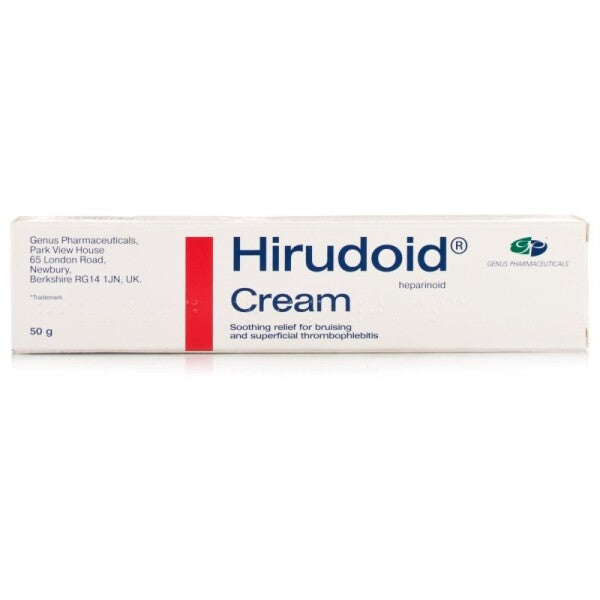
Hirudoid Cream 50g
Hirudoid Cream 50g
- ✔️ Targets bruising and haematomas with heparin sodium 0.3%
- ✔️ Reduces swelling from superficial thrombophlebitis effectively
- ✔️ Helps disperse pooled blood beneath the skin quickly
- ✔️ Suitable for adults and children aged five and over
- ✔️ MHRA-licensed topical cream available without a prescription
Price Checker
 Lowest price guarantee
 Includes FREE private prescription


Couldn't load pickup availability
What Is Hirudoid Cream and How Does It Help?
If you've ever had a stubborn bruise that just won't fade, or a tender, swollen vein after a drip or injection, you'll know how uncomfortable it can be. Hirudoid cream is a well-established, over-the-counter topical treatment containing heparin sodium 0.3% w/w — an ingredient with a long history of use in managing bruising, haematomas, and superficial thrombophlebitis. Available from our skin care range at Cured Pharmacy for just £6.39, it's a practical option for everyday soft-tissue injuries and post-procedure skin care.
Heparin sodium is a naturally derived anticoagulant that, when applied topically, works locally on the skin rather than entering the bloodstream in significant amounts. It's been used in dermatology and general practice for decades, and the 50g tube gives you enough product for a full course of treatment.
How Does Hirudoid Cream Work on the Skin?
The active ingredient, heparin sodium, works through several complementary mechanisms when massaged into the skin:
- Anti-inflammatory action: Heparin sodium helps reduce localised inflammation, easing redness and tenderness around bruised or injured tissue.
- Fibrinolytic activity: It promotes the breakdown of fibrin — the protein that forms clots — helping to disperse pooled blood beneath the skin more quickly.
- Improved local circulation: By acting on the microcirculation, it supports the reabsorption of haematomas and reduces swelling.
- Anti-thrombotic effect: In superficial thrombophlebitis, it helps reduce the inflammatory response around affected veins.
These combined effects make it useful not just for everyday bumps and bruises, but also for post-surgical bruising, bruising from injections, and inflammation of superficial veins.
Who Is Hirudoid Cream Suitable For?
Hirudoid cream is suitable for most adults and children over 5 years of age. It's particularly useful if you bruise easily, have had a recent minor injury, or are recovering from a cosmetic or medical procedure that has left bruising or swelling. That said, it's not appropriate for everyone.
It may be suitable for you if you:
- Have a bruise or haematoma from a knock, fall, or injection
- Are experiencing superficial thrombophlebitis (inflammation of a vein just under the skin)
- Have post-operative bruising or swelling following minor procedures
- Need a topical treatment for localised soft-tissue inflammation
It is not suitable for use on broken, infected, or ulcerated skin, and should not be applied near the eyes or mucous membranes. Always read the label before use.
How Does Hirudoid Cream Compare to Other Bruise Treatments?
| Feature | Hirudoid Cream 50g | Arnica Gel (e.g. Arnicare) |
|---|---|---|
| Active ingredient | Heparin sodium 0.3% w/w | Arnica montana extract |
| Mechanism | Anti-inflammatory, fibrinolytic, anti-thrombotic | Herbal anti-inflammatory |
| Licensed medicine (UK) | Yes — MHRA licensed | Varies by product |
| Suitable for superficial thrombophlebitis | Yes | No |
Is Hirudoid Cream Safe to Store at Home?
Yes. Hirudoid cream should be stored below 25°C, away from direct heat and sunlight. Keep the tube tightly closed when not in use, and always store it out of the reach and sight of children. Do not use the cream after the expiry date printed on the tube or carton.
If you're looking for other topical treatments for skin conditions, you might find our creams and ointments collection helpful. Hirudoid cream is a medicine — speak to your doctor or pharmacist before using it if you have an underlying medical condition or are taking other medicines.
This product is a medicine. Speak to your doctor or pharmacist before using if you have an underlying medical condition or are taking other medicines.
Hirudoid Cream 50g specifications
| Treatment category | Bruising, haematomas, superficial thrombophlebitis |
| Mechanism of action | Anti-inflammatory, fibrinolytic, anti-thrombotic via heparin sodium |
| Effective for | Bruises, haematomas, superficial thrombophlebitis, post-procedure swelling |
| Suitable for | Adults and children over 5 years |
| Active ingredient | Heparin sodium 0.3% w/w |
| Pack size | 50g |
| Strength | 0.3% w/w heparin sodium |
| UK classification | P (Pharmacy medicine) |
| Drug class | Topical anticoagulant / anti-inflammatory |
| Preparation | Cream |
| Route of administration | Topical (cutaneous) |
Specifications of Hirudoid Cream 50g
What Is Hirudoid Cream 50g and What Is It Used For?
Hirudoid cream is a topical medicine containing heparin sodium 0.3% w/w. It is used to treat a range of conditions involving bruising, blood pooling under the skin, and inflammation of superficial veins. Specifically, it is indicated for:
- Bruises and haematomas resulting from injury, falls, or injections
- Superficial thrombophlebitis — inflammation of a vein close to the skin surface
- Post-operative or post-procedure bruising and swelling
- Localised soft-tissue inflammation
It works locally on the skin and is not intended for internal use. Hirudoid cream is classified as a Pharmacy (P) medicine in the UK, meaning it is available without a prescription but should be purchased from a registered pharmacy.
What Do You Need to Know Before Using Hirudoid Cream?
Before applying hirudoid cream, it's important to check that it is appropriate for you. Do not use this cream if any of the following apply:
- You are allergic to heparin sodium or any other ingredient in the cream
- The skin in the area to be treated is broken, infected, or ulcerated
- You have a known bleeding disorder or are taking anticoagulant medicines (e.g. warfarin)
- You are applying it near the eyes, mouth, or other mucous membranes
- The child to be treated is under 5 years of age
Speak to your pharmacist or GP if you are pregnant, breastfeeding, or have any underlying health conditions before using this product. There is limited safety data for use during pregnancy, so caution is advised.
Drug interactions: Topical heparin sodium is not known to cause significant systemic drug interactions at the doses used in this cream. However, if you are already taking anticoagulant or antiplatelet medicines, seek advice before use.
- Warfarin or other oral anticoagulants — seek pharmacist advice
- Antiplatelet medicines (e.g. aspirin, clopidogrel) — use with caution
How Should You Apply Hirudoid Cream Correctly?
Using the cream correctly will help you get the most benefit from it. Follow these steps each time you apply it:
- Wash and dry your hands thoroughly before and after application.
- Squeeze a small amount of cream (approximately 3–5 cm) onto your fingertip.
- Apply gently to the affected area of skin.
- Massage the cream in slowly using circular motions until fully absorbed.
- Repeat two to three times daily, or as directed by your pharmacist.
- Do not cover the area with an airtight dressing unless advised by a healthcare professional.
| Indication | Age Group | Dose | Frequency |
|---|---|---|---|
| Bruising / haematoma | Adults & children over 5 | 3–5 cm strip of cream | 2–3 times daily |
| Superficial thrombophlebitis | Adults | 3–5 cm strip of cream | 2–3 times daily for up to 14 days |
| Post-procedure swelling | Adults | 3–5 cm strip of cream | 2–3 times daily |
If you are managing a skin condition alongside bruising, you may also find it helpful to explore our first aid collection for complementary products.
What Are the Possible Side Effects of Hirudoid Cream?
Like all medicines, hirudoid cream can cause side effects, although not everyone experiences them. Most side effects are mild and localised to the area of application.
Common side effects:
- Mild skin irritation or redness at the application site
- Temporary stinging or burning sensation on application
Less common side effects:
- Localised allergic (hypersensitivity) reaction — including rash, itching, or urticaria
- Contact dermatitis in sensitive individuals
If you notice any signs of a severe allergic reaction — such as widespread rash, swelling of the face or throat, or difficulty breathing — stop using the cream immediately and seek urgent medical attention. The NHS advises that you report any suspected side effects to the Yellow Card scheme via the MHRA.
How Should You Store Hirudoid Cream Safely?
Correct storage helps maintain the effectiveness of the cream throughout its shelf life. Follow these guidelines:
- Store below 25°C — do not refrigerate or freeze
- Keep away from direct sunlight and heat sources
- Always replace the cap tightly after use
- Store out of the reach and sight of children
- Do not use after the expiry date printed on the tube or carton
- Do not dispose of medicines via wastewater or household waste — return unused product to your pharmacy
For more skin health products and topical treatments, browse our full pain relief collection, which includes options for managing soft-tissue discomfort alongside topical creams.
References
Written and reviewed by our qualified team
Your safety and success are our highest priorities. Our medical team rigorously evaluates every product and piece of advice we provide, ensuring you receive only the most effective, science-backed solutions available.
Frequently Asked Questions
Where can I buy Hirudoid Cream online in the UK?
You can buy Hirudoid Cream 50g directly from Cured Pharmacy, a GPhC-registered online pharmacy, for just £6.39. No prescription is needed as it is an over-the-counter Pharmacy (P) medicine. Simply add it to your basket and it will be dispatched to your door.
How does Hirudoid Cream work in the body?
Hirudoid cream contains heparin sodium, which has anti-inflammatory, fibrinolytic, and anti-thrombotic properties when applied to the skin. It helps break down pooled blood beneath the skin, reduces swelling, and eases tenderness in bruised or inflamed tissue. It works locally and does not enter the bloodstream in significant amounts at topical doses.
How do I apply Hirudoid Cream step by step?
Wash your hands, then squeeze approximately 3–5 cm of cream onto your fingertip and apply it gently to the affected area. Massage it in using slow, circular motions until fully absorbed, then wash your hands again. Repeat this two to three times daily for best results.
How long does Hirudoid Cream take to show results?
Many people notice a visible improvement in bruising and swelling within two to four days of regular use. For superficial thrombophlebitis, a full course of up to 14 days may be needed. If there is no improvement after 14 days, consult your GP or pharmacist.
What is the correct dose of Hirudoid Cream for adults?
Adults should apply a 3–5 cm strip of hirudoid cream to the affected area two to three times daily. Do not apply more than directed, and always massage the cream in gently rather than rubbing vigorously. If you are unsure about the correct amount, speak to your pharmacist.
Can children use Hirudoid Cream?
Hirudoid cream is suitable for children aged 5 years and over, using the same dose as adults — a 3–5 cm strip applied two to three times daily. It should not be used in children under 5 years of age. Always supervise application in younger children and keep the tube out of their reach.
Is Hirudoid Cream safe to use during pregnancy?
There is limited clinical data on the safety of topical heparin sodium during pregnancy, so it is not routinely recommended without medical advice. If you are pregnant or breastfeeding, speak to your GP or midwife before using this product. They can advise on whether the benefits outweigh any potential risks in your individual situation.
What are the side effects of Hirudoid Cream?
Side effects are uncommon but may include mild skin irritation, redness, or a temporary stinging sensation at the application site. Less commonly, a localised allergic reaction such as a rash or itching may occur. If you experience any severe reaction, stop using the cream and seek medical advice promptly.
How do I manage a skin reaction to Hirudoid Cream?
If you notice redness, itching, or a rash after applying the cream, stop use immediately and wash the area gently with cool water. Mild reactions often settle on their own within a few hours. If the reaction is severe or does not improve, contact your pharmacist or GP for further guidance.
Who should not use Hirudoid Cream?
You should not use hirudoid cream if you are allergic to heparin sodium or any other ingredient in the formulation. It is also not suitable for use on broken, infected, or ulcerated skin, or in children under 5 years of age. People with bleeding disorders or those taking anticoagulant medicines should seek pharmacist advice before use.
What happens if I accidentally apply too much Hirudoid Cream?
Applying slightly more than the recommended amount topically is unlikely to cause serious harm, as heparin sodium is not significantly absorbed through intact skin. However, you should avoid excessive application and stick to the recommended 3–5 cm strip per dose. If you are concerned, contact your pharmacist or NHS 111 for advice.
What are the alternatives to Hirudoid Cream for bruising?
Alternatives for bruising include arnica-based topical products, which have a herbal anti-inflammatory action, though they are not licensed medicines in the same way. Cold compresses and elevation of the affected area are also recommended by the NHS for managing bruises. Browse our skin care collection for other topical options that may help.
How long can you use Hirudoid Cream for?
For most bruises and haematomas, use the cream until the bruise has resolved, which is typically within 7–14 days. For superficial thrombophlebitis, treatment should not exceed 14 days without medical review. If your symptoms persist beyond this time, consult your GP.
Can Hirudoid Cream be used after cosmetic procedures?
Hirudoid cream is commonly used to help resolve bruising and swelling following cosmetic injections or minor procedures, and many practitioners recommend it for this purpose. However, you should always check with the clinician who performed your procedure before applying any topical product to treated skin. Do not apply to any area where the skin is broken or not fully healed.
What are the latest findings on heparin cream for bruises?
Topical heparin sodium has been used clinically for several decades and remains a recognised treatment for superficial bruising and thrombophlebitis in UK pharmacy practice. Published literature supports its anti-inflammatory and fibrinolytic activity at the site of application. For the most up-to-date clinical guidance, refer to the BNF or speak to a registered pharmacist. You can also explore our first aid collection for related products.
Written and reviewed by our qualified team

Reviewed by:
Tarun Kumar
Superintendent/ Clinical Lead
📖 Find out more about our team of medical content authors and how we ensure the accuracy of our content with our content guidelines.
Content last updated: 14 Sep 2026
Other popular options


We’re a safe and
regulated UK service

Lowest Price Guarantee

We're convinced you won't find your treatment cheaper, but if you do we'll refund the difference.
Find out more
100% discreet packaging

Discreet, unbranded packaging for every order.
Find out more

Need help?
Talk to our friendly experts now


How our service works

Service setup

Discreet packaging

Express delivery