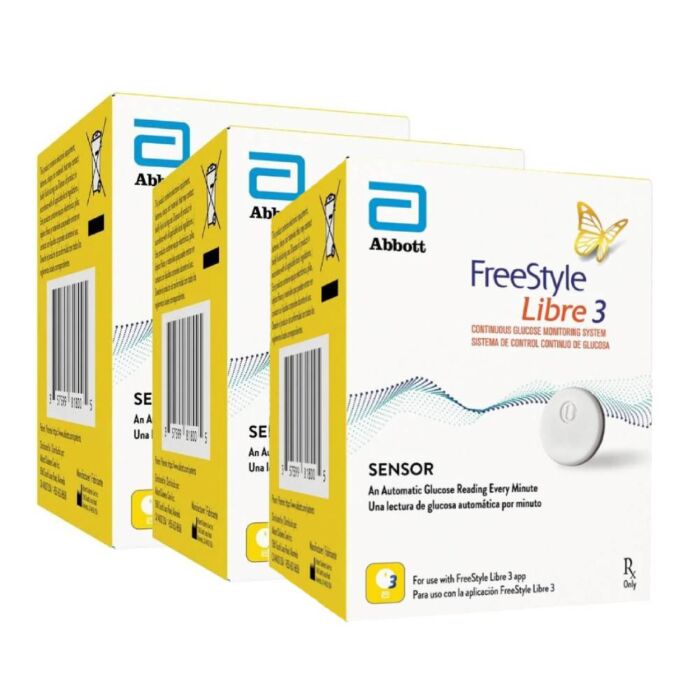
Managing diabetes day to day can feel relentless — the fingerpricks, the guesswork, the constant vigilance. The Freestyle Libre 3 sensor changes that. Developed by Abbott, it is a small, discreet continuous glucose monitoring (CGM) device worn on the back of the upper arm. It measures glucose levels automatically, every single minute, and sends those readings straight to your smartphone via Bluetooth. No scanning required. Just real-time data, quietly working in the background. For anyone living with Type 1 or Type 2 diabetes, that kind of visibility can genuinely transform how you manage your condition. You can explore our full range of diabetes monitoring products at Cured Pharmacy.
The sensor is the third generation of Abbott's Libre platform and represents a meaningful step forward from its predecessors. At just 2.9mm in height — the smallest CGM sensor available at the time of its UK launch — it sits almost invisibly on the skin. Each sensor lasts 14 days before needing replacement, and the accompanying FreeStyle LibreLink app displays not just your current glucose reading but also a trend arrow showing whether levels are rising, falling, or stable. That context is everything when you are making decisions about food, insulin, or exercise.
How Does the Freestyle Libre 3 Sensor Work?
The technology behind the sensor is elegant in its simplicity. A tiny, flexible filament — thinner than a human hair — sits just beneath the surface of the skin in the interstitial fluid. This fluid closely mirrors blood glucose levels, typically with a lag of around five minutes. The sensor's electrochemical biosensor measures glucose in this fluid continuously and transmits readings every minute to the FreeStyle LibreLink app via Bluetooth Low Energy.
Apply the sensor to the back of the upper arm using the single-use applicator
A 60-minute warm-up period begins automatically after application
Glucose readings stream to your smartphone every minute without any manual scanning
Trend arrows indicate whether glucose is rising rapidly, rising slowly, stable, falling slowly, or falling rapidly
Optional alarms can be set to alert you when glucose goes above or below your target range
The app stores up to 90 days of glucose data, which you can share directly with your diabetes care team. This makes clinic appointments far more productive — your clinician can see patterns across weeks rather than relying on a handful of fingerprick snapshots.
Who Should Use the Freestyle Libre 3 Sensor?
The Freestyle Libre 3 sensor is suitable for a wide range of people managing diabetes. It is CE-marked and MHRA-approved for use in the UK. Abbott has designed it for both adults and children aged 4 years and over, provided a caregiver assists with application and monitoring for younger users. It is particularly well-suited to:
Adults and children with Type 1 diabetes who require frequent glucose monitoring
People with Type 2 diabetes on insulin therapy
Those who find traditional fingerprick testing painful, inconvenient, or difficult to maintain consistently
People who want to understand how food, exercise, stress, and sleep affect their glucose levels in real time
It is worth noting that the sensor is not recommended as the sole method for making treatment decisions in people with hypoglycaemia unawareness. In those cases, a confirmatory fingerprick blood glucose test should still be used before adjusting insulin doses. Always discuss with your diabetes care team whether CGM is appropriate for your individual circumstances.
How Does the Freestyle Libre 3 Compare to the Freestyle Libre 2?
Feature
Freestyle Libre 3
Freestyle Libre 2
Sensor size
2.9mm height — smallest in range
Slightly larger profile
Reading method
Automatic streaming every minute
Manual scan required
Wear duration
14 days
14 days
Glucose alarms
Yes — real-time alerts
Yes — optional alarms
Reader required
No — smartphone only
Optional reader available
How Should You Store the Freestyle Libre 3 Sensor?
Proper storage is important to maintain sensor accuracy. Store unused sensors below 30°C, away from direct sunlight, moisture, and extreme temperatures. Do not refrigerate or freeze them. Once applied to the skin, the sensor is water-resistant to IP28 standards — meaning it can handle showering, bathing, and swimming in up to 1 metre of water for up to 30 minutes. If you are also managing other aspects of your health alongside diabetes, you might find our vitamins and supplements range useful for supporting overall wellbeing.
Check the expiry date printed on the sensor packaging before use. An expired sensor may not perform accurately. Keep sensors in their original sealed packaging until you are ready to apply them.
This product is a medical device. Speak to your doctor or pharmacist before using if you have an underlying medical condition or are taking other medicines.
Provides real-time glucose readings every minute for 14 days
Suitable for
Adults and children aged 4 years and over with diabetes
Active ingredient
Electrochemical glucose biosensor (no pharmacological active ingredient)
Pack sizes
1 sensor per pack (14-day wear)
UK classification
Class IIb Medical Device (MHRA-approved)
Preparation
Disposable wearable sensor with applicator
Route of administration
Transcutaneous (applied to skin of upper arm)
Specifications of Freestyle Libre 3 Sensor
What Is the Freestyle Libre 3 Sensor and What Is It Used For?
The Freestyle Libre 3 sensor is a continuous glucose monitoring (CGM) medical device manufactured by Abbott. It is used to measure glucose levels in people with diabetes — including Type 1 and Type 2 — on a continuous basis throughout the day and night. Unlike traditional blood glucose meters that provide a single snapshot reading, this sensor streams glucose data every minute to a compatible smartphone, giving you and your healthcare team a detailed picture of how your glucose fluctuates over time.
The NHS recognises CGM as a clinically valuable tool for people with diabetes, particularly those on insulin therapy, as it can help reduce the frequency of hypoglycaemic episodes and improve overall glucose control. The sensor is worn on the back of the upper arm and is replaced every 14 days.
What Do You Need to Know Before Using the Freestyle Libre 3 Sensor?
Before applying the sensor, there are several important contraindications and precautions to be aware of:
Do not use if you are allergic to any of the materials in the sensor or adhesive patch
Not recommended as the sole basis for treatment decisions in people with hypoglycaemia unawareness — always confirm with a fingerprick test before adjusting insulin
Not validated for use during MRI scans, CT scans, X-rays, or diathermy procedures — remove the sensor before these procedures
Not suitable for use in neonates, infants, or toddlers under 4 years of age
Consult your diabetes care team before use if you are pregnant, as glucose targets and monitoring requirements may differ
Do not apply to areas of skin that are irritated, damaged, or have active skin conditions
Regarding interactions, the Freestyle Libre 3 sensor is a medical device rather than a medicine, so traditional drug interactions do not apply. However, the following substances are known to affect sensor accuracy:
High-dose paracetamol (acetaminophen) — doses above 1g may cause falsely elevated glucose readings
Ascorbic acid (vitamin C) supplements in high doses may interfere with readings in some CGM systems — check Abbott's current guidance
How Should You Use the Freestyle Libre 3 Sensor?
Applying the sensor correctly is straightforward, but following each step carefully ensures accurate readings and good skin adhesion throughout the 14-day wear period.
Download and set up the FreeStyle LibreLink app on a compatible smartphone before applying the sensor
Wash and dry the back of your upper arm thoroughly — avoid moisturisers or oils on the application site
Remove the sensor from its sealed packaging and check the expiry date
Press the applicator firmly and directly onto the prepared skin site until you hear a click
Remove the applicator — the sensor will now be attached to your skin
Open the LibreLink app and follow the on-screen instructions to activate the sensor
Wait 60 minutes for the warm-up period to complete before your first reading appears
After 14 days, remove the sensor by peeling it gently from the skin and dispose of it responsibly
Indication
Age Group
Sensor Wear Duration
Replacement Frequency
Type 1 diabetes
Adults and children ≥4 years
14 days per sensor
Every 14 days
Type 2 diabetes (insulin-treated)
Adults
14 days per sensor
Every 14 days
Type 2 diabetes (non-insulin)
Adults — discuss with clinician
14 days per sensor
Every 14 days
What Are the Possible Side Effects of the Freestyle Libre 3 Sensor?
As a wearable medical device, the Freestyle Libre 3 sensor does not cause systemic side effects in the way that medicines do. However, local reactions at the application site are possible. If you experience persistent or severe skin reactions, remove the sensor and contact your healthcare provider. You can also browse our skin care range if you need products to soothe mild irritation after sensor removal.
Common side effects (affecting the skin at the application site):
Redness or erythema
Mild itching or pruritus
Minor bruising at insertion point
Skin indentation after sensor removal
Less common side effects:
Allergic contact dermatitis — particularly in people sensitive to acrylate adhesives
Localised swelling or oedema at the sensor site
Sensor detachment due to excessive sweating or physical activity
Inaccurate readings during periods of rapid glucose change (compression lows during sleep)
How Should You Store the Freestyle Libre 3 Sensor?
Correct storage protects sensor integrity and ensures accurate glucose readings throughout the wear period. If you are travelling with your sensors, our travel health range includes useful accessories for managing your health on the go.
Store unused sensors at room temperature, below 30°C
Keep away from direct sunlight, heat sources, and moisture
Do not refrigerate or freeze sensors
Keep in original sealed packaging until ready to use
Check the expiry date before each application — do not use expired sensors
Once applied, the sensor is water-resistant (IP28) — safe for showering and swimming up to 1 metre depth for 30 minutes
Your safety and success are our highest priorities. Our medical team rigorously evaluates every product and piece of advice we provide, ensuring you receive only the most effective, science-backed solutions available.
Frequently Asked Questions
Where can I buy the Freestyle Libre 3 sensor online in the UK?
You can buy the Freestyle Libre 3 sensor from Cured Pharmacy, a GPhC-registered UK online pharmacy, without a prescription. It is available for adults and children aged 4 and over who are managing diabetes. Browse our full diabetes monitoring range for sensors, accessories, and related products.
How does the Freestyle Libre 3 sensor work in the body?
The sensor uses a tiny flexible filament inserted just beneath the skin to measure glucose in interstitial fluid — the fluid surrounding your body's cells. This closely reflects blood glucose levels, typically with a lag of around five minutes. Readings are transmitted automatically every minute via Bluetooth to the FreeStyle LibreLink app on your smartphone.
How do I apply the Freestyle Libre 3 sensor step by step?
Clean and dry the back of your upper arm, then press the single-use applicator firmly onto the skin until you hear a click. Open the FreeStyle LibreLink app to activate the sensor and wait 60 minutes for the warm-up period before your first reading appears. Each sensor lasts 14 days and then needs replacing.
How long does the Freestyle Libre 3 sensor last?
Each Freestyle Libre 3 sensor is designed to last exactly 14 days from activation, after which it automatically deactivates and a new sensor must be applied. You cannot extend the wear period beyond 14 days. Plan your sensor replacements in advance to avoid any gaps in monitoring.
Can I get the Freestyle Libre 3 sensor on the NHS?
The Freestyle Libre 3 sensor is available on NHS prescription for people with Type 1 or Type 2 diabetes who meet specific clinical criteria set out in NHS England guidance. If you do not currently qualify for NHS provision, you can purchase it privately from a registered pharmacy such as Cured Pharmacy. Speak to your GP or diabetes nurse to find out whether you are eligible for NHS-funded CGM.
What are the side effects of the Freestyle Libre 3 sensor?
The most commonly reported side effects are localised skin reactions at the application site, including redness, itching, and mild irritation, which typically resolve after the sensor is removed. Less commonly, some people experience allergic contact dermatitis, particularly those sensitive to acrylate-based adhesives. If you develop a severe or persistent skin reaction, remove the sensor and seek advice from your pharmacist or GP.
Is the Freestyle Libre 3 sensor waterproof?
Yes, the Freestyle Libre 3 sensor carries an IP28 water-resistance rating, meaning it can be submerged in up to 1 metre of water for up to 30 minutes. This makes it suitable for showering, bathing, and swimming. You do not need to remove it for everyday water exposure, but avoid prolonged submersion beyond these limits.
How does the Freestyle Libre 3 compare to the Freestyle Libre 2?
The key difference is that the Freestyle Libre 3 streams glucose readings automatically every minute to your smartphone without any manual scanning, whereas the Libre 2 requires you to actively scan the sensor to obtain a reading. The Libre 3 is also physically smaller — at 2.9mm in height — making it more discreet to wear. Both sensors last 14 days per wear.
Who is eligible to use the Freestyle Libre 3 sensor?
The Freestyle Libre 3 sensor is suitable for adults and children aged 4 years and over who have been diagnosed with diabetes and require regular glucose monitoring. Children under 18 should use the sensor under the supervision of a parent or caregiver. It is not validated for use in neonates or infants under 4 years of age.
What happens if my Freestyle Libre 3 sensor falls off early?
If your sensor detaches before the 14-day wear period is complete, you will need to apply a new sensor — the detached sensor cannot be reattached. To help prevent early detachment, ensure the skin is clean, dry, and free from oils or moisturisers before application. Some people use additional adhesive patches over the sensor in hot weather or during intense physical activity.
Can I use the Freestyle Libre 3 sensor if I am pregnant?
The Freestyle Libre 3 sensor has not been specifically validated for use during pregnancy, and glucose targets during pregnancy differ from standard diabetes management. If you are pregnant or planning to become pregnant, speak to your diabetes care team or midwife before using CGM. They can advise on the most appropriate monitoring approach for your individual circumstances.
Does the Freestyle Libre 3 sensor require a reader device?
No — unlike earlier generations of the Libre system, the Freestyle Libre 3 sensor works exclusively with the FreeStyle LibreLink smartphone app and does not require or support a separate reader device. You will need a compatible Android or iOS smartphone with Bluetooth enabled. Check Abbott's compatibility list before purchasing to confirm your phone is supported.
Can medicines affect the accuracy of the Freestyle Libre 3 sensor?
Yes — high-dose paracetamol (above 1g) is known to potentially cause falsely elevated glucose readings with some CGM sensors. High-dose vitamin C supplements may also interfere with accuracy in certain systems. Always inform your pharmacist or diabetes team about all medicines and supplements you are taking so they can advise on any potential impact on your sensor readings.
How long can you use the Freestyle Libre 3 sensor for overall?
There is no defined maximum duration for using the Freestyle Libre 3 system — many people with diabetes use CGM continuously as part of their long-term diabetes management. Each individual sensor lasts 14 days, and you simply apply a new one when the previous sensor deactivates. Your diabetes care team can advise on whether ongoing CGM use is appropriate for your situation. You can also explore our electrical health and diagnostic range for other monitoring devices.
What does the latest research say about continuous glucose monitoring?
Clinical evidence consistently supports the use of CGM in people with Type 1 diabetes, showing improvements in time-in-range glucose levels and reductions in hypoglycaemic episodes compared to traditional fingerprick monitoring. Growing evidence also supports CGM use in insulin-treated Type 2 diabetes. NICE guidance (NG17 and NG28) reflects this evidence base and has progressively expanded NHS eligibility criteria for CGM devices including the Freestyle Libre range.
How Should You Use the Freestyle Libre 3 Sensor?
Applying the Freestyle Libre 3 sensor correctly is essential for accurate glucose readings and comfortable wear throughout the full 14-day period. Before you begin, download the FreeStyle LibreLink app on a compatible smartphone and ensure Bluetooth is enabled. The sensor should always be applied to the back of the upper arm — not the forearm, abdomen, or any other site.
If the sensor detaches before 14 days, apply a new one. Do not attempt to reattach a detached sensor.
What Is the Correct Dose of the Freestyle Libre 3 Sensor?
The Freestyle Libre 3 sensor is a medical device rather than a medicine, so there is no pharmacological dose. The relevant usage parameters relate to wear duration and replacement schedule. Each sensor provides continuous glucose monitoring for exactly 14 days, after which it must be replaced. Only one sensor should be worn at a time.
When Is the Best Time to Use the Freestyle Libre 3 Sensor?
There is no single "best" time of day to apply a new sensor, but many people choose to apply it in the morning so the 60-minute warm-up period is complete before meals and insulin decisions are needed. It is sensible to plan your sensor changes in advance — if your current sensor deactivates overnight, you may wake up without glucose data until a new sensor warms up. Applying a replacement sensor the evening before your current one expires avoids this gap.
During the first hour after application, the sensor is warming up and will not provide readings. During this time, use a fingerprick blood glucose test if you need to make any treatment decisions.
How Long Can You Use the Freestyle Libre 3 Sensor For?
There is no defined maximum duration for using the Freestyle Libre 3 system. Many people with diabetes use CGM continuously as part of their long-term management, replacing each sensor every 14 days. Clinical guidelines from NICE support ongoing CGM use in people with Type 1 diabetes and in insulin-treated Type 2 diabetes where it improves glucose control. Your diabetes care team will advise on whether continuous use is appropriate for your individual circumstances and whether you qualify for NHS-funded sensors.
Do not exceed the recommended dose. If in doubt, speak to your pharmacist.
How Should You Use the Freestyle Libre 3 Sensor?
Applying the Freestyle Libre 3 sensor correctly is essential for accurate glucose readings and comfortable wear throughout the full 14-day period. Before you begin, download the FreeStyle LibreLink app on a compatible smartphone and ensure Bluetooth is enabled. The sensor should always be applied to the back of the upper arm — not the forearm, abdomen, or any other site.
If the sensor detaches before 14 days, apply a new one. Do not attempt to reattach a detached sensor.
What Is the Correct Dose of the Freestyle Libre 3 Sensor?
The Freestyle Libre 3 sensor is a medical device rather than a medicine, so there is no pharmacological dose. The relevant usage parameters relate to wear duration and replacement schedule. Each sensor provides continuous glucose monitoring for exactly 14 days, after which it must be replaced. Only one sensor should be worn at a time.
When Is the Best Time to Use the Freestyle Libre 3 Sensor?
There is no single "best" time of day to apply a new sensor, but many people choose to apply it in the morning so the 60-minute warm-up period is complete before meals and insulin decisions are needed. It is sensible to plan your sensor changes in advance — if your current sensor deactivates overnight, you may wake up without glucose data until a new sensor warms up. Applying a replacement sensor the evening before your current one expires avoids this gap.
During the first hour after application, the sensor is warming up and will not provide readings. During this time, use a fingerprick blood glucose test if you need to make any treatment decisions.
How Long Can You Use the Freestyle Libre 3 Sensor For?
There is no defined maximum duration for using the Freestyle Libre 3 system. Many people with diabetes use CGM continuously as part of their long-term management, replacing each sensor every 14 days. Clinical guidelines from NICE support ongoing CGM use in people with Type 1 diabetes and in insulin-treated Type 2 diabetes where it improves glucose control. Your diabetes care team will advise on whether continuous use is appropriate for your individual circumstances and whether you qualify for NHS-funded sensors.
Do not exceed the recommended dose. If in doubt, speak to your pharmacist.
Very good service. My only query is that I have not had confirmation that this subscription has been cancelled as I have moved over to a two pack monthly subscription .
A
Anonymous
Very quick service
A
Alison Knight
Good value.
A
Anonymous
I have found that the senders were very helpful to keep the blood sugar right
What Are the Most Common Side Effects of the Freestyle Libre 3 Sensor?
Because the Freestyle Libre 3 sensor is a wearable medical device rather than a medicine, it does not cause systemic side effects such as nausea, dizziness, or organ-related reactions. Side effects are localised to the skin at the application site and are generally mild and temporary. Most resolve within a few days of removing the sensor.
Redness (erythema) at the sensor application site
Mild itching or pruritus beneath or around the sensor
Minor bruising at the point of filament insertion
Skin indentation or temporary mark after sensor removal
Slight discomfort during sensor application
What Are the Less Common Side Effects of the Freestyle Libre 3 Sensor?
A smaller number of users experience more notable skin reactions, particularly those with sensitive skin or known adhesive sensitivities. These are less common but worth being aware of before you start using the sensor.
Allergic contact dermatitis — a more pronounced skin reaction caused by sensitivity to the acrylate-based adhesive
Localised swelling or oedema at the sensor site
Blistering or weeping skin beneath the sensor in people with adhesive allergies
Sensor detachment due to excessive perspiration or physical activity
"Compression lows" — falsely low glucose readings when pressure is applied to the sensor during sleep
What Are the Serious Side Effects of the Freestyle Libre 3 Sensor?
Serious adverse events are rare but have been reported. Infection at the sensor insertion site is uncommon but possible, particularly if the skin is not properly cleaned before application or if the sensor is applied to broken or damaged skin. Signs of infection include increasing redness, warmth, swelling, pain, or discharge at the site. If you notice any of these, remove the sensor immediately and seek medical advice.
Severe systemic allergic reactions (anaphylaxis) to sensor components are extremely rare. If you experience difficulty breathing, widespread rash, or swelling of the face or throat after applying the sensor, call 999 immediately.
What Should You Do If You Experience Side Effects?
For mild skin irritation, removing the sensor and applying a gentle, fragrance-free moisturiser to the affected area is usually sufficient. Rotating the application site with each new sensor — using different areas of the upper arm — can help reduce cumulative skin irritation. If you have a known sensitivity to adhesives, speak to your pharmacist or dermatologist before using the sensor, as barrier films or hypoallergenic adhesive patches may help.
If you experience a significant skin reaction, inaccurate readings that are affecting your diabetes management, or any other concerning symptom, contact your pharmacist, GP, or diabetes care team promptly. Do not ignore persistent skin changes.
Can the Freestyle Libre 3 Sensor Interact With Other Medicines?
The Freestyle Libre 3 sensor does not interact with medicines in a pharmacological sense, but certain substances can affect the accuracy of glucose readings. High-dose paracetamol (acetaminophen) — doses above 1g — may cause the sensor to display falsely elevated glucose readings. This is clinically significant because it could lead to inappropriate insulin dosing decisions. High-dose ascorbic acid (vitamin C) supplements may also affect reading accuracy in some CGM systems. Always inform your pharmacist and diabetes care team about all medicines, supplements, and over-the-counter products you are taking so they can advise accordingly.
If you are concerned about any side effects, contact your pharmacist or GP immediately.
Patient Information Leaflet
Important - Before taking any medication, it is always important to read the Patient Information Leaflet (PIL)
Choosing a selection results in a full page refresh.
Opens in a new window.
[{"id":647255687491,"handle":"diabetes","updated_at":"2026-09-13T12:12:27+01:00","published_at":"2025-09-10T12:32:15+01:00","sort_order":"best-selling","template_suffix":"","published_scope":"global","title":"Diabetes","body_html":"\u003cdiv class=\"cp-content\"\u003e\n\u003ch2\u003eWhat Is Diabetes?\u003c\/h2\u003e\n\u003cp\u003eDiabetes is a chronic health condition in which the body either cannot produce enough insulin or cannot use it effectively, resulting in elevated blood glucose levels. It is one of the most common long-term conditions in the UK, with over five million people currently living with a diagnosis. Left unmanaged, persistently high blood sugar can lead to serious complications affecting the heart, kidneys, eyes, and nerves. Effective diabetes management products and medication play a vital role in keeping blood glucose within a healthy range.\u003c\/p\u003e\n\u003ch3\u003eType 1 Diabetes\u003c\/h3\u003e\n\u003cp\u003eType 1 diabetes is an autoimmune condition in which the immune system destroys the insulin-producing cells in the pancreas. People with Type 1 diabetes require daily insulin therapy and regular blood glucose monitoring to manage their condition. It can develop at any age but is most commonly diagnosed in children and young adults.\u003c\/p\u003e\n\u003ch3\u003eType 2 Diabetes\u003c\/h3\u003e\n\u003cp\u003eType 2 diabetes is the most prevalent form, accounting for around 90% of all diabetes cases in the UK. It occurs when the body becomes resistant to insulin or does not produce sufficient amounts. It is often managed through lifestyle changes, oral medication, and in some cases insulin. Blood glucose monitoring UK guidelines recommend regular testing to track levels throughout the day.\u003c\/p\u003e\n\u003ch2\u003eWhat Are the Symptoms of Diabetes?\u003c\/h2\u003e\n\u003cp\u003eThe symptoms of diabetes can develop gradually and are sometimes mistaken for other conditions. Recognising the signs early is important to seek a proper diagnosis and begin appropriate management. Common symptoms include:\u003c\/p\u003e\n\u003cul\u003e\n\u003cli\u003eIncreased thirst and frequent urination\u003c\/li\u003e\n\u003cli\u003eUnexplained tiredness and fatigue\u003c\/li\u003e\n\u003cli\u003eBlurred vision\u003c\/li\u003e\n\u003cli\u003eSlow healing of cuts and wounds\u003c\/li\u003e\n\u003cli\u003eUnintended weight loss (more common in Type 1)\u003c\/li\u003e\n\u003cli\u003eTingling or numbness in the hands and feet\u003c\/li\u003e\n\u003c\/ul\u003e\n\u003cp\u003eIf you experience any of these symptoms, speak to your GP as soon as possible. Early diagnosis allows for timely diabetes management and reduces the risk of long-term complications.\u003c\/p\u003e\n\u003ch2\u003eHow Do Diabetes Management Products Work?\u003c\/h2\u003e\n\u003cp\u003eDiabetes management products are designed to help individuals monitor, regulate, and respond to changes in blood glucose levels throughout the day. Each product type serves a specific purpose in supporting day-to-day diabetes care.\u003c\/p\u003e\n\u003ch3\u003eBlood Glucose Monitors\u003c\/h3\u003e\n\u003cp\u003eBlood glucose monitors, also known as glucometers, measure the concentration of glucose in a small blood sample, usually taken from a fingertip. When used alongside test strips and lancets, they provide a fast and accurate reading that helps users make informed decisions about food intake, activity, and medication. Blood glucose monitoring in the UK is a cornerstone of effective diabetes management for both Type 1 and Type 2 diabetes.\u003c\/p\u003e\n\u003ch3\u003eTest Strips and Lancets\u003c\/h3\u003e\n\u003cp\u003eTest strips are single-use strips that react with a drop of blood to provide a glucose reading when inserted into a compatible monitor. Lancets are the small, sterile needles used to prick the fingertip. It is important to use the correct strips for your specific monitor model to ensure accurate results.\u003c\/p\u003e\n\u003ch3\u003eInsulin Accessories\u003c\/h3\u003e\n\u003cp\u003eFor those on insulin therapy, accessories such as insulin pen needles, sharps disposal containers, and insulin cooling wallets are essential components of safe and effective treatment. Insulin accessories UK products are available in various sizes and gauges to suit individual needs and preferences.\u003c\/p\u003e\n\u003ch2\u003eAre There Any Side Effects?\u003c\/h2\u003e\n\u003cp\u003eSide effects depend on the specific products or medications being used. Some diabetes medications can cause hypoglycaemia (low blood sugar), nausea, or digestive discomfort. Test strips and lancets, when used correctly, are generally well tolerated. Always read the product information leaflet carefully and consult your pharmacist or GP if you experience any unexpected reactions or concerns about your diabetes management products.\u003c\/p\u003e\n\u003ch2\u003eWho Can Use Diabetes Supplies?\u003c\/h2\u003e\n\u003cp\u003eDiabetes supplies online UK products are suitable for adults and children living with Type 1 or Type 2 diabetes, as well as those with gestational diabetes or pre-diabetes who require blood glucose monitoring. Some prescription medications are only available following a consultation with a healthcare professional. If you are pregnant, breastfeeding, or managing another health condition alongside diabetes, speak to your GP or pharmacist before starting any new product or medication.\u003c\/p\u003e\n\u003ch2\u003eWhy Choose Diabetes Supplies from Cured Pharmacy?\u003c\/h2\u003e\n\u003cp\u003eCured Pharmacy is a registered UK online pharmacy offering a carefully selected range of diabetes supplies online UK, from trusted brands used by healthcare professionals and patients alike. Our qualified pharmacist team is available to answer questions and help you find the right products for your needs. We offer fast, discreet UK delivery so you can manage your condition without unnecessary disruption to your routine. Whether you are looking to buy diabetes medication online or stock up on everyday monitoring essentials, Cured Pharmacy makes it straightforward and convenient. For blood glucose management, our \u003ca href=\"https:\/\/curedpharmacy.com\/collections\/diabetes-monitoring\"\u003ediabetes monitoring\u003c\/a\u003e range includes reliable monitoring supplies.\u003c\/p\u003e\n\u003c\/div\u003e\n\u003cdiv class=\"cp-sources\"\u003e\n \u003ch3\u003eSources\u003c\/h3\u003e\n \u003col class=\"cp-sources-list\"\u003e\n \u003cli\u003e\u003ca href=\"https:\/\/www.nhs.uk\/conditions\/diabetes\/\" target=\"_blank\" rel=\"noopener noreferrer\"\u003ehttps:\/\/www.nhs.uk\/conditions\/diabetes\/\u003c\/a\u003e\u003c\/li\u003e\n \u003cli\u003e\u003ca href=\"https:\/\/www.nhs.uk\/conditions\/type-1-diabetes\/\" target=\"_blank\" rel=\"noopener noreferrer\"\u003ehttps:\/\/www.nhs.uk\/conditions\/type-1-diabetes\/\u003c\/a\u003e\u003c\/li\u003e\n \u003cli\u003e\u003ca href=\"https:\/\/www.nhs.uk\/conditions\/type-2-diabetes\/\" target=\"_blank\" rel=\"noopener noreferrer\"\u003ehttps:\/\/www.nhs.uk\/conditions\/type-2-diabetes\/\u003c\/a\u003e\u003c\/li\u003e\n \u003cli\u003e\u003ca href=\"https:\/\/www.diabetes.org.uk\/\" target=\"_blank\" rel=\"noopener noreferrer\"\u003ehttps:\/\/www.diabetes.org.uk\/\u003c\/a\u003e\u003c\/li\u003e\n \u003cli\u003e\u003ca href=\"https:\/\/www.nice.org.uk\/guidance\/ng28\" target=\"_blank\" rel=\"noopener noreferrer\"\u003ehttps:\/\/www.nice.org.uk\/guidance\/ng28\u003c\/a\u003e\u003c\/li\u003e\n \u003cli\u003e\u003ca href=\"https:\/\/www.nice.org.uk\/guidance\/ng17\" target=\"_blank\" rel=\"noopener noreferrer\"\u003ehttps:\/\/www.nice.org.uk\/guidance\/ng17\u003c\/a\u003e\u003c\/li\u003e\n \u003c\/ol\u003e\n\u003c\/div\u003e\n\u003cdiv class=\"cp-reviewed\"\u003e\n \u003cdiv class=\"cp-reviewed-inner\"\u003e\n \u003cdiv class=\"cp-reviewed-icon\"\u003e✦\u003c\/div\u003e\n \u003cdiv class=\"cp-reviewed-text\"\u003e\n \u003cp class=\"cp-reviewed-title\"\u003eWritten and reviewed by our qualified team\u003c\/p\u003e\n \u003cp class=\"cp-reviewed-desc\"\u003eYour safety and success are our highest priorities. Our medical team rigorously evaluates every product and piece of advice we provide, ensuring you receive only the most effective, science-backed solutions available.\u003c\/p\u003e\n \u003c\/div\u003e\n \u003c\/div\u003e\n\u003c\/div\u003e\n\u003cstyle\u003e\n.cp-content h2 { color: #3d1a6e; font-size: 22px; font-weight: 700; margin: 40px 0 12px; }\n.cp-content h3 { color: #5b3a8e; font-size: 18px; font-weight: 700; margin: 28px 0 10px; }\n.cp-content p { margin: 0 0 16px; line-height: 1.8; color: #333; font-size: 15px; }\n.cp-content ul, .cp-content ol { margin: 0 0 16px 20px; line-height: 1.8; color: #333; font-size: 15px; }\n.cp-content li { margin-bottom: 8px; }\n.cp-content strong { color: #3d1a6e; }\n.cp-content a { color: #5b3a8e; text-decoration: underline; }\n.cp-sources { background: #f5f5f5; border-radius: 8px; padding: 24px 28px; margin-top: 40px; }\n.cp-sources h3 { color: #3d1a6e; font-size: 18px; font-weight: 700; margin: 0 0 14px; }\n.cp-sources-list { margin: 0; padding-left: 20px; }\n.cp-sources-list li { font-size: 13px; color: #555; margin-bottom: 8px; word-break: break-all; }\n.cp-sources-list li a { color: #5b3a8e; text-decoration: none; }\n.cp-sources-list li a:hover { text-decoration: underline; }\n.cp-reviewed { background: #f0ebf8; border-left: 4px solid #3d1a6e; border-radius: 8px; padding: 24px 28px; margin-top: 24px; }\n.cp-reviewed-inner { display: flex; align-items: flex-start; gap: 16px; }\n.cp-reviewed-icon { font-size: 28px; color: #3d1a6e; line-height: 1; flex-shrink: 0; margin-top: 2px; }\n.cp-reviewed-title { font-weight: 700; font-size: 16px; color: #3d1a6e; margin: 0 0 8px; }\n.cp-reviewed-desc { font-size: 14px; color: #555; line-height: 1.7; margin: 0; }\n\u003c\/style\u003e\u003cdiv class=\"cp-faq\"\u003e\n \u003cdetails class=\"cp-faq-item\"\u003e\n \u003csummary\u003eCan I buy diabetes supplies online in the UK without a prescription?\u003c\/summary\u003e\n \u003cdiv class=\"cp-faq-answer\"\u003e\u003cp\u003eMany diabetes management products such as blood glucose monitors, test strips, lancets, and insulin accessories can be purchased online without a prescription. However, some diabetes medications do require a valid prescription. Always check individual product requirements and consult your GP or pharmacist if you are unsure.\u003c\/p\u003e\u003c\/div\u003e\n \u003c\/details\u003e\n \u003cdetails class=\"cp-faq-item\"\u003e\n \u003csummary\u003eWhat blood glucose monitor is best for home use in the UK?\u003c\/summary\u003e\n \u003cdiv class=\"cp-faq-answer\"\u003e\u003cp\u003eThe best blood glucose monitor depends on your individual needs, testing frequency, and budget. Look for monitors that are MHRA-approved, easy to use, and compatible with widely available test strips. Our pharmacist team can help you choose the right device based on your diabetes management requirements.\u003c\/p\u003e\u003c\/div\u003e\n \u003c\/details\u003e\n \u003cdetails class=\"cp-faq-item\"\u003e\n \u003csummary\u003eHow often should I check my blood sugar levels?\u003c\/summary\u003e\n \u003cdiv class=\"cp-faq-answer\"\u003e\u003cp\u003eTesting frequency varies depending on your type of diabetes and treatment plan. People with Type 1 diabetes may need to test several times daily, while those with Type 2 may test less frequently. Your GP or diabetes nurse will advise on the most appropriate schedule for your individual circumstances.\u003c\/p\u003e\u003c\/div\u003e\n \u003c\/details\u003e\n \u003cdetails class=\"cp-faq-item\"\u003e\n \u003csummary\u003eCan I buy diabetes medication online in the UK?\u003c\/summary\u003e\n \u003cdiv class=\"cp-faq-answer\"\u003e\u003cp\u003eSome diabetes medications are available to buy online through a registered UK pharmacy following a valid prescription or online consultation. It is important only to purchase from a GPhC-registered pharmacy to ensure your medication is safe and genuine. Speak to your GP before starting or changing any diabetes medication.\u003c\/p\u003e\u003c\/div\u003e\n \u003c\/details\u003e\n \u003cdetails class=\"cp-faq-item\"\u003e\n \u003csummary\u003eWhat are the signs of low blood sugar (hypoglycaemia)?\u003c\/summary\u003e\n \u003cdiv class=\"cp-faq-answer\"\u003e\u003cp\u003eSymptoms of hypoglycaemia include shaking, sweating, dizziness, confusion, pale skin, and feeling anxious or irritable. It can occur if blood sugar drops too low, often due to medication or missed meals. Treat it promptly with fast-acting glucose such as sugary drinks or glucose tablets, then eat a carbohydrate-based snack.\u003c\/p\u003e\u003c\/div\u003e\n \u003c\/details\u003e\n \u003cdetails class=\"cp-faq-item\"\u003e\n \u003csummary\u003eAre insulin pen needles available to purchase online in the UK?\u003c\/summary\u003e\n \u003cdiv class=\"cp-faq-answer\"\u003e\u003cp\u003eYes, insulin pen needles and other insulin accessories are available to buy online in the UK. They come in various lengths and gauges to suit different needs. If you are unsure which size is right for you, consult your diabetes nurse or pharmacist for guidance before purchasing.\u003c\/p\u003e\u003c\/div\u003e\n \u003c\/details\u003e\n \u003cdetails class=\"cp-faq-item\"\u003e\n \u003csummary\u003eHow quickly will my diabetes supplies be delivered?\u003c\/summary\u003e\n \u003cdiv class=\"cp-faq-answer\"\u003e\u003cp\u003eCured Pharmacy offers fast UK delivery on diabetes supplies, with standard and express options available at checkout. Most in-stock items are dispatched promptly. Delivery times may vary depending on your location and the shipping option selected. Check product pages for specific delivery information.\u003c\/p\u003e\u003c\/div\u003e\n \u003c\/details\u003e\n \u003cdetails class=\"cp-faq-item\"\u003e\n \u003csummary\u003eWhat is the difference between Type 1 and Type 2 diabetes?\u003c\/summary\u003e\n \u003cdiv class=\"cp-faq-answer\"\u003e\u003cp\u003eType 1 diabetes is an autoimmune condition requiring daily insulin therapy, while Type 2 diabetes involves insulin resistance and is often managed through lifestyle changes and oral medication. Both types require regular blood glucose monitoring. Your GP or diabetes team will advise on the most appropriate treatment and management plan for your diagnosis.\u003c\/p\u003e\u003c\/div\u003e\n \u003c\/details\u003e\n\u003c\/div\u003e\n\u003cstyle\u003e\n.cp-faq { max-width: none; margin: 40px -9999px -40px; padding: 40px 9999px 40px; background: #f5f5f5; }\n.cp-faq-item { background: #ebebeb; border-radius: 4px; margin-bottom: 10px; overflow: hidden; max-width: 900px; margin-left: auto; margin-right: auto; }\n.cp-faq-item summary { list-style: none; cursor: pointer; padding: 18px 22px; font-weight: 700; font-size: 16px; color: #5b3a8e; display: flex; justify-content: space-between; align-items: center; }\n.cp-faq-item summary::-webkit-details-marker { display: none; }\n.cp-faq-item summary::after { content: '+'; font-size: 22px; font-weight: 400; color: #5b3a8e; margin-left: 16px; }\n.cp-faq-item[open] summary::after { content: '−'; }\n.cp-faq-answer { background: #fff; padding: 0 22px 20px; color: #333; line-height: 1.6; font-size: 15px; }\n.cp-faq-answer p { margin: 0; }\n\u003c\/style\u003e\u003cscript type=\"application\/ld+json\"\u003e{\"@context\":\"https:\/\/schema.org\",\"@type\":\"FAQPage\",\"mainEntity\":[{\"@type\":\"Question\",\"name\":\"Can I buy diabetes supplies online in the UK without a prescription?\",\"acceptedAnswer\":{\"@type\":\"Answer\",\"text\":\"Many diabetes management products such as blood glucose monitors, test strips, lancets, and insulin accessories can be purchased online without a prescription. However, some diabetes medications do require a valid prescription. Always check individual product requirements and consult your GP or pharmacist if you are unsure.\"}},{\"@type\":\"Question\",\"name\":\"What blood glucose monitor is best for home use in the UK?\",\"acceptedAnswer\":{\"@type\":\"Answer\",\"text\":\"The best blood glucose monitor depends on your individual needs, testing frequency, and budget. Look for monitors that are MHRA-approved, easy to use, and compatible with widely available test strips. Our pharmacist team can help you choose the right device based on your diabetes management requirements.\"}},{\"@type\":\"Question\",\"name\":\"How often should I check my blood sugar levels?\",\"acceptedAnswer\":{\"@type\":\"Answer\",\"text\":\"Testing frequency varies depending on your type of diabetes and treatment plan. People with Type 1 diabetes may need to test several times daily, while those with Type 2 may test less frequently. Your GP or diabetes nurse will advise on the most appropriate schedule for your individual circumstances.\"}},{\"@type\":\"Question\",\"name\":\"Can I buy diabetes medication online in the UK?\",\"acceptedAnswer\":{\"@type\":\"Answer\",\"text\":\"Some diabetes medications are available to buy online through a registered UK pharmacy following a valid prescription or online consultation. It is important only to purchase from a GPhC-registered pharmacy to ensure your medication is safe and genuine. Speak to your GP before starting or changing any diabetes medication.\"}},{\"@type\":\"Question\",\"name\":\"What are the signs of low blood sugar (hypoglycaemia)?\",\"acceptedAnswer\":{\"@type\":\"Answer\",\"text\":\"Symptoms of hypoglycaemia include shaking, sweating, dizziness, confusion, pale skin, and feeling anxious or irritable. It can occur if blood sugar drops too low, often due to medication or missed meals. Treat it promptly with fast-acting glucose such as sugary drinks or glucose tablets, then eat a carbohydrate-based snack.\"}},{\"@type\":\"Question\",\"name\":\"Are insulin pen needles available to purchase online in the UK?\",\"acceptedAnswer\":{\"@type\":\"Answer\",\"text\":\"Yes, insulin pen needles and other insulin accessories are available to buy online in the UK. They come in various lengths and gauges to suit different needs. If you are unsure which size is right for you, consult your diabetes nurse or pharmacist for guidance before purchasing.\"}},{\"@type\":\"Question\",\"name\":\"How quickly will my diabetes supplies be delivered?\",\"acceptedAnswer\":{\"@type\":\"Answer\",\"text\":\"Cured Pharmacy offers fast UK delivery on diabetes supplies, with standard and express options available at checkout. Most in-stock items are dispatched promptly. Delivery times may vary depending on your location and the shipping option selected. Check product pages for specific delivery information.\"}},{\"@type\":\"Question\",\"name\":\"What is the difference between Type 1 and Type 2 diabetes?\",\"acceptedAnswer\":{\"@type\":\"Answer\",\"text\":\"Type 1 diabetes is an autoimmune condition requiring daily insulin therapy, while Type 2 diabetes involves insulin resistance and is often managed through lifestyle changes and oral medication. Both types require regular blood glucose monitoring. Your GP or diabetes team will advise on the most appropriate treatment and management plan for your diagnosis.\"}}]}\u003c\/script\u003e"},{"id":649655189827,"handle":"electrical-health-and-diagnostic","updated_at":"2026-09-13T12:12:27+01:00","published_at":"2026-03-29T12:36:11+01:00","sort_order":"best-selling","template_suffix":"","published_scope":"global","title":"Electrical Health and Diagnostic","body_html":"\u003cdiv class=\"cp-content\"\u003e\n\u003ch2\u003eWhat Are Electrical Health and Diagnostic Devices?\u003c\/h2\u003e\n\u003cp\u003eElectrical health and diagnostic devices are clinically designed tools that measure and monitor vital health indicators without the need for a clinical setting. From blood pressure monitors and pulse oximeters to digital thermometers and heart rate monitors, these home diagnostic devices UK customers rely on offer a convenient, non-invasive way to track your health. They are widely used by people managing conditions such as hypertension, diabetes, respiratory issues, and more, making self-monitoring a practical part of modern healthcare.\u003c\/p\u003e\n\u003ch3\u003eBlood Pressure Monitors\u003c\/h3\u003e\n\u003cp\u003eBlood pressure monitors measure the force of blood pushing against artery walls. Available as upper-arm or wrist-style devices, they are essential for anyone managing hypertension or cardiovascular health and are among the most popular home diagnostic devices in the UK.\u003c\/p\u003e\n\u003ch3\u003ePulse Oximeters\u003c\/h3\u003e\n\u003cp\u003eA pulse oximeter measures blood oxygen saturation levels and pulse rate using a small clip placed on the fingertip. They became widely used during the COVID-19 pandemic and remain a valuable tool for people with asthma, COPD, and other respiratory conditions.\u003c\/p\u003e\n\u003ch3\u003eDigital Thermometers\u003c\/h3\u003e\n\u003cp\u003eDigital thermometers provide accurate, fast temperature readings and are suitable for all ages. They are an essential household device for monitoring fevers in children and adults alike, offering a more reliable alternative to traditional mercury thermometers.\u003c\/p\u003e\n\u003ch2\u003eWhat Are the Signs You May Need a Diagnostic Device at Home?\u003c\/h2\u003e\n\u003cp\u003eMany people benefit from monitoring their health at home, particularly those with existing medical conditions or risk factors. Recognising when a home diagnostic device could help you stay on top of your health is an important step.\u003c\/p\u003e\n\u003cul\u003e\n\u003cli\u003eFrequent headaches or dizziness, which may indicate blood pressure changes\u003c\/li\u003e\n\u003cli\u003eShortness of breath or reduced exercise tolerance, suggesting a pulse oximeter may be helpful\u003c\/li\u003e\n\u003cli\u003eA persistent or recurring fever requiring accurate temperature monitoring\u003c\/li\u003e\n\u003cli\u003eA diagnosis of hypertension, diabetes, or a heart condition requiring regular self-monitoring\u003c\/li\u003e\n\u003cli\u003eRecovering from illness and needing to track vital signs at home\u003c\/li\u003e\n\u003cli\u003eA family history of cardiovascular disease or respiratory illness\u003c\/li\u003e\n\u003c\/ul\u003e\n\u003cp\u003eIf you experience any of these symptoms, speak to your GP before using a home monitor as your primary source of diagnosis.\u003c\/p\u003e\n\u003ch2\u003eHow Do Electrical Health and Diagnostic Devices Work?\u003c\/h2\u003e\n\u003cp\u003eMost electrical health monitors use sensors and microprocessors to detect physiological signals and convert them into readable data. The exact mechanism depends on the type of device, but all are designed to provide accurate, repeatable measurements with minimal user effort.\u003c\/p\u003e\n\u003ch3\u003eHow Blood Pressure Monitors Work\u003c\/h3\u003e\n\u003cp\u003eUpper-arm blood pressure monitors use an inflatable cuff that applies pressure to the brachial artery. Sensors detect the oscillations of blood flow as the cuff deflates, calculating systolic and diastolic pressure and pulse rate. Most modern devices store multiple readings, helping you track trends over time.\u003c\/p\u003e\n\u003ch3\u003eHow Pulse Oximeters Work\u003c\/h3\u003e\n\u003cp\u003ePulse oximeters shine two wavelengths of light through the skin of the fingertip. Oxygenated and deoxygenated haemoglobin absorb these wavelengths differently, allowing the device to calculate the proportion of oxygen in the blood — displayed as a SpO2 percentage alongside your heart rate monitor reading.\u003c\/p\u003e\n\u003ch3\u003eHow Digital Thermometers Work\u003c\/h3\u003e\n\u003cp\u003eDigital thermometers use a heat-sensitive electrical probe — typically a thermistor — that changes its resistance in response to temperature. This change is measured and converted into a digital readout, providing a fast and accurate body temperature measurement in seconds.\u003c\/p\u003e\n\u003ch2\u003eAre There Any Side Effects or Risks?\u003c\/h2\u003e\n\u003cp\u003eElectrical health and diagnostic devices are generally safe to use when operated according to manufacturer instructions. The cuff pressure from a blood pressure monitor may cause brief discomfort or temporary redness on the arm. Using devices incorrectly — such as incorrect cuff sizing or poor technique — can lead to inaccurate readings. It is important to consult a pharmacist or GP if you are unsure how to use a device correctly or if your readings seem unexpected.\u003c\/p\u003e\n\u003ch2\u003eWho Can Use Electrical Health and Diagnostic Devices?\u003c\/h2\u003e\n\u003cp\u003eThe majority of electrical health monitors are suitable for adults of all ages and are designed for straightforward home use. Many devices are also appropriate for use in older adults and those with long-term health conditions such as hypertension or respiratory illness. Some products, including certain digital thermometers, are specifically designed for infants and young children. If you are pregnant, have a cardiac device such as a pacemaker, or have circulatory conditions affecting the hands or arms, speak to a pharmacist before purchasing a home diagnostic device UK to ensure suitability.\u003c\/p\u003e\n\u003ch2\u003eBuying Electrical Health \u0026amp; Diagnostic Devices from Cured Pharmacy\u003c\/h2\u003e\n\u003cp\u003eWhen you buy health monitors online UK from Cured Pharmacy, you benefit from a curated range of clinically validated devices from trusted brands, all available with fast UK delivery. Our qualified pharmacy team is on hand to help you choose the right device for your needs, whether you are looking for a blood pressure monitor UK, a pulse oximeter, or a digital thermometer UK. We stock only quality-assured products, giving you confidence in the accuracy of your readings. Browse our full range of home diagnostic devices UK and enjoy the convenience of shopping from a registered online pharmacy. For blood glucose management, our \u003ca href=\"https:\/\/curedpharmacy.com\/collections\/diabetes-monitoring\"\u003ediabetes monitoring\u003c\/a\u003e range includes reliable monitoring supplies.\u003c\/p\u003e\n\u003c\/div\u003e\n\u003cdiv class=\"cp-sources\"\u003e\n \u003ch3\u003eSources\u003c\/h3\u003e\n \u003col class=\"cp-sources-list\"\u003e\n \u003cli\u003e\u003ca href=\"https:\/\/www.nhs.uk\/conditions\/blood-pressure-test\/\" target=\"_blank\" rel=\"noopener noreferrer\"\u003ehttps:\/\/www.nhs.uk\/conditions\/blood-pressure-test\/\u003c\/a\u003e\u003c\/li\u003e\n \u003cli\u003e\u003ca href=\"https:\/\/www.nhs.uk\/conditions\/pulse-oximetry\/\" target=\"_blank\" rel=\"noopener noreferrer\"\u003ehttps:\/\/www.nhs.uk\/conditions\/pulse-oximetry\/\u003c\/a\u003e\u003c\/li\u003e\n \u003cli\u003e\u003ca href=\"https:\/\/www.nhs.uk\/conditions\/fever\/\" target=\"_blank\" rel=\"noopener noreferrer\"\u003ehttps:\/\/www.nhs.uk\/conditions\/fever\/\u003c\/a\u003e\u003c\/li\u003e\n \u003cli\u003e\u003ca href=\"https:\/\/www.bhf.org.uk\/\" target=\"_blank\" rel=\"noopener noreferrer\"\u003ehttps:\/\/www.bhf.org.uk\/\u003c\/a\u003e\u003c\/li\u003e\n \u003cli\u003e\u003ca href=\"https:\/\/www.nice.org.uk\/guidance\/ng136\" target=\"_blank\" rel=\"noopener noreferrer\"\u003ehttps:\/\/www.nice.org.uk\/guidance\/ng136\u003c\/a\u003e\u003c\/li\u003e\n \u003cli\u003e\u003ca href=\"https:\/\/www.mayoclinic.org\/diseases-conditions\/high-blood-pressure\/symptoms-causes\/syc-20373410\" target=\"_blank\" rel=\"noopener noreferrer\"\u003ehttps:\/\/www.mayoclinic.org\/diseases-conditions\/high-blood-pressure\/symptoms-causes\/syc-20373410\u003c\/a\u003e\u003c\/li\u003e\n \u003c\/ol\u003e\n\u003c\/div\u003e\n\u003cdiv class=\"cp-reviewed\"\u003e\n \u003cdiv class=\"cp-reviewed-inner\"\u003e\n \u003cdiv class=\"cp-reviewed-icon\"\u003e✦\u003c\/div\u003e\n \u003cdiv class=\"cp-reviewed-text\"\u003e\n \u003cp class=\"cp-reviewed-title\"\u003eWritten and reviewed by our qualified team\u003c\/p\u003e\n \u003cp class=\"cp-reviewed-desc\"\u003eYour safety and success are our highest priorities. Our medical team rigorously evaluates every product and piece of advice we provide, ensuring you receive only the most effective, science-backed solutions available.\u003c\/p\u003e\n \u003c\/div\u003e\n \u003c\/div\u003e\n\u003c\/div\u003e\n\u003cstyle\u003e\n.cp-content h2 { color: #3d1a6e; font-size: 22px; font-weight: 700; margin: 40px 0 12px; }\n.cp-content h3 { color: #5b3a8e; font-size: 18px; font-weight: 700; margin: 28px 0 10px; }\n.cp-content p { margin: 0 0 16px; line-height: 1.8; color: #333; font-size: 15px; }\n.cp-content ul, .cp-content ol { margin: 0 0 16px 20px; line-height: 1.8; color: #333; font-size: 15px; }\n.cp-content li { margin-bottom: 8px; }\n.cp-content strong { color: #3d1a6e; }\n.cp-content a { color: #5b3a8e; text-decoration: underline; }\n.cp-sources { background: #f5f5f5; border-radius: 8px; padding: 24px 28px; margin-top: 40px; }\n.cp-sources h3 { color: #3d1a6e; font-size: 18px; font-weight: 700; margin: 0 0 14px; }\n.cp-sources-list { margin: 0; padding-left: 20px; }\n.cp-sources-list li { font-size: 13px; color: #555; margin-bottom: 8px; word-break: break-all; }\n.cp-sources-list li a { color: #5b3a8e; text-decoration: none; }\n.cp-sources-list li a:hover { text-decoration: underline; }\n.cp-reviewed { background: #f0ebf8; border-left: 4px solid #3d1a6e; border-radius: 8px; padding: 24px 28px; margin-top: 24px; }\n.cp-reviewed-inner { display: flex; align-items: flex-start; gap: 16px; }\n.cp-reviewed-icon { font-size: 28px; color: #3d1a6e; line-height: 1; flex-shrink: 0; margin-top: 2px; }\n.cp-reviewed-title { font-weight: 700; font-size: 16px; color: #3d1a6e; margin: 0 0 8px; }\n.cp-reviewed-desc { font-size: 14px; color: #555; line-height: 1.7; margin: 0; }\n\u003c\/style\u003e\u003cdiv class=\"cp-faq\"\u003e\n \u003cdetails class=\"cp-faq-item\"\u003e\n \u003csummary\u003eWhere can I buy health monitors online in the UK?\u003c\/summary\u003e\n \u003cdiv class=\"cp-faq-answer\"\u003e\u003cp\u003eYou can buy health monitors online UK from Cured Pharmacy. We offer a wide range of electrical health and diagnostic devices including blood pressure monitors, pulse oximeters, and digital thermometers, all available with fast UK delivery direct to your door.\u003c\/p\u003e\u003c\/div\u003e\n \u003c\/details\u003e\n \u003cdetails class=\"cp-faq-item\"\u003e\n \u003csummary\u003eDo I need a prescription to buy a blood pressure monitor in the UK?\u003c\/summary\u003e\n \u003cdiv class=\"cp-faq-answer\"\u003e\u003cp\u003eNo, you do not need a prescription to purchase a blood pressure monitor UK. These devices are available to buy over the counter. However, if your readings are consistently high or low, it is important to speak to your GP for further assessment and advice.\u003c\/p\u003e\u003c\/div\u003e\n \u003c\/details\u003e\n \u003cdetails class=\"cp-faq-item\"\u003e\n \u003csummary\u003eHow accurate are home blood pressure monitors?\u003c\/summary\u003e\n \u003cdiv class=\"cp-faq-answer\"\u003e\u003cp\u003eClinically validated home blood pressure monitors are generally very accurate when used correctly. Ensure you use the correct cuff size, sit quietly for five minutes before measuring, and take readings at the same time each day. Speak to a pharmacist if you have concerns about your readings.\u003c\/p\u003e\u003c\/div\u003e\n \u003c\/details\u003e\n \u003cdetails class=\"cp-faq-item\"\u003e\n \u003csummary\u003eWhat is a normal pulse oximeter reading?\u003c\/summary\u003e\n \u003cdiv class=\"cp-faq-answer\"\u003e\u003cp\u003eA normal blood oxygen saturation (SpO2) level measured by a pulse oximeter UK is typically between 95% and 100%. Readings below 95% may warrant medical attention. If you consistently record low readings, contact your GP or call NHS 111 promptly.\u003c\/p\u003e\u003c\/div\u003e\n \u003c\/details\u003e\n \u003cdetails class=\"cp-faq-item\"\u003e\n \u003csummary\u003eCan I use a digital thermometer for my baby or young child?\u003c\/summary\u003e\n \u003cdiv class=\"cp-faq-answer\"\u003e\u003cp\u003eYes, many digital thermometers UK are suitable for infants and children. Always choose a thermometer specifically designed for the age group. For babies under three months, seek urgent medical advice for any fever. Consult your pharmacist for guidance on the most suitable device for your child.\u003c\/p\u003e\u003c\/div\u003e\n \u003c\/details\u003e\n \u003cdetails class=\"cp-faq-item\"\u003e\n \u003csummary\u003eHow often should I check my blood pressure at home?\u003c\/summary\u003e\n \u003cdiv class=\"cp-faq-answer\"\u003e\u003cp\u003eIf you have been advised to monitor your blood pressure at home, your GP or pharmacist will usually recommend taking readings twice a day — morning and evening — for at least a week. This provides a reliable picture of your blood pressure to share with your healthcare team.\u003c\/p\u003e\u003c\/div\u003e\n \u003c\/details\u003e\n \u003cdetails class=\"cp-faq-item\"\u003e\n \u003csummary\u003eAre electrical health diagnostic devices suitable for elderly people?\u003c\/summary\u003e\n \u003cdiv class=\"cp-faq-answer\"\u003e\u003cp\u003eYes, most home diagnostic devices UK are designed with ease of use in mind and are suitable for elderly users. Large digital displays, simple one-button operation, and memory functions make devices such as blood pressure monitors and heart rate monitors accessible and straightforward for older adults.\u003c\/p\u003e\u003c\/div\u003e\n \u003c\/details\u003e\n \u003cdetails class=\"cp-faq-item\"\u003e\n \u003csummary\u003eHow quickly will my health monitor be delivered when I purchase from Cured Pharmacy?\u003c\/summary\u003e\n \u003cdiv class=\"cp-faq-answer\"\u003e\u003cp\u003eCured Pharmacy offers fast UK delivery on all electrical health and diagnostic devices. Standard and express delivery options are available at checkout. Most in-stock items are dispatched promptly so you can start monitoring your health as soon as possible.\u003c\/p\u003e\u003c\/div\u003e\n \u003c\/details\u003e\n\u003c\/div\u003e\n\u003cstyle\u003e\n.cp-faq { max-width: none; margin: 40px -9999px -40px; padding: 40px 9999px 40px; background: #f5f5f5; }\n.cp-faq-item { background: #ebebeb; border-radius: 4px; margin-bottom: 10px; overflow: hidden; max-width: 900px; margin-left: auto; margin-right: auto; }\n.cp-faq-item summary { list-style: none; cursor: pointer; padding: 18px 22px; font-weight: 700; font-size: 16px; color: #5b3a8e; display: flex; justify-content: space-between; align-items: center; }\n.cp-faq-item summary::-webkit-details-marker { display: none; }\n.cp-faq-item summary::after { content: '+'; font-size: 22px; font-weight: 400; color: #5b3a8e; margin-left: 16px; }\n.cp-faq-item[open] summary::after { content: '−'; }\n.cp-faq-answer { background: #fff; padding: 0 22px 20px; color: #333; line-height: 1.6; font-size: 15px; }\n.cp-faq-answer p { margin: 0; }\n\u003c\/style\u003e\u003cscript type=\"application\/ld+json\"\u003e{\"@context\":\"https:\/\/schema.org\",\"@type\":\"FAQPage\",\"mainEntity\":[{\"@type\":\"Question\",\"name\":\"Where can I buy health monitors online in the UK?\",\"acceptedAnswer\":{\"@type\":\"Answer\",\"text\":\"You can buy health monitors online UK from Cured Pharmacy. We offer a wide range of electrical health and diagnostic devices including blood pressure monitors, pulse oximeters, and digital thermometers, all available with fast UK delivery direct to your door.\"}},{\"@type\":\"Question\",\"name\":\"Do I need a prescription to buy a blood pressure monitor in the UK?\",\"acceptedAnswer\":{\"@type\":\"Answer\",\"text\":\"No, you do not need a prescription to purchase a blood pressure monitor UK. These devices are available to buy over the counter. However, if your readings are consistently high or low, it is important to speak to your GP for further assessment and advice.\"}},{\"@type\":\"Question\",\"name\":\"How accurate are home blood pressure monitors?\",\"acceptedAnswer\":{\"@type\":\"Answer\",\"text\":\"Clinically validated home blood pressure monitors are generally very accurate when used correctly. Ensure you use the correct cuff size, sit quietly for five minutes before measuring, and take readings at the same time each day. Speak to a pharmacist if you have concerns about your readings.\"}},{\"@type\":\"Question\",\"name\":\"What is a normal pulse oximeter reading?\",\"acceptedAnswer\":{\"@type\":\"Answer\",\"text\":\"A normal blood oxygen saturation (SpO2) level measured by a pulse oximeter UK is typically between 95% and 100%. Readings below 95% may warrant medical attention. If you consistently record low readings, contact your GP or call NHS 111 promptly.\"}},{\"@type\":\"Question\",\"name\":\"Can I use a digital thermometer for my baby or young child?\",\"acceptedAnswer\":{\"@type\":\"Answer\",\"text\":\"Yes, many digital thermometers UK are suitable for infants and children. Always choose a thermometer specifically designed for the age group. For babies under three months, seek urgent medical advice for any fever. Consult your pharmacist for guidance on the most suitable device for your child.\"}},{\"@type\":\"Question\",\"name\":\"How often should I check my blood pressure at home?\",\"acceptedAnswer\":{\"@type\":\"Answer\",\"text\":\"If you have been advised to monitor your blood pressure at home, your GP or pharmacist will usually recommend taking readings twice a day — morning and evening — for at least a week. This provides a reliable picture of your blood pressure to share with your healthcare team.\"}},{\"@type\":\"Question\",\"name\":\"Are electrical health diagnostic devices suitable for elderly people?\",\"acceptedAnswer\":{\"@type\":\"Answer\",\"text\":\"Yes, most home diagnostic devices UK are designed with ease of use in mind and are suitable for elderly users. Large digital displays, simple one-button operation, and memory functions make devices such as blood pressure monitors and heart rate monitors accessible and straightforward for older adults.\"}},{\"@type\":\"Question\",\"name\":\"How quickly will my health monitor be delivered when I purchase from Cured Pharmacy?\",\"acceptedAnswer\":{\"@type\":\"Answer\",\"text\":\"Cured Pharmacy offers fast UK delivery on all electrical health and diagnostic devices. Standard and express delivery options are available at checkout. Most in-stock items are dispatched promptly so you can start monitoring your health as soon as possible.\"}}]}\u003c\/script\u003e"}]