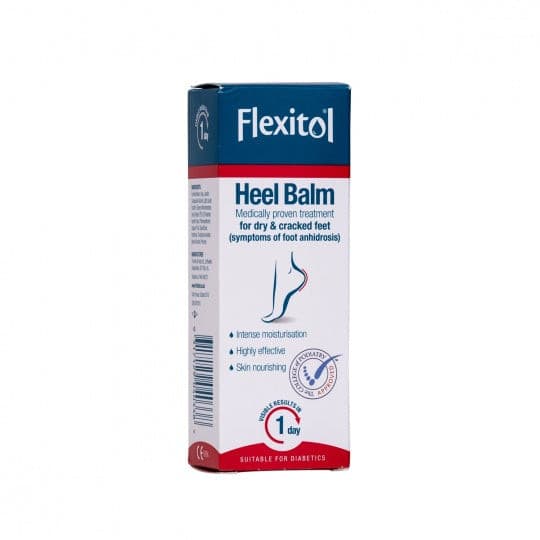
Flexitol Heel Balm
Flexitol Heel Balm
- ✔️ Contains 25% urea to soften severely cracked heels
- ✔️ Repairs dry, thickened heel skin with twice-daily use
- ✔️ Keratolytic action removes hardened dead skin cells
- ✔️ Suitable for adults including those with very dry skin
- ✔️ Humectant formula locks moisture into the heel skin
Price Checker
 Lowest price guarantee
 Includes FREE private prescription


Couldn't load pickup availability
What Is Flexitol Heel Balm and Does It Work for Cracked Heels?
Cracked heels are more common than you might think. The NHS notes that dry skin on the feet — particularly around the heels — can become uncomfortable and, in some cases, painful if left untreated. Flexitol Heel Balm is a widely used, over-the-counter emollient containing 25% urea, specifically formulated to target the thick, hardened skin that builds up on heels. It is available without a prescription and is suitable for most adults looking for an effective, no-fuss solution to dry, rough, or cracked heel skin. You can browse the full range of foot care products at Cured Pharmacy's foot care collection.
Urea is a well-established ingredient in dermatology. It has both keratolytic (skin-softening) and humectant (moisture-retaining) properties, making it particularly suited to areas of the body where skin tends to thicken and dry out. At a concentration of 25%, it is one of the higher-strength urea formulations available without a prescription in the UK.
How Does Flexitol Heel Balm Work on Dry Skin?
The mechanism behind Flexitol Heel Balm is straightforward but clinically meaningful. Urea works in two key ways simultaneously:
- Keratolytic action: At concentrations of 20% and above, urea breaks down the protein bonds in hardened keratin — the structural protein responsible for thickened, calloused skin — helping to loosen and remove dead skin cells.
- Humectant action: Urea draws water from the deeper layers of the skin (the dermis) up into the outer layer (the epidermis), improving hydration and skin flexibility.
- Emollient effect: The balm base helps to seal moisture into the skin surface, reducing transepidermal water loss and preventing further drying.
- Antimicrobial properties: Urea has mild antimicrobial activity, which may help reduce the risk of secondary infection in cracked skin, though it is not a treatment for active infection.
Together, these actions make Flexitol Heel Balm a clinically logical choice for managing dry, cracked heels rather than simply masking the problem.
Who Should Use Flexitol Heel Balm?
This product is suitable for a wide range of people. It is particularly useful if you spend long hours on your feet, wear open-backed footwear, or simply have naturally dry skin. That said, it is worth knowing who benefits most:
- Adults with dry, rough, or cracked heels caused by environmental factors or prolonged standing
- People with skin conditions such as eczema or psoriasis affecting the feet (seek GP advice first)
- Older adults, in whom skin naturally produces less sebum and tends to dry out more quickly
- Athletes or those who walk or run regularly and experience heel calluses
It is not recommended for use on infected, inflamed, or broken skin without medical advice. Children under 12 should only use this product under the guidance of a healthcare professional.
How Does Flexitol Heel Balm Compare to Other Heel Creams?
| Feature | Flexitol Heel Balm | Eucerin Intensive Foot Cream |
|---|---|---|
| Urea concentration | 25% | 10% |
| Suitable for severely cracked heels | Yes | Mild to moderate dryness |
| Prescription required | No (OTC) | No (OTC) |
| Keratolytic action | Yes (high-strength) | Mild |
Is Flexitol Heel Balm Suitable for People With Diabetes?
Foot care is especially important for people with diabetes. The NHS advises that people with diabetes are at higher risk of foot complications, including infections and slow-healing wounds, due to reduced circulation and nerve sensitivity. If you have diabetes and are considering using Flexitol Heel Balm, speak to your GP or podiatrist first. While urea-based emollients are commonly used in diabetic foot care, professional guidance ensures the product is appropriate for your specific situation. For those managing related skin concerns, our skin care collection includes a range of emollients and moisturisers.
Store Flexitol Heel Balm below 25°C, away from direct sunlight, and keep it out of reach of children. Do not use past the expiry date printed on the packaging.
This product is a medicine. Speak to your doctor or pharmacist before using if you have an underlying medical condition or are taking other medicines.
Flexitol Heel Balm specifications
| Treatment category | Foot care / Emollient |
| Mechanism of action | Keratolytic and humectant (urea 25%) |
| Effective for | Dry, cracked, and rough heels |
| Suitable for | Adults; children under 12 on medical advice only |
| Active ingredient | Urea 25% |
| Pack sizes | 112g, 500g |
| UK classification | General Sale (GSL) |
| Drug class | Emollient / Keratolytic |
| Preparation | Cream/balm |
| Route of administration | Topical (cutaneous) |
Specifications of Flexitol Heel Balm
What Is Flexitol Heel Balm and What Is It Used For?
Flexitol Heel Balm is a topical emollient and keratolytic preparation containing 25% urea. It is used to treat dry, rough, thickened, and cracked skin on the heels and feet. Urea is a naturally occurring substance found in the skin that helps maintain hydration and skin barrier function. When skin becomes severely dry — as often happens on the heels due to pressure, friction, and reduced sebaceous gland activity in that area — urea levels drop, and the skin loses its ability to retain moisture effectively. Applying a high-concentration urea balm replenishes this and actively works to soften and remove hardened skin.
The product is classified as a General Sale (GSL) medicine in the UK, meaning it can be purchased without a prescription from pharmacies, supermarkets, and online retailers. It is not a cosmetic — it contains an active pharmaceutical ingredient at a therapeutic concentration.
What Do You Need to Know Before Using Flexitol Heel Balm?
Before using this product, read the following carefully. Most people tolerate Flexitol Heel Balm well, but there are some situations where caution is needed.
Do not use Flexitol Heel Balm if you:
- Are allergic to urea or any other ingredient in the formulation
- Have an active skin infection (bacterial, fungal, or viral) on the affected area — if you suspect a fungal infection, see our athlete's foot and fungal infections range for appropriate treatment first
- Have open wounds or severely broken skin on the heel without medical advice
- Are using it on a child under 12 without healthcare professional guidance
Use with caution if you:
- Have diabetes — always consult your GP or podiatrist before use
- Have peripheral vascular disease or poor circulation in the feet
- Have a known skin condition such as psoriasis or eczema affecting the feet
- Are pregnant or breastfeeding — consult your GP or midwife before use
Known drug interactions:
- No significant systemic drug interactions are known for topically applied urea at this concentration
- Avoid using alongside other keratolytic agents (e.g. salicylic acid preparations) on the same area without medical advice, as this may cause excessive skin irritation
How Should You Use Flexitol Heel Balm Correctly?
Using Flexitol Heel Balm correctly makes a real difference to how quickly you see results. Follow these steps for best effect:
- Wash your feet with warm water and a mild soap, then dry thoroughly — paying particular attention to the heel area and between the toes.
- Apply a generous amount of Flexitol Heel Balm directly to the dry or cracked heel skin.
- Massage the balm in using circular motions until it is fully absorbed.
- Allow the product to absorb before putting on socks or footwear.
- Repeat twice daily — once in the morning and once at night — for best results.
- For very cracked heels, applying at night and covering with cotton socks can enhance absorption overnight.
| Indication | Age Group | Dose | Frequency |
|---|---|---|---|
| Dry, cracked heels | Adults (18+) | Generous application to affected area | Twice daily |
| Maintenance (once heels improve) | Adults (18+) | Moderate application | Once daily |
| Children under 12 | Under 12 | Only on medical advice | As directed by healthcare professional |
What Are the Possible Side Effects of Flexitol Heel Balm?
Side effects with topical urea products are generally mild and uncommon. Most people use Flexitol Heel Balm without any problems at all. However, as with any product applied to the skin, reactions can occasionally occur.
Common side effects:
- Mild stinging or tingling immediately after application, particularly on cracked or broken skin
- Temporary redness at the application site
- Mild itching during the first few days of use
Less common side effects:
- Skin irritation or a burning sensation that persists beyond the first few minutes
- Allergic contact dermatitis (rash, swelling, or blistering) — stop use immediately and seek medical advice if this occurs
- Excessive skin peeling if used too frequently or in combination with other exfoliating products
If you experience a severe allergic reaction — including swelling of the face, lips, or throat, or difficulty breathing — seek emergency medical attention immediately. This is rare but serious.
How Should You Store Flexitol Heel Balm?
Correct storage helps maintain the product's effectiveness and safety throughout its shelf life.
- Store below 25°C in a cool, dry place
- Keep away from direct sunlight and heat sources
- Keep the cap tightly closed when not in use
- Keep out of reach and sight of children
- Do not use after the expiry date printed on the tube or packaging
- Do not freeze
- Do not store in the bathroom, where humidity and temperature fluctuations can affect the formulation
If you are managing multiple skin concerns alongside dry heels, you may find it helpful to explore our creams and ointments collection for complementary products recommended by our pharmacy team.
References
Written and reviewed by our qualified team
Your safety and success are our highest priorities. Our medical team rigorously evaluates every product and piece of advice we provide, ensuring you receive only the most effective, science-backed solutions available.
Frequently Asked Questions
Where can I buy Flexitol Heel Balm online in the UK?
You can buy Flexitol Heel Balm online from Cured Pharmacy, a GPhC-registered UK online pharmacy. It is available without a prescription as an over-the-counter product. Browse our full foot care collection for more options.
How does Flexitol Heel Balm work in the body?
Flexitol Heel Balm contains 25% urea, which acts as both a keratolytic and a humectant. The keratolytic action breaks down hardened, thickened skin cells on the heel, while the humectant action draws moisture into the outer layers of the skin. Together, these effects soften and repair cracked, dry heel skin over time.
How do I use Flexitol Heel Balm step by step?
Wash and dry your feet thoroughly, then apply a generous amount of Flexitol Heel Balm to the affected heel area and massage in well. Use twice daily — morning and night — for best results. For very cracked heels, applying at night and wearing cotton socks overnight can improve absorption.
How long does Flexitol Heel Balm take to show results?
Many people notice their heels feeling softer within a few days of consistent twice-daily use. Severely cracked or thickened heels may take two to four weeks of regular application to show significant improvement. Continuing to use the balm once heels have improved helps prevent the dryness from returning.
What is the best time to apply Flexitol Heel Balm?
The most effective routine is to apply Flexitol Heel Balm twice daily — once in the morning after washing your feet, and once at night before bed. The overnight application is particularly useful because the skin has time to absorb the urea without the friction of walking or wearing shoes. Wearing cotton socks after the evening application can further enhance results.
Can I use Flexitol Heel Balm if I have diabetes?
People with diabetes should consult their GP or podiatrist before using Flexitol Heel Balm. The NHS recommends that people with diabetes check their feet daily and seek professional advice for any foot problems, as reduced circulation and nerve sensitivity can increase the risk of complications. Urea-based emollients are commonly used in diabetic foot care, but professional guidance is important.
Is Flexitol Heel Balm safe to use during pregnancy?
Topical urea products are generally considered low risk during pregnancy when applied to intact skin as directed, as systemic absorption is minimal. However, you should always speak to your GP or midwife before introducing any new product during pregnancy or breastfeeding. They can confirm whether it is appropriate for your individual circumstances.
What are the side effects of Flexitol Heel Balm?
Side effects are uncommon but may include mild stinging, temporary redness, or itching at the application site — particularly if the skin is cracked or broken. Allergic contact dermatitis is rare but possible; if you develop a rash, swelling, or persistent irritation, stop use and consult a pharmacist or GP. Most people tolerate the product well with no adverse effects.
How do I manage irritation caused by Flexitol Heel Balm?
If you experience mild stinging after application, this is usually temporary and settles within a few minutes — it is more common when the skin is cracked or broken. Reducing application frequency to once daily until the skin heals can help. If irritation is persistent or severe, stop using the product and speak to your pharmacist.
Who is eligible to use Flexitol Heel Balm?
Flexitol Heel Balm is suitable for most adults with dry, rough, or cracked heels. It is not recommended for children under 12 without healthcare professional guidance, and people with diabetes, peripheral vascular disease, or active skin infections should seek medical advice before use. It is available over the counter without a prescription for eligible adults.
Can I use Flexitol Heel Balm on other parts of my feet?
Yes, Flexitol Heel Balm can be applied to other areas of the feet affected by dry or thickened skin, such as the balls of the feet or the sides of the toes. Avoid applying it between the toes, as the moist environment there can increase the risk of irritation. Do not apply to the face or other body areas unless directed by a healthcare professional.
What happens if I miss an application of Flexitol Heel Balm?
Missing a single application will not cause any harm — simply resume your normal routine at the next scheduled time. Do not apply a double amount to compensate for a missed application. Consistency over time is what delivers results with emollient treatments like this one.
What are alternatives to Flexitol Heel Balm?
Alternatives include other urea-based emollients such as Eucerin Intensive Foot Cream (10% urea) for milder dryness, or CCS Foot Cream. For people with fungal infections contributing to dry, flaking skin, treating the underlying infection first is important — explore our athlete's foot and fungal infections range for suitable options. Your pharmacist can advise on the most appropriate product for your needs.
How long can you keep using Flexitol Heel Balm?
Flexitol Heel Balm can be used long term as a maintenance emollient once the initial cracking and dryness has resolved. Many people continue to use it daily or a few times a week to prevent heels from drying out again, particularly during winter months or periods of increased physical activity. There is no recommended maximum duration for use in healthy adults.
What does the latest research say about urea for cracked heels?
Urea has been used in dermatology for decades and is well supported by clinical evidence as an effective keratolytic and moisturising agent for dry skin conditions. The BNF recognises urea as an established emollient ingredient, and it is widely recommended by podiatrists and dermatologists for the management of hyperkeratotic (thickened) skin on the feet. Higher concentrations such as 25% are specifically indicated for more severe dryness and callus formation.
Written and reviewed by our qualified team

Reviewed by:
Tarun Kumar
Superintendent/ Clinical Lead
📖 Find out more about our team of medical content authors and how we ensure the accuracy of our content with our content guidelines.
Content last updated: 14 Sep 2026
Other popular options


We’re a safe and
regulated UK service

Lowest Price Guarantee

We're convinced you won't find your treatment cheaper, but if you do we'll refund the difference.
Find out more
100% discreet packaging

Discreet, unbranded packaging for every order.
Find out more

Need help?
Talk to our friendly experts now


How our service works

Service setup

Discreet packaging

Express delivery