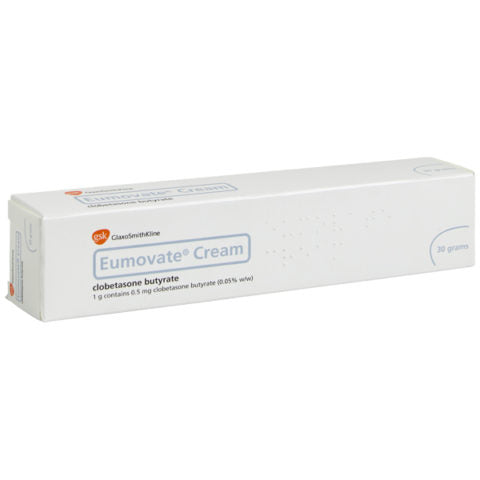
Eumovate Cream & Ointment
- ✔️ Contains 0.05% clobetasone butyrate for targeted eczema relief
- ✔️ Reduces redness, itching, and inflammation during flare-ups
- ✔️ Available as cream for moist skin or ointment for dry, scaly skin
- ✔️ Suitable for adults and children aged 12 and over
- ✔️ No prescription required — available OTC from a registered UK pharmacy
Price Checker
 Discreet, tracked delivery
 Includes FREE private prescription


Couldn't load pickup availability
What Is Eumovate Cream and How Does It Treat Eczema?
If you have ever dealt with a stubborn eczema flare-up — the relentless itch, the angry red patches, the skin that just will not settle — you will know how much it affects daily life. Eumovate cream is a mild topical corticosteroid containing clobetasone butyrate 0.05%, licensed in the UK for the short-term relief of inflammatory skin conditions including eczema, dermatitis, and other itchy, inflamed skin reactions. It is available over the counter without a prescription for adults and children aged 12 and over, making it one of the more accessible options in our range of creams and ointments.
Eumovate is available in two formulations — a cream and an ointment — both containing the same active ingredient at the same concentration. The choice between them largely comes down to your skin type and the nature of your condition, which we will cover below.
How Does Eumovate Work on Inflamed Skin?
Clobetasone butyrate belongs to the corticosteroid class of medicines. When applied to the skin, it works by reducing the activity of inflammatory cells and suppressing the release of substances that cause redness, swelling, and itching. It is classified as a mild-to-moderate potency topical steroid, sitting at the lower end of the potency scale — which is one reason it is available without a prescription for short-term use.
- Reduces the production of inflammatory mediators such as prostaglandins and leukotrienes in the skin
- Decreases capillary permeability, which helps reduce redness and swelling
- Relieves itching by calming the local immune response in the affected area
- Works locally at the site of application with minimal systemic absorption when used correctly
Who Is Eumovate Suitable For?
Eumovate is suitable for a range of people dealing with mild-to-moderate inflammatory skin conditions. It is not intended for severe or widespread eczema, and it should not be used as a long-term daily treatment without medical guidance. That said, for many people it provides meaningful relief during flare-ups.
It may be appropriate for you if you:
- Are aged 12 or over and experiencing a mild-to-moderate eczema or dermatitis flare-up
- Have been diagnosed with contact dermatitis, atopic eczema, or seborrhoeic dermatitis
- Need short-term relief from itching, redness, and inflammation on the body (not the face without medical advice)
- Are looking for an OTC option before seeking a GP appointment for a prescription-strength treatment
It is not suitable for children under 12 without a doctor's recommendation, and it should not be used on infected skin, broken skin, or around the eyes without professional guidance. If you are also managing skin-related allergic reactions, you may find our allergy and hay fever range useful alongside your skin care routine.
How Does Eumovate Cream Compare to Hydrocortisone Cream?
| Feature | Eumovate Cream/Ointment | Hydrocortisone 1% Cream |
|---|---|---|
| Active ingredient | Clobetasone butyrate 0.05% | Hydrocortisone 1% |
| Steroid potency | Mild-to-moderate | Mild |
| OTC availability | Yes (12 years and over) | Yes (10 years and over) |
| Suitable for face | Only under medical supervision | Short-term use on face (with caution) |
| Formulations available | Cream and ointment | Cream and ointment |
How Should Eumovate Be Stored and Is It Clinically Appropriate for You?
Store eumovate cream below 25°C, away from direct heat and sunlight. Do not freeze either formulation. Always keep the product out of reach of children and check the expiry date before use. Once opened, follow the manufacturer's guidance on shelf life — typically 12 months for topical preparations once opened.
Before starting treatment, consider whether your skin condition has been properly assessed. If you are unsure whether your symptoms are eczema, psoriasis, or a fungal infection, it is worth speaking to a pharmacist or GP first. Misidentifying a fungal infection as eczema and applying a steroid cream can actually worsen the infection. Our skin care collection includes a range of products to support different skin concerns alongside your Eumovate treatment.
This product is a medicine. Speak to your doctor or pharmacist before using if you have an underlying medical condition or are taking other medicines.
Eumovate Cream & Ointment specifications
| Treatment category | Inflammatory skin conditions (eczema, dermatitis) |
| Active ingredient | Clobetasone butyrate 0.05% |
| Mechanism of action | Topical corticosteroid — reduces skin inflammation and itching |
| Effective for | Eczema, contact dermatitis, atopic dermatitis, seborrhoeic dermatitis |
| Suitable for | Adults and children aged 12 and over |
| Pack sizes | 30g |
| Strengths | 0.05% clobetasone butyrate |
| UK classification | Pharmacy (P) medicine |
| Drug class | Mild-to-moderate topical corticosteroid |
| Preparation | Cream and ointment |
| Route of administration | Topical (applied to skin) |
Specifications of Eumovate Cream & Ointment
What Is Eumovate and What Is It Used For?
Eumovate Cream and Ointment contains clobetasone butyrate 0.05%, a mild-to-moderate topical corticosteroid. It is used to relieve the symptoms of inflammatory skin conditions, particularly eczema and dermatitis. These conditions cause the skin to become red, itchy, inflamed, and sometimes weepy or scaly. Eumovate works locally on the skin to reduce these symptoms during flare-ups. It is a Pharmacy (P) medicine in the UK, meaning it can be purchased without a prescription from a registered pharmacy for adults and children aged 12 and over.
What Do You Need to Know Before Using Eumovate?
Before applying Eumovate, read the following carefully. There are situations where this medicine should not be used, and others where extra caution is needed.
Do not use Eumovate if you:
- Are allergic to clobetasone butyrate or any other ingredient in the formulation
- Have a bacterial, viral, or fungal skin infection (including ringworm, impetigo, or cold sores) in the area to be treated
- Have acne, rosacea, or perioral dermatitis
- Are treating a child under 12 years of age without a doctor's recommendation
- Have broken or ulcerated skin in the area to be treated
Use with caution if you:
- Are pregnant or breastfeeding — speak to your doctor or pharmacist first
- Are applying to the face, groin, or underarms, where skin is thinner and absorption is higher
- Have previously experienced skin thinning (atrophy) from steroid use
- Are using other topical corticosteroids at the same time
Drug interactions:
- No clinically significant drug interactions are known at OTC doses when used topically
- Avoid using alongside other topical steroids on the same area without medical advice
- Inform your pharmacist of all medicines you are taking, including herbal remedies
How Should You Use Eumovate Correctly?
Always use Eumovate exactly as directed on the label or as advised by your pharmacist. Do not apply more than recommended, and do not use it for longer than seven days without seeking medical advice.
- Wash and dry your hands before applying the cream or ointment
- Clean and gently dry the affected area of skin
- Apply a thin layer of Eumovate to the affected area only — do not spread onto surrounding healthy skin
- Gently rub in until absorbed
- Wash your hands after application, unless your hands are the area being treated
- Do not cover the treated area with an airtight dressing unless advised by a doctor, as this increases absorption and the risk of side effects
| Indication | Age Group | Dose | Frequency |
|---|---|---|---|
| Eczema / dermatitis flare-up | Adults and children 12+ | Thin layer to affected area | Up to 4 times daily |
| Eczema / dermatitis flare-up | Under 12 years | Only under medical supervision | As directed by doctor |
If you are also managing dry skin between flare-ups, exploring our broader skin care range for emollients and moisturisers can help maintain your skin barrier and reduce the frequency of flare-ups.
What Are the Possible Side Effects of Eumovate?
Like all medicines, Eumovate can cause side effects, although not everyone experiences them. Most side effects are related to prolonged or excessive use.
Common side effects:
- Mild burning, stinging, or itching at the application site immediately after applying
- Skin dryness or mild irritation
- Temporary redness at the site of application
Less common side effects (usually associated with prolonged use):
- Skin thinning (atrophy), particularly on delicate areas such as the face or skin folds
- Stretch marks (striae) if used over large areas for extended periods
- Changes in skin pigmentation
- Increased susceptibility to skin infections
- Adrenal suppression — rare, but possible with excessive use over large areas
Stop using Eumovate and contact your GP or pharmacist if your condition worsens, if you develop signs of a skin infection (increased redness, warmth, pus, or crusting), or if you experience any unexpected side effects. You can also find additional first aid and skin support products in our first aid collection.
How Should You Store Eumovate?
- Store below 25°C in a cool, dry place
- Do not freeze either the cream or ointment formulation
- Keep the tube tightly closed when not in use
- Keep out of the sight and reach of children
- Do not use after the expiry date printed on the packaging
- Do not dispose of medicines via wastewater or household waste — return unused medicines to your pharmacy
References
Written and reviewed by our qualified team
Your safety and success are our highest priorities. Our medical team rigorously evaluates every product and piece of advice we provide, ensuring you receive only the most effective, science-backed solutions available.
Frequently Asked Questions
Where can I buy Eumovate cream online in the UK?
You can buy Eumovate cream online in the UK from Cured Pharmacy, a GPhC-registered online pharmacy. It is available as an over-the-counter Pharmacy (P) medicine for adults and children aged 12 and over, so no prescription is needed. Simply add it to your basket and complete a short online consultation to confirm suitability.
How does Eumovate cream work on eczema?
Eumovate cream contains clobetasone butyrate 0.05%, a mild-to-moderate topical corticosteroid that reduces inflammation in the skin by suppressing the release of inflammatory mediators such as prostaglandins. This helps calm the redness, swelling, and itching that characterise eczema flare-ups. It works locally at the site of application and does not significantly enter the bloodstream when used as directed.
How do I apply Eumovate cream step by step?
Wash and dry your hands, then clean and gently dry the affected skin area. Apply a thin layer of Eumovate cream directly to the inflamed area and rub in gently until absorbed. Wash your hands afterwards unless your hands are the area being treated, and avoid covering the area with an airtight dressing unless a doctor has advised it.
How many times a day should I use Eumovate?
Eumovate cream or ointment should be applied up to four times daily to the affected area. Always use the smallest amount needed to control your symptoms. Do not apply more frequently than directed, as this increases the risk of side effects without improving results.
How long can I use Eumovate cream for without seeing a doctor?
You should not use Eumovate for more than seven days without consulting a doctor or pharmacist. Prolonged use of topical corticosteroids — even mild ones — can lead to skin thinning, stretch marks, and increased susceptibility to infection. If your symptoms have not improved after one week, seek medical advice.
What are the side effects of Eumovate cream?
Common side effects include mild burning, stinging, or itching at the application site, which usually settles quickly. With prolonged or excessive use, more serious effects such as skin thinning (atrophy), changes in pigmentation, or stretch marks can occur. If you notice any worsening of your skin condition or signs of infection, stop using the cream and speak to your pharmacist or GP.
Can I use Eumovate cream on my face?
Eumovate cream should only be used on the face under medical supervision and for short periods. The skin on the face is thinner than elsewhere on the body, which means topical steroids are absorbed more readily and side effects such as skin thinning are more likely. Speak to your GP or pharmacist before applying it to facial skin.
Is Eumovate cream safe to use during pregnancy?
If you are pregnant or breastfeeding, you should speak to your doctor or pharmacist before using Eumovate cream. Topical corticosteroids should be used sparingly and only when clearly necessary during pregnancy, and they should not be applied to the breast area if you are breastfeeding. Your healthcare provider can advise on the safest approach for your situation.
What is the difference between Eumovate cream and Eumovate ointment?
Both formulations contain clobetasone butyrate 0.05% and work in the same way. The cream is water-based, lighter in texture, and better suited to weeping, moist, or inflamed skin. The ointment is greasier and more occlusive, making it more suitable for dry, thickened, or scaly skin that needs extra moisture alongside the anti-inflammatory effect.
Who is eligible to buy Eumovate over the counter?
Eumovate is available over the counter for adults and children aged 12 and over who have a mild-to-moderate inflammatory skin condition such as eczema or contact dermatitis. It is not suitable for children under 12 without a doctor's recommendation, and it should not be used by anyone with an active skin infection in the area to be treated. You can browse our full range of creams and ointments to find the right product for your needs.
What happens if I miss an application of Eumovate?
If you forget to apply Eumovate at your usual time, apply it as soon as you remember — unless it is nearly time for your next application, in which case simply skip the missed dose. Do not apply a double amount to make up for a missed application. Consistency matters, but doubling up increases the risk of side effects without additional benefit.
Can Eumovate cream be used for contact dermatitis?
Yes, Eumovate cream is licensed for use in contact dermatitis, which occurs when the skin reacts to an irritant or allergen. It helps reduce the redness, swelling, and itching associated with this condition. However, identifying and avoiding the trigger is equally important — if you are unsure what is causing your reaction, a GP or dermatologist can help with patch testing.
What are the alternatives to Eumovate cream for eczema?
Alternatives include hydrocortisone 1% cream, which is a milder OTC topical steroid, or prescription-strength steroids such as betamethasone or mometasone for more severe cases. Emollients and moisturisers are also an essential part of eczema management and should be used regularly alongside any steroid treatment. You can explore our skin care collection for supportive products.
Can I use Eumovate cream on children?
Eumovate cream can be used in children aged 12 and over without a prescription. For children under 12, it should only be used under the direct supervision and recommendation of a doctor. Children's skin is more sensitive to topical steroids, and the risk of systemic absorption is proportionally higher in younger children due to their smaller body surface area.
Are there any recent studies on clobetasone butyrate for eczema?
Clobetasone butyrate has been used clinically for several decades and is well-established in dermatology guidelines as a mild-to-moderate topical corticosteroid for eczema and dermatitis. Current NHS guidance continues to recommend mild topical steroids as a first-line treatment for eczema flare-ups in both adults and children. For the most up-to-date clinical evidence, the BNF and NICE guidelines provide regularly reviewed recommendations on topical corticosteroid use.
Frequently Asked Question
Written and reviewed by our qualified team

Reviewed by:
Tarun Kumar
Superintendent/ Clinical Lead
📖 Find out more about our team of medical content authors and how we ensure the accuracy of our content with our content guidelines.
Content last updated: 14 Sep 2026
Other popular options


We’re a safe and
regulated UK service

100% discreet packaging

Discreet, unbranded packaging for every order.

Need help?
Talk to our friendly experts now


How our service works

Service setup

Discreet packaging

Express delivery