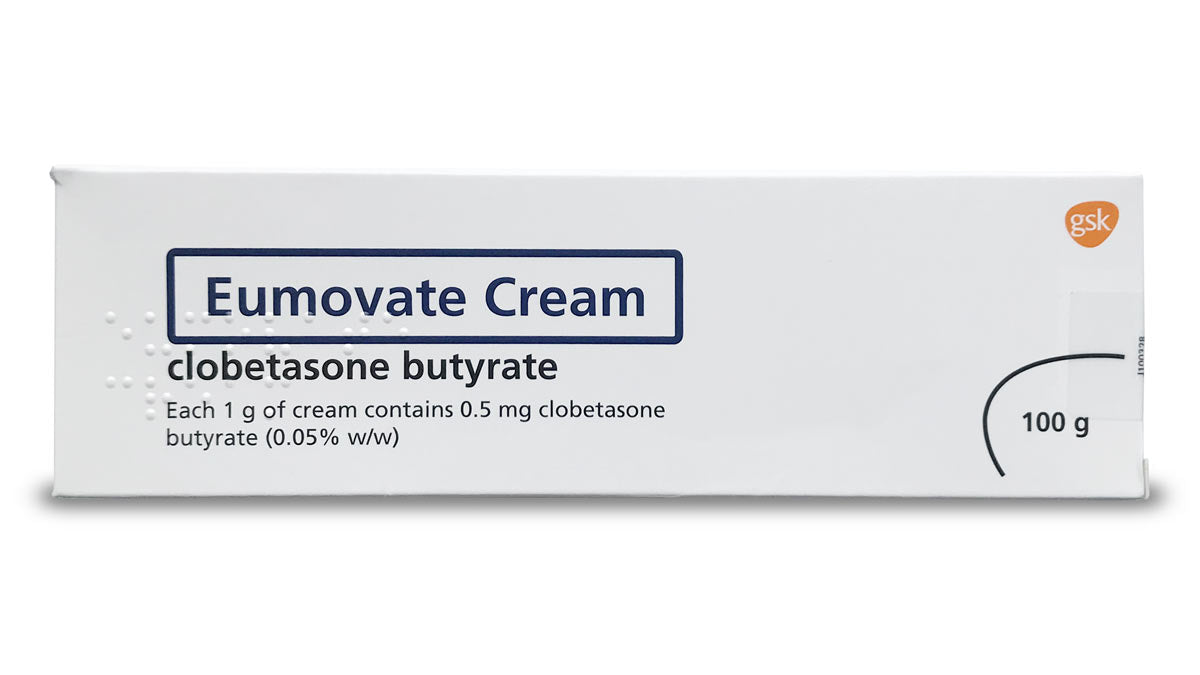
Eumovate Cream
Eumovate Cream
- ✔️ Relieves eczema redness, itching, and inflammation effectively
- ✔️ Contains clobetasone butyrate 0.05%, a clinically proven mild steroid
- ✔️ Suitable for adults and children aged 12 and over
- ✔️ Available without a prescription as a UK Pharmacy medicine
- ✔️ Gentle enough for short-term use on sensitive skin areas
Price Checker
 Lowest price guarantee
 Includes FREE private prescription


Couldn't load pickup availability
What Is Eumovate Cream and How Does It Help?
Eumovate cream is a mild topical corticosteroid containing clobetasone butyrate 0.05%. It's used to relieve the redness, itching, and inflammation associated with a range of skin conditions, including eczema and dermatitis. Available over the counter in the UK, it offers a clinically recognised option for managing flare-ups without needing a prescription. If you're looking for a trusted skin care treatment that's been used for decades, Eumovate is a well-established choice.
Eczema affects roughly one in five children and one in twelve adults in the UK, according to the NHS. Flare-ups can be uncomfortable and disruptive, and having a reliable topical treatment to hand makes a real difference. Eumovate cream is classified as a mild corticosteroid — the lowest potency class — which means it's suitable for short-term use on sensitive areas when used correctly.
How Does Eumovate Cream Work on Inflamed Skin?
Clobetasone butyrate, the active ingredient in Eumovate cream, works by reducing the activity of inflammatory chemicals in the skin. When your immune system overreacts — as it does in eczema or contact dermatitis — it triggers a cascade of inflammation that causes redness, swelling, and that persistent itch. The corticosteroid in Eumovate interrupts this process at a cellular level.
- Binds to glucocorticoid receptors inside skin cells
- Suppresses the production of pro-inflammatory cytokines and prostaglandins
- Reduces capillary dilation, which decreases redness and swelling
- Relieves itching by calming the inflammatory response in the dermis
Because it's a mild-potency steroid, it carries a lower risk of side effects compared to stronger corticosteroids, making it appropriate for short-term use on most body areas.
Who Is Eumovate Cream Suitable For?
Eumovate cream is suitable for adults and children aged 12 and over when purchased without a prescription. It's particularly useful for people who experience recurring mild-to-moderate inflammatory skin conditions. That said, it's not appropriate for everyone — always read the label and speak to a pharmacist if you're unsure.
- Adults with eczema, contact dermatitis, or seborrhoeic dermatitis
- People with mild skin inflammation that hasn't responded to emollients alone
- Those aged 12 and over seeking short-term OTC relief from itching and redness
- Individuals managing flare-ups of known inflammatory skin conditions
It is not suitable for use on infected skin, acne, rosacea, or perioral dermatitis. Children under 12 should only use it under medical supervision.
How Does Eumovate Cream Compare to Other Mild Steroids?
| Feature | Eumovate Cream | Hydrocortisone 1% Cream |
|---|---|---|
| Active ingredient | Clobetasone butyrate 0.05% | Hydrocortisone 1% |
| Potency class | Mild | Mild (slightly less potent) |
| OTC availability | Yes (adults & children 12+) | Yes (adults & children 10+) |
| Suitable for face | Up to 5 days only | Up to 7 days (some formulations) |
Is Eumovate Cream Safe to Store at Home?
Yes — storing Eumovate cream correctly is straightforward. Keep it below 25°C, away from direct heat and sunlight. Do not refrigerate it, as this can affect the cream's consistency. Always keep the cap tightly closed and store it out of reach of children. Check the expiry date before each use; do not use it after the printed date on the tube or carton.
If you're managing multiple skin conditions alongside eczema, you might also find it helpful to explore our range of creams and ointments for complementary topical treatments. As with all medicines, if you have any doubt about whether Eumovate cream is right for you, speak to your pharmacist before starting treatment.
This product is a medicine. Speak to your doctor or pharmacist before using if you have an underlying medical condition or are taking other medicines.
Eumovate Cream specifications
| Treatment category | Inflammatory skin conditions |
| Mechanism of action | Topical corticosteroid — suppresses inflammatory mediators in the skin |
| Effective for | Eczema, contact dermatitis, seborrhoeic dermatitis |
| Suitable for | Adults and children aged 12 and over (OTC) |
| Active ingredient | Clobetasone butyrate 0.05% |
| Pack sizes | 15g, 30g |
| Strength | 0.05% w/w |
| UK classification | Pharmacy (P) medicine |
| Drug class | Mild topical corticosteroid |
| Preparation | Cream |
| Route of administration | Topical (cutaneous) |
Specifications of Eumovate Cream
What Is Eumovate Cream and What Is It Used For?
Eumovate cream contains clobetasone butyrate 0.05%, a mild corticosteroid used to treat inflammatory skin conditions. It is indicated for the short-term relief of eczema (including atopic eczema), contact dermatitis, and seborrhoeic dermatitis in adults and children aged 12 and over. It reduces the redness, swelling, and itching that characterise these conditions, helping to restore comfort during flare-ups. It is not a cure — it manages symptoms while the skin heals.
What Do You Need to Know Before Using Eumovate Cream?
Before applying Eumovate cream, it's important to check whether it's appropriate for your situation. Do not use it if any of the following apply:
- You are allergic to clobetasone butyrate or any other ingredient in the cream
- The affected skin is infected (bacterial, fungal, or viral — including cold sores or chickenpox)
- You have acne, rosacea, or perioral dermatitis
- The skin area is broken, ulcerated, or raw
- You are pregnant or breastfeeding (seek medical advice first)
- The patient is a child under 12 years of age (without medical supervision)
Use with caution if you are applying it near the eyes, as prolonged contact with the eyes may increase the risk of glaucoma or cataracts. Regarding drug interactions, topical clobetasone butyrate at OTC doses has no significant known systemic drug interactions. However:
- Avoid using other topical steroids on the same area simultaneously unless directed by a doctor
- Inform your GP if you are using any immunosuppressant medicines
How Should You Use Eumovate Cream Correctly?
Always use Eumovate cream exactly as described in the patient information leaflet or as directed by your pharmacist. Using more than recommended will not speed up recovery and increases the risk of side effects.
- Wash and dry your hands thoroughly before applying
- Clean and gently pat dry the affected skin area
- Squeeze a small amount of cream onto your fingertip — a thin layer is sufficient
- Apply gently to the affected area and rub in lightly
- Wash your hands again after application (unless treating your hands)
- Do not cover the treated area with an airtight dressing unless advised by a doctor
- Avoid getting the cream in your eyes, mouth, or nose
| Indication | Age Group | Dose | Frequency |
|---|---|---|---|
| Eczema / dermatitis | Adults & children 12+ | Thin layer to affected area | 2–4 times daily |
| Facial use | Adults & children 12+ | Thin layer | Max 5 days without medical advice |
| Children under 12 | Under 12 | Only under medical supervision | As directed by doctor |
If you're also managing other skin concerns, our skin care collection includes a range of complementary products to support your routine.
What Are the Possible Side Effects of Eumovate Cream?
Like all medicines, Eumovate cream can cause side effects, although not everyone experiences them. Most side effects are local — meaning they occur at the site of application — and are more likely with prolonged or excessive use.
Common side effects:
- Mild burning or stinging sensation on application
- Itching or irritation at the treated site
- Skin dryness
Less common side effects:
- Skin thinning (atrophy) with prolonged use
- Stretch marks (striae) if used on large areas over time
- Changes in skin pigmentation
- Allergic contact dermatitis (worsening of the condition)
- Increased hair growth at the application site (hypertrichosis)
Systemic absorption is very low at OTC doses, but using large amounts over extensive areas or under occlusive dressings increases this risk. Stop using the cream and seek medical advice if your condition worsens or does not improve within 7 days.
How Should You Store Eumovate Cream?
Correct storage keeps the cream effective and safe for the duration of use. Follow these guidelines:
- Store below 25°C in a cool, dry place
- Do not refrigerate or freeze
- Keep the tube tightly closed when not in use
- Store out of sight and reach of children
- Do not use after the expiry date printed on the tube or carton
- Do not dispose of medicines via wastewater or household waste — return unused medicine to your pharmacist
For parents managing a child's skin condition, you may also find useful products in our baby and toddler range, though always confirm suitability with a pharmacist before use in young children.
References
Written and reviewed by our qualified team
Your safety and success are our highest priorities. Our medical team rigorously evaluates every product and piece of advice we provide, ensuring you receive only the most effective, science-backed solutions available.
Frequently Asked Questions
Where can I buy Eumovate cream online in the UK?
You can buy Eumovate cream from Cured Pharmacy, a GPhC-registered online pharmacy in the UK. It is available as an over-the-counter medicine, so no prescription is needed for adults and children aged 12 and over. Simply add it to your basket and it will be dispatched promptly to your door.
How does Eumovate cream work in the body?
Eumovate cream contains clobetasone butyrate 0.05%, which works by binding to glucocorticoid receptors in skin cells and suppressing the release of inflammatory chemicals such as cytokines and prostaglandins. This reduces redness, swelling, and itching at the site of application. Because it is a mild corticosteroid, systemic absorption is minimal when used as directed.
How do I apply Eumovate cream step by step?
Wash your hands, then apply a thin layer of the cream to the clean, dry affected area and rub in gently. Use it two to four times daily, or as directed by your pharmacist. Always wash your hands after application unless you are treating your hands.
How long does Eumovate cream take to work?
Most people notice a reduction in redness and itching within a few days of starting treatment. If there is no improvement after 7 days of use, you should stop using the cream and consult your pharmacist or GP. Continuing to use it beyond this point without improvement is not recommended.
What is the correct dose of Eumovate cream for adults?
Apply a thin layer to the affected area two to four times daily. Use the smallest amount that provides relief — more is not more effective and increases the risk of side effects. Do not apply to large areas of the body without medical advice.
Can I use Eumovate cream on my face?
Yes, but only for up to 5 days without seeking medical advice, as the skin on the face is thinner and more susceptible to side effects such as skin thinning. Avoid getting the cream in your eyes. If your facial condition does not improve within 5 days, speak to your GP.
Is Eumovate cream safe for children?
Eumovate cream can be used in children aged 12 and over without a prescription. For children under 12, it should only be used under the supervision of a doctor. If you are looking for skin products suitable for younger children, browse our baby and toddler range for age-appropriate options.
What are the side effects of Eumovate cream?
Common side effects include mild burning, stinging, or itching at the application site. With prolonged or excessive use, skin thinning, stretch marks, or changes in pigmentation may occur. If you notice any worsening of your skin condition or an allergic reaction, stop using the cream and seek medical advice.
How do I manage side effects of Eumovate cream?
Mild stinging or irritation on first application usually settles quickly and does not require stopping treatment. To minimise the risk of skin thinning, use the cream for the shortest time necessary and apply only a thin layer. If side effects persist or worsen, contact your pharmacist or GP promptly.
Who should not use Eumovate cream?
Do not use Eumovate cream if you have a skin infection (bacterial, fungal, or viral), acne, rosacea, or perioral dermatitis. It is also not suitable for use on broken or ulcerated skin. Pregnant or breastfeeding women should seek medical advice before using any topical corticosteroid.
What happens if I use too much Eumovate cream?
Using more than the recommended amount does not improve results and increases the risk of local side effects such as skin thinning. Applying it over large areas or under occlusive dressings can increase systemic absorption. If you are concerned about overuse, speak to your pharmacist.
What is the difference between Eumovate cream and hydrocortisone cream?
Both are mild topical corticosteroids available over the counter in the UK, but clobetasone butyrate (in Eumovate) is considered slightly more potent than 1% hydrocortisone, though both sit in the mild potency class. Your pharmacist can help you decide which is more appropriate for your specific condition and skin type.
How long can you use Eumovate cream for?
Eumovate cream is intended for short-term use only — typically no longer than 7 days without medical review. Prolonged use, particularly on the face or in skin folds, increases the risk of skin thinning and other local side effects. If your condition requires longer treatment, speak to your GP about a management plan.
Are there alternatives to Eumovate cream for eczema?
Yes — alternatives include 1% hydrocortisone cream for milder cases, or emollients and moisturisers as a first-line approach for dry, itchy skin. For more persistent or severe eczema, a GP may prescribe a moderate or potent corticosteroid. You can explore our wider range of creams and ointments for other topical options.
What are the latest findings on topical corticosteroids for eczema?
Current NHS and NICE guidance continues to support mild topical corticosteroids like clobetasone butyrate as a first-line treatment for mild-to-moderate eczema flare-ups, used alongside regular emollient therapy. Research consistently shows that short-term, appropriately dosed use is safe and effective. Long-term safety concerns are primarily associated with higher-potency steroids used without medical oversight.
Written and reviewed by our qualified team

Reviewed by:
Tarun Kumar
Superintendent/ Clinical Lead
📖 Find out more about our team of medical content authors and how we ensure the accuracy of our content with our content guidelines.
Content last updated: 14 Sep 2026
Other popular options


We’re a safe and
regulated UK service

Lowest Price Guarantee

We're convinced you won't find your treatment cheaper, but if you do we'll refund the difference.
Find out more
100% discreet packaging

Discreet, unbranded packaging for every order.
Find out more

Need help?
Talk to our friendly experts now


How our service works

Service setup

Discreet packaging

Express delivery