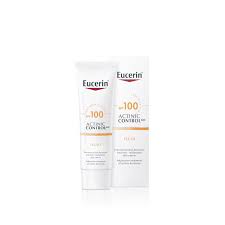
Eucerin Sun Actinic Control MD Sun Cream for Face & Body SPF100 - 80ml
- ✔️ Provides SPF100 protection against UVA and UVB radiation
- ✔️ Specifically formulated for actinic keratosis-prone skin
- ✔️ Fragrance-free and dermatologically tested for sensitive skin
- ✔️ Photostable formula maintains protection throughout sun exposure
- ✔️ Suitable for face and body with broad-spectrum coverage
Price Checker
 Lowest price guarantee
 Includes FREE private prescription


Couldn't load pickup availability
Is SPF 100 Sun Cream for Face Right for You?
If you have been told you have actinic keratosis — or you simply want the highest level of UV protection available — Eucerin Sun Actinic Control MD SPF100 is worth knowing about. This 80ml sun cream is specifically formulated for skin that is vulnerable to UV-induced damage, including skin that has already developed pre-cancerous lesions. The NHS advises that protecting your skin from the sun is one of the most important steps you can take to reduce the risk of skin cancer, and for those with photodamaged skin, that advice becomes even more pressing. You can explore a wider range of protective and therapeutic options in our skin care collection.
Eucerin is a dermatologist-trusted brand with a long-standing reputation in medical skincare. This particular formulation carries the "MD" designation, indicating it has been developed with a medically oriented approach to photoprotection. At £19.69 for 80ml, it sits at a reasonable price point for a clinically targeted product.
How Does Eucerin Sun Actinic Control MD SPF100 Work?
The sun cream works by combining multiple broad-spectrum UV filters that together block both UVA and UVB radiation. Here is how the mechanism breaks down:
- Tinosorb M (Methylene Bis-Benzotriazolyl Tetramethylbutylphenol) — a hybrid filter that both absorbs and reflects UV radiation across a wide spectrum.
- Tinosorb S (Bis-Ethylhexyloxyphenol Methoxyphenyl Triazine) — an organic filter offering broad UVA and UVB coverage with excellent photostability.
- Uvinul A Plus — targets UVA rays specifically, helping to prevent the deeper skin damage associated with photoageing and DNA strand breaks.
- Licochalcone A — a liquorice root extract with antioxidant properties that helps neutralise free radicals generated by UV exposure.
Together, these filters provide an SPF of 100 and a UVA protection factor that meets the EU recommendation of at least one-third of the SPF value. The formulation is photostable, meaning it does not degrade quickly under sunlight — a common weakness in some lower-grade sunscreens.
Who Should Use Eucerin Sun Actinic Control MD SPF100?
This product is not a general holiday sunscreen. It is designed for people with specific skin concerns where maximum UV protection is clinically important. That said, anyone who wants very high SPF coverage can use it safely.
- People diagnosed with actinic keratosis (solar keratosis) who need to minimise further UV damage
- Those with a personal or family history of non-melanoma skin cancer
- Individuals with fair or photosensitive skin (Fitzpatrick skin types I–III)
- Patients undergoing topical treatments for actinic keratosis (e.g. fluorouracil, imiquimod) where sun avoidance is essential
How Does Eucerin SPF100 Compare to Other High-SPF Sunscreens?
| Feature | Eucerin Sun Actinic Control MD SPF100 | Standard SPF50+ Sunscreen |
|---|---|---|
| SPF Rating | 100 | 50+ |
| UVB Blocked | ~99% | ~98% |
| Actinic Keratosis Focus | Yes — specifically formulated | No specific indication |
| Photostability | High (Tinosorb filters) | Variable |
| Fragrance-Free | Yes | Not always |
Is Eucerin Sun Actinic Control MD SPF100 Suitable for Sensitive or Treated Skin?
Yes. The formula is fragrance-free, dermatologically tested, and designed to be well tolerated on sensitive or compromised skin. If you are currently using prescription topical treatments for actinic keratosis, speak to your GP or dermatologist before adding any new product to your routine — but in most cases, a SPF 100 sun cream for face and body like this one is actively encouraged alongside treatment.
Store the product below 25°C, away from direct heat and sunlight. Do not freeze. Keep out of reach of children. If you are managing a skin condition alongside other health concerns, our creams and ointments collection may have additional products relevant to your care.
This product is a medicine. Speak to your doctor or pharmacist before using if you have an underlying medical condition or are taking other medicines.
Eucerin Sun Actinic Control MD Sun Cream SPF100 80ml specifications
| Treatment category | Photoprotection / Actinic keratosis prevention |
| Mechanism of action | Broad-spectrum UVA/UVB absorption and reflection via organic and hybrid UV filters |
| Effective against | UVA and UVB radiation; UV-induced skin damage and actinic keratosis progression |
| Suitable for | Adults with actinic keratosis, photosensitive skin, or history of skin cancer |
| Active ingredients | Tinosorb M, Tinosorb S, Uvinul A Plus, Licochalcone A |
| Pack size | 80ml |
| SPF | 100 |
| UK classification | General sale / Cosmetic medical device |
| Preparation | Cream (emulsion) |
| Route of administration | Topical (skin) |
Specifications of Eucerin Sun Actinic Control MD Sun Cream SPF100 80ml
What Is Eucerin Sun Actinic Control MD SPF100 and What Is It Used For?
Eucerin Sun Actinic Control MD SPF100 is a topical photoprotective cream for use on the face and body. It is designed primarily for people with actinic keratosis — rough, scaly patches on the skin caused by years of sun exposure — and for those at elevated risk of UV-related skin damage. The NHS describes actinic keratosis as a common condition that can, in some cases, develop into squamous cell carcinoma if left unmanaged, which is why consistent sun protection is so important.
Beyond actinic keratosis, this cream is suitable for anyone with photosensitive skin who needs reliable, high-factor protection during outdoor activities. It is not a treatment for existing lesions, but it plays a key role in preventing new ones from forming and stopping existing ones from worsening.
What Do You Need to Know Before Using Eucerin Sun Actinic Control MD SPF100?
Before applying this product, check the following contraindications and warnings:
- Do not use on broken, infected, or severely inflamed skin without medical advice
- Avoid contact with eyes — if contact occurs, rinse thoroughly with water
- Do not use in children under 3 years of age without medical supervision
- If you have a known allergy to any of the listed UV filters or excipients, do not use this product
- Do not inhale — keep away from the mouth and nose when applying to the face
- If you are pregnant or breastfeeding, consult your GP or pharmacist before use
Known drug interactions are limited for topical sunscreens. However, be aware of the following:
- If you are using topical retinoids, photosensitising antibiotics (e.g. doxycycline), or topical chemotherapy agents (e.g. fluorouracil), sun protection is especially critical — discuss your full regimen with your dermatologist
- Some topical corticosteroids may thin the skin; apply sunscreen as directed and avoid excessive rubbing on treated areas
How Should You Apply Eucerin Sun Actinic Control MD SPF100?
- Shake or stir the tube gently before use if the product has separated.
- Apply generously to all exposed areas of skin — face, neck, décolletage, hands, and any other exposed body areas.
- Apply at least 20–30 minutes before going outdoors to allow the filters to bind to the skin surface.
- Use approximately 2mg per cm² of skin — this equates to roughly a teaspoon for the face and neck alone. Under-application significantly reduces the effective SPF.
- Reapply every two hours during sun exposure, and immediately after swimming, towel-drying, or heavy sweating.
- Do not rely on sunscreen alone — seek shade between 11am and 3pm, wear protective clothing, and use a wide-brimmed hat.
| Indication | Age Group | Dose | Frequency |
|---|---|---|---|
| Actinic keratosis prevention | Adults | Generous layer to all exposed skin | Every 2 hours during sun exposure |
| General photoprotection | Adults and children over 3 | Generous layer to all exposed skin | Every 2 hours; reapply after water exposure |
What Are the Possible Side Effects of Eucerin Sun Actinic Control MD SPF100?
This product is generally well tolerated. Side effects are uncommon, but you should be aware of what to look out for. If you experience any reaction that concerns you, stop using the product and speak to a pharmacist or GP.
Common side effects:
- Mild stinging or tingling on application, particularly on sensitive or broken skin
- Temporary whitish residue on the skin (due to the mineral-like filter components)
Less common side effects:
- Contact dermatitis — redness, itching, or a rash at the site of application
- Folliculitis (blocked hair follicles) if applied too thickly in hairy areas
- Eye irritation if the product migrates near the eye area
Serious allergic reactions (anaphylaxis) are extremely rare with topical sunscreens but seek emergency medical help immediately if you develop swelling of the face, lips, or throat, or have difficulty breathing after application. You can find further guidance on managing skin reactions in our skin care collection.
How Should You Store Eucerin Sun Actinic Control MD SPF100?
- Store below 25°C in a cool, dry place
- Do not freeze or expose to temperatures above 40°C (e.g. inside a hot car)
- Keep the cap tightly closed when not in use
- Keep out of reach and sight of children
- Do not use after the expiry date printed on the tube
- Once opened, use within 12 months (check the period-after-opening symbol on the packaging)
If you are travelling and need to manage multiple health products, our travel health collection includes a range of essentials for sun-safe holidays.
References
- https://www.nhs.uk/conditions/actinic-keratoses/
- https://www.nhs.uk/live-well/seasonal-health/sunscreen-and-sun-safety/
- https://www.nhs.uk/conditions/skin-cancer/
- https://www.nhs.uk/conditions/squamous-cell-skin-cancer/
- https://www.nhs.uk/live-well/seasonal-health/vitamin-d/
- https://www.medicines.org.uk/emc
Written and reviewed by our qualified team
Your safety and success are our highest priorities. Our medical team rigorously evaluates every product and piece of advice we provide, ensuring you receive only the most effective, science-backed solutions available.
Frequently Asked Questions
Where can I buy Eucerin Sun Actinic Control MD SPF100 online in the UK?
You can buy Eucerin Sun Actinic Control MD SPF100 80ml directly from Cured Pharmacy, a GPhC-registered UK online pharmacy. It is available without a prescription and can be ordered for home delivery. No GP referral is needed — simply add it to your basket and check out securely.
How does Eucerin Sun Actinic Control MD SPF100 work in the body?
It works topically on the skin's surface rather than systemically. The UV filters — including Tinosorb M and Tinosorb S — absorb and reflect UVA and UVB radiation before it can penetrate the skin and cause DNA damage. This helps prevent the formation and progression of actinic keratosis lesions.
How do I apply Eucerin Sun Actinic Control MD SPF100 step by step?
Apply a generous amount to all exposed skin at least 20–30 minutes before going outdoors. Reapply every two hours, and immediately after swimming or sweating. Do not rub it in too vigorously — a thin, even layer across the skin is what you are aiming for.
When is the best time to apply Eucerin Sun Actinic Control MD SPF100?
Apply it as part of your morning skincare routine, at least 20 to 30 minutes before you go outside. If you are spending extended time outdoors, reapply every two hours throughout the day. The NHS recommends avoiding direct sun between 11am and 3pm when UV intensity is highest.
Is Eucerin Sun Actinic Control MD SPF100 suitable for sensitive skin?
Yes — it is fragrance-free, dermatologically tested, and specifically formulated for photosensitive and photodamaged skin. It is well tolerated by most people with sensitive skin types. If you have a known allergy to any UV filter ingredient, check the full ingredient list before use or speak to a pharmacist.
Can I use Eucerin Sun Actinic Control MD SPF100 on my face every day?
Yes, daily use is not only safe but actively recommended for people with actinic keratosis or a history of skin cancer. Consistent daily application — even on cloudy days — significantly reduces cumulative UV exposure over time. It is lightweight enough to wear under makeup if needed.
What are the side effects of Eucerin Sun Actinic Control MD SPF100?
Side effects are uncommon. Some people experience mild stinging on application or a temporary white cast on the skin. Less commonly, contact dermatitis or folliculitis may occur. If you develop a rash, swelling, or difficulty breathing, stop use immediately and seek medical advice. You can find further skin care support in our skin care collection.
How does Eucerin SPF100 compare to SPF50 sunscreens for actinic keratosis?
SPF100 blocks approximately 99% of UVB rays, compared to around 98% for SPF50 — a small but meaningful difference for high-risk skin. More importantly, Eucerin Sun Actinic Control MD is specifically formulated for actinic keratosis-prone skin, whereas most SPF50 products are general-use sunscreens without that clinical focus. For people managing actinic keratosis, the higher SPF is generally preferred by dermatologists.
Who is eligible to use Eucerin Sun Actinic Control MD SPF100?
It is suitable for adults and children over 3 years of age. It is particularly recommended for people with actinic keratosis, fair or photosensitive skin, or a personal or family history of skin cancer. Pregnant or breastfeeding individuals should consult a pharmacist or GP before use.
What happens if I forget to reapply Eucerin Sun Actinic Control MD SPF100?
If you forget to reapply, your skin's UV protection will diminish — especially after sweating, swimming, or towel-drying. Apply as soon as you remember and continue reapplying every two hours thereafter. Try not to go more than two hours without reapplication during active sun exposure.
Can I use Eucerin Sun Actinic Control MD SPF100 alongside my actinic keratosis treatment?
In most cases, yes — and it is strongly encouraged. Treatments such as fluorouracil cream or imiquimod can make skin more photosensitive, making high-SPF protection even more important. Always confirm with your dermatologist or GP that it is appropriate to use alongside your specific treatment plan.
How long can I use Eucerin Sun Actinic Control MD SPF100 for?
There is no maximum duration — it can be used long-term as part of a daily sun protection routine. For people with actinic keratosis, year-round daily use is generally recommended, not just during summer. Check the expiry date and the period-after-opening symbol (usually 12M) on the packaging.
Is Eucerin Sun Actinic Control MD SPF100 water-resistant?
The formulation offers some water resistance, but it is not fully waterproof. You should always reapply immediately after swimming, water sports, or heavy sweating to maintain effective protection. Do not assume that water resistance means you can go longer between applications.
What are the alternatives to Eucerin Sun Actinic Control MD SPF100?
Alternatives include other high-SPF dermatological sunscreens such as La Roche-Posay Anthelios SPF50+ or Altruist SPF50. However, few products are specifically formulated for actinic keratosis with an SPF of 100. If you are looking for complementary skin health products, browse our creams and ointments collection for additional options.
What does the latest research say about SPF100 sunscreens and actinic keratosis?
Clinical evidence consistently supports the use of high-SPF broad-spectrum sunscreens in reducing the incidence and progression of actinic keratosis. Studies published in dermatology journals have shown that daily sunscreen use can reduce new actinic keratosis lesions and lower the risk of progression to squamous cell carcinoma. The NHS and British Association of Dermatologists both recommend sun protection as a cornerstone of actinic keratosis management.
Written and reviewed by our qualified team

Reviewed by:
Tarun Kumar
Superintendent/ Clinical Lead
📖 Find out more about our team of medical content authors and how we ensure the accuracy of our content with our content guidelines.
Content last updated: 14 Sep 2026
Other popular options


We’re a safe and
regulated UK service

Lowest Price Guarantee

We're convinced you won't find your treatment cheaper, but if you do we'll refund the difference.
Find out more
100% discreet packaging

Discreet, unbranded packaging for every order.
Find out more

Need help?
Talk to our friendly experts now


How our service works

Service setup

Discreet packaging

Express delivery