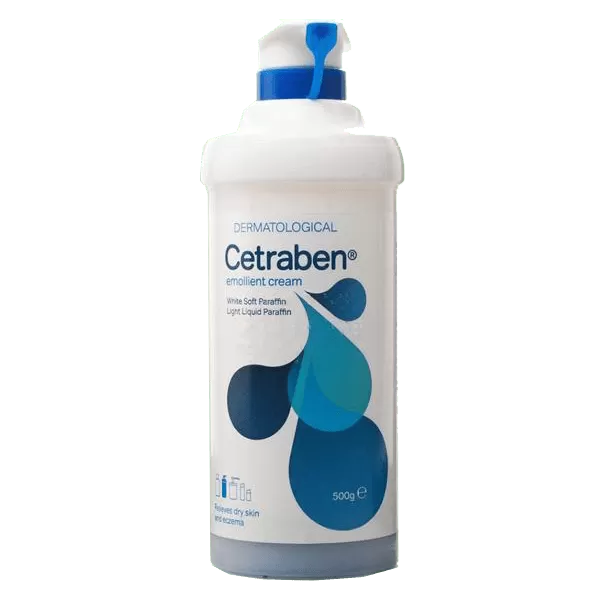
Cetraben Cream – 500g
Cetraben Cream – 500g
- ✔️ Soothes and relieves dry, itchy, eczema-prone skin daily
- ✔️ Restores the skin's natural moisture barrier with regular use
- ✔️ Fragrance-free formula suitable for sensitive skin and babies
- ✔️ Can replace soap during washing to prevent further dryness
- ✔️ 500g tub provides generous supply for full-body application
Price Checker
 Lowest price guarantee
 Includes FREE private prescription


Couldn't load pickup availability
What Is Cetraben Cream and How Does It Help Dry Skin?
If you live with dry, itchy, or eczema-prone skin, you'll know how relentless it can feel — especially during colder months when central heating strips moisture from the air. Cetraben cream is a soap-free emollient moisturiser designed to soothe and protect skin that struggles to retain its natural moisture. Available in a generous 500g tub, it's a practical, everyday option for adults, children, and babies alike. You can find it alongside other trusted options in our skin care collection.
Cetraben Cream is classified as a general sale medicine (GSL) in the UK, meaning you can buy it without a prescription. It contains two key active ingredients — white soft paraffin 13.2% and light liquid paraffin 10.5% — which work together to form a protective film over the skin surface. It's free from fragrance and colourants, which makes it particularly well-suited to sensitive or reactive skin types.
How Does Cetraben Cream Work to Moisturise Skin?
Emollients like Cetraben Cream work by addressing the root cause of dry skin — a compromised skin barrier that allows water to escape too quickly. Here's how the mechanism breaks down:
- Occlusive action: White soft paraffin forms a semi-occlusive layer on the skin surface, physically slowing transepidermal water loss (TEWL).
- Lubricating effect: Light liquid paraffin softens and smooths the outer layers of the skin (the stratum corneum), reducing roughness and flaking.
- Barrier restoration: Regular use helps rebuild the skin's natural lipid barrier over time, reducing the frequency and severity of flare-ups in conditions like eczema.
- Soap substitute: Cetraben Cream can also be used as a soap replacement during washing, avoiding the drying effects of conventional soaps and shower gels.
It doesn't contain steroids or antibiotics, so it won't treat infection or inflammation directly — but consistent use as a moisturiser is a cornerstone of managing chronic dry skin conditions, as recommended by NHS guidance.
Who Should Use Cetraben Cream?
Cetraben Cream is suitable for a wide range of people. It's particularly useful if you have a diagnosed skin condition or simply experience persistent dryness that over-the-counter lotions haven't resolved. It's also commonly recommended by GPs and dermatologists as a first-line emollient.
- Adults and children with eczema (atopic dermatitis)
- People with psoriasis who need regular moisturisation between treatments
- Babies and toddlers with dry or sensitive skin
- Anyone with ichthyosis or other chronic dry skin conditions
- People looking for a fragrance-free, gentle daily moisturiser
It's not suitable for use on infected, broken, or weeping skin without medical advice. If you're unsure whether it's right for you, speak to your pharmacist before starting.
How Does Cetraben Cream Compare to Other Emollients?
| Feature | Cetraben Cream 500g | Diprobase Cream |
|---|---|---|
| Active ingredients | White soft paraffin 13.2%, light liquid paraffin 10.5% | Cetomacrogol 1000, cetostearyl alcohol, liquid paraffin, white soft paraffin |
| Suitable for babies | Yes | Yes |
| Fragrance-free | Yes | Yes |
| Can be used as soap substitute | Yes | Yes |
| Pack size available | 500g | 500g |
Is Cetraben Cream Safe to Store and Use Long-Term?
Cetraben cream is generally considered safe for long-term daily use. Store it below 25°C, away from direct sunlight and out of reach of children. Do not use after the expiry date printed on the tub. One important safety point: because this product contains paraffin, fabrics that have been in contact with it — including clothing, bedding, and dressings — can become a fire hazard. Keep away from naked flames and do not smoke while applying or wearing clothing treated with the cream. This is a known risk with all paraffin-based emollients and is highlighted in NHS guidance. You'll find more emollient options in our creams and ointments collection.
This product is a medicine. Speak to your doctor or pharmacist before using if you have an underlying medical condition or are taking other medicines.
Cetraben Cream 500g specifications
| Treatment category | Emollient / Moisturiser |
| Mechanism of action | Occlusive barrier formation; reduces transepidermal water loss |
| Effective for | Dry skin, eczema, psoriasis, ichthyosis |
| Suitable for | Adults, children, and babies |
| Active ingredient | White soft paraffin 13.2%, light liquid paraffin 10.5% |
| Pack size | 500g |
| UK classification | General Sale Medicine (GSL) |
| Drug class | Emollient |
| Preparation | Cream |
| Route of administration | Topical (applied to skin) |
Specifications of Cetraben Cream 500g
What Is Cetraben Cream and What Is It Used For?
Cetraben Cream is a topical emollient used to manage dry, itchy, and flaky skin conditions. It is indicated for conditions including eczema (atopic dermatitis), psoriasis, ichthyosis, and other forms of dry skin. It can also be used as a soap substitute during bathing or showering to avoid the drying effects of conventional cleansers. The NHS recommends emollients as a first-line treatment for eczema and other dry skin conditions, to be used regularly even when the skin appears to have improved.
What Do You Need to Know Before Using Cetraben Cream?
Before using Cetraben Cream, read the following carefully. While it is generally well tolerated, there are some important warnings and contraindications to be aware of.
Do not use Cetraben Cream if:
- You are allergic to white soft paraffin, light liquid paraffin, or any other ingredient in the formulation
- The skin is infected, broken, or weeping — seek medical advice first
- You have been advised by a healthcare professional to avoid paraffin-based products
Warnings and precautions:
- Paraffin-based emollients present a fire risk — fabrics (clothing, bedding, dressings) that have absorbed the product can ignite more easily near a naked flame
- Wash clothing and bedding regularly to reduce paraffin build-up
- Do not smoke while applying the cream or while wearing clothing that may have absorbed it
- Avoid contact with eyes, mouth, and nasal passages
- If your skin condition worsens or does not improve after regular use, consult your GP
Drug interactions:
- No clinically significant drug interactions are known for topical emollients such as Cetraben Cream
- If you are using topical corticosteroids or other medicated creams, apply Cetraben Cream at a different time to avoid diluting the active treatment — your pharmacist can advise on timing
How Should You Use Cetraben Cream?
Using an emollient correctly makes a real difference to how well it works. Apply it generously and regularly — not just when your skin feels uncomfortable. Here's a step-by-step guide:
- Wash and gently pat your skin dry before applying
- Scoop out the cream using a clean spatula or spoon — avoid dipping fingers directly into the tub to prevent contamination
- Apply in smooth, downward strokes in the direction of hair growth to reduce the risk of folliculitis
- Allow the cream to absorb for a few minutes before dressing
- As a soap substitute: apply to wet skin, rinse off gently, and pat dry
- Reapply as often as needed throughout the day — at least 2–4 times daily for best results
| Indication | Age Group | Dose | Frequency |
|---|---|---|---|
| Dry skin / eczema | Adults | Apply liberally to affected areas | 2–4 times daily or as needed |
| Dry skin / eczema | Children and babies | Apply liberally to affected areas | 2–4 times daily or as needed |
| Soap substitute | All ages | Apply to wet skin, rinse off | At each wash |
If you're managing eczema in a young child, our baby and toddler collection includes other products that may support their skincare routine.
What Are the Possible Side Effects of Cetraben Cream?
Side effects with Cetraben Cream are uncommon, but it's worth knowing what to look out for. Most people tolerate it well, particularly because it is fragrance-free and contains no preservatives that commonly trigger reactions.
Common side effects:
- Mild skin irritation or stinging immediately after application
- Temporary redness at the application site
Less common side effects:
- Folliculitis (inflammation or infection of hair follicles) — more likely if the cream is applied against the direction of hair growth
- Allergic contact dermatitis — rare, but possible if you are sensitive to any ingredient
If you notice a worsening rash, significant swelling, or signs of an allergic reaction (such as hives or difficulty breathing), stop using the product immediately and seek medical attention. You can also explore our broader allergy range if you suspect a skin sensitivity reaction.
How Should You Store Cetraben Cream?
- Store below 25°C in a cool, dry place
- Keep out of direct sunlight
- Keep the lid tightly closed when not in use
- Keep out of reach and sight of children
- Do not use after the expiry date printed on the tub
- Do not store in the bathroom — humidity can affect the product's consistency
- Do not freeze
References
Written and reviewed by our qualified team
Your safety and success are our highest priorities. Our medical team rigorously evaluates every product and piece of advice we provide, ensuring you receive only the most effective, science-backed solutions available.
Frequently Asked Questions
Where can I buy Cetraben Cream 500g online in the UK?
You can buy Cetraben Cream 500g directly from Cured Pharmacy, a GPhC-registered UK online pharmacy, for just £9.45. No prescription is needed as it is classified as a General Sale Medicine. It's available to order online and delivered to your door across the UK.
How does Cetraben Cream work on dry and eczema-prone skin?
Cetraben Cream works by forming a semi-occlusive film over the skin surface using white soft paraffin and light liquid paraffin. This film slows down transepidermal water loss, helping the skin retain moisture and gradually restoring the natural skin barrier. With regular use, it can reduce the frequency and severity of dry skin flare-ups.
How do I apply Cetraben Cream correctly?
Apply Cetraben Cream generously to clean, dry skin using smooth downward strokes in the direction of hair growth. Use a clean spatula rather than your fingers to scoop cream from the tub to avoid contamination. Reapply at least 2–4 times daily, or more frequently if your skin is very dry.
What is the correct dose of Cetraben Cream for adults?
There is no fixed dose — apply liberally to all affected areas as often as needed, typically 2–4 times per day. For very dry or eczema-affected skin, more frequent application is often recommended by GPs and dermatologists. The 500g tub provides a generous supply for regular full-body use.
Is Cetraben Cream safe for babies and young children?
Yes, Cetraben Cream is suitable for use in babies, toddlers, and children of all ages. It is fragrance-free, colourant-free, and gentle enough for sensitive infant skin. It is commonly recommended by paediatric dermatologists for managing eczema in young children. You can find other suitable products in our baby and toddler collection.
Can I use Cetraben Cream on my face?
Yes, Cetraben Cream can be applied to the face, including around the nose and mouth area, but avoid direct contact with the eyes. It is gentle enough for facial skin and is often used for dry patches on the cheeks and forehead in both adults and children. If facial skin is infected or broken, seek medical advice before applying.
What are the side effects of Cetraben Cream?
Side effects are uncommon but may include mild skin irritation, temporary redness, or folliculitis (inflammation of hair follicles) if applied against the direction of hair growth. Allergic reactions are rare but possible — stop use and seek medical advice if you develop hives, significant swelling, or worsening redness. Most people tolerate Cetraben Cream very well with no adverse effects.
Is there a fire risk with Cetraben Cream?
Yes — this is an important safety warning. Cetraben Cream contains paraffin, which can soak into fabrics such as clothing, bedding, and bandages, making them more flammable. You should keep away from naked flames, open fires, and cigarettes while wearing clothing that may have absorbed the cream. Wash fabrics regularly to reduce paraffin build-up.
Can Cetraben Cream be used as a soap substitute?
Yes, Cetraben Cream can be used as a soap substitute during bathing or showering. Apply it to wet skin, gently massage in, then rinse off and pat dry. This is particularly useful for people with eczema or very dry skin, as conventional soaps and shower gels can strip the skin's natural oils and worsen dryness.
How long can I use Cetraben Cream for?
Cetraben Cream can be used long-term as part of a daily skincare routine — there is no maximum duration of use. For chronic conditions like eczema or psoriasis, ongoing regular use is recommended even during periods when the skin appears clear. If your condition worsens or fails to improve after several weeks, speak to your GP.
What happens if I miss an application of Cetraben Cream?
If you forget to apply Cetraben Cream at your usual time, simply apply it as soon as you remember. Do not apply a double amount to compensate — just continue with your normal routine. Consistency is key with emollients, so try to apply at regular intervals throughout the day.
What are the alternatives to Cetraben Cream?
Common alternatives include Diprobase Cream, Doublebase Gel, Epaderm Cream, and Hydromol Cream — all of which are paraffin-based emollients available in the UK. The best choice depends on your skin type and personal preference; some people prefer lighter lotions while others need thicker ointments for very dry skin. Browse our creams and ointments collection for more options.
Who is eligible to use Cetraben Cream?
Cetraben Cream is suitable for adults, children, and babies with dry, itchy, or eczema-prone skin. It is available without a prescription and does not require a GP referral. It is not suitable for use on infected or broken skin without medical advice, and you should check with your pharmacist if you have any known allergies to its ingredients.
Can I use Cetraben Cream during pregnancy or breastfeeding?
Cetraben Cream is generally considered safe to use during pregnancy and breastfeeding as it is applied topically and is not significantly absorbed into the bloodstream. However, it is always sensible to speak to your midwife, GP, or pharmacist before starting any new product during pregnancy. Avoid applying to the nipple area if breastfeeding to prevent the baby ingesting the cream.
What does the latest research say about emollients like Cetraben Cream for eczema?
NHS and NICE guidance consistently supports the use of emollients as a cornerstone of eczema management, recommending regular application even during remission to maintain the skin barrier. Research published in clinical dermatology literature suggests that early and consistent emollient use in infants may help reduce the risk of eczema developing. Emollients remain one of the most evidence-based, widely recommended treatments for dry skin conditions in the UK.
Written and reviewed by our qualified team

Reviewed by:
Tarun Kumar
Superintendent/ Clinical Lead
📖 Find out more about our team of medical content authors and how we ensure the accuracy of our content with our content guidelines.
Content last updated: 14 Sep 2026
Other popular options


We’re a safe and
regulated UK service

Lowest Price Guarantee

We're convinced you won't find your treatment cheaper, but if you do we'll refund the difference.
Find out more
100% discreet packaging

Discreet, unbranded packaging for every order.
Find out more

Need help?
Talk to our friendly experts now


How our service works

Service setup

Discreet packaging

Express delivery