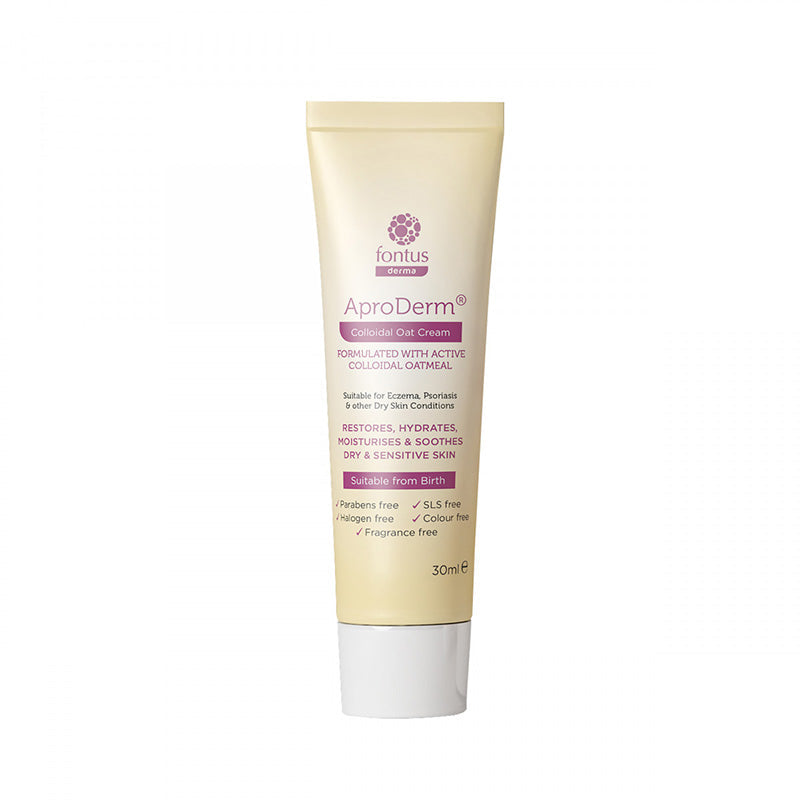
AproDerm Colloidal Oat Cream
AproDerm Colloidal Oat Cream
- ✔️ Soothes dry, itchy eczema-prone skin with colloidal oatmeal
- ✔️ Restores the skin's natural moisture barrier effectively
- ✔️ Suitable for adults, children, and babies with sensitive skin
- ✔️ Fragrance-free and SLS-free — gentle on reactive skin
- ✔️ Supports long-term eczema management with daily use
Price Checker
 Lowest price guarantee
 Includes FREE private prescription


Couldn't load pickup availability
Is Colloidal Oat Cream for Eczema Right for You?
Living with eczema, dry skin, or psoriasis can be genuinely exhausting. The constant itch, the tightness, the flare-ups that seem to appear out of nowhere — it takes a real toll. Colloidal oat cream for eczema has become one of the most widely recommended emollient options in the UK, and AproDerm Colloidal Oat Cream is a trusted, clinically suitable choice available without a prescription. It's designed to soothe, hydrate, and protect skin that's struggling — whether that's due to eczema, psoriasis, ichthyosis, or general dryness.
Emollients are the foundation of dry skin management, according to NHS guidance. They work by replacing lost moisture and reinforcing the skin's natural barrier. AproDerm Colloidal Oat Cream sits within our wider range of creams and ointments for skin conditions, making it easy to find alongside other topical treatments you might need.
How Does AproDerm Colloidal Oat Cream Work?
The active ingredient here is colloidal oatmeal — finely milled oats that have been processed so they disperse evenly in water and absorb readily into the skin. It's not just a moisturiser. Colloidal oatmeal has well-documented properties that go beyond simple hydration:
- Forms a protective film on the skin surface, reducing transepidermal water loss
- Contains avenanthramides — natural compounds with anti-inflammatory and antipruritic (anti-itch) activity
- Helps normalise skin pH, which is often disrupted in eczema-prone skin
- Supports restoration of the skin's lipid barrier, which is structurally compromised in atopic eczema
The result is skin that feels calmer, less reactive, and better able to retain moisture between applications. It doesn't treat the underlying immune response driving eczema, but it significantly reduces the symptoms that make daily life uncomfortable.
Who Should Use AproDerm Colloidal Oat Cream?
This cream is suitable for a broad range of people. It's particularly well-suited to those who need a gentle, fragrance-free emollient that can be used frequently without concern. The NHS recommends emollients for anyone with dry or inflamed skin conditions as a first-line treatment.
- Adults and children with atopic eczema or contact dermatitis
- People with psoriasis looking for a gentle daily moisturiser
- Babies and toddlers with dry or sensitive skin (under GP guidance)
- Anyone with ichthyosis or pruritus (persistent itching) of unknown cause
It's also a practical option for people who've found heavily fragranced or preservative-laden moisturisers irritating in the past.
How Does AproDerm Colloidal Oat Cream Compare to Other Emollients?
| Feature | AproDerm Colloidal Oat Cream | Standard Aqueous Cream |
|---|---|---|
| Active ingredient | Colloidal oatmeal | Emulsifying wax, liquid paraffin |
| Anti-inflammatory properties | Yes (avenanthramides) | No |
| Suitable for sensitive skin | Yes — fragrance-free | Caution — SLS content may irritate |
| Suitable for babies | Yes (with GP guidance) | Not recommended by NHS |
Is AproDerm Colloidal Oat Cream Suitable for Long-Term Use?
Yes. Emollients like this one are intended for regular, ongoing use — not just during flare-ups. The NHS advises applying emollients at least twice daily, even when skin appears clear, to maintain the barrier and reduce the frequency of flares. If you're managing a chronic skin condition, consistency really does make a difference.
Store the cream below 25°C, away from direct sunlight, and keep it out of reach of children. If you're also exploring other aspects of your skin care routine, our broader skin care collection includes complementary products that may support your regimen. This colloidal oat cream for eczema is a practical, evidence-informed choice for daily skin maintenance.
This product is a medicine. Speak to your doctor or pharmacist before using if you have an underlying medical condition or are taking other medicines.
AproDerm Colloidal Oat Cream specifications
| Treatment category | Emollient / Dry skin treatment |
| Mechanism of action | Forms a protective skin barrier; reduces transepidermal water loss; anti-inflammatory via avenanthramides |
| Effective for | Eczema, psoriasis, dry skin, ichthyosis, pruritus |
| Suitable for | Adults, children, and babies (under GP guidance) |
| Active ingredient | Colloidal oatmeal |
| UK classification | General Sale / OTC |
| Drug class | Emollient |
| Preparation | Cream |
| Route of administration | Topical (applied to skin) |
Specifications of AproDerm Colloidal Oat Cream
What Is AproDerm Colloidal Oat Cream and What Is It Used For?
AproDerm Colloidal Oat Cream is a topical emollient containing colloidal oatmeal as its active ingredient. It is used to moisturise, soothe, and protect dry, itchy, or inflamed skin. The NHS recommends emollients as a core treatment for conditions including atopic eczema, psoriasis, ichthyosis, and pruritus. This cream is available over the counter without a prescription and is suitable for adults, children, and babies.
Colloidal oat cream for eczema works by reinforcing the skin's natural moisture barrier, reducing water loss, and calming the inflammatory response that causes itching and redness. It is not a steroid and does not suppress the immune system — it works purely by supporting the skin's own protective function.
What Do You Need to Know Before Using AproDerm Colloidal Oat Cream?
Before using this cream, read the following carefully. Although it is generally well tolerated, there are some important points to be aware of.
Do not use this product if you:
- Are allergic to colloidal oatmeal or any other ingredient in the formulation
- Have a known allergy to oats or gluten-related grains (seek medical advice first)
- Have an active skin infection — treat the infection before applying emollients
Warnings and precautions:
- Avoid contact with the eyes
- Do not apply to broken or infected skin without medical advice
- Emollients can make surfaces slippery — take care in the bath or shower
- Emollient-soaked clothing and bedding can be a fire hazard — keep away from naked flames
- If your skin condition worsens after use, stop and consult your GP or pharmacist
Drug interactions:
- No clinically significant drug interactions are known for topical colloidal oatmeal
- If you are using topical corticosteroids, apply the emollient first and allow it to absorb before applying the steroid
How Should You Use AproDerm Colloidal Oat Cream?
Using an emollient correctly makes a real difference to how well it works. Follow these steps for best results:
- Wash and gently pat the skin dry before applying
- Take a generous amount of cream and apply it to the affected area
- Smooth in the direction of hair growth — do not rub vigorously
- Allow the cream to absorb before dressing or applying other topical treatments
- Wash hands after application unless treating the hands themselves
- Reapply as often as needed throughout the day
| Indication | Age Group | Dose | Frequency |
|---|---|---|---|
| Eczema / dry skin | Adults | Liberal application to affected area | 2–4 times daily |
| Eczema / dry skin | Children | Liberal application to affected area | 2–4 times daily |
| Eczema / dry skin | Babies (under GP guidance) | Small amount to affected area | As directed by GP |
| Psoriasis / ichthyosis | Adults and children | Liberal application to affected area | 2–3 times daily |
What Are the Possible Side Effects of AproDerm Colloidal Oat Cream?
Side effects with this cream are uncommon. Most people tolerate it well, even with frequent use. However, as with any topical product, reactions can occasionally occur.
Common side effects:
- Mild stinging or tingling immediately after application (usually settles quickly)
- Temporary redness at the application site
Less common side effects:
- Contact dermatitis (skin irritation caused by sensitivity to an ingredient)
- Folliculitis (inflammation of hair follicles) — more likely if cream is rubbed against hair growth
- Allergic reaction — symptoms may include rash, swelling, or worsening itch
If you notice any signs of a serious allergic reaction — such as swelling of the face, lips, or throat, or difficulty breathing — stop using the product immediately and seek emergency medical help. You can also find additional baby and toddler skin care options if you're looking for products suited to younger, more sensitive skin.
How Should You Store AproDerm Colloidal Oat Cream?
Correct storage keeps the cream effective and safe to use throughout its shelf life.
- Store below 25°C in a cool, dry place
- Keep away from direct sunlight and heat sources
- Keep the lid tightly closed when not in use
- Keep out of reach and sight of children
- Do not use after the expiry date printed on the packaging
- Do not dispose of medicines via wastewater or household waste — return unused product to your pharmacist
References
Written and reviewed by our qualified team
Your safety and success are our highest priorities. Our medical team rigorously evaluates every product and piece of advice we provide, ensuring you receive only the most effective, science-backed solutions available.
Frequently Asked Questions
Where can I buy AproDerm Colloidal Oat Cream online in the UK?
You can buy AproDerm Colloidal Oat Cream directly from Cured Pharmacy, a GPhC-registered UK online pharmacy. It's available without a prescription and can be ordered quickly and discreetly to your door. No GP appointment needed — simply add it to your basket and check out.
How does colloidal oat cream for eczema actually work?
Colloidal oatmeal forms a thin, protective film over the skin that locks in moisture and reduces water loss through the skin surface. It also contains natural compounds called avenanthramides, which have anti-inflammatory and anti-itch properties. Together, these actions help calm eczema-prone skin and reduce the frequency of flare-ups.
How do I apply AproDerm Colloidal Oat Cream step by step?
Start by gently patting your skin dry after washing, then apply a generous layer of the cream to the affected area. Smooth it in the direction of hair growth — never rub against it, as this can cause folliculitis. Reapply two to four times daily, or more often if your skin feels dry or tight.
What is the correct dose of AproDerm Colloidal Oat Cream?
There is no fixed dose in the traditional sense — you apply as much as needed to cover the affected area generously. The NHS recommends using emollients liberally and frequently, typically at least twice a day even when skin looks clear. For babies, follow your GP's specific guidance on quantity and frequency.
Is AproDerm Colloidal Oat Cream safe for babies and young children?
Yes, AproDerm Colloidal Oat Cream is formulated to be gentle enough for babies and young children. It is fragrance-free and does not contain sodium lauryl sulphate (SLS), which the NHS advises avoiding in young or sensitive skin. Always check with your GP or health visitor before starting any new skin treatment in infants under three months old.
Can I use AproDerm Colloidal Oat Cream on my face?
Yes, you can apply it to facial skin, but take care to avoid the eye area. If you notice any stinging, increased redness, or irritation on your face after application, stop using it and speak to your pharmacist. Facial skin can sometimes be more reactive than skin elsewhere on the body.
What are the side effects of AproDerm Colloidal Oat Cream?
Side effects are uncommon but can include mild stinging or temporary redness at the application site. In rare cases, some people may develop contact dermatitis or a localised allergic reaction. If your symptoms worsen rather than improve, or if you notice swelling or hives, stop using the cream and seek medical advice promptly.
Who is eligible to use AproDerm Colloidal Oat Cream?
This cream is suitable for most people with dry, itchy, or eczema-prone skin, including adults, children, and babies. It is not suitable for anyone with a known allergy to oats or colloidal oatmeal. People with active skin infections should treat the infection first before applying any emollient.
How long can you use AproDerm Colloidal Oat Cream for?
AproDerm Colloidal Oat Cream can be used long-term as part of a daily skin care routine. Emollients are not a short-term fix — the NHS recommends using them continuously, even between flare-ups, to maintain the skin barrier and reduce the risk of future episodes. There is no maximum duration of use for this type of product.
What happens if I forget to apply AproDerm Colloidal Oat Cream?
Unlike medicines with strict dosing schedules, missing a single application of an emollient is not a clinical concern. Simply apply it as soon as you remember and continue with your usual routine. Consistency over time matters more than any individual application — try to build it into your morning and evening routine.
Can I use AproDerm Colloidal Oat Cream with topical steroids?
Yes, and in fact emollients are routinely used alongside topical corticosteroids in eczema management. Apply the emollient first, allow it to absorb for around 30 minutes, and then apply the steroid cream to the affected area. This approach helps the steroid work more effectively and reduces the amount needed overall.
What are the alternatives to AproDerm Colloidal Oat Cream?
Other emollients commonly used for eczema include Diprobase, Doublebase, Epaderm, and Cetraben. You can explore a range of options in our creams and ointments collection. The best choice depends on your skin type, preference for cream versus ointment, and any specific sensitivities you have.
Is AproDerm Colloidal Oat Cream available on NHS prescription?
AproDerm products can be prescribed on the NHS, though availability varies by GP practice and local formulary. Buying it over the counter from a pharmacy like Cured Pharmacy is often a convenient and cost-effective alternative, particularly for those who pay for NHS prescriptions. Check with your GP if you think you may be eligible for a prescription.
What does the latest research say about colloidal oatmeal for eczema?
Clinical research supports the use of colloidal oatmeal as an effective emollient for atopic eczema, with studies demonstrating improvements in skin hydration, barrier function, and itch scores. The ingredient is recognised by regulatory bodies including the US FDA as a skin protectant. Its anti-inflammatory properties are attributed to avenanthramides, which are unique to oats.
Can AproDerm Colloidal Oat Cream be used in the bath or shower?
AproDerm Colloidal Oat Cream is a leave-on emollient rather than a bath additive, so it should be applied to the skin after bathing rather than added to bathwater. If you're looking for a bath-time emollient option, speak to your pharmacist about suitable alternatives. You can also browse our skin care collection for complementary products.
Written and reviewed by our qualified team

Reviewed by:
Tarun Kumar
Superintendent/ Clinical Lead
📖 Find out more about our team of medical content authors and how we ensure the accuracy of our content with our content guidelines.
Content last updated: 14 Sep 2026
Other popular options


We’re a safe and
regulated UK service

Lowest Price Guarantee

We're convinced you won't find your treatment cheaper, but if you do we'll refund the difference.
Find out more
100% discreet packaging

Discreet, unbranded packaging for every order.
Find out more

Need help?
Talk to our friendly experts now


How our service works

Service setup

Discreet packaging

Express delivery