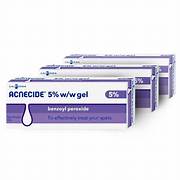
Acnecide 5% w/w Gel -30g
Acnecide 5% w/w Gel -30g
- ✔️ Targets acne-causing bacteria directly at the source
- ✔️ Unblocks pores to reduce blackheads and whiteheads
- ✔️ Clinically established benzoyl peroxide 5% formulation
- ✔️ Suitable for facial and body acne from age 12
- ✔️ No prescription needed — available over the counter
Price Checker
 Lowest price guarantee
 Includes FREE private prescription


Couldn't load pickup availability
Is Acnecide 5% Gel the Right Benzoyl Peroxide Gel for Acne?
Acne is one of the most common skin conditions in the UK, affecting up to 95% of people aged 11 to 30 at some point in their lives, according to the NHS. It can knock your confidence, cause discomfort, and — if left untreated — lead to scarring. Acnecide 5% w/w Gel is a clinically established, over-the-counter treatment that targets the root causes of mild to moderate acne. Available from our skin care collection at Cured Pharmacy, this 30g tube offers a straightforward, pharmacist-recommended option for people looking to get their breakouts under control.
Each tube contains benzoyl peroxide at a 5% concentration — one of the most widely used and well-evidenced topical acne treatments available without a prescription in the UK. It's suitable for use on the face and body, and it works directly at the site of the spot rather than systemically.
How Does Acnecide 5% w/w Gel Work on Spots?
Benzoyl peroxide works through a targeted antibacterial and keratolytic mechanism. Here's what happens when you apply it to your skin:
- It releases oxygen into the follicle, creating an environment hostile to Cutibacterium acnes (formerly Propionibacterium acnes), the bacteria responsible for inflamed spots.
- It has a keratolytic effect — meaning it gently breaks down the outer layer of skin cells, helping to unblock pores clogged with sebum and dead skin.
- It reduces the formation of comedones (blackheads and whiteheads) over time with consistent use.
- Unlike antibiotics, benzoyl peroxide does not contribute to bacterial resistance, making it a reliable long-term option.
Because it acts locally rather than entering the bloodstream, the risk of systemic side effects is very low. That said, skin reactions at the application site are possible, particularly during the first few weeks of use.
Who Is Acnecide 5% Gel Suitable For?
Acnecide is designed for adults and adolescents aged 12 and over who have mild to moderate acne vulgaris. It's particularly useful if you have inflammatory spots — the red, tender papules and pustules that respond well to antibacterial treatment. It may be less effective for purely non-inflammatory acne (blackheads only), where a different approach might be more appropriate.
This gel is suitable for you if:
- You are 12 years of age or older
- You have mild to moderate acne on your face, chest, or back
- You have not had an allergic reaction to benzoyl peroxide previously
- You are looking for an OTC option before considering prescription treatments
How Does Acnecide Compare to Other Acne Treatments?
| Feature | Acnecide 5% w/w Gel | Topical Antibiotic (e.g. Clindamycin) |
|---|---|---|
| Active ingredient | Benzoyl peroxide 5% | Clindamycin 1% |
| Prescription required? | No — OTC | Yes |
| Risk of antibiotic resistance | None | Yes, with prolonged use |
| Suitable for long-term use | Yes | Limited — resistance risk |
How Should You Store Acnecide 5% Gel and Is It Clinically Suitable for You?
Using benzoyl peroxide gel for acne correctly starts with proper storage. Keep Acnecide below 25°C, away from direct sunlight, and out of reach of children. Do not freeze the gel. Once opened, use within the period indicated on the packaging. If you're browsing other topical options, our creams and ointments collection includes a range of skin treatments to suit different needs.
Before starting Acnecide, consider whether it's right for your skin. If you have very sensitive skin, eczema, or a known allergy to benzoyl peroxide, speak to your pharmacist or GP first. Patch testing on a small area before full application is a sensible precaution.
This product is a medicine. Speak to your doctor or pharmacist before using if you have an underlying medical condition or are taking other medicines.
Acnecide 5% w/w Gel – 30g specifications
| Treatment category | Acne treatment |
| Mechanism of action | Antibacterial and keratolytic |
| Effective for | Mild to moderate acne vulgaris |
| Suitable for | Adults and adolescents aged 12 and over |
| Active ingredient | Benzoyl peroxide 5% w/w |
| Pack size | 30g |
| Strength | 5% w/w |
| UK classification | General Sale Medicine (GSL) |
| Drug class | Topical antibacterial / keratolytic |
| Preparation | Gel |
| Route of administration | Topical (cutaneous) |
Specifications of Acnecide 5% w/w Gel – 30g
What Is Acnecide 5% w/w Gel and What Is It Used For?
Acnecide 5% w/w Gel is a topical medicine containing benzoyl peroxide as its active ingredient. It is used to treat mild to moderate acne vulgaris — the common form of acne that causes spots, blackheads, and inflamed pimples, typically on the face, chest, and back. The NHS recognises benzoyl peroxide as a first-line treatment for acne, and it has been used safely and effectively for decades. Acnecide is available over the counter, meaning you do not need a prescription to purchase it.
It is manufactured by Galderma and is licensed for use in the UK. The gel formulation is designed to be applied directly to affected skin areas, where it works locally to reduce bacteria and unblock pores.
What Do You Need to Know Before Using Acnecide 5% Gel?
Before applying Acnecide, it's important to be aware of the following contraindications and warnings:
- Do not use if you are allergic to benzoyl peroxide or any other ingredient in the gel
- Avoid applying to broken, sunburned, or eczematous skin
- Keep away from eyes, mouth, nostrils, and other mucous membranes
- Benzoyl peroxide can bleach hair, clothing, and bed linen — take care during application
- Not recommended for children under 12 years of age
- Use with caution if you have very sensitive skin — consider patch testing first
- Avoid excessive sun exposure while using this product; use a non-comedogenic sunscreen if needed
Regarding drug interactions, Acnecide is a topical product and is not known to cause significant systemic drug interactions. However:
- Avoid using alongside other topical acne treatments (e.g. retinoids, salicylic acid) unless directed by a healthcare professional, as combined use may increase skin irritation
- Do not use with topical antibiotics alone without benzoyl peroxide, as this may increase the risk of antibiotic resistance
How Should You Use Acnecide 5% w/w Gel Correctly?
Follow these steps carefully to get the most from your treatment and minimise the risk of irritation:
- Wash the affected area gently with a mild cleanser and pat dry
- Squeeze a small, pea-sized amount of gel onto a clean fingertip
- Apply a thin, even layer to the entire affected area — not just individual spots
- Wash your hands thoroughly after application
- Allow the gel to dry before applying any moisturiser or make-up
- If irritation occurs, reduce application to every other day until your skin adjusts
| Indication | Age Group | Dose | Frequency |
|---|---|---|---|
| Mild to moderate acne vulgaris | 12 years and over | Thin layer to affected area | Once daily |
| Sensitive skin — initial use | 12 years and over | Thin layer to affected area | Every other day initially |
If you are exploring other skincare options alongside your acne treatment, our skin care collection includes a variety of products to support your routine.
What Are the Possible Side Effects of Acnecide 5% Gel?
Like all medicines, Acnecide can cause side effects, although not everyone experiences them. Most side effects are localised to the skin and tend to improve as your skin adapts to the treatment.
Common side effects (may affect more than 1 in 10 people):
- Skin dryness and peeling
- Redness and mild burning sensation at the application site
- Skin tightness
Less common side effects (may affect up to 1 in 10 people):
- Stinging or itching at the application site
- Contact dermatitis (allergic skin reaction)
- Oedema (swelling) of the treated area
If you experience severe redness, swelling, blistering, or signs of a serious allergic reaction (such as difficulty breathing or swelling of the face), stop using the product immediately and seek medical attention. You can also find complementary products for skin health in our vitamins and supplements collection, including options that support skin from within.
How Should You Store Acnecide 5% w/w Gel Safely?
- Store below 25°C in a cool, dry place
- Do not freeze
- Keep out of direct sunlight
- Keep out of the reach and sight of children
- Do not use after the expiry date printed on the tube and carton
- Do not dispose of medicines via wastewater or household waste — return unused product to your pharmacy
References
Written and reviewed by our qualified team
Your safety and success are our highest priorities. Our medical team rigorously evaluates every product and piece of advice we provide, ensuring you receive only the most effective, science-backed solutions available.
Frequently Asked Questions
Where can I buy Acnecide 5% Gel online in the UK?
You can buy Acnecide 5% w/w Gel directly from Cured Pharmacy, a GPhC-registered UK online pharmacy, for £11.99 per 30g tube. No prescription is required as it is an over-the-counter medicine. Simply add it to your basket and it will be dispatched to your door.
How does Acnecide 5% Gel work to treat acne?
Acnecide contains benzoyl peroxide, which releases oxygen into the skin follicle to kill the acne-causing bacteria Cutibacterium acnes. It also has a keratolytic action, gently loosening dead skin cells to unblock pores and prevent new spots from forming. Unlike antibiotics, it does not cause bacterial resistance with long-term use.
How do I apply Acnecide 5% Gel step by step?
Start by washing the affected area with a gentle cleanser and patting it dry. Apply a thin layer of Acnecide gel to the entire affected area — not just individual spots — once daily. Wash your hands after application and allow the gel to dry fully before applying moisturiser or make-up.
How long does Acnecide 5% Gel take to show results?
Most people notice an improvement in their acne within 4 to 6 weeks of consistent daily use. Full results, including a significant reduction in spots and inflammation, may take up to 3 months. Stick with the treatment even if you don't see immediate changes — consistency is key.
What are the most common side effects of Acnecide 5% Gel?
The most common side effects are skin dryness, redness, peeling, and a mild burning or stinging sensation at the application site. These effects are usually temporary and tend to settle as your skin adjusts over the first few weeks. Using a non-comedogenic moisturiser can help manage dryness.
How do I manage skin irritation caused by Acnecide?
If you experience irritation, reduce your application frequency to every other day until your skin builds tolerance. Apply a gentle, fragrance-free moisturiser after the gel has dried to help with dryness and peeling. If irritation is severe or persistent, stop use and speak to your pharmacist or GP.
Is Acnecide 5% Gel suitable for teenagers?
Yes, Acnecide is suitable for adolescents aged 12 and over. It is one of the most commonly recommended OTC acne treatments for teenagers, as acne is particularly prevalent during puberty due to hormonal changes. A parent or guardian should supervise use in younger adolescents to ensure correct application.
Can I use Acnecide 5% Gel during pregnancy or breastfeeding?
If you are pregnant or breastfeeding, you should speak to your GP or pharmacist before using Acnecide. While systemic absorption from topical benzoyl peroxide is considered minimal, it is always best to seek professional advice before using any medicine during pregnancy or whilst nursing.
Will Acnecide 5% Gel bleach my clothes or bedding?
Yes — benzoyl peroxide is an oxidising agent and can bleach or discolour hair, clothing, towels, and bed linen on contact. Allow the gel to dry completely before your skin touches any fabric. Using white or old pillowcases and towels while on treatment is a practical way to avoid accidental bleaching.
Can I use Acnecide 5% Gel with other acne products?
You should avoid combining Acnecide with other topical acne treatments — such as retinoids or salicylic acid — unless a doctor or pharmacist has specifically advised it, as this can increase skin irritation. If you are already using prescription acne treatments, check with your GP before adding Acnecide to your routine.
What are the alternatives to Acnecide 5% Gel?
Other OTC benzoyl peroxide products such as PanOxyl are available as alternatives. For more stubborn or severe acne, prescription options including topical retinoids, azelaic acid, or oral antibiotics may be considered — your GP can advise. You can also explore our broader skin care collection for complementary products.
How long can I keep using Acnecide 5% Gel?
Acnecide can be used for as long as it is needed to control your acne, provided you are not experiencing significant side effects. Unlike topical antibiotics, benzoyl peroxide does not carry a resistance risk, making it suitable for longer-term use. If your acne has not improved after 3 months, consult your GP for further assessment.
What happens if I miss a dose of Acnecide 5% Gel?
If you forget to apply Acnecide one day, simply continue with your normal routine the following day — do not apply a double amount to compensate. Consistency matters more than perfection, so try to build application into a daily habit such as your morning or evening skincare routine.
Is Acnecide 5% Gel suitable for body acne as well as facial acne?
Yes, Acnecide can be applied to acne on the chest and back as well as the face. Apply the same thin layer technique to the affected body areas once daily. Be particularly careful to avoid contact with clothing immediately after application, as bleaching of fabric is more likely on the body where the gel may rub off more easily.
What does the latest evidence say about benzoyl peroxide for acne?
Benzoyl peroxide remains one of the most well-evidenced topical treatments for acne vulgaris, consistently recommended in NHS and NICE guidance as a first-line option. It is valued not only for its antibacterial efficacy but also for its role in preventing antibiotic resistance when used alongside or instead of topical antibiotics. Current clinical guidelines continue to support its use in mild to moderate acne management.
Written and reviewed by our qualified team

Reviewed by:
Tarun Kumar
Superintendent/ Clinical Lead
📖 Find out more about our team of medical content authors and how we ensure the accuracy of our content with our content guidelines.
Content last updated: 14 Sep 2026
Other popular options


We’re a safe and
regulated UK service

Lowest Price Guarantee

We're convinced you won't find your treatment cheaper, but if you do we'll refund the difference.
Find out more
100% discreet packaging

Discreet, unbranded packaging for every order.
Find out more

Need help?
Talk to our friendly experts now


How our service works

Service setup

Discreet packaging

Express delivery