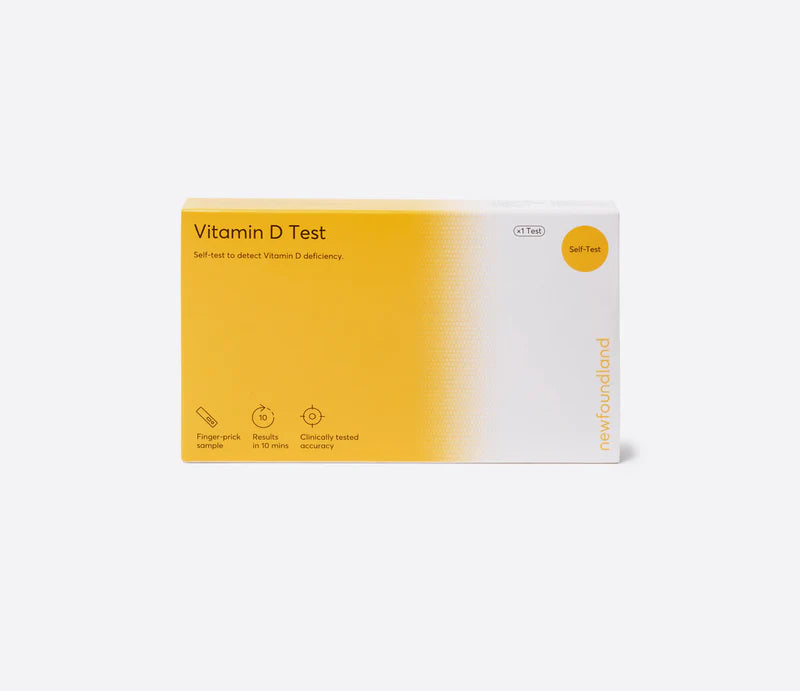
Vitamin D Test
- ✔️ Detects vitamin D deficiency from a single finger-prick sample
- ✔️ Measures 25-hydroxyvitamin D — the key clinical marker
- ✔️ Results available in minutes without a GP appointment
- ✔️ Suitable for adults at risk of seasonal vitamin D deficiency
- ✔️ Helps guide vitamin D supplementation decisions accurately
Price Checker
 Lowest price guarantee
 Includes FREE private prescription


Couldn't load pickup availability
What Is a Vitamin D Test and Do You Need One?
Vitamin D deficiency is surprisingly common in the UK. The NHS estimates that around one in five people in England have low vitamin D levels — a figure that rises sharply during the autumn and winter months when sunlight exposure drops. Symptoms can be vague and easy to dismiss: persistent tiredness, aching bones, low mood, or a general sense of not feeling quite right. That is exactly why a vitamin D test can be so useful. Rather than guessing, you get a clear picture of where your levels actually stand.
The Newfoundland Vitamin D Test is a straightforward, affordable at-home kit priced at just £7.99. It measures your 25-hydroxyvitamin D (25-OHD) concentration — the form of vitamin D your body stores and the standard marker used clinically to assess vitamin D status. If you are already taking supplements and want to know whether they are working, or if you simply want to rule out deficiency before winter sets in, this test gives you a quick, accessible answer. You might also want to explore our Vitamins and Supplements collection if you are considering starting a supplement alongside testing.
How Does the Newfoundland Vitamin D Test Work?
The test works by detecting the concentration of 25-OHD in a small finger-prick blood sample. Here is what happens step by step:
- A lancet (included in the kit) is used to prick the fingertip and collect a small blood sample.
- The sample is applied to the test cassette or strip as directed in the instructions.
- The device uses immunoassay technology to detect 25-OHD levels in the sample.
- Results appear within the timeframe stated in the kit instructions — typically a few minutes.
- You compare your result against the reference ranges provided to determine whether your level is deficient, insufficient, or adequate.
No laboratory equipment is needed. Everything required is included in the pack, making it genuinely simple to use at home.
Who Should Consider Using a Vitamin D Deficiency Test?
This test is suitable for a wide range of people. The NHS recommends that certain groups consider taking vitamin D supplements year-round, which implies regular monitoring makes sense too. You may particularly benefit from testing if you fall into one of the following categories:
- Adults who spend most of their time indoors or have limited sun exposure.
- People with darker skin tones, who produce less vitamin D from sunlight.
- Older adults aged 65 and over, who are at higher risk of deficiency.
- Pregnant or breastfeeding women.
- Anyone experiencing symptoms such as fatigue, muscle weakness, or low mood — especially in winter.
- People already taking vitamin D supplements who want to confirm their levels are within a healthy range.
How Does the Newfoundland Vitamin D Test Compare to a GP Blood Test?
| Feature | Newfoundland Vitamin D Test | GP Laboratory Blood Test |
|---|---|---|
| Cost | £7.99 | Free on NHS (if clinically indicated) |
| Convenience | At home, no appointment needed | Requires GP referral and phlebotomy appointment |
| Speed of results | Minutes | Days to weeks |
| Sample type | Finger-prick capillary blood | Venous blood draw |
| Clinical confirmation | Indicative — follow up with GP if deficient | Definitive laboratory result |
Is the Vitamin D Test Suitable for Everyone?
The vitamin D test is suitable for most adults. However, it is not intended for use in children without adult supervision, and it should not replace a clinical diagnosis if you have symptoms that concern you. If you are on medications that affect vitamin D metabolism — such as certain anticonvulsants or corticosteroids — your GP should be involved in interpreting your results. People with bleeding disorders or those taking anticoagulants should take extra care when performing the finger-prick step. Store the kit below 25°C, away from direct sunlight and moisture, and always check the expiry date before use. If you are managing a long-term condition and want to keep track of multiple health markers, our Electrical Health and Diagnostic collection has a range of monitoring tools worth exploring.
This product is a medicine. Speak to your doctor or pharmacist before using if you have an underlying medical condition or are taking other medicines.
Newfoundland Vitamin D Test specifications
| Treatment category | Diagnostic / Health Monitoring |
| Mechanism of action | Immunoassay detection of 25-hydroxyvitamin D in capillary blood |
| Effective for | Identifying vitamin D deficiency and insufficiency |
| Suitable for | Adults; those at risk of vitamin D deficiency |
| Active ingredient | N/A — diagnostic test kit |
| Pack size | 1 test kit |
| UK classification | General Sale / Medical Device |
| Preparation | Lateral flow / immunoassay cassette |
| Route of administration | Finger-prick capillary blood sample |
Specifications of Newfoundland Vitamin D Test
What Is the Newfoundland Vitamin D Test and What Is It Used For?
The Newfoundland Vitamin D Test is an at-home diagnostic kit designed to measure the concentration of 25-hydroxyvitamin D (25-OHD) in your blood. Vitamin D plays a critical role in maintaining healthy bones and teeth, supporting immune function, and regulating muscle function. The NHS advises that vitamin D deficiency is widespread in the UK, particularly during autumn and winter when ultraviolet B (UVB) sunlight — the type needed for the skin to synthesise vitamin D — is insufficient.
This test is used to identify whether your vitamin D levels fall into the deficient (below 25 nmol/L), insufficient (25–50 nmol/L), or adequate (above 50 nmol/L) range. It is not a treatment in itself, but it gives you the information you need to take appropriate action — whether that means starting a supplement, adjusting your diet, or speaking to your GP.
What Do You Need to Know Before Using the Newfoundland Vitamin D Test?
Before using this test, read the instructions carefully. There are some situations where you should exercise caution or seek medical advice first.
Do not use this test if:
- The packaging is damaged or the kit has passed its expiry date.
- You have a known bleeding disorder (e.g. haemophilia) — the finger-prick step may carry additional risk.
- You are taking anticoagulant medicines such as warfarin — take extra care with the lancet and apply firm pressure after sampling.
- You are under 18 years of age without adult supervision.
Warnings and precautions:
- This test provides an indicative result only. It does not replace a laboratory serum test or clinical diagnosis.
- Certain medicines — including anticonvulsants (e.g. phenytoin), corticosteroids, and some weight-loss medicines — can affect vitamin D metabolism and may influence your result interpretation.
- If you are pregnant or breastfeeding, consult your GP or midwife before acting on your result.
- Do not use the lancet more than once. Dispose of sharps safely in accordance with local guidelines.
Known interactions:
- No direct drug interactions with the test device itself.
- Medicines affecting vitamin D metabolism (anticonvulsants, corticosteroids, orlistat) may affect how you interpret your result — discuss with your GP.
How Should You Use the Newfoundland Vitamin D Test?
Using this kit correctly is important for getting a reliable result. Follow these steps carefully:
- Wash your hands thoroughly with warm water and dry them completely.
- Warm your fingertip by rubbing it gently — this encourages blood flow and makes sampling easier.
- Use the lancet provided to prick the side of your fingertip (avoid the very tip, which is more sensitive).
- Wipe away the first drop of blood with a clean tissue.
- Gently squeeze your finger to collect the required volume of blood into the collection device or onto the test strip as directed.
- Apply the sample to the test cassette as instructed and start timing immediately.
- Read the result within the timeframe stated in the kit instructions — do not read results after the stated window.
- Compare your result to the reference ranges provided in the leaflet.
| Result | 25-OHD Level | Recommended Action |
|---|---|---|
| Deficient | Below 25 nmol/L | Speak to your GP; supplementation likely needed |
| Insufficient | 25–50 nmol/L | Consider a daily supplement; discuss with pharmacist |
| Adequate | Above 50 nmol/L | Maintain current lifestyle; retest seasonally if desired |
If your result suggests deficiency, you can browse our Vitamins and Supplements collection for appropriate vitamin D options, and speak to one of our pharmacists for personalised advice.
What Are the Possible Side Effects of the Newfoundland Vitamin D Test?
Because this is a diagnostic test rather than a medicine, side effects relate to the finger-prick procedure rather than any active ingredient.
Common side effects:
- Brief, mild pain or discomfort at the finger-prick site.
- A small drop of blood remaining at the puncture site.
- Minor redness around the puncture area.
Less common side effects:
- Small bruise at the sampling site, particularly if you pressed too hard or have fragile skin.
- Lightheadedness in people who are sensitive to the sight of blood — sit down before performing the test if this applies to you.
- Infection at the puncture site if the area is not kept clean (extremely rare when standard hygiene is followed).
How Should You Store the Newfoundland Vitamin D Test?
Correct storage ensures the test remains accurate and reliable up to its expiry date.
- Store below 25°C in a cool, dry place.
- Keep away from direct sunlight and sources of heat.
- Do not freeze the kit.
- Keep out of reach of children.
- Do not use after the expiry date printed on the packaging.
- Once opened, use the test immediately — do not store a partially used kit.
- Dispose of used lancets safely in a sharps container or as directed by your local council. For general health monitoring supplies, our Electrical Health and Diagnostic collection includes a range of complementary products.
References
Written and reviewed by our qualified team
Your safety and success are our highest priorities. Our medical team rigorously evaluates every product and piece of advice we provide, ensuring you receive only the most effective, science-backed solutions available.
Frequently Asked Questions
Where can I buy a vitamin D test online in the UK?
You can buy the Newfoundland Vitamin D Test directly from Cured Pharmacy for just £7.99 — no prescription required. It is dispatched promptly and comes with everything you need to test at home. If your result suggests you need a supplement, our Vitamins and Supplements collection has a range of vitamin D options to consider.
How does a home vitamin D test work in the body?
The test measures 25-hydroxyvitamin D (25-OHD) — the main circulating form of vitamin D in your blood — using a small finger-prick sample and immunoassay technology. Your liver converts vitamin D from sunlight and food into 25-OHD, making it the most reliable marker of your overall vitamin D status. The result tells you whether your levels are deficient, insufficient, or adequate according to established clinical reference ranges.
How do I use the Newfoundland Vitamin D Test step by step?
Wash and warm your hands, then use the lancet to prick the side of your fingertip. Wipe away the first drop of blood, collect the required sample, and apply it to the test cassette as directed. Read your result within the timeframe stated in the instructions — never after the reading window has closed, as results may be unreliable.
What is the best time to take a vitamin D test?
There is no strict time-of-day requirement for this finger-prick test, but testing in the morning before taking any supplements gives the most consistent baseline reading. Many people choose to test at the start of autumn to check their levels before the low-sunlight winter months. Retesting in spring can also be useful to see whether supplementation over winter has been effective.
How accurate is a home vitamin D deficiency test compared to a GP test?
Home vitamin D test kits provide a reliable indicative result when used correctly, but laboratory serum tests performed by your GP are considered the clinical gold standard. If your home result suggests deficiency, it is worth following up with your GP for a confirmatory venous blood test. The home test is a practical first step — especially if you want a quick answer without waiting for a GP appointment.
What vitamin D level is considered deficient in the UK?
According to the NHS, a serum 25-OHD level below 25 nmol/L indicates vitamin D deficiency, while levels between 25 and 50 nmol/L suggest insufficiency. A level above 50 nmol/L is generally considered adequate for most people in the UK. Your test kit will include reference ranges to help you interpret your result correctly.
Who is eligible to use the Newfoundland Vitamin D Test?
The test is suitable for most adults who want to check their vitamin D levels at home. It is particularly useful for older adults, people with darker skin tones, those who spend little time outdoors, and anyone experiencing symptoms such as fatigue, bone pain, or low mood. People with bleeding disorders or those taking anticoagulants should take extra care with the finger-prick step and may wish to consult their GP first.
What should I do if my vitamin D test result shows I am deficient?
If your result indicates deficiency (below 25 nmol/L), speak to your GP or pharmacist as soon as possible. They can advise on an appropriate vitamin D supplement dose and may arrange a confirmatory laboratory test. Do not self-prescribe high-dose vitamin D without medical guidance, as excessive intake can cause toxicity over time.
Can I check my vitamin D levels without seeing a GP?
Yes — the Newfoundland Vitamin D Test lets you check your vitamin D levels at home without a GP appointment, making it a convenient first step. However, if your result suggests deficiency or you have symptoms that concern you, a follow-up with your GP is strongly recommended. Home testing is a useful screening tool, not a replacement for professional medical assessment.
How do I manage any discomfort from the finger-prick?
Most people find the finger-prick causes only brief, mild discomfort — similar to a small pinch. Warming your finger beforehand by rubbing it or running it under warm water makes the process easier and reduces the need to squeeze hard. Apply gentle pressure with a clean tissue after sampling to stop any bleeding quickly.
Are there any side effects of using a vitamin D test kit?
Because this is a diagnostic test rather than a medicine, side effects are limited to the finger-prick procedure itself. These include brief pain, minor redness, or a small bruise at the puncture site. Serious complications are extremely rare when the kit is used as directed and basic hygiene is maintained.
What are the alternatives to a home vitamin D blood test?
Your GP can request a serum 25-OHD test through the NHS, though this is typically only offered if there is a clinical reason. Private laboratory services also offer postal blood tests, but these tend to cost considerably more than the Newfoundland kit. For broader health monitoring at home, you might also explore our Electrical Health and Diagnostic collection.
How long does it take to get results from the Newfoundland Vitamin D Test?
Results are typically available within a few minutes of applying the blood sample to the test cassette — the exact timeframe is stated in the kit instructions. It is important to read the result within the specified window, as reading too early or too late can affect accuracy. The process from start to result usually takes under 15 minutes in total.
How often should I check my vitamin D levels?
For most people, testing once or twice a year — typically at the start of autumn and again in spring — gives a useful picture of how levels change with the seasons. If you are taking a vitamin D supplement, retesting after three to four months allows you to assess whether your dose is effective. Your GP or pharmacist can advise on a monitoring schedule suited to your individual circumstances.
What are the latest findings on vitamin D deficiency in the UK?
The NHS and NICE both highlight vitamin D deficiency as a significant public health concern in the UK, with around one in five people in England affected. NICE guidance (PH56) recommends targeted supplementation for at-risk groups including older adults, pregnant women, and people with limited sun exposure. Ongoing research continues to explore links between vitamin D status and immune function, mental health, and long-term bone health.
Written and reviewed by our qualified team

Reviewed by:
Tarun Kumar
Superintendent/ Clinical Lead
📖 Find out more about our team of medical content authors and how we ensure the accuracy of our content with our content guidelines.
Content last updated: 14 Sep 2026
Other popular options


We’re a safe and
regulated UK service

Lowest Price Guarantee

We're convinced you won't find your treatment cheaper, but if you do we'll refund the difference.
Find out more
100% discreet packaging

Discreet, unbranded packaging for every order.
Find out more

Need help?
Talk to our friendly experts now


How our service works

Service setup

Discreet packaging

Express delivery