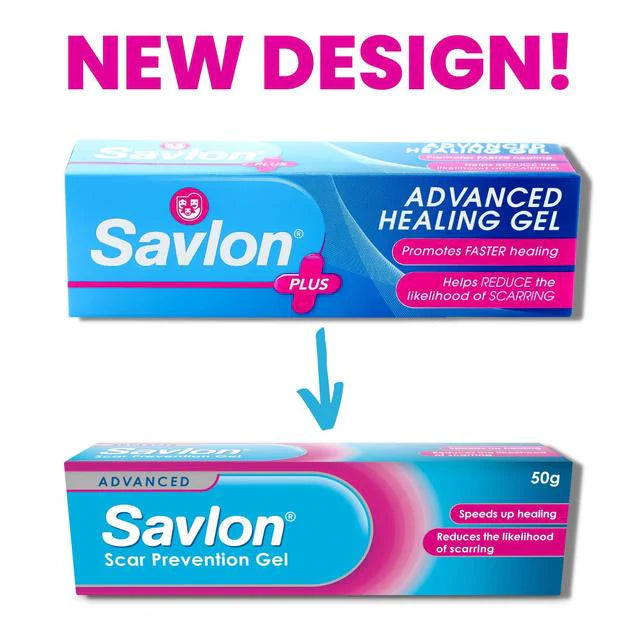
Savlon Advanced Healing Gel
Savlon Advanced Healing Gel
- ✔️ Cleanses minor cuts and grazes with dual antiseptic action
- ✔️ Helps prevent wound infection with chlorhexidine and cetrimide
- ✔️ Supports moist wound healing for faster skin repair
- ✔️ Suitable for adults and children aged two years and over
- ✔️ Convenient gel format for precise, mess-free wound application
Price Checker
 Lowest price guarantee
 Includes FREE private prescription


Couldn't load pickup availability
What Is Savlon Advanced Healing Gel and How Does It Help Wounds?
Minor cuts, grazes, and superficial skin wounds are a fact of everyday life — whether it's a kitchen accident, a scraped knee, or a blister that's broken. Savlon Advanced Healing Gel is a topical antiseptic gel designed to cleanse minor wounds and support the skin's natural repair process. Available over the counter without a prescription, it's a practical addition to any home first aid kit. You can browse our full range of first aid products at Cured Pharmacy if you're stocking up on essentials.
The gel contains two established antiseptic agents — cetrimide and chlorhexidine digluconate — which work together to reduce the bacterial load on the skin surface. This helps lower the risk of infection in minor wounds, which is one of the most common complications of everyday skin injuries according to NHS guidance on cuts and grazes.
How Does Savlon Advanced Healing Gel Work on the Skin?
The mechanism behind this gel is straightforward but clinically sound. Chlorhexidine digluconate disrupts bacterial cell membranes, causing cell death across a broad spectrum of gram-positive and gram-negative bacteria. Cetrimide acts as a surfactant, helping to lift debris and bacteria from the wound surface. Together, they create an antiseptic environment that reduces infection risk while the skin heals.
- Chlorhexidine digluconate binds to bacterial cell walls and disrupts membrane integrity
- Cetrimide acts as a cationic surfactant, loosening debris and bacteria from the wound bed
- The gel base maintains a moist wound environment, which the NHS notes can support faster healing compared to dry wound management
- The formulation is water-soluble, making it easy to remove during dressing changes
Who Should Use Savlon Advanced Healing Gel?
This product is intended for adults and children dealing with minor, superficial skin injuries. It is not suitable for deep wounds, puncture wounds, or injuries involving significant tissue damage — those require professional medical assessment. If you're unsure whether a wound needs medical attention, the NHS recommends seeking advice from a pharmacist or GP.
- Adults with minor cuts, grazes, or abrasions
- Children (check suitability with a pharmacist for those under 2 years)
- People looking to prevent infection in superficial skin wounds
- Those managing blisters or minor skin breaks in everyday settings
How Does Savlon Advanced Healing Gel Compare to Other Antiseptic Products?
| Feature | Savlon Advanced Healing Gel | Germolene Antiseptic Cream |
|---|---|---|
| Active ingredients | Cetrimide, Chlorhexidine digluconate | Phenol, Chlorhexidine digluconate |
| Formulation | Clear gel (water-soluble) | Cream (emollient base) |
| Wound environment | Moist healing environment | Moisturising but less occlusive |
| Suitable for children | Yes (check under 2 years) | Yes (check under 2 years) |
Is Savlon Advanced Healing Gel Suitable for Sensitive Skin and How Should It Be Stored?
If you have sensitive skin or a known allergy to chlorhexidine or cetrimide, you should not use this product. Chlorhexidine hypersensitivity, while uncommon, is a recognised clinical concern and has been highlighted by the MHRA. Always perform a small patch test if you are uncertain about your skin's reaction. For those exploring broader skin care options, Cured Pharmacy stocks a wide range of products suited to different skin types and conditions.
Store savlon advanced healing gel below 25°C, away from direct sunlight and out of reach of children. Do not use after the expiry date printed on the tube. Once opened, use within the period indicated on the packaging.
This product is a medicine. Speak to your doctor or pharmacist before using if you have an underlying medical condition or are taking other medicines.
Savlon Advanced Healing Gel specifications
| Treatment category | Antiseptic / Wound care |
| Mechanism of action | Antiseptic: disrupts bacterial cell membranes; surfactant action removes debris |
| Effective for | Minor cuts, grazes, abrasions, superficial skin wounds |
| Suitable for | Adults and children (consult pharmacist for under 2 years) |
| Active ingredients | Cetrimide, Chlorhexidine digluconate |
| UK classification | General Sale List (GSL) |
| Drug class | Antiseptic / Disinfectant |
| Preparation | Topical gel |
| Route of administration | Topical (applied directly to skin) |
Specifications of Savlon Advanced Healing Gel
What Is Savlon Advanced Healing Gel and What Is It Used For?
Savlon Advanced Healing Gel is an over-the-counter antiseptic topical gel used to cleanse and help heal minor skin wounds. It is indicated for minor cuts, grazes, abrasions, and superficial skin injuries where there is a risk of bacterial contamination. The NHS advises that keeping minor wounds clean is one of the most important steps in preventing infection and supporting recovery. This product supports that process by delivering two antiseptic agents directly to the wound site in a convenient gel formulation.
What Do You Need to Know Before Using Savlon Advanced Healing Gel?
Before applying this gel, there are some important safety points to consider. Do not use it if you have a known allergy to any of the ingredients, particularly chlorhexidine or cetrimide. The MHRA has flagged chlorhexidine hypersensitivity as a recognised risk, and reactions can range from mild skin irritation to, in rare cases, anaphylaxis.
Do not use this product if you:
- Are allergic to chlorhexidine, cetrimide, or any other listed ingredient
- Have a deep, puncture, or heavily contaminated wound — seek medical attention instead
- Have an animal bite wound — these require professional assessment
- Are treating a wound near the eyes or mucous membranes
- Have previously experienced a reaction to antiseptic products
Drug interactions:
- No clinically significant systemic drug interactions are expected with topical use
- Avoid using alongside other topical antiseptics on the same wound area simultaneously
- Chlorhexidine can be inactivated by soaps and anionic agents — rinse the area with clean water before applying
How Should You Use Savlon Advanced Healing Gel?
Using this gel correctly makes a real difference to how well it works. Always read the patient information leaflet supplied with the product before use. If you have any doubts, your pharmacist is the best first point of contact — they can advise on wound care without an appointment.
- Wash your hands thoroughly with soap and water before touching the wound
- Gently rinse the wound under clean running water to remove visible dirt and debris
- Pat the area dry with a clean cloth or sterile gauze
- Apply a thin layer of Savlon Advanced Healing Gel directly to the wound
- Cover with a sterile dressing or plaster if appropriate
- Reapply up to three times daily, or as directed on the packaging
- Wash hands again after application
| Indication | Age Group | Dose | Frequency |
|---|---|---|---|
| Minor cuts and grazes | Adults and children (2+ years) | Thin layer applied to wound | Up to 3 times daily |
| Minor abrasions | Adults | Thin layer applied to wound | Up to 3 times daily |
| Under 2 years | Infants | Consult pharmacist before use | As directed by pharmacist |
If you're looking for complementary wound care products, our creams and ointments collection includes a range of topical treatments to support skin health.
What Are the Possible Side Effects of Savlon Advanced Healing Gel?
Like all medicines, this product can cause side effects, although not everyone experiences them. Most side effects are mild and localised to the application site. If you notice anything unusual or concerning, stop using the product and speak to a pharmacist or GP.
Common side effects:
- Mild stinging or burning sensation at the wound site
- Temporary redness around the application area
- Mild skin irritation
Less common side effects:
- Contact dermatitis (skin inflammation due to sensitivity)
- Localised allergic reaction — rash, itching, or swelling at the site
- In very rare cases, systemic hypersensitivity reactions including anaphylaxis have been reported with chlorhexidine-containing products
If you develop signs of a serious allergic reaction — including swelling of the face, lips, or throat, difficulty breathing, or a widespread rash — stop use immediately and call 999 or go to your nearest A&E.
How Should You Store Savlon Advanced Healing Gel?
Correct storage keeps the product effective and safe for the duration of its shelf life. Always check the expiry date before use, and never use a product that has passed it. For a broader look at managing your home medicine cabinet, the NHS provides useful guidance on safe storage of medicines at home. You might also find our pain relief collection helpful for managing discomfort associated with minor injuries.
- Store below 25°C in a cool, dry place
- Keep away from direct sunlight and heat sources
- Keep the cap tightly closed when not in use
- Keep out of reach and sight of children
- Do not store in the bathroom or near a sink where humidity is high
- Do not use after the expiry date printed on the tube or carton
- Do not dispose of medicines via wastewater or household waste — return unused product to your pharmacy
References
- https://www.nhs.uk/conditions/cuts-and-grazes/
- https://www.nhs.uk/conditions/antiseptics/
- https://www.nhs.uk/conditions/anaphylaxis/
- https://www.nhs.uk/common-health-questions/accidents-first-aid-and-treatments/how-do-i-treat-a-cut-or-wound/
- https://www.gov.uk/drug-safety-update/chlorhexidine-solutions-reminder-of-potential-for-serious-allergic-reactions
Written and reviewed by our qualified team
Your safety and success are our highest priorities. Our medical team rigorously evaluates every product and piece of advice we provide, ensuring you receive only the most effective, science-backed solutions available.
Frequently Asked Questions
Where can I buy Savlon Advanced Healing Gel online in the UK?
You can buy Savlon Advanced Healing Gel from Cured Pharmacy, a GPhC-registered UK online pharmacy, for just £5.10 with fast dispatch. It is also widely available in supermarkets, high street pharmacies, and health retailers across the UK. Buying online is convenient if you want it delivered directly to your door without a trip to the shops.
How does Savlon Advanced Healing Gel work in the body?
Savlon Advanced Healing Gel works topically — it does not enter the bloodstream in any meaningful way during normal use. The active ingredients, cetrimide and chlorhexidine digluconate, act directly on the wound surface to kill bacteria and reduce the risk of infection. The gel base also helps maintain a moist wound environment, which supports the skin's natural healing process.
How do I use Savlon Advanced Healing Gel step by step?
Using the gel correctly is straightforward. Follow these steps:
- Wash your hands before touching the wound
- Rinse the wound under clean running water
- Pat dry with a clean cloth or sterile gauze
- Apply a thin layer of gel to the wound
- Cover with a plaster or sterile dressing if needed
Reapply up to three times daily until the wound has healed.
What is the correct dose of Savlon Advanced Healing Gel?
There is no fixed measured dose for this topical gel — you simply apply a thin layer to the affected area. The recommended frequency is up to three times daily for adults and children aged 2 years and over. For children under 2 years, always consult a pharmacist before use.
Can children use Savlon Advanced Healing Gel safely?
Savlon Advanced Healing Gel is generally considered suitable for children aged 2 years and over when used as directed. For infants under 2 years, you should speak to a pharmacist or GP before applying any antiseptic product to broken skin. Always keep the tube out of reach of children to prevent accidental ingestion.
What are the side effects of Savlon Advanced Healing Gel?
Most people tolerate this gel well, but some may experience mild stinging, redness, or irritation at the application site. Less commonly, contact dermatitis or a localised allergic reaction may occur. In very rare cases, chlorhexidine-containing products have been associated with serious hypersensitivity reactions — if you notice swelling, widespread rash, or difficulty breathing, stop use and seek emergency medical help immediately.
How do I manage side effects of Savlon Advanced Healing Gel?
If you experience mild stinging or redness, this usually settles on its own within a few minutes of application. If irritation persists or worsens, stop using the gel and rinse the area with clean water. For any signs of an allergic reaction, discontinue use immediately and contact your pharmacist or GP for advice.
Who is eligible to use Savlon Advanced Healing Gel?
This product is suitable for most adults and children aged 2 years and over with minor superficial skin wounds. It is not suitable for people with a known allergy to chlorhexidine or cetrimide, or for use on deep, puncture, or heavily contaminated wounds. If you have a complex medical history or are immunocompromised, speak to your GP before using any antiseptic product on broken skin.
What happens if I accidentally get Savlon Advanced Healing Gel in my eyes?
If the gel comes into contact with your eyes, rinse immediately and thoroughly with clean water for at least 10–15 minutes. Chlorhexidine is known to be irritating to the eyes and should never be applied near them. If irritation persists after rinsing, seek medical advice promptly — you can browse our eye care products for supportive options, but professional assessment is always recommended after chemical eye contact.
What are alternatives to Savlon Advanced Healing Gel for minor wounds?
Common alternatives include Germolene antiseptic cream, Sudocrem antiseptic healing cream, and simple antiseptic wipes for wound cleansing. For those who prefer a non-antiseptic approach, thorough cleansing with clean running water is recommended by the NHS as a first-line measure for minor cuts and grazes. Your pharmacist can help you choose the most appropriate product for your specific wound.
How long can you use Savlon Advanced Healing Gel for?
You should use this gel only for as long as needed to treat the minor wound — typically no longer than 7 days. If the wound shows no signs of improvement, or if you notice increasing redness, swelling, warmth, or discharge after a few days, these may be signs of infection and you should consult your GP. Prolonged use of antiseptic products on healing skin is not generally recommended without medical advice.
Is Savlon Advanced Healing Gel safe to use during pregnancy?
There is limited specific clinical data on the topical use of cetrimide and chlorhexidine during pregnancy, so it is advisable to consult your midwife or GP before using this product if you are pregnant or breastfeeding. For minor wounds during pregnancy, thorough cleansing with clean water is always a safe first step while you seek advice. Do not assume that all over-the-counter products are automatically safe in pregnancy.
Can I use Savlon Advanced Healing Gel on infected wounds?
Savlon Advanced Healing Gel is intended for the prevention of infection in minor wounds, not for the treatment of established wound infections. If your wound is already showing signs of infection — such as increasing pain, pus, spreading redness, or fever — you should seek medical attention rather than relying on an over-the-counter antiseptic. A GP may need to prescribe an antibiotic cream or oral antibiotic depending on the severity.
What are the latest findings on chlorhexidine-based wound gels?
Chlorhexidine remains one of the most widely studied and used antiseptic agents in wound care, with a well-established safety and efficacy profile for minor wound management. The MHRA has issued guidance reminding healthcare professionals and patients of the potential for hypersensitivity reactions, particularly with repeated exposure. Current NHS guidance continues to support the use of antiseptic products like savlon advanced healing gel for minor wound care when used as directed.
Can I use Savlon Advanced Healing Gel alongside other first aid products?
Yes, you can use this gel as part of a broader first aid approach — for example, alongside sterile dressings, plasters, or bandages. However, avoid applying multiple antiseptic products to the same wound simultaneously, as this can cause unnecessary irritation. If you're building up your home first aid supplies, our first aid collection has everything you need in one place.
Written and reviewed by our qualified team

Reviewed by:
Tarun Kumar
Superintendent/ Clinical Lead
📖 Find out more about our team of medical content authors and how we ensure the accuracy of our content with our content guidelines.
Content last updated: 14 Sep 2026
Other popular options


We’re a safe and
regulated UK service

Lowest Price Guarantee

We're convinced you won't find your treatment cheaper, but if you do we'll refund the difference.
Find out more
100% discreet packaging

Discreet, unbranded packaging for every order.
Find out more

Need help?
Talk to our friendly experts now


How our service works

Service setup

Discreet packaging

Express delivery