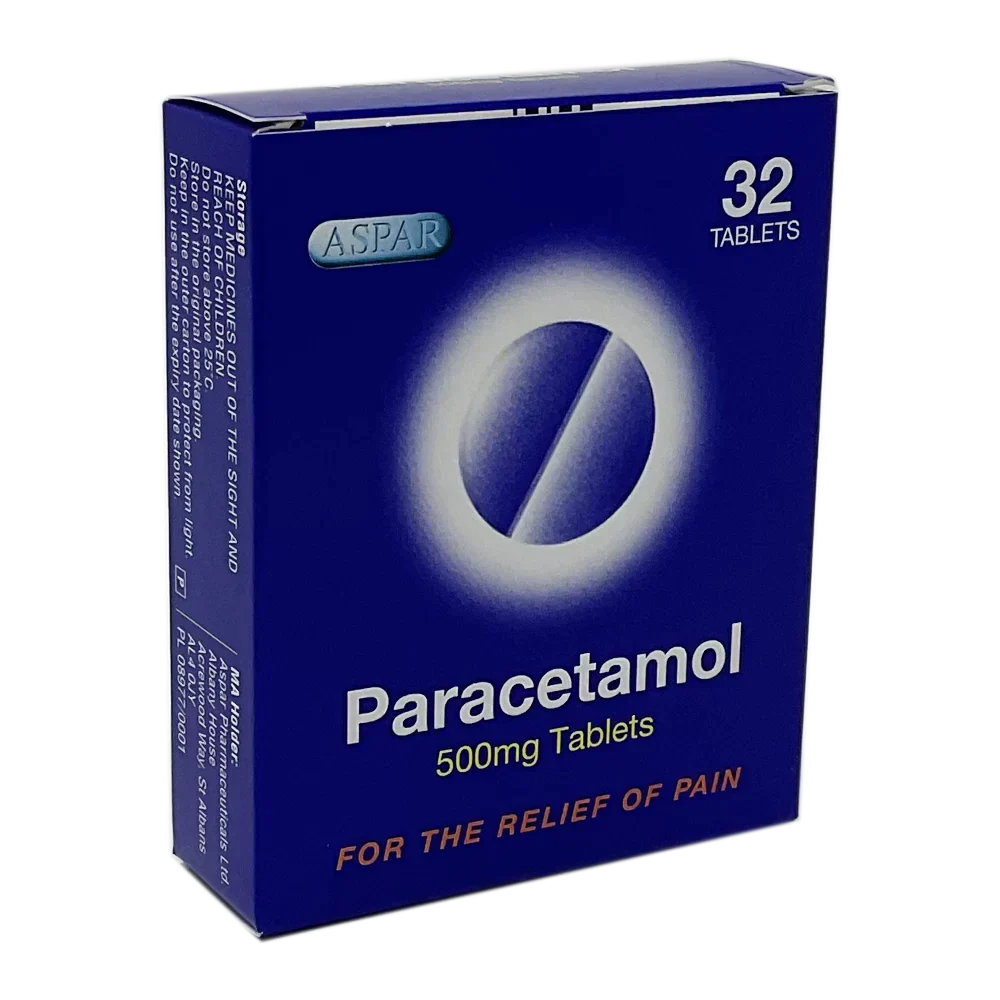
Paracetamol Tablets 500mg -FULL PACK
- ✔️ Relieves mild to moderate pain within 30–60 minutes
- ✔️ Reduces fever effectively in adults aged 16 and over
- ✔️ Suitable for those who cannot tolerate ibuprofen or aspirin
- ✔️ Gentle on the stomach — can be taken with or without food
- ✔️ Each tablet contains 500mg paracetamol — the standard adult dose
Price Checker
 Lowest price guarantee
 Includes FREE private prescription


Couldn't load pickup availability
What Are Paracetamol Tablets 500mg Used For?
Paracetamol tablets 500mg are one of the most widely used over-the-counter medicines in the UK, trusted by millions of people every day to manage everyday aches, pains, and fevers. Whether you're dealing with a tension headache, a sore throat, period pain, or the discomfort of a cold, paracetamol offers reliable, well-established relief. You can browse our full pain relief collection if you're looking for additional options alongside this product.
Paracetamol has been used clinically for decades and is recommended by the NHS as a first-line treatment for mild to moderate pain. It's suitable for most adults and children aged 16 and over when taken at the correct dose, making it a genuinely versatile medicine to keep at home.
How Does Paracetamol Work to Relieve Pain and Fever?
Paracetamol works primarily within the central nervous system. It inhibits the synthesis of prostaglandins — chemical messengers that sensitise nerve endings to pain and signal the hypothalamus to raise body temperature. By reducing prostaglandin production in the brain and spinal cord, paracetamol lowers your perception of pain and helps normalise an elevated temperature.
- Inhibits cyclooxygenase (COX) enzymes in the central nervous system
- Reduces prostaglandin synthesis, dampening pain signals
- Acts on the hypothalamus to lower fever (antipyretic effect)
- Does not significantly inhibit peripheral COX enzymes, so it has minimal anti-inflammatory effect compared to ibuprofen
This mechanism means paracetamol is an analgesic and antipyretic, but not a true anti-inflammatory. That distinction matters — if inflammation is the main driver of your pain (for example, in a swollen joint), your pharmacist may suggest an alternative or combination approach.
Who Is Paracetamol 500mg Suitable For?
Paracetamol is suitable for a wide range of people, which is part of why it remains such a go-to option. It's generally well tolerated even by those who cannot take ibuprofen or aspirin — for instance, people with stomach ulcers, asthma triggered by NSAIDs, or kidney concerns. That said, it isn't right for everyone.
- Adults and young people aged 16 and over
- People who cannot tolerate NSAIDs such as ibuprofen or aspirin
- Those managing mild to moderate pain from headaches, toothache, backache, or period pain
- People with a fever who need a safe, first-line antipyretic
It may not be appropriate if you have liver disease, regularly drink large amounts of alcohol, or are already taking other medicines that contain paracetamol. Always check the label of any other medicines you're using — many cold and flu remedies already contain paracetamol, and doubling up is a common and potentially dangerous mistake.
How Does Paracetamol Compare to Ibuprofen for Pain Relief?
| Feature | Paracetamol 500mg | Ibuprofen 400mg |
|---|---|---|
| Pain relief type | Analgesic, antipyretic | Analgesic, antipyretic, anti-inflammatory |
| Suitable for stomach sensitivity | Yes | No — can irritate the stomach lining |
| Safe in pregnancy (first choice) | Generally yes (lowest dose, shortest time) | Avoid from 20 weeks onwards |
| Suitable with kidney disease | Usually yes (with caution) | Avoid in significant kidney impairment |
How Should You Store Paracetamol Tablets 500mg?
Store your paracetamol tablets below 25°C in a dry place, away from direct sunlight and moisture. Bathrooms are not ideal storage spots — the humidity can degrade tablets over time. Always keep medicines out of the reach and sight of children, and never use tablets past their expiry date printed on the packaging.
If you're managing multiple health conditions and keeping a range of medicines at home, it's worth checking our first aid collection to make sure your home medicine cabinet is well stocked with the essentials.
This product is a medicine. Speak to your doctor or pharmacist before using if you have an underlying medical condition or are taking other medicines.
Paracetamol Tablets 500mg specifications
| Treatment category | Pain relief, fever reduction |
| Mechanism of action | Inhibits prostaglandin synthesis in the CNS; analgesic and antipyretic |
| Effective for | Mild to moderate pain, fever |
| Suitable for | Adults and young people aged 16 and over |
| Active ingredient | Paracetamol 500mg |
| Pack sizes | Full pack |
| Strengths | 500mg per tablet |
| UK classification | General Sale List (GSL) |
| Drug class | Analgesic / Antipyretic |
| Preparation | Tablet |
| Route of administration | Oral |
Specifications of Paracetamol Tablets 500mg
What Is Paracetamol 500mg and What Is It Used For?
Paracetamol tablets 500mg are an analgesic (painkiller) and antipyretic (fever reducer) available without a prescription in the UK. They are used to relieve mild to moderate pain, including headaches, toothache, backache, period pain, and muscular aches. They are also used to reduce a high temperature (fever) associated with colds, flu, and other infections. Paracetamol is classified as a General Sale List (GSL) medicine, meaning it can be purchased from pharmacies and general retailers without a prescription.
What Do You Need to Know Before Using Paracetamol Tablets?
Before taking paracetamol, it's important to check whether it's appropriate for you. Do not take this medicine if any of the following apply:
- You are allergic to paracetamol or any other ingredient in the tablet
- You have severe liver disease or active liver failure
- You are already taking other medicines that contain paracetamol (check cold and flu remedies, combination painkillers)
- You have phenylketonuria (some formulations may contain aspartame)
Speak to your pharmacist or GP before taking paracetamol if you have liver or kidney problems, regularly drink alcohol, are malnourished, or weigh less than 50kg, as your safe dose may be lower than the standard adult dose.
Be aware of the following drug interactions:
- Warfarin: Regular use of paracetamol may enhance the anticoagulant effect of warfarin — your INR should be monitored more closely
- Other paracetamol-containing products: Taking these alongside paracetamol tablets significantly increases overdose risk
- Metoclopramide and domperidone: These can increase the rate of paracetamol absorption
- Cholestyramine: May reduce paracetamol absorption if taken within one hour
How Should You Use Paracetamol 500mg Tablets?
Always take paracetamol exactly as directed on the label or as advised by your pharmacist. Swallow the tablets whole with a glass of water. Do not crush or chew them unless the formulation specifically states this is acceptable.
- Check you are not already taking any other product containing paracetamol
- Take 1 or 2 tablets (500mg–1g) with a full glass of water
- Wait at least 4 hours before taking your next dose
- Do not take more than 4 doses (8 tablets / 4g) in any 24-hour period
- If symptoms persist beyond 3 days, consult your GP or pharmacist
| Age Group | Dose | Frequency | Maximum in 24 hours |
|---|---|---|---|
| Adults and young people aged 16+ | 1–2 tablets (500mg–1g) | Every 4–6 hours | 8 tablets (4g) |
| Under 16 years | Not suitable — use age-appropriate liquid or junior formulation | — | — |
If you are managing pain alongside other symptoms such as nausea or digestive discomfort, you may find it helpful to explore our cold and flu range for complementary products.
What Are the Possible Side Effects of Paracetamol Tablets?
Paracetamol is generally very well tolerated when taken at the recommended dose. Serious side effects are rare but can occur, particularly in overdose situations. If you think you or someone else has taken too much paracetamol, go to your nearest A&E immediately — even if you feel well, as liver damage may not be apparent for several days.
Common side effects (may affect up to 1 in 10 people):
- Nausea (particularly if taken on an empty stomach)
- General feeling of being unwell
Less common or rare side effects:
- Skin rash, itching, or hives (may indicate an allergic reaction)
- Swelling of the face, lips, or throat (angioedema — seek emergency help immediately)
- Abnormal liver function tests with prolonged use at high doses
- Blood disorders such as thrombocytopenia (very rare)
How Should You Store Paracetamol Tablets 500mg?
Correct storage helps maintain the quality and safety of your tablets. Follow these guidelines:
- Store below 25°C in a cool, dry place
- Keep away from direct sunlight and moisture
- Do not store in the bathroom or near a sink
- Keep out of the reach and sight of children at all times
- Do not use after the expiry date printed on the packaging
- Do not dispose of medicines via wastewater or household waste — return unused tablets to your pharmacy
If you're looking to support your overall wellbeing alongside pain management, our vitamins and supplements collection includes a range of products that may complement your health routine.
References
- https://www.nhs.uk/medicines/paracetamol-for-adults/
- https://www.nhs.uk/medicines/paracetamol-for-adults/who-can-and-cannot-take-paracetamol-for-adults/
- https://www.nhs.uk/medicines/paracetamol-for-adults/dosage/
- https://www.nhs.uk/medicines/paracetamol-for-adults/side-effects/
- https://www.nhs.uk/medicines/paracetamol-for-adults/taking-paracetamol-with-other-medicines-and-herbal-supplements/
- https://bnf.nice.org.uk/drugs/paracetamol/
Written and reviewed by our qualified team
Your safety and success are our highest priorities. Our medical team rigorously evaluates every product and piece of advice we provide, ensuring you receive only the most effective, science-backed solutions available.
Frequently Asked Questions
Where can I buy paracetamol tablets 500mg online in the UK?
You can buy paracetamol tablets 500mg directly from Cured Pharmacy, a GPhC-registered online pharmacy in the UK. No prescription is needed as paracetamol is a General Sale List (GSL) medicine. Simply add it to your basket and it will be dispatched to your door. You can also find it alongside other options in our pain relief collection.
How does paracetamol work in the body?
Paracetamol works by inhibiting the production of prostaglandins in the brain and spinal cord — these are the chemicals responsible for transmitting pain signals and raising body temperature. By reducing prostaglandin synthesis centrally, it lowers your perception of pain and helps bring a fever down. Unlike ibuprofen, it does not have a significant anti-inflammatory effect at peripheral tissues.
What is the correct dose of paracetamol 500mg for adults?
The standard adult dose is 1 to 2 tablets (500mg to 1g) taken every 4 to 6 hours as needed. You must not take more than 8 tablets (4g) in any 24-hour period. Always leave at least 4 hours between doses, and do not take more than directed even if your pain feels severe.
How long does paracetamol take to start working?
Paracetamol typically begins to work within 30 to 60 minutes of taking a dose orally. The pain-relieving effect usually lasts for around 4 to 6 hours, which is why doses are spaced at those intervals. Taking it with a small amount of food may help if you experience any stomach discomfort, though it does not significantly affect how quickly it works.
Can I take paracetamol if I drink alcohol regularly?
If you drink alcohol regularly or heavily, you should speak to your pharmacist or GP before taking paracetamol, as both substances are processed by the liver and combining them increases the risk of liver damage. Occasional, moderate alcohol consumption is generally considered low risk when paracetamol is taken at the recommended dose. However, it is always safest to avoid alcohol while taking any medicine.
Who should not take paracetamol tablets 500mg?
You should not take paracetamol tablets 500mg if you are allergic to paracetamol, have severe liver disease, or are already taking other medicines that contain paracetamol. People who are malnourished, weigh under 50kg, or have significant kidney impairment should seek advice from a pharmacist or GP before use. Children under 16 should use an age-appropriate paracetamol formulation rather than adult tablets.
What happens if I accidentally take too much paracetamol?
If you think you or someone else has taken too much paracetamol — even if you feel well — go to your nearest A&E department immediately or call 999. Paracetamol overdose can cause serious and potentially fatal liver damage, and symptoms may not appear for several days after the overdose. Do not wait for symptoms to develop before seeking help.
Can I take paracetamol with ibuprofen at the same time?
Yes, paracetamol and ibuprofen can generally be taken together as they work via different mechanisms and do not interact with each other directly. Some healthcare professionals recommend alternating the two for more consistent pain control. However, always follow the recommended dose for each medicine separately and speak to your pharmacist if you are unsure.
Is paracetamol safe to take during pregnancy?
Paracetamol is generally considered the first-choice painkiller during pregnancy and is recommended by the NHS when pain relief is needed. It should be taken at the lowest effective dose for the shortest possible time. Always consult your GP or midwife before taking any medicine during pregnancy, particularly in the later stages.
Can paracetamol interact with warfarin or blood thinners?
Yes — regular use of paracetamol can enhance the anticoagulant effect of warfarin, potentially increasing your risk of bleeding. If you take warfarin or any other anticoagulant, your INR should be monitored more closely when you start or stop taking paracetamol regularly. Always inform your GP or anticoagulation clinic if you are using paracetamol on a regular basis.
What are the side effects of paracetamol tablets 500mg?
Paracetamol is one of the most well-tolerated medicines available when taken at the correct dose. Side effects are uncommon but can include nausea, skin rash, or in very rare cases, allergic reactions such as swelling of the face or throat. Serious liver damage can occur in overdose — this is why it is critical never to exceed the recommended dose.
How do I manage side effects of paracetamol?
If you experience nausea after taking paracetamol, try taking it with a small snack or glass of milk. If you develop a skin rash, itching, or any signs of an allergic reaction, stop taking the tablets and seek medical advice promptly. For any serious or unexpected side effects, contact your pharmacist or GP without delay. You can also explore our sickness and nausea range if nausea is a persistent concern.
What are the alternatives to paracetamol for pain relief?
Common alternatives to paracetamol include ibuprofen (an NSAID with anti-inflammatory properties), aspirin (not suitable for under-16s or those with stomach problems), and codeine-containing combination products (available from a pharmacist). The right choice depends on the type and cause of your pain, as well as your medical history. Your pharmacist can help you choose the most appropriate option.
How long can you take paracetamol for?
For short-term pain or fever, paracetamol can be taken for up to 3 days for a fever and up to 5 days for pain without needing to see a doctor. If your symptoms persist beyond this, you should consult your GP or pharmacist. Long-term regular use should only be undertaken under medical supervision, as it may mask underlying conditions that need investigation.
What is the latest research on paracetamol safety and effectiveness?
Paracetamol remains one of the most extensively studied medicines in the world. Recent research has prompted ongoing review of its use in pregnancy, with some studies suggesting a possible association between prolonged use and developmental outcomes — though the evidence is not conclusive and the NHS continues to recommend it as the first-choice painkiller in pregnancy at the lowest effective dose. Regulatory bodies including the MHRA continue to monitor the evidence and update guidance accordingly.
Written and reviewed by our qualified team

Reviewed by:
Tarun Kumar
Superintendent/ Clinical Lead
📖 Find out more about our team of medical content authors and how we ensure the accuracy of our content with our content guidelines.
Content last updated: 14 Sep 2026
Other popular options


We’re a safe and
regulated UK service

Lowest Price Guarantee

We're convinced you won't find your treatment cheaper, but if you do we'll refund the difference.
Find out more
100% discreet packaging

Discreet, unbranded packaging for every order.
Find out more

Need help?
Talk to our friendly experts now


How our service works

Service setup

Discreet packaging

Express delivery