Skip to product information
1 of 1

  • Images are for illustration purposes only

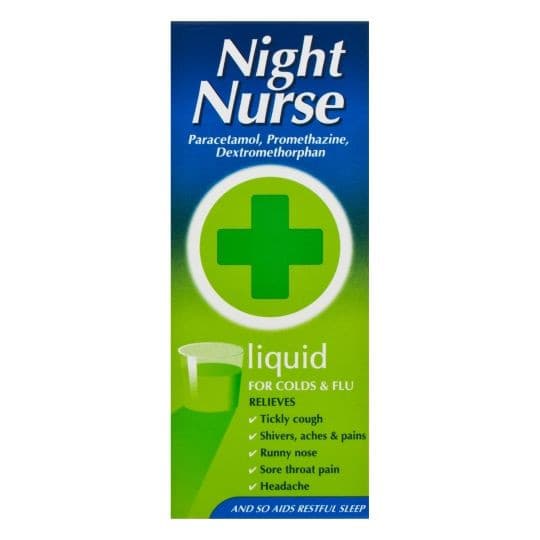
Night Nurse Liquid 160ml

Night Nurse Liquid 160ml

  • ✔️ Relieves cold and flu symptoms specifically at night
  • ✔️ Contains promethazine to aid restful sleep when unwell
  • ✔️ Suppresses dry cough with dextromethorphan hydrobromide
  • ✔️ Reduces fever and pain with 1000mg paracetamol per dose
  • ✔️ One convenient 20ml bedtime dose covers multiple symptoms

Price Checker

Regular price £8.49
Sale price £8.49
Sale Sold out
  • Not approved? Full refund
  • Includes FREE private prescription
View full details

How Should You Use Night Nurse Liquid?

Night Nurse Liquid is straightforward to use, but it is important to follow the instructions carefully to get the most benefit and avoid any risk. This medicine is for oral use only and should always be taken at bedtime — never during the day. Follow these steps each time you take a dose:

Because promethazine causes drowsiness, you should ensure you are ready for bed before taking your dose. Do not attempt to drive or operate machinery after taking Night Nurse Liquid.

What Is the Correct Dose of Night Nurse Liquid?

The dose of Night Nurse Liquid is the same for all eligible adults and young people aged 16 and over. There is no variation based on weight or symptom severity — the single recommended dose applies universally. Always stick to this dose and never take more, as exceeding the recommended amount increases the risk of paracetamol toxicity and other adverse effects.

When Is the Best Time to Use Night Nurse Liquid?

The clue is in the name — Night Nurse Liquid is designed exclusively for night-time use. Take your dose immediately before you go to bed, when you are already in a safe environment and have no further need to drive or be fully alert. The sedative effect of promethazine typically begins within 20 to 30 minutes, so timing your dose correctly means you are likely to fall asleep before the drowsiness becomes pronounced. Avoid taking it earlier in the evening if you still have tasks to complete.

How Long Can You Use Night Nurse Liquid For?

Night Nurse Liquid is intended for short-term use only. Most cold and flu episodes resolve within seven to ten days, and this medicine should not be used for more than three to five consecutive nights without seeking medical advice. If your symptoms are not improving after this period, or if they worsen at any point, contact your GP. Prolonged use of combination cold and flu remedies without medical supervision is not recommended, as it may mask symptoms of a more serious underlying condition that requires proper assessment and treatment.

Do not exceed the recommended dose. If in doubt, speak to your pharmacist.

Customer Reviews

Based on 2 reviews
100%
(2)
0%
(0)
0%
(0)
0%
(0)
0%
(0)
V
Very Happy.

Great prices, great website, great service!

A
Anonymous

Helped ease my cough and stuffed nose

What Are the Most Common Side Effects of Night Nurse Liquid?

The most frequently reported side effects of Night Nurse Liquid are largely related to the promethazine hydrochloride it contains. Promethazine is a first-generation antihistamine with well-known sedative and anticholinergic properties, and these account for the majority of effects people notice.

  • Drowsiness or sedation (expected and intentional at night)
  • Dry mouth
  • Dizziness
  • Blurred vision
  • Difficulty passing urine

These effects are generally mild and resolve once the medicine wears off. Because drowsiness is expected, you must not drive or operate machinery the morning after taking Night Nurse Liquid until you are certain you are fully alert.

What Are the Less Common Side Effects of Night Nurse Liquid?

Some people experience side effects that are less frequent but still worth being aware of. These tend to occur more often in older adults or those who are more sensitive to antihistamines.

  • Nausea or stomach discomfort
  • Headache on waking
  • Confusion or disorientation (particularly in elderly patients)
  • Photosensitivity — increased sensitivity of the skin to sunlight the following day
  • Restlessness or paradoxical excitability (more common in children, which is one reason this product is not suitable for under-16s)
  • Palpitations

What Are the Serious Side Effects of Night Nurse Liquid?

Serious side effects are rare but require immediate medical attention if they occur. Paracetamol overdose — even accidental — can cause severe liver damage that may not produce obvious symptoms for several days. This is why it is critical never to exceed the stated dose and never to take Night Nurse Liquid alongside any other paracetamol-containing product.

Seek emergency help immediately if you experience any of the following: swelling of the face, lips, tongue, or throat; difficulty breathing; a severe skin rash or hives; loss of consciousness; or chest pain. These may indicate a serious allergic reaction (anaphylaxis) or another medical emergency.

What Should You Do If You Experience Side Effects?

For mild side effects such as dry mouth or morning drowsiness, no specific treatment is usually needed — staying hydrated and allowing time for the medicine to clear your system is generally sufficient. If you find the drowsiness is lasting well into the following day, consider whether you took the dose too early in the evening, and adjust accordingly next time.

If you experience any side effect that concerns you, or if a side effect persists or worsens, stop taking the medicine and speak to your pharmacist or GP. Never ignore a side effect that feels unusual or severe.

Can Night Nurse Liquid Interact With Other Medicines?

Yes — Night Nurse Liquid has several clinically significant interactions. Taking it alongside other medicines containing paracetamol increases the risk of accidental overdose. Combining it with sedatives, sleeping tablets, or alcohol amplifies the drowsiness caused by promethazine to a potentially dangerous degree. People taking MAOIs (monoamine oxidase inhibitors) must not take Night Nurse Liquid, as dextromethorphan combined with MAOIs can cause a serious and potentially life-threatening condition called serotonin syndrome. SSRIs may also interact with dextromethorphan. Always tell your pharmacist about every medicine you are currently taking before purchasing this product.

If you are concerned about any side effects, contact your pharmacist or GP immediately.

Written and reviewed by our qualified team

GPhC Number: 2233073
Tarun Kumar

Reviewed by:

Tarun Kumar

Superintendent/ Clinical Lead

📖 Find out more about our team of medical content authors.

Content last reviewed: 11 November 2026

We’re a safe and
regulated UK service

Registered Pharmacy Badge

100% discreet packaging

Discreet, unbranded packaging for every order.

Agent

Need help?
Talk to our friendly experts now

How our service works

Service Setup

Service setup

Discreet Packaging

Discreet packaging

Express Delivery

Express delivery

Tarun Kumar, Superintendent Pharmacist & Clinical Lead

Medically reviewed by

Tarun Kumar, Superintendent Pharmacist & Clinical Lead (GPhC 2233073)

Last reviewed: