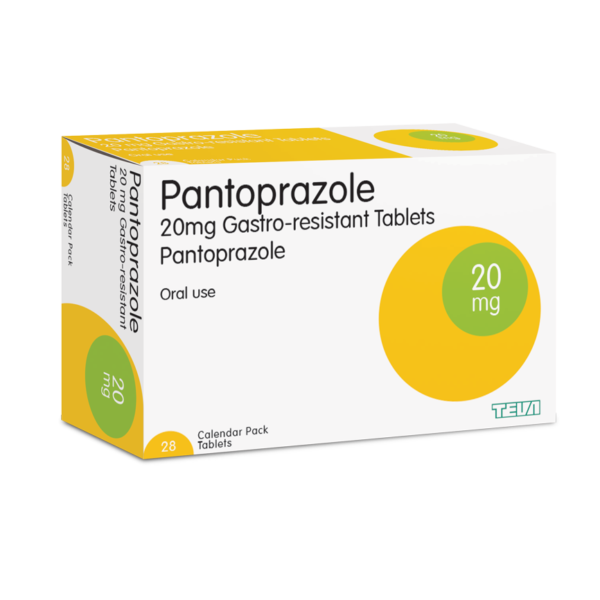
Pantoprazole Gastro Resistant Tablets (20mg & 40mg)
Pantoprazole Gastro Resistant Tablets (20mg & 40mg)
- ✔️ Reduces stomach acid production for up to 24 hours
- ✔️ Relieves heartburn and acid reflux in adults
- ✔️ Gastro resistant coating ensures correct intestinal absorption
- ✔️ Available in 20mg and 40mg strengths for flexible dosing
- ✔️ Clinically used to treat GORD, oesophagitis, and peptic ulcers
Price Checker
 Lowest price guarantee
 Includes FREE private prescription


Couldn't load pickup availability
What Are Pantoprazole Tablets and How Do They Help?
If you've ever woken up at 3am with that familiar burning sensation creeping up your chest, you'll know how disruptive acid reflux can be. Pantoprazole tablets are a type of medicine called a proton pump inhibitor (PPI), used to reduce the amount of acid your stomach produces. Teva's gastro resistant tablets are available in two strengths — 20mg and 40mg — making them suitable for a range of conditions from occasional heartburn to more persistent gastro-oesophageal reflux disease (GORD). You can explore our full range of indigestion treatments if you're looking for additional digestive support alongside this medicine.
Pantoprazole is one of the most widely used PPIs in the UK, recommended by the NHS for conditions including reflux oesophagitis, GORD, and gastric or duodenal ulcers. The gastro resistant coating on each tablet is important — it stops the medicine dissolving in your stomach before it reaches the small intestine, where it's properly absorbed.
How Do Pantoprazole Tablets Work in the Body?
Stomach acid is produced by specialised cells in the stomach lining via a mechanism called the proton pump (H+/K+ ATPase). Pantoprazole works by irreversibly binding to and blocking this pump, cutting off acid production at its source. It's not just masking symptoms — it's addressing the underlying mechanism.
- Pantoprazole is absorbed in the small intestine after passing through the gastro resistant coating.
- It travels via the bloodstream to the acid-secreting parietal cells in the stomach lining.
- It binds irreversibly to the proton pump, blocking acid secretion.
- Acid levels remain reduced for up to 24 hours after a single dose.
- With regular use, the stomach lining and oesophagus have time to heal.
Who Is Pantoprazole Suitable For?
Pantoprazole is suitable for adults aged 18 and over who experience symptoms related to excess stomach acid. It's particularly useful for people who haven't found adequate relief from antacids or H2 blockers. That said, it's not right for everyone — always read the patient information leaflet before starting treatment.
- Adults with frequent heartburn or acid reflux (two or more days per week)
- People diagnosed with GORD or reflux oesophagitis
- Patients with gastric or duodenal ulcers (under medical supervision)
- Those requiring long-term acid suppression as directed by a GP
How Do Pantoprazole Tablets Compare to Other PPIs?
| Feature | Pantoprazole (Teva) | Omeprazole |
|---|---|---|
| Drug class | Proton pump inhibitor | Proton pump inhibitor |
| Available strengths | 20mg, 40mg | 10mg, 20mg, 40mg |
| Drug interaction profile | Lower interaction risk (fewer CYP2C19 interactions) | Higher interaction risk (CYP2C19 inhibitor) |
| Gastro resistant coating | Yes | Yes |
How Should Pantoprazole Tablets Be Stored?
Store pantoprazole tablets below 25°C in their original packaging, away from direct light and moisture. Keep them out of reach and sight of children at all times. Do not use the tablets after the expiry date printed on the pack — if in doubt, return them to your local pharmacy for safe disposal. If you're managing multiple health conditions and need support with other treatments, our vitamins and supplements range may complement your overall wellness routine.
This product is a medicine. Speak to your doctor or pharmacist before using if you have an underlying medical condition or are taking other medicines.
Pantoprazole Gastro Resistant Tablets (20mg & 40mg) specifications
| Treatment category | Acid reflux, GORD, gastric ulcers, oesophagitis |
| Mechanism of action | Proton pump inhibitor — blocks H+/K+ ATPase enzyme |
| Effective for | Heartburn, acid reflux, GORD, peptic ulcers |
| Suitable for | Adults aged 18 and over |
| Active ingredient | Pantoprazole sodium sesquihydrate |
| Pack sizes | 7, 14, 28 tablets (varies by supplier) |
| Strengths | 20mg, 40mg |
| UK classification | P (Pharmacy medicine) |
| Drug class | Proton pump inhibitor (PPI) |
| Preparation | Gastro resistant tablet |
| Route of administration | Oral |
Specifications of Pantoprazole Gastro Resistant Tablets (20mg & 40mg)
What Is Pantoprazole and What Is It Used For?
Pantoprazole belongs to a group of medicines called proton pump inhibitors (PPIs). It works by reducing the amount of acid your stomach produces. Teva pantoprazole gastro resistant tablets are used to treat a range of acid-related conditions in adults, including heartburn, acid reflux, gastro-oesophageal reflux disease (GORD), and inflammation of the oesophagus (oesophagitis). They may also be used alongside antibiotics to treat Helicobacter pylori infection, or to prevent and treat ulcers caused by non-steroidal anti-inflammatory drugs (NSAIDs).
What Do You Need to Know Before Using Pantoprazole?
Before taking pantoprazole, it's important to check whether it's appropriate for you. There are certain situations where you should not take it, and others where extra care is needed.
Do not take pantoprazole if you:
- Are allergic to pantoprazole, substituted benzimidazoles, or any other ingredient in the tablet
- Are taking medicines containing nelfinavir (used for HIV infection)
- Are under 18 years of age (for OTC use)
Take care and speak to your doctor or pharmacist if you:
- Have severe liver problems
- Are pregnant, planning to become pregnant, or breastfeeding
- Have ever had an allergic reaction to another PPI
- Are due to have an endoscopy or breath test for H. pylori
- Have low magnesium levels or are at risk of osteoporosis (long-term use may reduce bone density)
- Experience unintentional weight loss, difficulty swallowing, or persistent vomiting — these require urgent medical review
Known drug interactions — tell your doctor or pharmacist if you are taking:
- Methotrexate (used for cancer or autoimmune conditions)
- Atazanavir or other HIV medicines
- Warfarin or other anticoagulants
- Clopidogrel (used to prevent blood clots)
- Ketoconazole or itraconazole (antifungal medicines)
- Fluvoxamine (antidepressant)
How Should You Use Pantoprazole?
Always take pantoprazole exactly as directed by your pharmacist or as described in the patient information leaflet. Swallow the tablet whole — do not crush, chew, or split it, as this will damage the gastro resistant coating. If you have difficulty swallowing, speak to your pharmacist about alternatives.
- Take one tablet 30 to 60 minutes before a meal, ideally breakfast.
- Swallow the tablet whole with a glass of water.
- Do not crush, chew, or break the tablet.
- Take at the same time each day for best results.
- Complete the full course if prescribed, even if symptoms improve.
| Indication | Age Group | Dose | Duration |
|---|---|---|---|
| Heartburn / acid reflux (OTC) | Adults 18+ | 20mg once daily | Up to 4 weeks |
| GORD / oesophagitis | Adults 18+ | 40mg once daily | 4–8 weeks (as directed by GP) |
| Gastric or duodenal ulcer | Adults 18+ | 40mg once daily | 4–8 weeks (as directed by GP) |
| H. pylori eradication (with antibiotics) | Adults 18+ | 40mg twice daily | 7 days (as directed by GP) |
What Are the Possible Side Effects of Pantoprazole?
Like all medicines, pantoprazole can cause side effects, although not everyone gets them. Most are mild and temporary. If you're also managing other digestive symptoms, our IBS and cramps range may offer additional support alongside your treatment.
Common side effects (may affect up to 1 in 10 people):
- Headache
- Diarrhoea
- Nausea or vomiting
- Abdominal pain or discomfort
- Flatulence (wind)
- Constipation
Less common side effects (may affect up to 1 in 100 people):
- Dizziness or sleep disturbances
- Dry mouth
- Skin rash or itching
- Joint or muscle pain
- Raised liver enzymes (detected on blood tests)
- Low magnesium levels with long-term use
Stop taking pantoprazole and seek immediate medical attention if you develop signs of a serious allergic reaction, such as swelling of the face, lips, tongue or throat, difficulty breathing, or a severe skin rash.
How Should You Store Pantoprazole?
- Store below 25°C in the original packaging.
- Keep away from direct light and moisture.
- Do not store in the bathroom or near a sink.
- Keep out of the reach and sight of children.
- Do not use after the expiry date printed on the pack.
- Return unused or expired tablets to your pharmacy — do not dispose of them in household waste or down the sink.
If you need support managing pain alongside your digestive condition, you may find our pain relief range helpful for related discomfort.
References
Written and reviewed by our qualified team
Your safety and success are our highest priorities. Our medical team rigorously evaluates every product and piece of advice we provide, ensuring you receive only the most effective, science-backed solutions available.
Frequently Asked Questions
Where can I buy pantoprazole tablets online in the UK?
You can buy pantoprazole tablets online in the UK from Cured Pharmacy, a GPhC-registered online pharmacy. Both 20mg and 40mg strengths are available subject to a short clinical assessment to confirm suitability. Ordering online is straightforward, discreet, and delivered directly to your door.
How do pantoprazole tablets work in the body?
Pantoprazole works by irreversibly blocking the proton pump (H+/K+ ATPase) in the stomach's parietal cells — the final step in acid production. This significantly reduces the volume of acid your stomach makes, relieving symptoms like heartburn and allowing the oesophagus and stomach lining to heal. Effects can last up to 24 hours from a single dose.
What is the correct dose of pantoprazole for heartburn?
For OTC use in adults, the standard dose for heartburn and acid reflux is 20mg once daily, taken before a meal, for up to 4 weeks. If your GP has prescribed pantoprazole for GORD or an ulcer, the dose is typically 40mg once daily. Never exceed the recommended dose without medical advice.
What is the best time to take pantoprazole tablets?
The best time to take pantoprazole is 30 to 60 minutes before your first meal of the day, usually breakfast. Taking it before eating ensures the drug is active when your stomach is stimulated to produce acid during digestion. Consistency matters — try to take it at the same time each day.
What are the common side effects of pantoprazole?
The most commonly reported side effects of pantoprazole include headache, diarrhoea, nausea, stomach pain, flatulence, and constipation. These are generally mild and tend to resolve without treatment. If side effects are persistent or troublesome, speak to your pharmacist or GP.
Who should not take pantoprazole tablets?
Pantoprazole should not be taken by anyone with a known allergy to pantoprazole, other PPIs, or any excipient in the tablet. It is also contraindicated in people taking nelfinavir (an HIV medicine) and is not recommended for children under 18 for OTC use. Always check with your pharmacist if you are unsure.
What happens if I miss a dose of pantoprazole?
If you miss a dose, take it as soon as you remember — unless it is nearly time for your next scheduled dose, in which case skip the missed one entirely. Never take two doses at the same time to compensate. Carry on with your regular dosing schedule as normal.
How long can you take pantoprazole for?
For OTC use, pantoprazole should not be taken for more than 4 weeks without consulting a GP. If symptoms persist beyond this period, a doctor needs to investigate the underlying cause. Long-term use under medical supervision is possible for certain conditions, but requires regular review due to potential effects on magnesium levels and bone density.
Can I take pantoprazole with other medicines?
Pantoprazole can interact with several medicines, including methotrexate, atazanavir, warfarin, clopidogrel, and certain antifungals like ketoconazole. Always tell your pharmacist or GP about all medicines you are taking, including over-the-counter products and supplements. They can advise whether pantoprazole is safe to use alongside your current treatment.
Is pantoprazole safe to take during pregnancy?
Pantoprazole is not recommended during pregnancy unless clearly necessary and prescribed by a doctor. If you are pregnant or planning to become pregnant, speak to your GP before taking any PPI. There are alternative treatments your doctor may consider safer for managing heartburn during pregnancy.
What are the alternatives to pantoprazole tablets?
Other PPIs available in the UK include omeprazole, lansoprazole, esomeprazole, and rabeprazole — all work in a similar way but have slightly different interaction profiles. For milder symptoms, antacids or H2 blockers such as famotidine may be appropriate. You can browse our indigestion treatments for a range of options.
Can pantoprazole be taken on an empty stomach?
Pantoprazole should ideally be taken before a meal rather than on a completely empty stomach, as food stimulates the proton pumps that pantoprazole needs to bind to in order to work effectively. Taking it 30 to 60 minutes before eating gives the best clinical outcome. Swallow the tablet whole with a glass of water.
Does pantoprazole cause weight gain?
Weight gain is not a commonly reported side effect of pantoprazole. However, if you notice unexplained weight changes while taking this medicine, it is worth mentioning to your GP, as this could indicate an unrelated condition requiring investigation. Do not stop taking prescribed pantoprazole without speaking to your doctor first.
What are the latest studies on long-term pantoprazole use?
Research has highlighted that long-term PPI use may be associated with a modest reduction in magnesium levels, reduced bone density, and a small increased risk of certain gut infections such as Clostridioides difficile. The NHS and MHRA advise that PPIs should be used at the lowest effective dose for the shortest necessary duration. Regular review by a GP is recommended for anyone on long-term treatment.
Can I drink alcohol while taking pantoprazole?
There is no direct interaction between pantoprazole and alcohol, but alcohol can worsen acid reflux and heartburn symptoms, potentially reducing the effectiveness of your treatment. It is sensible to limit alcohol intake while managing acid-related conditions. If you have concerns about lifestyle factors affecting your treatment, speak to your pharmacist for personalised advice. You may also find our IBS and cramps section useful for broader digestive health support.
Frequently Asked Question
Written and reviewed by our qualified team

Reviewed by:
Tarun Kumar
Superintendent/ Clinical Lead
📖 Find out more about our team of medical content authors and how we ensure the accuracy of our content with our content guidelines.
Content last updated: 14 Sep 2026
Other popular options


We’re a safe and
regulated UK service

Lowest Price Guarantee

We're convinced you won't find your treatment cheaper, but if you do we'll refund the difference.
Find out more
100% discreet packaging

Discreet, unbranded packaging for every order.
Find out more

Need help?
Talk to our friendly experts now


How our service works

Service setup

Discreet packaging

Express delivery