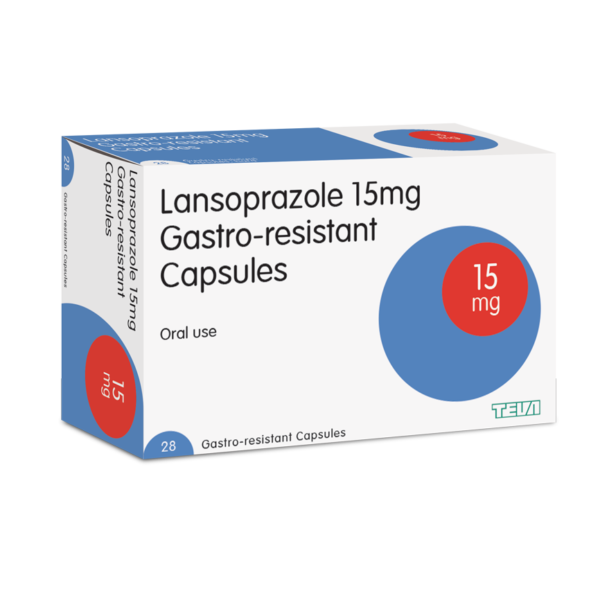
Lansoprazole Capsules (30mg & 15mg)
Lansoprazole Capsules (30mg & 15mg)
- ✔️ Reduces excess stomach acid for up to 24 hours per dose
- ✔️ Relieves heartburn, acid reflux, and GORD symptoms effectively
- ✔️ Supports healing of gastric and duodenal ulcers
- ✔️ Available in 15mg OTC and 30mg prescription-strength capsules
- ✔️ Suitable for adults managing frequent or persistent acid reflux
Price Checker
 Lowest price guarantee
 Includes FREE private prescription


Couldn't load pickup availability
What Are Lansoprazole Capsules and How Do They Help?
If you've ever woken up with that familiar burning sensation creeping up your chest, you'll know how disruptive acid reflux can be. Lansoprazole capsules are a clinically proven treatment used to reduce the amount of acid your stomach produces, offering relief from heartburn, acid reflux, and related digestive conditions. Available in 15mg and 30mg strengths, these capsules from Teva are one of the most widely used proton pump inhibitors (PPIs) in the UK. Whether you're managing occasional heartburn or a longer-term condition like gastro-oesophageal reflux disease (GORD), lansoprazole offers a reliable, well-established option. You can browse our full range of indigestion treatments if you're looking for additional digestive support.
Lansoprazole belongs to a class of medicines called proton pump inhibitors. It's available over the counter at 15mg for adults aged 18 and over, and at 30mg under pharmacist guidance or prescription. The NHS recognises lansoprazole as a first-line treatment for conditions including GORD, gastric ulcers, and duodenal ulcers.
How Do Lansoprazole Capsules Work in the Body?
Your stomach lining contains tiny structures called proton pumps. These pumps are responsible for secreting hydrochloric acid into the stomach — acid that's essential for digestion but can cause real problems when there's too much of it. Lansoprazole works by irreversibly binding to and blocking these proton pumps, dramatically reducing acid output.
- Lansoprazole is absorbed in the small intestine and converted to its active form.
- It then binds to the H+/K+ ATPase enzyme (the proton pump) in the stomach lining.
- Acid secretion is suppressed for up to 24 hours from a single dose.
- The stomach lining is given the chance to heal, particularly in cases of oesophagitis or ulcers.
Because the effect lasts all day, once-daily dosing is usually sufficient. It typically takes 2–3 days of regular use before you notice the full benefit, though some people feel improvement sooner.
Who Is Lansoprazole Suitable For?
Lansoprazole is suitable for a wide range of adults dealing with acid-related conditions. It's particularly useful if antacids or H2 blockers haven't provided enough relief. That said, it's not right for everyone — always read the label and speak to a pharmacist if you're unsure.
- Adults aged 18 and over with frequent heartburn or acid reflux symptoms.
- People diagnosed with GORD (gastro-oesophageal reflux disease).
- Patients with gastric or duodenal ulcers (under medical supervision).
- Those taking NSAIDs long-term who need stomach protection.
How Do Lansoprazole Capsules Compare to Other Acid Reflux Treatments?
| Feature | Lansoprazole Capsules | Omeprazole Capsules |
|---|---|---|
| Drug class | Proton pump inhibitor (PPI) | Proton pump inhibitor (PPI) |
| OTC strength available | 15mg | 20mg |
| Onset of action | 1–3 days for full effect | 1–4 days for full effect |
| Dosing frequency | Once daily | Once daily |
How Should You Store Lansoprazole Capsules?
Store your lansoprazole capsules below 25°C in a dry place, away from direct sunlight. Keep them in their original packaging and out of reach of children. Do not use after the expiry date printed on the pack. If you're also managing other health conditions alongside acid reflux, you might find our IBS and cramps range helpful for broader digestive support.
This product is a medicine. Speak to your doctor or pharmacist before using if you have an underlying medical condition or are taking other medicines.
Lansoprazole Capsules (15mg & 30mg) specifications
| Treatment category | Acid reflux, GORD, gastric ulcers, heartburn |
| Mechanism of action | Proton pump inhibitor — reduces stomach acid secretion |
| Effective for | Heartburn, acid reflux, GORD, gastric and duodenal ulcers, oesophagitis |
| Suitable for | Adults aged 18 and over |
| Active ingredient | Lansoprazole |
| Pack sizes | 7, 14, 28 capsules (varies by strength) |
| Strengths | 15mg, 30mg |
| UK classification | P (15mg OTC); POM (30mg prescription only) |
| Drug class | Proton pump inhibitor (PPI) |
| Preparation | Gastro-resistant capsules |
| Route of administration | Oral |
Specifications of Lansoprazole Capsules (15mg & 30mg)
What Is Lansoprazole and What Is It Used For?
Lansoprazole is a proton pump inhibitor (PPI) used to treat conditions caused by excess stomach acid. The NHS lists it as a treatment for heartburn, acid reflux, gastro-oesophageal reflux disease (GORD), gastric ulcers, duodenal ulcers, and oesophagitis (inflammation of the oesophagus). It is also used alongside antibiotics to eradicate Helicobacter pylori, a bacterium linked to stomach ulcers. At 15mg, it is available over the counter for adults; the 30mg strength is typically prescribed by a doctor for more significant conditions.
What Do You Need to Know Before Using Lansoprazole?
Before taking lansoprazole, it's important to check whether it's appropriate for you. Certain conditions and medicines can affect how safely you use it.
Do not take lansoprazole if you:
- Are allergic to lansoprazole or any other PPI (such as omeprazole or pantoprazole).
- Are under 18 years of age (for OTC use).
- Are taking rilpivirine-containing HIV medicines.
- Have been told by a doctor you have a serious underlying stomach condition without investigation.
Speak to your doctor or pharmacist before use if you:
- Are pregnant, planning to become pregnant, or breastfeeding.
- Have liver problems.
- Have low magnesium levels (hypomagnesaemia).
- Have had a previous allergic reaction to any PPI.
- Are due to have an endoscopy or breath test for H. pylori.
Known drug interactions — lansoprazole may interact with:
- Methotrexate (used for cancer and autoimmune conditions).
- Clopidogrel (a blood thinner).
- Atazanavir or nelfinavir (HIV medicines).
- Ketoconazole or itraconazole (antifungal medicines).
- Digoxin (heart medicine).
- Warfarin or other anticoagulants.
How Should You Use Lansoprazole Capsules?
Always use lansoprazole exactly as directed on the label or as advised by your pharmacist or doctor. Swallow the capsule whole with water — do not crush or chew it, as the capsule contains gastro-resistant granules designed to protect the medicine from stomach acid before it reaches the intestine.
- Take one capsule by mouth, ideally 30 minutes before a meal.
- Swallow whole with a full glass of water.
- Take at the same time each day for best results.
- Do not exceed the recommended dose or duration without medical advice.
- For OTC use, do not take for more than 14 days without consulting a doctor.
| Indication | Age Group | Dose | Duration |
|---|---|---|---|
| Heartburn / acid reflux (OTC) | Adults 18+ | 15mg once daily | Up to 14 days |
| GORD | Adults (prescribed) | 30mg once daily | 4–8 weeks |
| Gastric ulcer | Adults (prescribed) | 30mg once daily | 4–8 weeks |
| Duodenal ulcer | Adults (prescribed) | 30mg once daily | 2–4 weeks |
What Are the Possible Side Effects of Lansoprazole?
Like all medicines, lansoprazole can cause side effects, although not everyone experiences them. Most are mild and short-lived. If you're also taking other medicines for digestive issues, you can explore our pain relief range for complementary options where appropriate.
Common side effects (may affect up to 1 in 10 people):
- Headache
- Diarrhoea
- Stomach pain or discomfort
- Nausea or vomiting
- Constipation
- Flatulence (wind)
Less common side effects (may affect up to 1 in 100 people):
- Dizziness or fatigue
- Dry mouth
- Skin rash or itching
- Swollen ankles
- Low magnesium levels with long-term use (hypomagnesaemia)
- Increased risk of bone fractures with prolonged use
Stop taking lansoprazole and seek urgent medical attention if you experience signs of a serious allergic reaction, such as swelling of the face, lips, or throat, difficulty breathing, or a severe skin rash.
How Should You Store Lansoprazole Capsules?
- Store below 25°C in a dry place.
- Keep away from direct sunlight and moisture.
- Store in the original packaging until use.
- Keep out of the sight and reach of children.
- Do not use after the expiry date printed on the pack.
- Do not dispose of medicines via wastewater or household waste — return unused medicines to your pharmacy.
If you're managing multiple health conditions, it's worth knowing that Cured Pharmacy also stocks a wide range of vitamins and supplements that may support your overall wellbeing alongside your treatment.
References
Written and reviewed by our qualified team
Your safety and success are our highest priorities. Our medical team rigorously evaluates every product and piece of advice we provide, ensuring you receive only the most effective, science-backed solutions available.
Frequently Asked Questions
Where can I buy lansoprazole capsules online in the UK?
You can buy lansoprazole capsules online from Cured Pharmacy, a GPhC-registered UK online pharmacy. The 15mg strength is available over the counter for adults aged 18 and over, and orders are dispatched quickly and discreetly. Simply add to your basket and complete a short health questionnaire to confirm suitability.
How do lansoprazole capsules work in the body?
Lansoprazole works by irreversibly blocking the proton pumps in your stomach lining — the structures responsible for producing hydrochloric acid. By suppressing acid output, it relieves the burning sensation of heartburn and allows irritated or ulcerated tissue to heal. The effect of a single dose can last up to 24 hours, which is why once-daily dosing is usually sufficient.
How do I take lansoprazole capsules step by step?
Take one capsule by mouth approximately 30 minutes before a meal, swallowing it whole with a full glass of water — never crush or chew the capsule. Take it at the same time each day to maintain consistent acid suppression. For OTC use, do not exceed 14 days without speaking to a doctor or pharmacist.
What is the best time of day to take lansoprazole?
The NHS recommends taking lansoprazole in the morning, around 30 minutes before breakfast, for the best results. This timing ensures the medicine is active when your stomach begins producing acid in response to food. Taking it consistently at the same time each day also helps maintain steady levels in your system.
What is the correct dose of lansoprazole for heartburn?
For over-the-counter heartburn relief in adults aged 18 and over, the standard dose is 15mg once daily for up to 14 days. If your symptoms are more severe or you have been diagnosed with GORD or a stomach ulcer, a doctor may prescribe 30mg once daily. Never self-increase your dose without medical advice.
What are the common side effects of lansoprazole capsules?
The most common side effects include headache, diarrhoea, stomach pain, nausea, constipation, and wind. These tend to be mild and often resolve within a few days of starting treatment. If any side effect persists or becomes bothersome, speak to your pharmacist or GP.
How do I manage side effects of lansoprazole?
Most side effects are mild and can be managed by taking lansoprazole with food if stomach discomfort occurs, staying well hydrated if you experience diarrhoea, and resting if you feel a headache coming on. If you develop a skin rash, swelling, or difficulty breathing, stop taking the capsules immediately and seek urgent medical attention, as these may indicate a serious allergic reaction.
Who should not take lansoprazole capsules?
Lansoprazole is not suitable for people who are allergic to it or to other PPIs such as omeprazole or pantoprazole. It should not be taken by anyone under 18 for OTC use, or by those taking rilpivirine-based HIV medicines. Always speak to a pharmacist or doctor if you are pregnant, breastfeeding, or have liver disease before starting treatment.
What happens if I miss a dose of lansoprazole?
If you forget to take a dose, take it as soon as you remember — unless it's nearly time for your next scheduled dose, in which case simply skip the missed one. Never take two doses at the same time to compensate. Continuing your regular schedule is the most important thing.
How long can you take lansoprazole capsules for?
For OTC use, lansoprazole should not be taken for more than 14 consecutive days without consulting a doctor. Long-term use is sometimes appropriate under medical supervision — for example, in people with chronic GORD or those taking NSAIDs regularly. Prolonged use without review can increase the risk of side effects such as low magnesium levels and bone fractures.
Is lansoprazole 15mg or 30mg better for acid reflux?
The 15mg dose is appropriate for mild to moderate heartburn and acid reflux in adults buying over the counter. The 30mg dose is typically reserved for more significant conditions such as GORD, oesophagitis, or stomach ulcers, and is usually prescribed by a doctor. If 15mg isn't providing enough relief after 14 days, speak to your GP rather than increasing the dose yourself.
What are the alternatives to lansoprazole capsules?
Other PPIs such as omeprazole, pantoprazole, and esomeprazole work in a similar way and may be suitable alternatives. H2 blockers like famotidine offer a different mechanism and may suit people who cannot tolerate PPIs. You can also explore our indigestion treatments range for antacids and other options.
Can I take lansoprazole with other medicines?
Lansoprazole can interact with several medicines, including methotrexate, clopidogrel, ketoconazole, digoxin, warfarin, and certain HIV antiretrovirals. Always tell your pharmacist or doctor about all medicines, supplements, and herbal remedies you are taking before starting lansoprazole. This helps avoid potentially harmful interactions.
Can I take lansoprazole during pregnancy or while breastfeeding?
Lansoprazole is not generally recommended during pregnancy or breastfeeding unless a doctor has specifically advised it. The NHS recommends speaking to your GP or midwife before taking any PPI if you are pregnant or nursing. There may be safer alternatives available depending on your situation.
What are the latest findings on long-term lansoprazole use?
Research and NHS guidance indicate that long-term PPI use — including lansoprazole — may be associated with a small increased risk of bone fractures, low magnesium (hypomagnesaemia), and vitamin B12 deficiency. Regular review by a GP is recommended for anyone taking PPIs for more than 8 weeks. If you're supporting your health during long-term treatment, our vitamins and supplements range includes options that may help address nutritional gaps.
Written and reviewed by our qualified team

Reviewed by:
Tarun Kumar
Superintendent/ Clinical Lead
📖 Find out more about our team of medical content authors and how we ensure the accuracy of our content with our content guidelines.
Content last updated: 14 Sep 2026
Other popular options


We’re a safe and
regulated UK service

Lowest Price Guarantee

We're convinced you won't find your treatment cheaper, but if you do we'll refund the difference.
Find out more
100% discreet packaging

Discreet, unbranded packaging for every order.
Find out more

Need help?
Talk to our friendly experts now


How our service works

Service setup

Discreet packaging

Express delivery