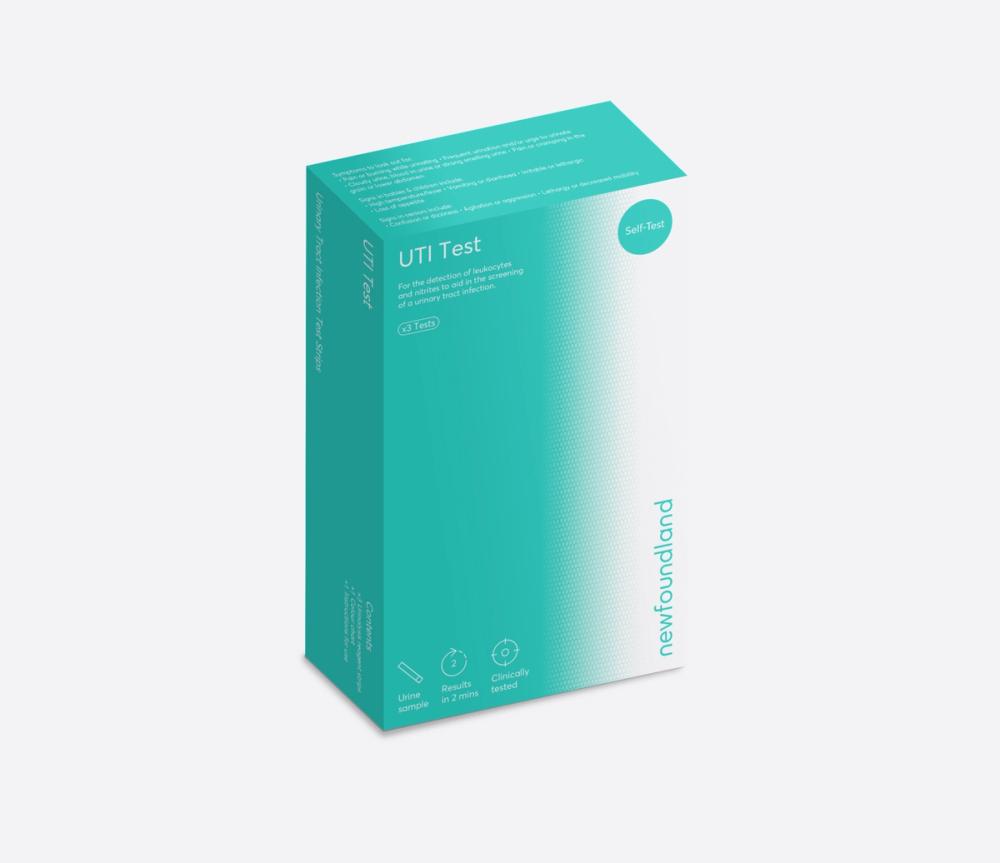
Newfoundland UTI Test
- ✔️ Detects two key UTI markers: nitrites and leucocyte esterase
- ✔️ Results available in as little as one to two minutes
- ✔️ Suitable for adults aged 16 and over
- ✔️ No prescription required for at-home use
- ✔️ Helps inform decision to seek GP or pharmacist advice
Price Checker
 Lowest price guarantee
 Includes FREE private prescription


Couldn't load pickup availability
What Are UTI Test Strips UK and How Can the Newfoundland UTI Test Help?
Urinary tract infections (UTIs) are one of the most common bacterial infections in the UK, affecting millions of people every year — particularly women. Symptoms such as a burning sensation when passing urine, needing to urinate more frequently, and cloudy or strong-smelling urine can be distressing and disruptive. The UTI test strips UK market has grown significantly as more people look for a quick, convenient way to check for signs of infection at home before deciding whether to contact their GP. The Newfoundland UTI Test, available for just £8.49, offers exactly that: a simple, at-home dipstick test designed to detect two key markers of urinary tract infection in your urine sample. If you're managing a recurring condition, you might also find it helpful to browse our cystitis and bladder infection range for additional support products.
UTIs left untreated can progress to kidney infections, so getting a fast indication of whether an infection may be present is genuinely useful. This test is not a replacement for professional medical diagnosis, but it can help you make a more informed decision about whether to seek further care.
How Does the Newfoundland UTI Test Work?
The Newfoundland UTI Test works by detecting two specific chemical markers in urine that are commonly associated with bacterial urinary tract infections:
- Nitrites: Many bacteria responsible for UTIs — particularly Escherichia coli — convert urinary nitrates into nitrites. A positive nitrite reading suggests bacterial activity in the urinary tract.
- Leucocyte esterase: This enzyme is released by white blood cells (leucocytes). Its presence in urine indicates that the body may be mounting an immune response to an infection.
- Colour change reaction: The reagent pads on the strip change colour when these markers are detected. You compare the colour to a reference chart included in the pack.
- Result time: Results are typically readable within 1 to 2 minutes, making this one of the faster at-home diagnostic options available without a prescription.
It's worth noting that not all bacteria produce nitrites, and some UTIs — particularly those caused by less common organisms — may not trigger a positive nitrite result. This is why clinical context and symptom assessment remain important alongside any home test.
Who Should Use the Newfoundland UTI Test?
This test is suitable for adults who are experiencing symptoms that may suggest a urinary tract infection and want a quick, at-home indication before contacting a healthcare professional. It is particularly useful for:
- Women aged 16 and over who experience recurrent UTIs and want to monitor symptoms at home
- Anyone experiencing classic UTI symptoms such as burning urination, increased frequency, or cloudy urine
- People who want to avoid an unnecessary GP visit if symptoms turn out to be mild or non-infective
- Those who have previously been diagnosed with a UTI and recognise the early signs returning
It is not intended for use in children without medical supervision, and pregnant women who suspect a UTI should always consult their GP or midwife promptly, as UTIs in pregnancy carry additional risks.
How Does the Newfoundland UTI Test Compare to a GP Urine Culture?
| Feature | Newfoundland UTI Test | GP Laboratory Urine Culture |
|---|---|---|
| Speed of result | 1–2 minutes | 2–5 working days |
| Location | At home | GP surgery / laboratory |
| Identifies specific bacteria | No | Yes |
| Cost | £8.49 | Free on NHS (with appointment) |
| Prescription required | No | No (but GP appointment needed) |
Is the Newfoundland UTI Test Suitable for Long-Term or Repeated Use?
If you experience recurrent UTIs — defined by the NHS as two or more infections in six months — using a home test like this can help you track symptom patterns and decide when to seek treatment sooner. Each test strip is for single use only, so you would need to purchase additional packs for repeated testing. Store the strips correctly (see storage guidance below) to ensure each test gives a reliable result. For those managing ongoing urinary health concerns, it may also be worth exploring our women's health range, which includes products that support urinary tract wellbeing. Always consult your GP if you are using home UTI test strips UK frequently, as recurrent infections may require further investigation or a longer course of treatment.
This product is a medicine. Speak to your doctor or pharmacist before using if you have an underlying medical condition or are taking other medicines.
Newfoundland UTI Test specifications
| Treatment category | Urinary tract infection (UTI) detection |
| Mechanism of action | Detects nitrites and leucocyte esterase in urine via reagent pad colour change |
| Effective for | Indicating possible bacterial UTI in adults |
| Suitable for | Adults aged 16 and over |
| Active ingredient | Nitrite and leucocyte esterase reagent pads |
| UK classification | In vitro diagnostic medical device (IVD) |
| Preparation | Urine dipstick test strip |
| Route of administration | In vitro (urine sample) |
Specifications of Newfoundland UTI Test
What Is the Newfoundland UTI Test and What Is It Used For?
The Newfoundland UTI Test is an at-home, over-the-counter urine dipstick test designed to help adults detect possible signs of a urinary tract infection (UTI). It works by identifying two chemical markers — nitrites and leucocyte esterase — in a urine sample. These markers are commonly elevated when bacteria are present in the urinary tract and the body is responding with an immune reaction. The test is intended as an initial screening tool, not a definitive diagnosis. A positive result should prompt you to contact your GP or pharmacist for further assessment and appropriate treatment. A negative result does not completely rule out a UTI, particularly if your symptoms are persistent or worsening.
What Do You Need to Know Before Using the Newfoundland UTI Test?
Before using this test, read the following contraindications and warnings carefully:
- Do not use this test as a substitute for professional medical diagnosis
- Pregnant women should consult their GP or midwife before relying on a home test result, as UTIs in pregnancy require prompt medical management
- People who are immunocompromised or have diabetes may be at higher risk of atypical UTI presentations — always seek medical advice
- Do not use if the foil packaging is damaged or the strips appear discoloured before use
- Results may be affected by certain medications, including high-dose vitamin C (ascorbic acid), which can suppress nitrite readings
- Do not use beyond the expiry date printed on the packaging
- This test is for in vitro diagnostic use only — do not ingest or apply to skin
Regarding drug interactions, there are no systemic drug interactions as this is an in vitro diagnostic device. However, the following substances may affect test accuracy:
- High-dose vitamin C (ascorbic acid) — may cause false negative nitrite results
- Some antibiotics — if already taking antibiotics for a UTI, the test may return a negative result even if infection was present
- Urinary pH-altering medications — may interfere with leucocyte esterase readings
How Should You Use the Newfoundland UTI Test?
For the most accurate result, collect your urine sample first thing in the morning when bacterial concentrations are typically highest. Follow these steps carefully:
- Wash your hands thoroughly before handling the test strip
- Collect a midstream urine sample in a clean, dry container — allow the first part of the stream to pass before collecting
- Remove one test strip from the sealed foil pouch immediately before use
- Dip the reagent end of the strip into the urine sample for the time specified in the package instructions (typically 1–2 seconds)
- Remove the strip and hold it horizontally to prevent cross-contamination between pads
- Wait for the time stated in the instructions before reading results (usually 60 seconds for nitrites, 120 seconds for leucocyte esterase)
- Compare the colour of each pad to the reference chart on the packaging under good lighting
- Record your result and dispose of the strip and sample safely
| Indication | Age Group | Use | Frequency |
|---|---|---|---|
| Suspected UTI symptoms | Adults 16+ | One strip per test | As needed; one test per episode |
| Monitoring recurrent UTIs | Adults 16+ | One strip per test | At onset of symptoms only |
What Are the Possible Side Effects of the Newfoundland UTI Test?
As an in vitro diagnostic device, the Newfoundland UTI Test does not introduce any substance into your body, so systemic side effects are not applicable. However, there are some practical considerations to be aware of:
Common considerations:
- Skin irritation if reagent chemicals come into direct contact with skin — rinse with water if this occurs
- Anxiety or distress caused by an unexpected positive or negative result
- False positive results — a colour change that does not indicate a true infection (can occur with certain foods or medications)
Less common considerations:
- False negative results — a negative reading despite an active infection, particularly with bacteria that do not produce nitrites
- Difficulty interpreting colour changes in individuals with colour vision deficiency
If you are unsure how to interpret your result, speak to your pharmacist. You can also explore our pain relief range if you are experiencing discomfort associated with urinary symptoms while awaiting medical advice.
How Should You Store the Newfoundland UTI Test?
- Store below 30°C in a cool, dry place away from direct sunlight and moisture
- Do not refrigerate or freeze the test strips
- Keep the strips in their original sealed foil pouch until immediately before use
- Keep out of reach and sight of children
- Do not use after the expiry date printed on the outer packaging
- Discard any unused strips from an opened pouch that has been exposed to air for an extended period
For those who regularly monitor their health at home, our electrical health and diagnostic collection includes a range of monitoring devices that complement at-home testing.
References
Written and reviewed by our qualified team
Your safety and success are our highest priorities. Our medical team rigorously evaluates every product and piece of advice we provide, ensuring you receive only the most effective, science-backed solutions available.
Frequently Asked Questions
Where can I buy the Newfoundland UTI Test online in the UK?
You can buy the Newfoundland UTI Test directly from Cured Pharmacy online for £8.49, with no prescription required. It is dispatched from a GPhC-registered UK pharmacy, so you can be confident in the quality and authenticity of the product. Simply add it to your basket and choose your preferred delivery option at checkout.
How does the Newfoundland UTI Test work in the body?
The test does not work inside the body — it is an in vitro diagnostic device that analyses a urine sample outside the body. It detects nitrites (produced by bacteria such as E. coli) and leucocyte esterase (an enzyme released by white blood cells fighting infection). A colour change on the reagent pads indicates whether these markers are present in your urine.
How do I use the Newfoundland UTI Test step by step?
Collect a midstream urine sample in a clean, dry container, then dip the test strip into the sample for the time stated in the instructions — usually just one to two seconds. Remove the strip, hold it horizontally, and wait the specified time before comparing the pad colours to the reference chart on the packaging. Always read the full instructions included in the pack before testing.
What is the best time of day to use the Newfoundland UTI Test?
The NHS advises that first-morning urine is generally the most concentrated, which means bacterial markers such as nitrites are more likely to be detectable at this time. Testing first thing in the morning can therefore improve the reliability of your result. If you cannot test in the morning, ensure your urine has been held in the bladder for at least two to four hours before collecting the sample.
Can the Newfoundland UTI Test give a false negative result?
Yes, false negatives are possible. Some bacteria responsible for UTIs do not produce nitrites, meaning the nitrite pad may not change colour even if an infection is present. Additionally, if you have been drinking large amounts of fluid, the urine may be too dilute to trigger a positive reading. If your symptoms persist despite a negative result, contact your GP or pharmacist for further assessment.
What does a positive result on the Newfoundland UTI Test mean?
A positive result — indicated by a colour change on one or both reagent pads — suggests that nitrites or leucocyte esterase are present in your urine, which may indicate a urinary tract infection. This is not a confirmed diagnosis, and you should contact your GP or pharmacist as soon as possible for further evaluation and to discuss whether antibiotic treatment is appropriate. Do not self-treat with antibiotics without medical advice.
Can I use the Newfoundland UTI Test if I am pregnant?
Pregnant women are at increased risk of UTIs, and the NHS recommends that any suspected urinary infection during pregnancy is assessed and treated promptly by a GP or midwife. While the test may provide an initial indication, it should not replace professional assessment during pregnancy. Always contact your maternity care team if you experience UTI symptoms when pregnant.
Who is eligible to use the Newfoundland UTI Test?
The test is suitable for adults aged 16 and over who are experiencing symptoms that may suggest a urinary tract infection, such as burning urination, increased frequency, or cloudy urine. It is not recommended for use in children without medical supervision. People with diabetes, a weakened immune system, or recurrent UTIs should seek medical advice alongside using any home test.
What happens if I get an unclear or borderline result?
If the colour change on the test pad is difficult to interpret or falls between the reference colours on the chart, treat the result as inconclusive and contact your pharmacist or GP for guidance. Do not attempt to reuse the same strip or dip it again. Collect a fresh sample and use a new strip if you wish to repeat the test, following the instructions carefully.
What are the alternatives to the Newfoundland UTI Test?
Alternatives include other branded urine dipstick tests available from UK pharmacies, or visiting your GP for a laboratory urine culture, which can identify the specific bacteria causing the infection and guide antibiotic selection. For those managing recurrent infections, our cystitis and bladder infection range includes additional products that may help. A GP urine culture is more definitive but takes several days for results.
Can men use the Newfoundland UTI Test?
Yes, men can use the test, although UTIs are less common in men than in women. When a UTI does occur in a man, it may indicate an underlying issue such as an enlarged prostate or another urinary tract abnormality, so men should always consult their GP if a UTI is suspected rather than self-managing. The test can provide a useful initial indication while awaiting a GP appointment.
How long can I keep using UTI test strips UK at home?
You can use home UTI test strips as needed whenever you experience symptoms, but if you find yourself testing frequently — for example, more than twice in a few months — this may suggest recurrent UTIs that warrant further investigation by your GP. The NHS defines recurrent UTIs as two or more infections within six months or three or more within a year. Speak to your doctor if this applies to you, as preventative strategies or further tests may be recommended.
Can vitamin C supplements affect my UTI test result?
Yes. High doses of vitamin C (ascorbic acid) can interfere with the nitrite pad on urine dipstick tests, potentially causing a false negative result. If you take vitamin C supplements, consider pausing them for 24 hours before testing if possible, or inform your pharmacist so they can factor this into their assessment. For general supplement advice, browse our vitamins and supplements collection.
What are the latest research findings on home UTI testing?
NICE guidance (NG112, 2018) acknowledges that urine dipstick testing for nitrites and leucocyte esterase is a useful initial screening tool in primary care and community settings, though it notes that clinical judgement and symptom assessment remain essential alongside test results. Research continues to explore the role of point-of-care testing in reducing unnecessary antibiotic prescribing. Home dipstick tests like this one align with that broader goal of empowering patients to make informed decisions about when to seek care.
How should I manage symptoms while waiting for my UTI test result or GP appointment?
The NHS recommends drinking plenty of water to help flush bacteria from the urinary tract, and avoiding drinks that may irritate the bladder such as alcohol and caffeine. Over-the-counter pain relief such as paracetamol can help manage discomfort — you can explore suitable options in our pain relief range. Do not delay seeking medical advice if your symptoms are severe, you develop a fever, or you experience back or loin pain, as these may indicate a kidney infection.
Written and reviewed by our qualified team

Reviewed by:
Tarun Kumar
Superintendent/ Clinical Lead
📖 Find out more about our team of medical content authors and how we ensure the accuracy of our content with our content guidelines.
Content last updated: 14 Sep 2026
Other popular options


We’re a safe and
regulated UK service

Lowest Price Guarantee

We're convinced you won't find your treatment cheaper, but if you do we'll refund the difference.
Find out more
100% discreet packaging

Discreet, unbranded packaging for every order.
Find out more

Need help?
Talk to our friendly experts now


How our service works

Service setup

Discreet packaging

Express delivery