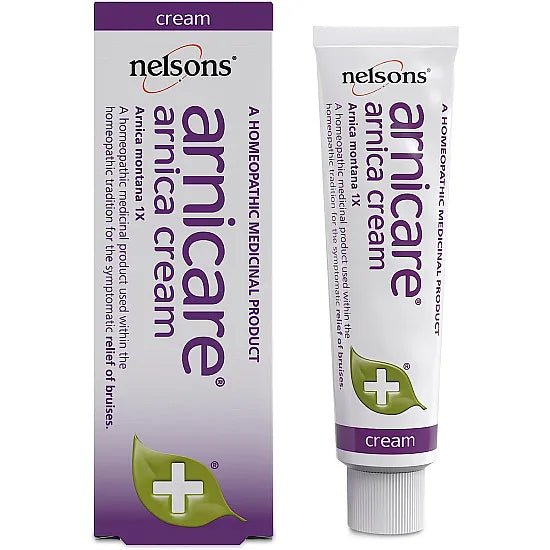
Nelsons Arnicare - Arnica Skin Cream For Bruise Relief - 30g
- ✔️ Soothes bruised skin using traditional Arnica montana extract
- ✔️ Gentle cream formula suitable for adults and children 12+
- ✔️ Targets localised swelling and discolouration from minor trauma
- ✔️ NSAID-free topical option for those avoiding ibuprofen-based gels
- ✔️ Compact 30g tube ideal for home first aid kits and sports bags
Price Checker
Not approved? Full refund
Includes FREE private prescription
Couldn't load pickup availability
How Should You Use Nelsons Arnicare Arnica Skin Cream?
Using Nelsons Arnicare correctly is simple, but a few key steps make all the difference. Always check that the skin over the bruised area is completely intact before applying — this cream is for external use on unbroken skin only.
What Is the Correct Dose of Nelsons Arnicare Arnica Skin Cream?
There is no fixed measured dose for topical creams in the same way as oral medicines, but using a small, controlled amount each time is important. Applying more than needed does not increase effectiveness and may increase the risk of skin irritation.
When Is the Best Time to Use Nelsons Arnicare Arnica Skin Cream?
There is no single "best" time of day to apply arnica cream, but consistency is key. Many people find it easiest to apply once in the morning, once in the afternoon, and once before bed — spacing applications roughly evenly across the day. Applying it shortly after a minor bump or injury, once you have confirmed the skin is intact, may help you get started with the routine promptly.
Avoid applying immediately after a hot bath or shower when skin may be more sensitive. Let the skin cool and dry fully before application.
How Long Can You Use Nelsons Arnicare Arnica Skin Cream For?
This cream is designed for short-term use while a bruise heals. Most minor bruises resolve within 1–2 weeks. If your bruise has not improved after 7–10 days of regular use, or if it appears to be worsening, stop using the cream and consult your GP or pharmacist for further assessment.
Do not use this product as a long-term daily skin treatment without medical guidance. It is intended for episodic use in response to minor skin trauma, not as a preventative or maintenance cream.
Do not exceed the recommended dose. If in doubt, speak to your pharmacist.
What Are the Most Common Side Effects of Nelsons Arnicare Arnica Skin Cream?
Most people who use Nelsons Arnicare Arnica Skin Cream as directed on intact skin do not experience any side effects. However, as with any topical product, mild reactions can occasionally occur, particularly in those with sensitive skin.
- Mild skin irritation at the application site
- Temporary redness or warmth of the skin
- Slight tingling sensation after application
These reactions are generally mild and short-lived. If they persist or worsen, stop using the cream and speak to your pharmacist.
What Are the Less Common Side Effects of Nelsons Arnicare Arnica Skin Cream?
Less commonly, some individuals — particularly those with known plant allergies — may develop a more pronounced skin reaction. This is more likely in people who are sensitive to members of the Asteraceae/Compositae plant family, which includes daisies, marigolds, and chrysanthemums.
- Localised allergic contact dermatitis (itching, blistering, or rash at the application site)
- Eczematous skin reaction with prolonged use
- Skin dryness or peeling around the treated area
If you notice any of these reactions, discontinue use immediately and consult a pharmacist or GP before reapplying.
What Are the Serious Side Effects of Nelsons Arnicare Arnica Skin Cream?
Serious side effects from topical arnica cream used as directed are very rare. However, a severe allergic reaction (anaphylaxis) is theoretically possible in individuals with significant plant allergies, though this is extremely uncommon with topical application at standard concentrations.
Seek emergency medical attention immediately if you experience any of the following after applying this cream:
- Widespread skin rash or hives spreading beyond the application site
- Swelling of the face, lips, tongue, or throat
- Difficulty breathing or swallowing
- Dizziness or feeling faint
What Should You Do If You Experience Side Effects?
If you develop any unexpected skin reaction after applying Nelsons Arnicare, stop use straight away. For mild irritation, rinse the area gently with cool water and allow the skin to settle. Contact your pharmacist for advice on whether to continue or switch to an alternative product.
For more serious reactions — particularly any signs of a widespread allergic response — seek urgent medical attention. You can also report suspected side effects of any medicine in the UK via the MHRA Yellow Card scheme at yellowcard.mhra.gov.uk.
Can Nelsons Arnicare Arnica Skin Cream Interact With Other Medicines?
Clinically significant drug interactions with topical arnica cream are not well established. However, as a precaution, avoid applying this cream to the same area as another topical medicine without first checking with your pharmacist. If you are taking anticoagulant medicines such as warfarin, it is worth mentioning your use of arnica cream to your GP, as arnica may theoretically influence platelet activity — though systemic absorption from topical use at standard concentrations is considered minimal.
Always inform your pharmacist of all medicines you are currently using, including herbal and homeopathic products, to ensure there are no concerns specific to your situation.
If you are concerned about any side effects, contact your pharmacist or GP immediately.
Written and reviewed by our qualified team
Reviewed by:
Tarun Kumar
Superintendent/ Clinical Lead
📖 Find out more about our team of medical content authors.
Content last reviewed: 11 November 2026
★ Other popular options
100% discreet packaging
Discreet, unbranded packaging for every order.
Need help?
Talk to our friendly experts now
How our service works
Service setup
Discreet packaging
Express delivery
Medically reviewed by
Tarun Kumar, Superintendent Pharmacist & Clinical Lead (GPhC 2233073)
Last updated on 11 November 2026.
Review History
Our experts continually monitor new findings in health and medicine, and we update our articles when new information becomes available.
Why this page was updated on 11 November 2026
Content checked and updated as part of our periodic review, to ensure accuracy and currentness.
Current version (11 November 2026)
Edited by: The Editorial Team
Medically reviewed by:
Tarun Kumar, GPhC No. 2233073, Superintendent Pharmacist & Clinical Lead
How we source info.
When we present you with stats, data, opinion or a consensus, we'll tell you where this came from.