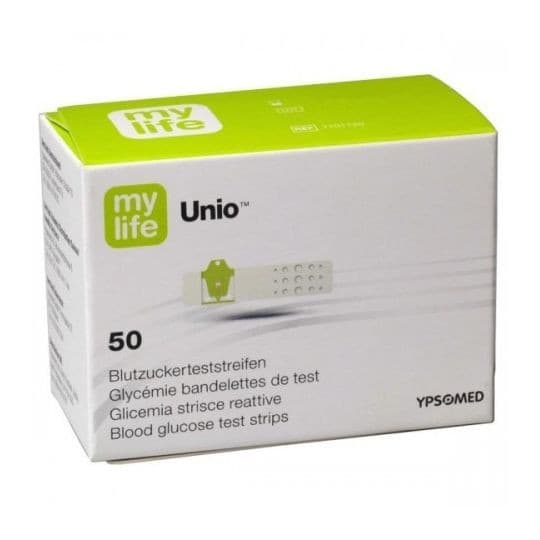
mylife Unio Blood Glucose Test Strips 50s
- ✔️ Designed exclusively for the mylife Unio blood glucose meter
- ✔️ Delivers accurate blood glucose results in approximately five seconds
- ✔️ Requires only a tiny 0.6 µL fingertip blood sample
- ✔️ Pack of 50 strips supports regular daily diabetes self-monitoring
- ✔️ Suitable for adults with type 1 or insulin-treated type 2 diabetes
Price Checker
 Lowest price guarantee
 Includes FREE private prescription


Couldn't load pickup availability
Are Blood Glucose Test Strips Right for You?
Managing diabetes day to day means keeping a close eye on your blood sugar levels — and having the right tools makes all the difference. The mylife Unio Blood Glucose Test Strips 50s are designed specifically for use with the mylife Unio blood glucose meter, giving you a reliable, straightforward way to monitor your glucose at home. Whether you have type 1 or type 2 diabetes, self-monitoring is a key part of staying in control. The NHS recommends that people with diabetes regularly check their blood glucose to help manage their condition and reduce the risk of complications. You can explore a full range of monitoring tools in our diabetes monitoring collection.
Each pack contains 50 test strips, making it a practical choice for everyday use. At £14.99, it offers a cost-effective option for those who self-fund their testing supplies. Accurate readings depend on using the correct strips for your meter — these strips are compatible only with the mylife Unio meter, so always check before purchasing.
How Do mylife Unio Test Strips Work?
The science behind these strips is straightforward but precise. Each strip contains a glucose oxidase enzyme that reacts with the glucose in your blood sample. This reaction generates a small electrical current, which the mylife Unio meter measures and converts into a blood glucose reading displayed in millimoles per litre (mmol/L).
- Insert the strip into the mylife Unio meter — the meter switches on automatically.
- A small blood sample (as little as 0.6 µL) is drawn from a fingertip lancet prick.
- Touch the blood drop to the tip of the strip; it is absorbed by capillary action.
- The glucose oxidase reaction occurs within seconds, and your result appears on screen.
- Record or review your result using the meter's memory or a diabetes diary.
Who Should Use mylife Unio Blood Glucose Test Strips?
These strips are suitable for adults who already own the mylife Unio blood glucose meter and need a reliable supply of replacement strips. They are particularly useful for people who self-monitor regularly as part of their diabetes management plan.
- Adults with type 1 diabetes who test multiple times daily.
- People with type 2 diabetes who self-monitor on the advice of their GP or diabetes nurse.
- Those on insulin therapy who need to check levels before meals and at bedtime.
- Individuals who self-fund their testing supplies and want a cost-effective pack size.
They are not intended for use in newborns or for testing at alternative body sites (such as the forearm) unless specifically advised by a healthcare professional.
How Do mylife Unio Strips Compare to Other Test Strips?
| Feature | mylife Unio Test Strips | Accu-Chek Guide Strips |
|---|---|---|
| Compatible meter | mylife Unio only | Accu-Chek Guide only |
| Sample volume | 0.6 µL | 0.6 µL |
| Pack size | 50 strips | 50 strips |
| Result time | Approx. 5 seconds | Approx. 4 seconds |
How Should You Store mylife Unio Blood Glucose Test Strips?
Proper storage is essential for accurate results. Blood glucose test strips are sensitive to heat, humidity, and light — all of which can degrade the enzyme coating and lead to unreliable readings. Always store the vial below 30°C in a dry location, away from direct sunlight. Do not refrigerate them, as condensation can damage the strips when they return to room temperature.
Once opened, use the strips within the timeframe stated on the packaging — typically three to six months. Always replace the cap firmly after removing a strip. If you're also managing other aspects of your health alongside diabetes, our vitamins and supplements collection includes products that may support general wellbeing.
This product is a medicine. Speak to your doctor or pharmacist before using if you have an underlying medical condition or are taking other medicines.
mylife Unio Blood Glucose Test Strips 50s specifications
| Treatment category | Diabetes monitoring |
| Mechanism of action | Glucose oxidase enzyme electrochemical reaction |
| Effective for | Self-monitoring of blood glucose levels |
| Suitable for | Adults with diabetes using the mylife Unio meter |
| Active ingredient | Glucose oxidase enzyme electrode |
| Pack size | 50 test strips |
| UK classification | Medical device (CE marked) |
| Preparation | Disposable electrochemical test strip |
| Route of administration | Capillary blood sample (fingertip) |
Specifications of mylife Unio Blood Glucose Test Strips 50s
What Are mylife Unio Test Strips and What Are They Used For?
The mylife Unio Blood Glucose Test Strips 50s are single-use electrochemical test strips designed for self-monitoring of blood glucose (SMBG) in people with diabetes. They work exclusively with the mylife Unio blood glucose meter and provide a reading of your blood sugar level in mmol/L within seconds of applying a small blood sample.
Regular self-monitoring helps you and your healthcare team understand how food, exercise, illness, and medication affect your blood glucose. The NHS advises that people with type 1 diabetes should test multiple times daily, while testing frequency for type 2 diabetes depends on your treatment plan. These strips are a medical device — not a medicine — but accurate use is critical for safe diabetes management.
What Do You Need to Know Before Using mylife Unio Test Strips?
Before you start using these strips, there are a few important points to be aware of. They are intended for in vitro diagnostic use only — meaning they test blood outside the body — and results should always be interpreted alongside clinical symptoms and guidance from your diabetes care team.
Do not use these strips if:
- You are using a meter other than the mylife Unio — results will be inaccurate.
- The strips are past their expiry date printed on the vial.
- The vial has been left open or exposed to high humidity or extreme temperatures.
- You are testing a neonate (newborn) — these strips are not validated for neonatal use.
- The strip appears damaged, discoloured, or the vial seal was broken on arrival.
Factors that may affect your reading:
- Certain medicines, including high-dose paracetamol, ascorbic acid (vitamin C), and some lipid-lowering drugs, may interfere with glucose oxidase-based readings — always check with your pharmacist.
- Severely low haematocrit (anaemia) or very high haematocrit (dehydration) can affect accuracy.
- Dirty or wet hands at the time of testing can dilute the sample and skew results.
How Should You Use mylife Unio Blood Glucose Test Strips?
Using these strips correctly is straightforward once you've done it a few times. Always read the instructions supplied with your mylife Unio meter before testing for the first time.
- Wash your hands thoroughly with soap and warm water, then dry completely.
- Remove one test strip from the vial and replace the cap immediately.
- Insert the strip into the mylife Unio meter — the meter will power on automatically.
- Use a fresh lancet to prick the side of your fingertip.
- Gently squeeze your finger to produce a small, round blood drop.
- Touch the tip of the strip to the blood drop — do not smear blood onto the strip.
- Hold steady until the meter beeps or confirms the sample has been absorbed.
- Read your result on the meter display and record it in your diabetes diary or app.
- Dispose of the used strip and lancet safely in a sharps bin.
| Indication | Age Group | Recommended Testing Frequency |
|---|---|---|
| Type 1 diabetes | Adults | At least 4 times daily (before meals and bedtime) |
| Type 2 diabetes (insulin) | Adults | As directed by GP or diabetes nurse |
| Type 2 diabetes (non-insulin) | Adults | As clinically indicated — discuss with your care team |
What Are the Possible Side Effects of Using mylife Unio Test Strips?
The test strips themselves do not cause systemic side effects, as they are a medical device rather than a medicine. However, the process of fingertip lancing — which is necessary to obtain a blood sample — can cause minor localised effects. If you're managing multiple aspects of your health, our electrical health and diagnostic collection includes a range of monitoring devices that may complement your diabetes care.
Common effects associated with fingertip lancing:
- Mild pain or discomfort at the puncture site.
- Minor bruising, particularly with repeated testing at the same site.
- Small amounts of bleeding beyond the required drop.
- Skin calluses over time with very frequent testing.
Less common concerns:
- Infection at the lancing site if lancets are reused or hands are not clean — always use a fresh lancet.
- Skin sensitivity or irritation in rare cases.
If you notice signs of infection — redness, swelling, warmth, or discharge — at a testing site, contact your GP promptly.
How Should You Store mylife Unio Blood Glucose Test Strips?
- Store below 30°C in a cool, dry place.
- Keep away from direct sunlight and sources of heat.
- Do not refrigerate or freeze the strips.
- Always replace the vial cap tightly after removing a strip.
- Do not use strips after the expiry date printed on the vial.
- Once opened, use within the period stated on the packaging (typically 3–6 months).
- Keep out of reach of children.
- Do not store in a bathroom or near a kitchen sink where humidity is high.
If you are also managing your wider health alongside diabetes, you may find our vitamins and supplements collection useful for supporting general nutritional wellbeing.
References
- https://www.nhs.uk/conditions/type-1-diabetes/living-with-type-1-diabetes/checking-your-blood-sugar-level/
- https://www.nhs.uk/conditions/type-2-diabetes/living-with-type-2-diabetes/checking-your-blood-sugar-level/
- https://www.nhs.uk/conditions/diabetes/
- https://www.nhs.uk/conditions/blood-sugar-testing/
- https://www.nice.org.uk/guidance/ng17
Written and reviewed by our qualified team
Your safety and success are our highest priorities. Our medical team rigorously evaluates every product and piece of advice we provide, ensuring you receive only the most effective, science-backed solutions available.
Frequently Asked Questions
Where can I buy mylife Unio Blood Glucose Test Strips online in the UK?
You can buy mylife Unio Blood Glucose Test Strips 50s directly from Cured Pharmacy online for £14.99. No prescription is required, and they are dispatched promptly to your home address. Browse our full diabetes monitoring collection for compatible meters and accessories.
How do mylife Unio Blood Glucose Test Strips work in the body?
The strips use a glucose oxidase enzyme that reacts with glucose in your blood sample to generate a small electrical current. The mylife Unio meter measures this current and converts it into a blood glucose reading displayed in mmol/L. The whole process takes approximately five seconds from applying the blood drop.
How do I use mylife Unio Test Strips step by step?
Wash and dry your hands, insert a strip into the mylife Unio meter, and use a lancet to prick the side of your fingertip. Touch the blood drop to the tip of the strip and hold steady until the meter confirms the sample. Your result will appear on screen within seconds — record it in your diabetes diary.
What is a normal blood glucose reading in mmol/L?
According to the NHS, a normal fasting blood glucose level for someone without diabetes is between 4.0 and 5.9 mmol/L. For people with diabetes, target ranges vary depending on your treatment plan and are set by your GP or diabetes care team. Always discuss your individual targets with your healthcare provider.
Are mylife Unio Test Strips compatible with other blood glucose meters?
No — mylife Unio Blood Glucose Test Strips are designed exclusively for use with the mylife Unio meter. Using them with any other meter will produce inaccurate or no results. Always check strip-meter compatibility before purchasing replacement strips.
Can I get mylife Unio Test Strips on NHS prescription?
NHS prescribing of blood glucose test strips depends on your diabetes type and treatment. People with type 1 diabetes or those using insulin are generally eligible for strips on prescription. If you have type 2 diabetes managed by diet or non-insulin medication, you may need to self-fund — speak to your GP or diabetes nurse for guidance.
How should I store mylife Unio Blood Glucose Test Strips correctly?
Store the strips below 30°C in a cool, dry place away from direct sunlight and moisture. Do not refrigerate them, as condensation when they warm up can damage the enzyme coating. Always replace the vial cap tightly after removing a strip to prevent humidity affecting accuracy.
What happens if I use an expired mylife Unio Test Strip?
Using expired strips can produce inaccurate blood glucose readings, which could lead to incorrect treatment decisions — particularly dangerous if you are adjusting insulin doses. Always check the expiry date on the vial before testing and discard any strips that have passed their date. Never rely on a reading from an expired strip.
How many times a day should I test my blood glucose?
Testing frequency depends on your diabetes type and treatment. The NHS recommends that people with type 1 diabetes test at least four times daily — before each meal and at bedtime. For type 2 diabetes, your GP or diabetes nurse will advise on how often to test based on your individual management plan.
Can any medicines affect my blood glucose test strip readings?
Yes — certain medicines can interfere with glucose oxidase-based test strips. High-dose paracetamol, ascorbic acid (vitamin C), and some other medications may affect accuracy. Always inform your pharmacist of all medicines you are taking, and check the strip instructions for a full list of potential interferences.
What are the alternatives to mylife Unio Blood Glucose Test Strips?
Alternatives include test strips for other meter systems such as Accu-Chek Guide, FreeStyle Lite, or Contour Next — but strips are not interchangeable between different meter brands. If you are considering switching systems, speak to your diabetes care team first. You can also explore our electrical health and diagnostic collection for other monitoring options.
Who is eligible to use mylife Unio Blood Glucose Test Strips?
These strips are suitable for adults with diabetes who own the mylife Unio blood glucose meter. They are not validated for use in neonates or for alternative site testing unless directed by a healthcare professional. If you are unsure whether self-monitoring is appropriate for you, consult your GP or diabetes nurse.
How long can I use mylife Unio Test Strips for?
You can continue using these strips for as long as you need to self-monitor your blood glucose, provided the strips are within their expiry date and stored correctly. Once the vial is opened, use the strips within the period stated on the packaging — typically three to six months. Regular self-monitoring is a long-term part of diabetes management for most people.
What is the latest research on blood glucose self-monitoring for type 2 diabetes?
Research and NICE guidance indicate that structured self-monitoring of blood glucose can be beneficial for people with type 2 diabetes, particularly those on insulin or at risk of hypoglycaemia. The evidence for routine self-monitoring in non-insulin-treated type 2 diabetes is less clear, and NICE recommends it only when it will lead to a change in management. Always discuss the value of testing with your diabetes care team.
What should I do if my blood glucose reading seems unexpectedly high or low?
If your reading seems unexpectedly high or low, repeat the test with a fresh strip after re-washing and drying your hands. Check that your strips are in date and stored correctly, and that your meter has been calibrated if required. If the reading remains concerning or you feel unwell, contact your GP, diabetes nurse, or call NHS 111 immediately.
Written and reviewed by our qualified team

Reviewed by:
Tarun Kumar
Superintendent/ Clinical Lead
📖 Find out more about our team of medical content authors and how we ensure the accuracy of our content with our content guidelines.
Content last updated: 14 Sep 2026
Other popular options


We’re a safe and
regulated UK service

Lowest Price Guarantee

We're convinced you won't find your treatment cheaper, but if you do we'll refund the difference.
Find out more
100% discreet packaging

Discreet, unbranded packaging for every order.
Find out more

Need help?
Talk to our friendly experts now


How our service works

Service setup

Discreet packaging

Express delivery