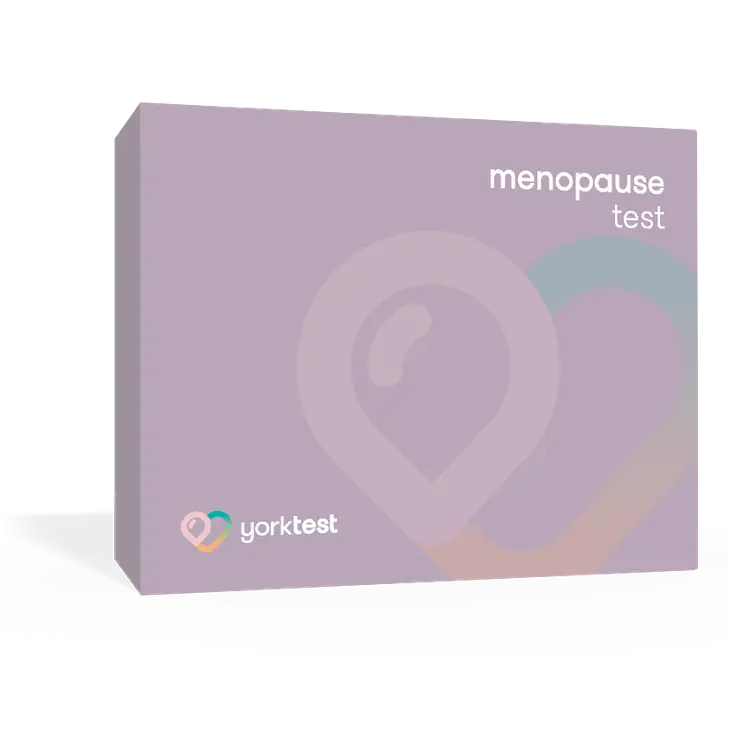
Menopause Test
- ✔️ Detects elevated FSH levels linked to perimenopause and menopause
- ✔️ Provides results in just 5 minutes from a urine sample
- ✔️ Pack includes two strips for repeat testing on separate days
- ✔️ Suitable for women aged 40+ not using hormonal contraception or HRT
- ✔️ Clinically recognised FSH threshold used for accurate indication
Price Checker
 Lowest price guarantee
 Includes FREE private prescription


Couldn't load pickup availability
What Is a Menopause Test and How Can It Help You?
Wondering whether your symptoms are down to menopause or something else entirely? You are not alone. Millions of women in the UK experience irregular periods, hot flushes, mood changes, and disrupted sleep — and many are left unsure of what is actually happening in their bodies. The menopause test from YorkTest is a simple, at-home urine test that measures your follicle-stimulating hormone (FSH) level, giving you a clearer picture of where you are in your hormonal journey. It costs £79.00 and is available without a prescription from Cured Pharmacy. If you are also exploring broader women's health products, you will find a range of relevant options to support you at every stage.
FSH is produced by the pituitary gland and plays a central role in regulating the menstrual cycle. As the ovaries begin to produce less oestrogen during perimenopause and menopause, the pituitary gland releases more FSH in an attempt to stimulate the ovaries. Detecting elevated FSH in your urine is therefore a recognised indicator that your body may be entering or has entered menopause.
How Does the YorkTest Menopause Test Work?
The test uses a lateral flow immunoassay — the same technology used in many rapid diagnostic tests — to detect FSH in a urine sample. Here is how the process works:
- You collect a urine sample, ideally using the first morning urine when FSH concentration is highest.
- The test strip is dipped into the sample for the time specified in the instructions.
- The strip is then laid flat on a clean, dry surface.
- Results appear within 5 minutes as coloured lines — one control line and one test line.
- A single line (test line only) indicates a positive result, suggesting elevated FSH levels consistent with menopause or perimenopause.
- Two lines indicate a negative result, suggesting FSH levels are not yet in the menopausal range.
It is worth noting that FSH levels can fluctuate, particularly during perimenopause. A single negative result does not rule out perimenopause if your symptoms are persistent.
Who Should Consider Using This Menopause Test?
This test is designed for women who are experiencing symptoms that may be associated with perimenopause or menopause and want an initial indication of their hormonal status before speaking to a GP. It is particularly useful if you:
- Are aged 40 or over and noticing changes in your menstrual cycle
- Are experiencing hot flushes, night sweats, or mood changes
- Have had irregular or absent periods and want to understand why
- Want to prepare for a more informed conversation with your GP or healthcare provider
It is not suitable for women currently using hormonal contraception or hormone replacement therapy (HRT), as these can suppress FSH levels and produce inaccurate results. Women under 40 experiencing these symptoms should speak to their GP promptly, as premature ovarian insufficiency requires clinical investigation.
How Does the YorkTest Menopause Test Compare to a GP Blood Test?
| Feature | YorkTest Menopause Test | GP Blood Test |
|---|---|---|
| Sample type | Urine | Blood (venous) |
| Hormones measured | FSH only | FSH, LH, oestradiol |
| Result time | 5 minutes at home | Several days |
| Clinical confirmation | No — indicative only | Yes — used for diagnosis |
| Cost | £79.00 | Free on NHS (if referred) |
Is the YorkTest Menopause Test Clinically Reliable?
The menopause test is a useful screening tool, but it is important to understand its limitations. FSH levels naturally fluctuate during perimenopause, meaning a single test taken on one day may not reflect your overall hormonal picture. The NHS advises that in women over 45 with typical symptoms, a diagnosis of menopause can often be made clinically without any blood tests at all. For women under 45, or where there is diagnostic uncertainty, a GP-requested blood test measuring FSH, LH, and oestradiol is recommended. If you are managing related symptoms such as sleep disruption, you may also find it helpful to explore sleep aid options available at Cured Pharmacy.
Always follow up a positive home test result with your GP. This test does not replace professional medical advice and should be used as a starting point for a broader conversation about your health.
This product is a medicine. Speak to your doctor or pharmacist before using if you have an underlying medical condition or are taking other medicines.
YorkTest Menopause Test specifications
| Treatment category | Diagnostic / Women's Health |
| Mechanism of action | Lateral flow immunoassay detecting urinary FSH |
| Effective for | Indicating elevated FSH levels associated with perimenopause or menopause |
| Suitable for | Women aged 40+ experiencing possible menopausal symptoms; not suitable during hormonal contraception or HRT use |
| Active ingredient | FSH-specific monoclonal antibody (lateral flow strip) |
| Pack size | 2 test strips per pack |
| UK classification | General Sale / Diagnostic device |
| Preparation | Lateral flow test strip |
| Route of administration | Urine sample (in vitro diagnostic) |
Specifications of YorkTest Menopause Test
What Is the YorkTest Menopause Test and What Is It Used For?
The YorkTest Menopause Test is an at-home, in vitro diagnostic device that detects follicle-stimulating hormone (FSH) in urine. It is used to help women identify whether their FSH levels are elevated to a degree consistent with perimenopause or menopause. Menopause is defined as the point at which a woman has not had a menstrual period for 12 consecutive months, and it typically occurs between the ages of 45 and 55 in the UK. The perimenopause — the transitional phase leading up to menopause — can begin several years earlier and is often characterised by irregular periods, vasomotor symptoms such as hot flushes and night sweats, sleep disturbance, and mood changes. This test provides an accessible first step for women who want to understand their hormonal status before seeking further medical advice.
What Do You Need to Know Before Using the YorkTest Menopause Test?
Before using this test, it is important to be aware of the following contraindications and warnings:
- Do not use if you are currently taking combined oral contraceptives, the progestogen-only pill, hormonal patches, implants, or injections — these suppress FSH and will produce unreliable results.
- Do not use if you are currently taking hormone replacement therapy (HRT), as this also affects FSH levels.
- Women under 40 with suspected menopausal symptoms should consult a GP rather than relying on a home test, as premature ovarian insufficiency requires clinical investigation.
- A positive result is not a clinical diagnosis of menopause — always follow up with your GP.
- Do not use the test if the packaging is damaged or the expiry date has passed.
- This test is for in vitro diagnostic use only — do not ingest any component.
Regarding interactions that may affect test accuracy:
- Combined hormonal contraceptives (pill, patch, ring)
- Progestogen-only contraceptives
- Hormone replacement therapy (oestrogen and/or progestogen)
- Gonadotrophin-releasing hormone (GnRH) analogues used in conditions such as endometriosis
How Should You Use the YorkTest Menopause Test?
For the most reliable result, follow these steps carefully. Using first morning urine is recommended, as FSH concentration tends to be highest at this time.
- Remove the test strip from its sealed foil pouch immediately before use.
- Collect a urine sample in the clean collection cup provided.
- Hold the test strip by the coloured end and dip the absorbent tip into the urine sample for exactly 15 seconds (or as directed in the package insert).
- Remove the strip and lay it flat on a clean, dry, non-absorbent surface.
- Read the result at 5 minutes. Do not read after 10 minutes, as results may change and become unreliable.
- Dispose of the used strip and collection cup safely in household waste.
| Indication | Age Group | Tests Recommended | Frequency |
|---|---|---|---|
| Suspected perimenopause | 40–50 years | 1–2 tests (on separate days) | Repeat if first result is negative and symptoms persist |
| Suspected menopause | 45–55 years | 1 test initially | Follow up with GP if positive |
| Monitoring (not on HRT) | 50+ years | 1 test | As needed, guided by symptoms |
What Are the Possible Side Effects of the YorkTest Menopause Test?
As a diagnostic device rather than a pharmacological product, the YorkTest Menopause Test does not cause pharmacological side effects. However, there are some considerations to be aware of:
Common considerations:
- Emotional distress or anxiety upon receiving an unexpected positive result
- Confusion if the result does not match your symptoms
- False reassurance from a negative result if symptoms are still present
Less common considerations:
- Invalid result (no control line appearing) due to incorrect technique or a faulty strip — repeat with the second strip if this occurs
- Misinterpretation of a faint line — always read the instructions carefully and contact YorkTest customer support if unsure
If you receive a positive result and feel anxious or overwhelmed, speaking to your GP is the most important next step. They can discuss symptom management, lifestyle adjustments, and whether HRT or other treatments are appropriate for you. Women experiencing significant mood changes alongside physical symptoms may also wish to explore vitamins and supplements that support general wellbeing during this transition.
How Should You Store the YorkTest Menopause Test?
- Store at room temperature, below 30°C.
- Keep in a dry place, away from direct sunlight and moisture.
- Do not refrigerate or freeze the test strips.
- Keep out of reach of children.
- Do not use after the expiry date printed on the outer packaging.
- Once removed from the foil pouch, use the strip immediately — do not store an opened strip for later use.
If you are managing other aspects of your health during the menopause transition, such as vaginal dryness or discomfort, you may find it helpful to browse personal lubricants available at Cured Pharmacy, which can provide symptomatic relief.
References
Written and reviewed by our qualified team
Your safety and success are our highest priorities. Our medical team rigorously evaluates every product and piece of advice we provide, ensuring you receive only the most effective, science-backed solutions available.
Frequently Asked Questions
Where can I buy the YorkTest Menopause Test online in the UK?
You can buy the YorkTest Menopause Test directly from Cured Pharmacy, a GPhC-registered UK online pharmacy. It is available without a prescription and is priced at £79.00. Orders are dispatched discreetly to your home address.
How does the YorkTest Menopause Test work in the body?
The test detects follicle-stimulating hormone (FSH) in your urine using a lateral flow immunoassay. As the ovaries produce less oestrogen during perimenopause and menopause, the pituitary gland releases more FSH — elevated urinary FSH is therefore a recognised indicator of this hormonal shift. The test does not measure oestrogen or LH directly.
How do I use the YorkTest Menopause Test step by step?
Collect a urine sample in the provided cup, dip the test strip for the time stated in the instructions, then lay it flat on a clean surface. Read the result at 5 minutes — do not read after 10 minutes as results may become unreliable. Using first morning urine gives the most accurate reading.
When is the best time to take the YorkTest Menopause Test?
First morning urine is recommended because FSH concentration is typically at its highest at this time of day. Avoid excessive fluid intake the evening before, as this can dilute the sample and potentially affect the result. Testing on two separate days can help account for natural FSH fluctuations during perimenopause.
What does a positive result on the menopause test mean?
A positive result indicates that your urinary FSH level is elevated to a degree consistent with perimenopause or menopause. It is not a clinical diagnosis — FSH levels can fluctuate, and other conditions can also raise FSH. Always follow up with your GP, who can arrange a blood test and discuss your symptoms in full.
What does a negative result on the menopause test mean?
A negative result suggests your FSH levels are not currently in the menopausal range, but this does not rule out perimenopause — FSH fluctuates significantly during this transition. If your symptoms persist, repeat the test on a different day or speak to your GP. A negative result on a home test should not be used to dismiss ongoing symptoms.
Can I use the menopause test if I am on the contraceptive pill?
No. Hormonal contraceptives — including the combined pill, progestogen-only pill, patch, implant, and injection — suppress FSH levels and will make the test result unreliable. You should stop hormonal contraception and wait as advised by your GP before testing. Speak to your GP about alternative contraception during this period if needed.
Can I use the menopause test if I am already taking HRT?
No. Hormone replacement therapy (HRT) suppresses FSH levels and is likely to produce a misleading negative result. If you are already taking HRT, a home FSH test is not appropriate — speak to your GP directly about your symptoms and treatment. They can assess your response to HRT clinically without relying on FSH measurement.
How accurate is the YorkTest Menopause Test?
The test is designed to detect FSH at a threshold consistent with menopausal levels, but accuracy can be affected by hydration, time of day, hormonal medications, and natural FSH fluctuations. It is a useful screening tool rather than a definitive diagnostic test. A GP-requested blood test measuring FSH, LH, and oestradiol remains the clinical gold standard.
Who is eligible to use the YorkTest Menopause Test?
The test is suitable for women aged 40 and over who are experiencing symptoms that may indicate perimenopause or menopause and are not currently using hormonal contraception or HRT. Women under 40 with suspected menopausal symptoms should see their GP promptly, as premature ovarian insufficiency requires specialist investigation. You can also explore our women's health range for additional support products.
What are the alternatives to the YorkTest Menopause Test?
The main alternative is a GP-requested blood test, which measures FSH, LH, and oestradiol and provides a more complete hormonal picture. In women over 45 with typical symptoms, the NHS advises that a clinical diagnosis can often be made without any testing at all. Other home FSH tests are available from different brands, though the principle is the same.
How many tests are included in the YorkTest Menopause Test pack?
The YorkTest Menopause Test pack contains two test strips. This is useful because FSH levels can fluctuate during perimenopause, and testing on two separate days gives a more representative picture. If both results are positive, this strengthens the case for discussing menopause management with your GP.
What should I do after getting a positive menopause test result?
Book an appointment with your GP to discuss your result and symptoms. Your GP may arrange a blood test to confirm FSH levels and assess other hormones, and can discuss options including lifestyle changes, HRT, and non-hormonal treatments. If sleep disruption is a significant symptom, you may also wish to look at sleep aid products while awaiting your appointment.
Can the menopause test detect premature ovarian insufficiency?
Elevated FSH can occur in premature ovarian insufficiency (POI), which affects women under 40, but a home test is not an appropriate diagnostic tool for this condition. POI requires specialist investigation including repeated blood tests and clinical assessment. If you are under 40 and experiencing menopausal symptoms, please see your GP rather than relying on a home test.
What are the latest research findings on home menopause FSH tests?
Current NICE guidance (NG23, updated 2019) advises that FSH testing is not routinely needed to diagnose menopause in women over 45 with typical symptoms, as clinical assessment is sufficient. For women aged 40–45 with symptoms, FSH testing can support diagnosis. Home tests are not referenced in NICE guidance as diagnostic tools, but they can be a useful prompt for seeking medical advice.
Written and reviewed by our qualified team

Reviewed by:
Tarun Kumar
Superintendent/ Clinical Lead
📖 Find out more about our team of medical content authors and how we ensure the accuracy of our content with our content guidelines.
Content last updated: 14 Sep 2026
Other popular options


We’re a safe and
regulated UK service

Lowest Price Guarantee

We're convinced you won't find your treatment cheaper, but if you do we'll refund the difference.
Find out more
100% discreet packaging

Discreet, unbranded packaging for every order.
Find out more

Need help?
Talk to our friendly experts now


How our service works

Service setup

Discreet packaging

Express delivery