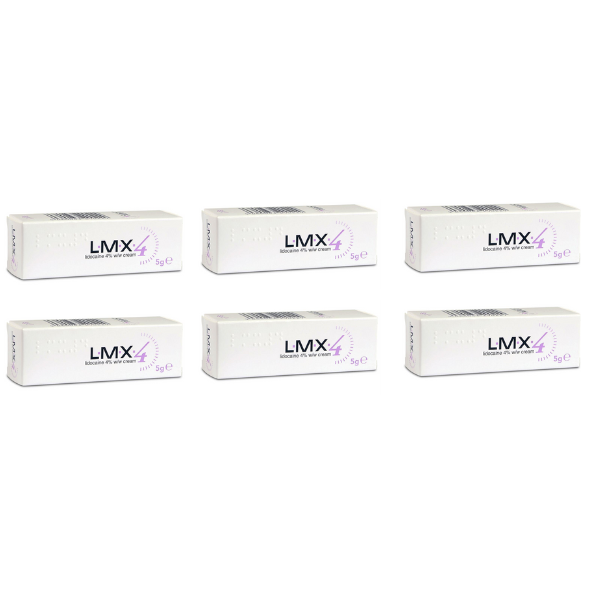
LMX4 Lidocaine 4% Cream - 5g
- ✔️ Numbs skin within 20–30 minutes using liposomal lidocaine technology
- ✔️ Reduces tattoo and procedure pain on intact skin effectively
- ✔️ Suitable for adults and children over three months old
- ✔️ Compact 5g tube — ideal for single-session tattoo preparation
- ✔️ Contains 4% lidocaine for localised, targeted skin numbing
Price Checker
 Not approved? Full refund
 Includes FREE private prescription


Couldn't load pickup availability
Is LMX4 the Right Lidocaine Cream for Tattoos?
If you're preparing for a tattoo session or a minor skin procedure and want to take the edge off the discomfort, lidocaine cream for tattoos is one of the most widely used options available without a prescription. LMX4 Lidocaine 4% Cream contains 4% lidocaine in a liposomal base — a formulation designed to help the active ingredient penetrate the outer layers of skin more effectively than standard cream bases. At just £5.19 for a 5g tube, it's an accessible, practical choice for anyone looking to manage localised skin discomfort before a procedure. You can browse our full range of first aid products if you're stocking up on essentials alongside this cream.
Lidocaine is a well-established local anaesthetic used across a wide range of clinical and cosmetic settings. It works by temporarily blocking nerve signals in the skin, reducing the sensation of pain at the site of application. The NHS recognises lidocaine as a standard topical anaesthetic used before minor procedures such as blood tests, cannula insertion, and skin treatments.
How Does LMX4 Lidocaine 4% Cream Work?
LMX4 uses a liposomal delivery system to carry lidocaine into the deeper layers of the skin. Liposomes are tiny lipid-based vesicles that fuse with skin cell membranes, allowing the active ingredient to reach the nerve endings more efficiently than a conventional cream. Here's how the process works:
- You apply the cream to clean, intact skin and cover it with an occlusive dressing.
- The liposomal particles begin penetrating the stratum corneum (the outermost skin layer) within minutes.
- Lidocaine reaches the nerve endings beneath the skin and blocks sodium ion channels.
- This prevents the nerve from generating or transmitting pain signals to the brain.
- Numbing typically begins within 20–30 minutes and can last up to 60 minutes after removal.
It's worth noting that the numbing effect is localised — it only affects the area where the cream has been applied. It does not enter the bloodstream in significant amounts when used correctly on intact skin.
Who Should Use LMX4 Lidocaine 4% Cream?
LMX4 is suitable for adults and children (under appropriate guidance) who need temporary skin numbing before a minor procedure or cosmetic treatment. It's particularly popular among people who experience anxiety around needles or pain during tattoo sessions. That said, it's not appropriate for everyone — always read the label carefully.
- Adults preparing for tattoo sessions who want to reduce discomfort
- People undergoing minor skin procedures such as laser treatments or waxing
- Patients anxious about needle-based procedures like blood tests or injections
- Individuals with a low pain threshold who need localised numbing on intact skin
How Does LMX4 Compare to Other Numbing Creams?
| Feature | LMX4 Lidocaine 4% Cream | EMLA Cream (Lidocaine 2.5% / Prilocaine 2.5%) |
|---|---|---|
| Active ingredient(s) | Lidocaine 4% | Lidocaine 2.5% + Prilocaine 2.5% |
| Delivery system | Liposomal base | Oil-in-water emulsion |
| Onset of action | 20–30 minutes | 45–60 minutes |
| OTC availability | Yes | Yes (some formulations) |
Is LMX4 Suitable for Sensitive Skin and How Should It Be Stored?
If you have sensitive skin or a history of allergic reactions to local anaesthetics, speak to your pharmacist before using this cream. Lidocaine cream for tattoos should only ever be applied to intact, unbroken skin — never on open wounds, inflamed areas, or near the eyes and mucous membranes. Store LMX4 below 25°C, away from direct sunlight, and keep it out of reach of children. Do not freeze the product. If you're also managing other skin concerns, our skin care collection includes a range of products that may complement your routine.
This product is a medicine. Speak to your doctor or pharmacist before using if you have an underlying medical condition or are taking other medicines.
LMX4 Lidocaine 4% Cream 5g specifications
| Treatment category | Topical anaesthetic / First aid |
| Mechanism of action | Sodium channel blockade via liposomal lidocaine delivery |
| Effective for | Skin numbing before tattoos, minor procedures, and injections |
| Suitable for | Adults and children (with guidance); intact skin only |
| Active ingredient | Lidocaine 4% |
| Pack size | 5g |
| Strength | 4% w/w |
| UK classification | General Sale / OTC |
| Drug class | Local anaesthetic (amide type) |
| Preparation | Cream (liposomal base) |
| Route of administration | Topical (cutaneous) |
Specifications of LMX4 Lidocaine 4% Cream 5g
What Is LMX4 Lidocaine 4% Cream and What Is It Used For?
LMX4 Lidocaine 4% Cream is a topical local anaesthetic containing 4% lidocaine in a liposomal formulation. It is used to temporarily numb the surface of the skin before minor painful procedures. Common uses include preparation for tattoo sessions, laser skin treatments, waxing, blood tests, and cannula insertion. The cream is applied to intact skin and left under an occlusive dressing for a set period before the procedure begins. It is available over the counter and does not require a prescription for most adult uses.
What Do You Need to Know Before Using LMX4 Lidocaine 4% Cream?
Before applying LMX4, it's important to check whether it is appropriate for you. Do not use this cream if any of the following apply:
- You are allergic to lidocaine, any other amide-type local anaesthetic, or any ingredient in the cream
- The skin in the treatment area is broken, infected, inflamed, or eczematous
- You are applying it near the eyes, ears, or mucous membranes
- You are using it on a child under 3 months old without medical supervision
- You have a condition called methaemoglobinaemia or glucose-6-phosphate dehydrogenase (G6PD) deficiency
The following medicines may interact with lidocaine when used topically in large amounts or over large areas:
- Antiarrhythmic drugs such as mexiletine or amiodarone — may increase the risk of cardiac side effects
- Other local anaesthetics — additive effects possible if used simultaneously
- Cimetidine and beta-blockers — may reduce lidocaine clearance in the body
Always tell your pharmacist about any medicines you are currently taking, including herbal remedies and supplements. If you're looking for other pain relief options, our collection includes a variety of products for different types of discomfort.
How Should You Use LMX4 Lidocaine 4% Cream?
Using LMX4 correctly is key to getting the best numbing effect. Follow these steps carefully:
- Wash and dry the area of skin where you plan to apply the cream.
- Apply a thick layer of LMX4 cream directly to the skin — do not rub it in.
- Cover the cream with an occlusive dressing (such as cling film or a supplied dressing) to keep it in place.
- Leave the cream on for 20–60 minutes, depending on the procedure and depth of numbing required.
- Remove the dressing and wipe away all remaining cream before the procedure begins.
- Do not apply to more skin than necessary, and do not leave on longer than directed.
| Indication | Age Group | Dose | Application Time |
|---|---|---|---|
| Minor skin procedures / tattoos | Adults | Thick layer to affected area (up to 10g per site) | 30–60 minutes |
| Needle procedures (e.g. blood tests) | Adults and children over 3 months | Thin to moderate layer | 20–30 minutes |
| Children (under medical guidance) | 3 months – 12 years | As directed by a healthcare professional | As directed |
What Are the Possible Side Effects of LMX4 Lidocaine 4% Cream?
Like all medicines, LMX4 can cause side effects, although not everyone experiences them. Most side effects are mild and localised to the area of application.
Common side effects:
- Temporary redness (erythema) at the application site
- Mild burning or stinging sensation during or after application
- Skin pallor (paleness) or slight swelling at the treated area
- Itching or a feeling of warmth on the skin
Less common side effects:
- Contact dermatitis or localised skin irritation
- Oedema (swelling) at the application site
- Rarely, methaemoglobinaemia — a condition where the blood's ability to carry oxygen is reduced (more likely with excessive use or in young children)
Serious allergic reactions (anaphylaxis) are very rare but can include swelling of the face, difficulty breathing, or a sudden drop in blood pressure. If you notice any of these symptoms, stop using the cream immediately and seek emergency medical help. You can also find further guidance in our creams and ointments section for related topical products.
How Should You Store LMX4 Lidocaine 4% Cream?
- Store below 25°C in a cool, dry place away from direct sunlight
- Do not freeze the product — freezing can alter the liposomal formulation
- Keep the tube tightly closed when not in use
- Keep out of the reach and sight of children at all times
- Do not use after the expiry date printed on the tube or carton
- Do not dispose of medicines via wastewater or household waste — return unused product to your pharmacy
References
Written and reviewed by our qualified team
Your safety and success are our highest priorities. Our medical team rigorously evaluates every product and piece of advice we provide, ensuring you receive only the most effective, science-backed solutions available.
Frequently Asked Questions
Where can I buy LMX4 Lidocaine 4% Cream online in the UK?
You can buy LMX4 Lidocaine 4% Cream 5g directly from Cured Pharmacy, a GPhC-registered UK online pharmacy, for just £5.19. No prescription is needed for this over-the-counter topical anaesthetic. It's available for fast UK delivery, making it easy to have it ready before your appointment or tattoo session.
How does LMX4 lidocaine cream work in the body?
LMX4 uses a liposomal delivery system to carry lidocaine through the outer layers of the skin to the nerve endings beneath. Once there, lidocaine blocks sodium ion channels, which prevents the nerve from generating or transmitting pain signals. The result is a temporary, localised numbing effect that typically begins within 20–30 minutes of application.
How do I use LMX4 cream step by step?
Start by cleaning and drying the area of skin you want to numb. Apply a thick layer of LMX4 cream without rubbing it in, then cover it with an occlusive dressing such as cling film. Leave it in place for 20–60 minutes, then wipe away all the cream before your procedure begins.
How long does LMX4 numbing cream take to work?
LMX4 typically begins to numb the skin within 20–30 minutes of application under an occlusive dressing. For deeper or more prolonged numbing — such as before a tattoo — leaving it on for up to 60 minutes may provide a more effective result. The numbing effect generally lasts for 30–60 minutes after the cream is removed.
Is LMX4 cream safe to use before getting a tattoo?
Yes, LMX4 is one of the most commonly used lidocaine creams for tattoos in the UK, applied to intact skin before the needle touches the area. It's important to wipe the cream away completely before the tattooing begins, as residue can affect ink absorption. Always follow the directions and do not apply to broken or irritated skin.
What are the side effects of LMX4 lidocaine cream?
The most common side effects are mild and localised, including temporary redness, a slight burning or stinging sensation, and skin pallor at the application site. These usually resolve quickly once the cream is removed. Serious allergic reactions are rare but require immediate medical attention — stop use and call 999 if you experience swelling of the face, difficulty breathing, or dizziness.
Can children use LMX4 lidocaine cream?
LMX4 can be used in children aged 3 months and over for minor procedures, but only under the guidance of a healthcare professional. The dose and application time should be adjusted based on the child's age and weight. Do not use in babies under 3 months old without specific medical advice.
What is the difference between LMX4 and EMLA cream?
LMX4 contains 4% lidocaine in a liposomal base, while EMLA cream contains a combination of lidocaine 2.5% and prilocaine 2.5% in an emulsion. The liposomal delivery in LMX4 may allow for a faster onset of numbing compared to EMLA's standard emulsion base. Both are available over the counter in the UK for topical skin numbing.
Who should not use LMX4 lidocaine cream?
You should not use LMX4 if you are allergic to lidocaine or any amide-type local anaesthetic. It should also be avoided on broken, infected, or inflamed skin, and must not be applied near the eyes or mucous membranes. People with methaemoglobinaemia or G6PD deficiency should speak to a doctor before use.
How long does the numbing effect of LMX4 last after removal?
After you wipe away LMX4 cream, the numbing effect typically lasts for around 30–60 minutes, though this can vary depending on skin type, the area treated, and how long the cream was left on. Thicker skin areas such as the back or thighs may experience a shorter duration of effect than thinner-skinned areas.
Can I use LMX4 cream on my face?
LMX4 can be applied to facial skin for procedures such as laser treatments or cosmetic injections, provided the skin is intact and the cream is kept well away from the eyes, nostrils, and mouth. Use a smaller amount on the face and do not leave it on for longer than directed. If you're unsure, speak to your pharmacist or treating practitioner first.
Does LMX4 cream interact with any other medicines?
When used as directed on small areas of intact skin, significant drug interactions are unlikely. However, if you are taking antiarrhythmic medicines such as mexiletine or amiodarone, or other local anaesthetics, speak to your pharmacist before use. Using LMX4 over large areas or for extended periods increases the risk of systemic absorption and potential interactions.
How long can you use LMX4 cream for?
LMX4 is intended for short-term, occasional use before specific procedures rather than as a long-term daily treatment. There is no defined maximum number of uses, but you should not apply it continuously or over large areas of skin without medical advice. If you find yourself needing it frequently for ongoing pain, speak to your GP about alternative pain relief options.
What are the alternatives to LMX4 numbing cream?
The main alternative topical anaesthetic available in the UK is EMLA cream, which contains lidocaine and prilocaine. Other options include lidocaine gel or spray formulations used in clinical settings. For general skin discomfort unrelated to procedures, you might also explore our creams and ointments collection for suitable alternatives.
What are the latest studies on lidocaine cream for tattoos?
Research into topical lidocaine for tattoo pain management is ongoing, with studies generally supporting its effectiveness in reducing procedural discomfort when applied correctly before skin penetration. Liposomal formulations like LMX4 have been shown in clinical literature to offer faster skin penetration compared to conventional cream bases. Always use evidence-based products from registered pharmacies rather than unregulated alternatives sold online.
Written and reviewed by our qualified team

Reviewed by:
Tarun Kumar
Superintendent/ Clinical Lead
📖 Find out more about our team of medical content authors and how we ensure the accuracy of our content with our content guidelines.
Content last updated: 14 Sep 2026
Other popular options


We’re a safe and
regulated UK service

100% discreet packaging

Discreet, unbranded packaging for every order.

Need help?
Talk to our friendly experts now


How our service works

Service setup

Discreet packaging

Express delivery