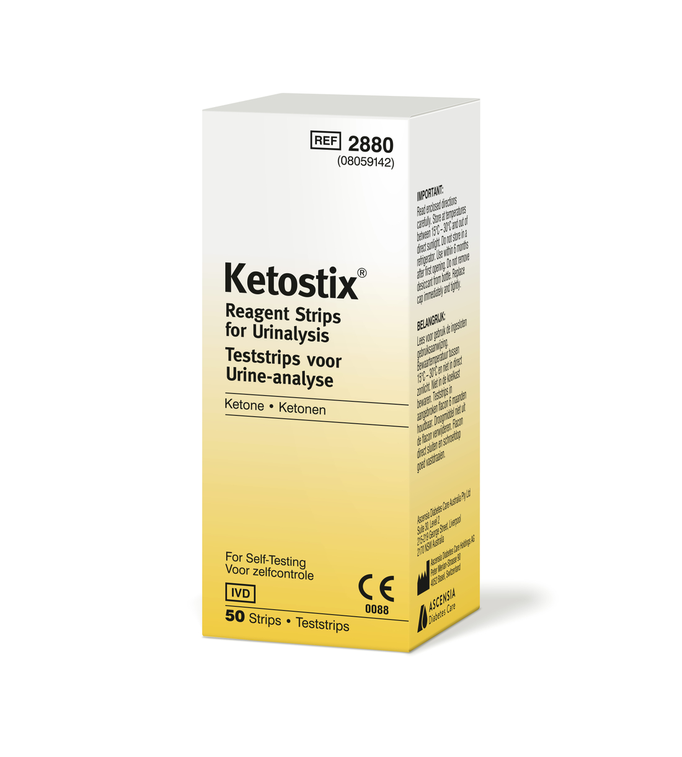
Ketostix Reagent Strips for Ketone Urinalysis - 50 Test Strips
- ✔️ Detects urinary ketones quickly with a simple 15-second dip test
- ✔️ Suitable for type 1 diabetes ketone monitoring during illness
- ✔️ Helps confirm nutritional ketosis for ketogenic diet followers
- ✔️ 50 strips per pack for consistent, regular home monitoring
- ✔️ Uses sodium nitroprusside reagent for reliable acetoacetate detection
Price Checker
 Lowest price guarantee
 Includes FREE private prescription


Couldn't load pickup availability
What Are Ketone Urine Test Strips and How Do They Help?
If you're managing diabetes, following a ketogenic diet, or simply keeping a closer eye on your metabolic health, ketone urine test strips offer a quick, affordable, and non-invasive way to check your ketone levels at home. Ketostix Reagent Strips — a pack of 50 — are one of the most widely recognised options available in the UK, trusted by both healthcare professionals and patients alike. At just £4.99, they're an accessible tool for anyone who needs regular monitoring without the cost of a blood ketone meter.
Ketones are produced when your body breaks down fat for energy instead of glucose. This can happen during fasting, low-carbohydrate eating, or when insulin levels are insufficient — as in uncontrolled diabetes. Elevated ketone levels in urine can be an early warning sign of diabetic ketoacidosis (DKA), a serious and potentially life-threatening condition. The NHS advises people with type 1 diabetes in particular to test for ketones when blood glucose is high or during illness. You can explore a wider range of diabetes monitoring products at Cured Pharmacy to support your overall management routine.
How Do Ketostix Reagent Strips Work?
The science behind these strips is straightforward. Each strip contains a small reagent pad impregnated with sodium nitroprusside. When you dip the strip into a urine sample, the reagent reacts specifically with acetoacetate — one of the three main ketone bodies produced during fat metabolism. The reaction causes a visible colour change on the pad.
- Dip the strip into fresh urine for two seconds
- Remove and tap off any excess urine
- Hold the strip horizontally for exactly 15 seconds
- Compare the colour of the reagent pad to the colour chart on the packaging
- Record your result — colours range from beige (negative) through pink to deep purple (large ketones)
It's worth noting that Ketostix strips detect acetoacetate only, not beta-hydroxybutyrate (BHB), which is the predominant ketone in the bloodstream. This means urine strips can sometimes underestimate ketone levels, particularly in early or prolonged ketosis. For clinical accuracy in diabetes management, your care team may recommend a blood ketone meter alongside urine testing.
Who Should Use Ketostix Reagent Strips?
These strips are suitable for a broad range of people. They're particularly useful if you fall into one of the following groups:
- People with type 1 diabetes monitoring for DKA, especially during illness or when blood glucose exceeds 14 mmol/L
- People with type 2 diabetes on SGLT2 inhibitors, where euglycaemic DKA is a known risk
- Individuals following a ketogenic or very low-carbohydrate diet who want to confirm nutritional ketosis
- Those who are fasting for medical or personal reasons and wish to track metabolic changes
They are not intended to replace blood glucose monitoring or professional medical advice. If you're unsure whether ketone testing is appropriate for your situation, speak to your GP or diabetes nurse before starting.
How Do Ketostix Strips Compare to Blood Ketone Meters?
| Feature | Ketostix Urine Strips | Blood Ketone Meter |
|---|---|---|
| Ketone measured | Acetoacetate (urine) | Beta-hydroxybutyrate (blood) |
| Invasiveness | Non-invasive | Finger-prick required |
| Cost per test | ~£0.10 per strip | ~£1.00–£2.00 per strip |
| Clinical accuracy | Good screening tool | Higher clinical accuracy |
| Suitable for home use | Yes | Yes |
How Should You Store Ketostix Strips and Are They Clinically Reliable?
Proper storage is essential for accurate results. Keep your ketone urine test strips in their original container with the cap tightly closed. Store below 30°C, away from direct sunlight, moisture, and heat. Do not refrigerate. Always check the expiry date before use — expired strips can give false negative results, which could be dangerous if you're monitoring for DKA. Once opened, use within six months or by the expiry date, whichever comes first.
If you're also managing other aspects of your health alongside ketone monitoring, you might find it helpful to browse our vitamins and supplements range, which includes products that support metabolic and general wellbeing. Always discuss any new supplement with your pharmacist or GP, particularly if you have diabetes.
This product is a medicine. Speak to your doctor or pharmacist before using if you have an underlying medical condition or are taking other medicines.
Ketostix Reagent Strips for Ketone Urinalysis - 50 Test Strips specifications
| Treatment category | Diabetes monitoring / Metabolic health |
| Mechanism of action | Sodium nitroprusside reacts with acetoacetate in urine to produce a colour change |
| Effective for | Detection of urinary ketones |
| Suitable for | Adults and children (under medical supervision for children) |
| Active ingredient | Sodium nitroprusside |
| Pack size | 50 test strips |
| UK classification | General Sale / Medical Device |
| Preparation | Reagent strip |
| Route of administration | Urine dip test (in vitro diagnostic) |
Specifications of Ketostix Reagent Strips for Ketone Urinalysis - 50 Test Strips
What Are Ketostix Reagent Strips and What Are They Used For?
Ketostix Reagent Strips are single-use, in vitro diagnostic test strips designed to detect the presence and approximate concentration of ketones — specifically acetoacetate — in urine. They are used as a screening tool for ketonaemia (elevated blood ketones) by detecting the ketones that spill into urine when levels rise. The NHS recommends ketone testing for people with type 1 diabetes during illness, when blood glucose is persistently elevated, or when symptoms of DKA are present, such as nausea, vomiting, or abdominal pain. They are also used by people following ketogenic diets to confirm they have entered a state of nutritional ketosis.
What Do You Need to Know Before Using Ketostix Strips?
Before using these strips, there are some important considerations to be aware of. Do not use them as a replacement for blood glucose monitoring or professional medical assessment.
Do not use Ketostix strips if:
- The strips are past their expiry date
- The strips have been exposed to moisture, heat, or direct sunlight
- The container has been left open for an extended period
- The colour of the unused reagent pad has changed from its original beige colour
Warnings and precautions:
- A negative result does not rule out ketoacidosis — blood ketone testing may be needed for confirmation
- Certain substances may interfere with results, including large amounts of ascorbic acid (vitamin C) in urine
- Levodopa and other compounds containing sulphydryl groups may cause atypical colour reactions
- Highly pigmented urine (e.g. from certain medications or dehydration) may make colour comparison difficult
- Children should only use these strips under adult and medical supervision
Known drug interactions:
- Levodopa: may produce false positive results
- High-dose ascorbic acid (vitamin C): may suppress the colour reaction, potentially causing false negative results
- Phenylketones and other sulphydryl-containing compounds: may cause atypical colour changes
How Should You Use Ketostix Reagent Strips?
Using Ketostix strips correctly is essential for reliable results. Follow these steps carefully each time you test.
- Wash and dry your hands thoroughly before handling the strips
- Remove one strip from the container and replace the cap immediately
- Collect a fresh urine sample in a clean, dry container
- Dip the reagent end of the strip into the urine sample for exactly two seconds
- Remove the strip and tap the edge gently against the container to remove excess urine
- Hold the strip horizontally — do not let the reagent pad touch anything
- Wait exactly 15 seconds
- Compare the colour of the reagent pad to the colour chart on the label in good lighting
- Record your result and note the time and date
- Dispose of the used strip safely in household waste
| Indication | Age Group | Frequency | When to Seek Help |
|---|---|---|---|
| Type 1 diabetes (illness/high BG) | Adults and children (supervised) | Every 2–4 hours during illness | Moderate or large result — contact care team immediately |
| Ketogenic diet monitoring | Adults | Once or twice daily | Large result unexpectedly — seek medical advice |
| SGLT2 inhibitor users | Adults | As directed by GP or diabetes team | Any positive result during illness — contact GP |
What Are the Possible Side Effects of Ketostix Strips?
Ketostix strips are an in vitro diagnostic device — they are not ingested or applied to the body, so systemic side effects do not apply. However, there are a small number of practical considerations to be aware of when handling the strips.
Common issues:
- Skin irritation if the reagent pad comes into prolonged contact with skin — rinse with water if this occurs
- Difficulty reading results in poor lighting or if urine is heavily pigmented
- Inaccurate results if the strip is read too early or too late after dipping
Less common issues:
- False negative results due to expired strips or improper storage
- False positive results due to certain medications (e.g. levodopa)
- Colour blindness may make interpretation of results difficult — seek assistance if needed
If you receive an unexpected result — particularly a moderate or large reading — do not ignore it. Contact your GP or diabetes care team promptly. You can also find additional support products in our electrical health and diagnostic range, including blood glucose and ketone meters for more detailed monitoring.
How Should You Store Ketostix Reagent Strips?
- Store in the original container with the cap tightly closed at all times
- Keep below 30°C — do not refrigerate or freeze
- Protect from direct sunlight, heat, and moisture
- Do not store in a bathroom cabinet where humidity is high
- Check the expiry date before each use and discard any expired strips
- Once opened, use within six months or by the expiry date, whichever is sooner
- Keep out of reach of children
- Do not transfer strips to another container
If you're managing a long-term condition such as diabetes and need a broader range of monitoring and health products, our diabetes monitoring collection has everything you need in one place.
References
- https://www.nhs.uk/conditions/diabetic-ketoacidosis/
- https://www.nhs.uk/conditions/type-1-diabetes/living-with-type-1-diabetes/illness-and-sick-days/
- https://www.nhs.uk/conditions/type-1-diabetes/
- https://www.nhs.uk/conditions/type-2-diabetes/managing-type-2-diabetes/understanding-medicine-options/
- https://www.nhs.uk/conditions/ketosis/
- https://www.nice.org.uk/guidance/ng17
Written and reviewed by our qualified team
Your safety and success are our highest priorities. Our medical team rigorously evaluates every product and piece of advice we provide, ensuring you receive only the most effective, science-backed solutions available.
Frequently Asked Questions
Where can I buy Ketostix strips online in the UK?
You can buy Ketostix Reagent Strips online in the UK from Cured Pharmacy for just £4.99 for a pack of 50 strips. No prescription is needed, and they are dispatched quickly to your home address. They are also available from some high street pharmacies, though online purchasing is often more convenient and cost-effective.
How do Ketostix strips detect ketones in urine?
Each Ketostix strip contains a reagent pad coated with sodium nitroprusside, which reacts chemically with acetoacetate — a ketone body — present in urine. This reaction produces a colour change on the pad, ranging from beige (no ketones) to deep purple (high ketone concentration). The colour is then compared to the reference chart on the packaging to estimate the level of ketonaemia.
How do I use Ketostix strips correctly step by step?
Dip the reagent end of the strip into a fresh urine sample for exactly two seconds, then remove it and tap the edge gently to remove excess urine. Hold the strip horizontally and wait exactly 15 seconds before comparing the colour of the pad to the chart on the label. Reading the result too early or too late can affect accuracy, so timing is important.
What do the different colours on Ketostix strips mean?
The colour scale on the Ketostix packaging ranges from beige (negative — no ketones detected) through shades of pink to deep purple, which indicates a large concentration of ketones. A trace or small result is common in people following a ketogenic diet, while a moderate or large result in someone with diabetes warrants urgent contact with a healthcare professional. Always interpret results in the context of your symptoms and overall health.
Are Ketostix strips accurate enough for diabetes management?
Ketostix strips are a reliable and widely used screening tool for detecting urinary ketones, but they only measure acetoacetate and not beta-hydroxybutyrate, which is the predominant ketone in the blood during DKA. This means they can sometimes underestimate ketone levels, particularly in the early stages of DKA. For this reason, your diabetes care team may recommend confirming a positive urine result with a blood ketone meter.
Can I use Ketostix strips if I follow a ketogenic diet?
Yes, ketone urine test strips are widely used by people on ketogenic or very low-carbohydrate diets to confirm they have entered nutritional ketosis. A trace to small result is typical and generally considered safe in healthy adults without diabetes. If you consistently see a large result and are not diabetic, it is still worth mentioning to your GP, as very high ketone levels can occasionally occur in non-diabetic individuals during prolonged fasting or extreme carbohydrate restriction.
Who is eligible to use Ketostix reagent strips?
Ketostix strips are suitable for adults and, under medical supervision, for children with type 1 diabetes. They are also appropriate for adults with type 2 diabetes who are taking SGLT2 inhibitors, individuals following ketogenic diets, and anyone advised by their GP or diabetes nurse to monitor urinary ketones. If you are pregnant and have diabetes, speak to your midwife or diabetes team before using ketone strips, as ketone targets may differ during pregnancy.
What should I do if my Ketostix result shows a large amount of ketones?
If you have diabetes and your strip shows a moderate or large ketone result, contact your diabetes care team or call NHS 111 immediately, as this may indicate the early stages of diabetic ketoacidosis. Do not wait for symptoms to worsen — DKA can develop rapidly and is a medical emergency. If you do not have diabetes and see a large result unexpectedly, speak to your GP for further assessment.
What are the alternatives to Ketostix urine strips?
The main alternative is a blood ketone meter, which measures beta-hydroxybutyrate directly from a finger-prick blood sample and is considered more clinically accurate, particularly for diagnosing DKA. Breath ketone analysers are another option, though they are less commonly used in clinical practice. You can explore a range of monitoring options in our electrical health and diagnostic collection.
Can anything interfere with Ketostix strip results?
Yes, several factors can affect the accuracy of results. High doses of vitamin C (ascorbic acid) in urine may suppress the colour reaction, potentially causing a false negative. Levodopa and other sulphydryl-containing compounds can cause atypical colour changes, leading to false positive readings. Heavily pigmented urine — from certain medications, dehydration, or foods like beetroot — can also make the colour comparison more difficult to interpret accurately.
How often should I test my ketones using Ketostix strips?
For people with type 1 diabetes during illness or when blood glucose is above 14 mmol/L, the NHS recommends testing every two to four hours. For those following a ketogenic diet, once or twice daily is typically sufficient to monitor ketosis. If you are on SGLT2 inhibitors, follow the specific guidance given by your GP or diabetes team regarding testing frequency.
How long can I use Ketostix strips for?
You can use Ketostix strips for as long as clinically indicated — there is no set maximum duration of use. However, once the container is opened, the strips should be used within six months or by the printed expiry date, whichever comes first. Always check the expiry date before each test, as expired strips can give unreliable results.
Do Ketostix strips have any side effects?
Because Ketostix strips are an in vitro diagnostic device — meaning they are used outside the body on a urine sample — they do not cause systemic side effects. The only practical concern is mild skin irritation if the reagent pad comes into prolonged contact with skin, which can be resolved by rinsing with water. Inaccurate results due to improper use or storage are the most common issue rather than any physical side effect.
What is the latest research on urine ketone testing?
Current clinical guidance, including NICE guidelines for type 1 diabetes (NG17), continues to recommend urine ketone testing as a practical first-line screening tool, particularly in community settings where blood ketone meters may not be immediately available. Research has increasingly highlighted the limitations of urine strips compared to blood ketone meters for diagnosing DKA, which is why many diabetes teams now recommend blood testing as the preferred method when possible. Urine strips remain a cost-effective and accessible option for routine monitoring and dietary ketosis confirmation.
Can I use Ketostix strips during pregnancy?
Pregnant women with diabetes may be advised to monitor ketones, but the targets and frequency of testing during pregnancy differ from standard guidance and should be discussed with your midwife or obstetric diabetes team. Ketosis during pregnancy — even at low levels — can carry risks for the developing baby, so professional guidance is essential. If you are pregnant and concerned about your ketone levels, do not rely solely on home testing — contact your maternity care team promptly. You may also find relevant products in our women's health range.
Written and reviewed by our qualified team

Reviewed by:
Tarun Kumar
Superintendent/ Clinical Lead
📖 Find out more about our team of medical content authors and how we ensure the accuracy of our content with our content guidelines.
Content last updated: 14 Sep 2026
Other popular options


We’re a safe and
regulated UK service

Lowest Price Guarantee

We're convinced you won't find your treatment cheaper, but if you do we'll refund the difference.
Find out more
100% discreet packaging

Discreet, unbranded packaging for every order.
Find out more

Need help?
Talk to our friendly experts now


How our service works

Service setup

Discreet packaging

Express delivery