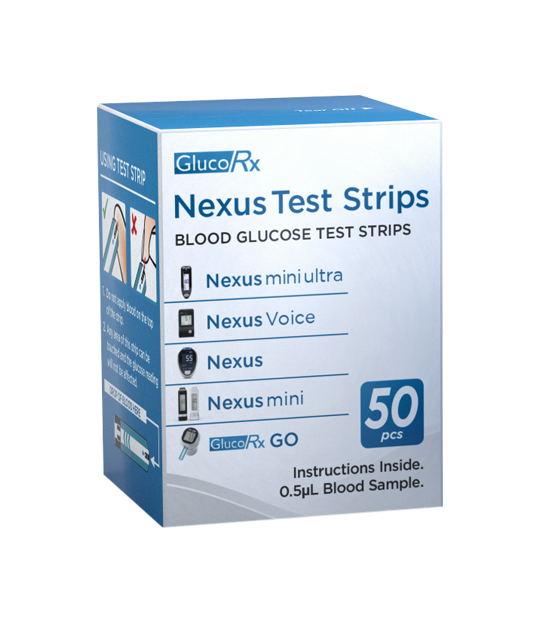
GlucoRx Nexus 50 Test Strips
- ✔️ Compatible exclusively with the GlucoRx Nexus blood glucose meter
- ✔️ Delivers blood glucose results in approximately 5 seconds
- ✔️ Meets ISO 15197:2013 accuracy standards for reliable readings
- ✔️ Suitable for type 1, type 2, and gestational diabetes monitoring
- ✔️ Pack of 50 strips for consistent, cost-effective daily testing
Price Checker
 Lowest price guarantee
 Includes FREE private prescription


Couldn't load pickup availability
What Are GlucoRx Nexus Test Strips and How Do They Help?
If you're living with diabetes, keeping a close eye on your blood glucose levels is one of the most important things you can do for your health. GlucoRx Nexus test strips are designed specifically for use with the GlucoRx Nexus blood glucose meter, giving you a fast, straightforward way to check your readings at home or on the go. Each pack contains 50 strips, priced at just £14.49, making regular self-monitoring genuinely accessible. You can browse our full range of monitoring products in our diabetes monitoring collection.
The NHS recommends that people with diabetes monitor their blood glucose regularly, particularly those on insulin therapy or certain other medications. Consistent testing helps you and your healthcare team spot patterns, adjust treatment, and reduce the risk of both short-term complications like hypoglycaemia and longer-term issues such as nerve or kidney damage.
How Do GlucoRx Nexus Test Strips Work?
The strips use an electrochemical biosensor technology. When a small blood sample touches the absorbent tip of the strip, a glucose oxidase enzyme reacts with the glucose in your blood. This reaction generates a tiny electrical current that the GlucoRx Nexus meter measures and converts into a mmol/L reading — usually within seconds.
- A lancet is used to obtain a small capillary blood sample, typically from a fingertip.
- The blood sample is applied to the coloured absorbent tip of the inserted strip.
- The enzyme electrode reacts with glucose in the sample.
- The meter displays your blood glucose result in mmol/L within approximately 5 seconds.
The strips are designed to meet ISO 15197:2013 accuracy standards, which means results should be within ±15% of a laboratory reference value for the majority of readings. Always check that your strips are within their expiry date and that the vial has been stored correctly, as both factors affect accuracy.
Who Should Use GlucoRx Nexus Test Strips?
These strips are suitable for adults and children who have been advised by their GP, diabetes nurse, or specialist to self-monitor their blood glucose. They are intended for use with the GlucoRx Nexus meter only — they will not work with other meter models, even other GlucoRx devices.
- People with type 1 diabetes who test multiple times daily.
- People with type 2 diabetes on insulin or certain oral medications.
- Those newly diagnosed who are learning how food, exercise, and medication affect their levels.
- Individuals whose healthcare team has specifically recommended the GlucoRx Nexus system.
If you are unsure whether self-monitoring is right for you, or how often you should be testing, speak to your GP or diabetes care team before purchasing.
How Do GlucoRx Nexus Test Strips Compare to Other Strips?
| Feature | GlucoRx Nexus 50 Strips | Accu-Chek Guide Strips (50) |
|---|---|---|
| Compatible meter | GlucoRx Nexus only | Accu-Chek Guide only |
| Pack size | 50 strips | 50 strips |
| Accuracy standard | ISO 15197:2013 | ISO 15197:2013 |
| Typical OTC price | £14.49 | ~£16–£18 |
How Should You Store GlucoRx Nexus Test Strips?
Proper storage is essential for accurate results. Keep the vial tightly closed at all times and store it below 30°C, away from direct sunlight, heat sources, and moisture. Do not refrigerate the strips. Once opened, discard any unused strips after 3 months — even if the printed expiry date has not yet passed. If you also use other health monitoring products, you might find our electrical health and diagnostic collection useful for related devices.
Do not use strips that appear damaged, discoloured, or have been exposed to extreme temperatures. Always perform a quality control check with your meter's control solution if you suspect a problem with your readings.
This product is a medicine. Speak to your doctor or pharmacist before using if you have an underlying medical condition or are taking other medicines.
GlucoRx Nexus 50 Test Strips specifications
| Treatment category | Diabetes monitoring / blood glucose self-testing |
| Mechanism of action | Electrochemical biosensor using glucose oxidase enzyme |
| Effective for | Measuring capillary blood glucose levels in mmol/L |
| Suitable for | Adults and children using the GlucoRx Nexus meter |
| Active ingredient | Glucose oxidase enzyme electrode |
| Pack size | 50 test strips per vial |
| UK classification | In vitro diagnostic medical device (IVD) |
| Preparation | Single-use disposable test strip |
| Route of administration | Capillary blood sample (fingertip) |
Specifications of GlucoRx Nexus 50 Test Strips
What Are GlucoRx Nexus 50 Test Strips and What Are They Used For?
GlucoRx Nexus 50 Test Strips are single-use in vitro diagnostic (IVD) strips used alongside the GlucoRx Nexus blood glucose meter to measure the concentration of glucose in a capillary blood sample. They are used by people with type 1 diabetes, type 2 diabetes, and gestational diabetes to monitor their blood glucose levels at home. Regular self-monitoring helps you and your healthcare team make informed decisions about diet, physical activity, and medication adjustments.
The NHS advises that blood glucose self-monitoring is particularly important for people on insulin, those at risk of hypoglycaemia, and anyone whose diabetes management plan requires regular data. GlucoRx Nexus test strips provide a cost-effective way to carry out this monitoring consistently.
What Do You Need to Know Before Using GlucoRx Nexus Test Strips?
Before you start using these strips, there are a few important things to be aware of. These strips are for in vitro diagnostic use only — they must never be used for any purpose other than measuring blood glucose with the GlucoRx Nexus meter.
Do not use these strips if:
- You are using a meter other than the GlucoRx Nexus — results will be unreliable.
- The strips are past their printed expiry date.
- The vial has been open for more than 3 months.
- The strips appear damaged, bent, or discoloured.
- The vial has been stored in conditions outside the recommended range (e.g. in a car in summer heat).
Factors that may affect your readings:
- Certain medications, including high-dose paracetamol, ascorbic acid (vitamin C), and some lipid-lowering drugs, may interfere with glucose oxidase-based test strips — always inform your pharmacist of all medicines you take.
- Severely dehydrated patients or those with very low haematocrit levels may get inaccurate readings.
- Dirty or wet hands can dilute the blood sample and affect results.
How Should You Use GlucoRx Nexus Test Strips?
Using the strips correctly every time is essential for accurate results. Follow these steps carefully each time you test.
- Wash your hands thoroughly with soap and warm water, then dry them completely.
- Remove one test strip from the vial and close the lid immediately.
- Insert the strip into the GlucoRx Nexus meter — the meter will switch on automatically.
- Use a lancing device to prick the side of a fingertip and obtain a small drop of blood.
- Touch the absorbent tip of the strip to the blood drop and hold it there until the meter beeps or signals.
- Read your blood glucose result on the meter display (shown in mmol/L).
- Dispose of the used strip and lancet safely in a sharps bin.
- Record your result in your diabetes diary or app as advised by your healthcare team.
| Indication | Age Group | Typical Testing Frequency | Guidance |
|---|---|---|---|
| Type 1 diabetes | Adults & children | 4–10 times daily | As directed by diabetes team |
| Type 2 diabetes (insulin) | Adults | 2–4 times daily | As directed by GP or nurse |
| Type 2 diabetes (diet/tablets) | Adults | As clinically indicated | Discuss with your GP |
| Gestational diabetes | Adults | 4 times daily (fasting + post-meal) | As directed by midwife or specialist |
What Are the Possible Side Effects of GlucoRx Nexus Test Strips?
The strips themselves do not cause systemic side effects as they are used externally. However, the process of finger-prick blood testing can cause some localised discomfort. If you notice persistent skin problems at your testing sites, speak to your diabetes nurse or pharmacist. You might also find it helpful to explore our first aid collection for wound care products if your fingertips become sore.
Common side effects (related to finger-prick testing):
- Fingertip soreness or tenderness after repeated lancing.
- Minor bruising at the test site.
- Small calluses forming on frequently used fingertips.
Less common side effects:
- Skin infection at the lancing site if hygiene is not maintained.
- Excessive bleeding in people taking anticoagulant medicines such as warfarin — apply gentle pressure after lancing.
Rotating your testing sites across different fingers and using the correct lancet depth setting can help minimise discomfort over time.
How Should You Store GlucoRx Nexus Test Strips?
Correct storage protects the integrity of the enzyme coating on each strip and ensures your readings remain reliable. If you manage multiple health conditions and store various products at home, keeping your diabetes supplies in a dedicated, cool, dry location is a good habit. You can also find related health management products in our vitamins and supplements collection to support your overall wellbeing.
- Store below 30°C in a cool, dry place.
- Keep away from direct sunlight, humidity, and heat sources.
- Do not refrigerate or freeze the strips.
- Always replace the vial cap immediately after removing a strip.
- Discard unused strips 3 months after first opening the vial, even if the expiry date has not passed.
- Keep out of reach of children.
- Do not store near strong electromagnetic fields or electronic devices that may interfere with the strips.
References
- https://www.nhs.uk/conditions/type-1-diabetes/living-with-type-1-diabetes/checking-your-blood-sugar-level/
- https://www.nhs.uk/conditions/type-2-diabetes/living-with-type-2-diabetes/checking-your-blood-sugar-level/
- https://www.nhs.uk/conditions/diabetes/
- https://www.nhs.uk/conditions/gestational-diabetes/
- https://www.nhs.uk/conditions/low-blood-sugar-hypoglycaemia/
- https://www.nice.org.uk/guidance/ng28
Written and reviewed by our qualified team
Your safety and success are our highest priorities. Our medical team rigorously evaluates every product and piece of advice we provide, ensuring you receive only the most effective, science-backed solutions available.
Frequently Asked Questions
Where can I buy GlucoRx Nexus test strips online in the UK?
You can buy GlucoRx Nexus 50 Test Strips directly from Cured Pharmacy, a GPhC-registered UK online pharmacy, for £14.49 per pack of 50. They are also stocked by some high street pharmacies and diabetes supply services. Ordering online is a convenient option if you need regular supplies delivered to your door.
Are GlucoRx Nexus test strips accurate?
GlucoRx Nexus test strips are designed to comply with ISO 15197:2013 accuracy standards for blood glucose monitoring systems, meaning results should fall within ±15% of a laboratory reference value for the vast majority of readings. Accuracy depends on correct storage, using strips within their expiry date, and following the testing procedure correctly. If you suspect your readings are inaccurate, perform a control solution test or speak to your pharmacist.
How do I use GlucoRx Nexus test strips step by step?
Wash and dry your hands, then insert a strip into the GlucoRx Nexus meter. Lance the side of a fingertip, touch the strip's absorbent tip to the blood drop, and wait for the meter to display your result in mmol/L. Dispose of the used strip and lancet in a sharps bin and record your reading as advised by your healthcare team.
How many test strips do I need per day?
The number of daily tests varies depending on your diabetes type and treatment plan. People with type 1 diabetes on insulin may test four to ten times a day, while those with type 2 diabetes managed by diet alone may test far less frequently. Your GP, diabetes nurse, or specialist will advise you on the right testing schedule for your individual needs.
Can I get GlucoRx Nexus test strips on NHS prescription?
GlucoRx Nexus test strips may be available on NHS prescription depending on your clinical need and your local integrated care board's prescribing guidelines. Not all blood glucose strips are routinely prescribed on the NHS, so it is worth discussing this with your GP or diabetes care team. If you are not eligible for a prescription, buying them over the counter from a registered pharmacy like Cured Pharmacy is a straightforward alternative.
What meter are GlucoRx Nexus test strips compatible with?
GlucoRx Nexus test strips are exclusively compatible with the GlucoRx Nexus blood glucose meter. They will not work correctly with other GlucoRx meter models or any third-party meters. Always check compatibility before purchasing strips to avoid wasted expense and inaccurate readings.
How should I store GlucoRx Nexus test strips correctly?
Store the strips below 30°C in a cool, dry place away from direct sunlight, moisture, and heat sources — do not refrigerate them. Always replace the vial cap immediately after removing a strip to prevent moisture damage. Once opened, discard any remaining strips after 3 months even if the printed expiry date has not yet passed.
What are the alternatives to GlucoRx Nexus test strips?
Alternatives include test strips for other blood glucose meters such as the Accu-Chek Guide, FreeStyle Lite, or Contour Next systems. You can explore a wider range of monitoring options in our diabetes monitoring collection. Your choice should always be guided by which meter your healthcare team has recommended for you.
Can medicines affect my GlucoRx Nexus test strip readings?
Yes — certain medicines can interfere with glucose oxidase-based test strips and produce falsely high or low readings. High-dose paracetamol, ascorbic acid (vitamin C), and some lipid-lowering drugs are known to potentially affect results. Always inform your pharmacist of all medicines and supplements you are taking so they can advise you on any potential interference.
Who is eligible to use GlucoRx Nexus test strips?
These strips are suitable for adults and children who have been advised by a healthcare professional to self-monitor their blood glucose using the GlucoRx Nexus meter. They are appropriate for people with type 1 diabetes, type 2 diabetes, and gestational diabetes. If you are unsure whether self-monitoring is right for you, speak to your GP or diabetes nurse before purchasing.
What happens if I get an error reading on my GlucoRx Nexus meter?
Error codes on the GlucoRx Nexus meter usually indicate an issue with the strip, the blood sample, or the meter itself — consult your meter's user manual for the specific error code meaning. Common causes include an insufficient blood sample, a damaged strip, or a strip that has been exposed to extreme temperatures. If errors persist, contact GlucoRx customer support or speak to your pharmacist.
How long can I use GlucoRx Nexus test strips for?
You can continue using GlucoRx Nexus test strips for as long as your healthcare team advises you to self-monitor your blood glucose — for many people with diabetes, this is an ongoing, long-term part of their management plan. Each individual strip must be used before the vial's expiry date and within 3 months of opening. There is no clinical limit on how long you can use blood glucose monitoring as part of your diabetes care.
Are GlucoRx Nexus test strips suitable for children?
Yes, GlucoRx Nexus test strips can be used by children with diabetes, provided they are using the GlucoRx Nexus meter and are supervised by a parent or carer as appropriate. Testing frequency and targets for children with type 1 diabetes should be guided by their paediatric diabetes team. Always use a paediatric lancet setting to minimise discomfort for younger users.
What is the latest guidance on blood glucose self-monitoring for type 2 diabetes?
NICE guidance (NG28) recommends that self-monitoring of blood glucose in adults with type 2 diabetes should be considered as part of an integrated self-management approach, particularly for those on insulin or at risk of hypoglycaemia. Routine self-monitoring is not recommended for all people with type 2 diabetes managed by diet alone unless there is a specific clinical reason. Speak to your GP or diabetes nurse to find out what is right for your situation.
How do I dispose of used GlucoRx Nexus test strips safely?
Used test strips should be disposed of in a suitable sharps bin or clinical waste container — do not place them in your household recycling or general waste bin. Many local councils and pharmacies offer free sharps bin collection services for people with diabetes. You can also find out more about safe disposal from your GP surgery or diabetes care team. For other health and safety supplies, browse our first aid collection.
Written and reviewed by our qualified team

Reviewed by:
Tarun Kumar
Superintendent/ Clinical Lead
📖 Find out more about our team of medical content authors and how we ensure the accuracy of our content with our content guidelines.
Content last updated: 14 Sep 2026
Other popular options


We’re a safe and
regulated UK service

Lowest Price Guarantee

We're convinced you won't find your treatment cheaper, but if you do we'll refund the difference.
Find out more
100% discreet packaging

Discreet, unbranded packaging for every order.
Find out more

Need help?
Talk to our friendly experts now


How our service works

Service setup

Discreet packaging

Express delivery