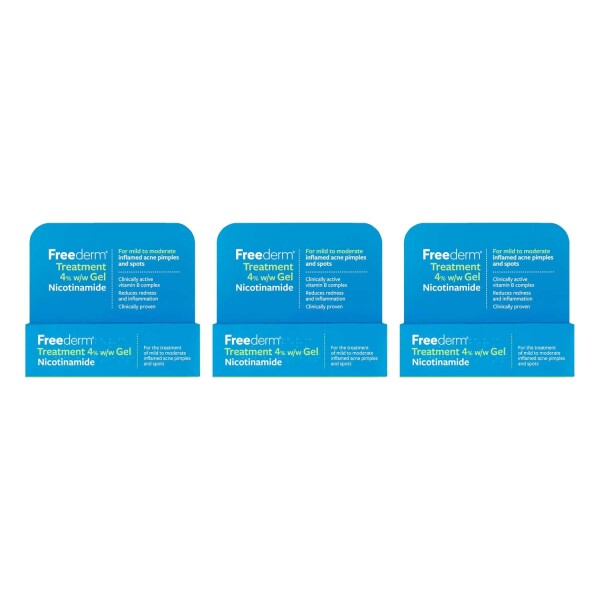
Freederm Gel -25g
Freederm Gel -25g
- ✔️ Targets acne inflammation with clinically recognised nicotinamide 4%
- ✔️ Reduces sebum production to help prevent new spots forming
- ✔️ Suitable for sensitive skin — gentler than benzoyl peroxide
- ✔️ Helps fade post-acne dark marks with consistent use
- ✔️ Effective for mild to moderate facial acne from age 12
Price Checker
 Lowest price guarantee
 Includes FREE private prescription


Couldn't load pickup availability
Is Freederm Gel Acne Treatment Right for You?
Dealing with acne can feel relentless — especially when you've tried product after product with little to show for it. Freederm gel acne treatment offers a clinically recognised approach using nicotinamide, a form of vitamin B3, to target spots at their source. Available over the counter without a prescription, this 25g gel is designed for mild to moderate acne vulgaris on the face. If you're looking for a straightforward, evidence-backed option, it's worth understanding exactly what this product does and whether it suits your skin. You can explore the full range of skin care products at Cured Pharmacy to find the right combination for your routine.
Acne is one of the most common skin conditions in the UK, affecting up to 95% of people aged 11 to 30 at some point. It occurs when hair follicles become blocked with sebum and dead skin cells, leading to blackheads, whiteheads, and inflamed spots. Freederm Gel 25g is formulated to address this process directly, making it a practical choice for everyday use.
How Does Freederm Gel Work on Spots?
The active ingredient in Freederm Gel is nicotinamide 4% — a well-studied compound with anti-inflammatory properties. Unlike some acne treatments that rely on antibiotics or harsh exfoliants, nicotinamide works through a gentler mechanism that's generally well tolerated, even on sensitive skin.
- Reduces inflammation in and around blocked follicles, calming redness and swelling
- Decreases sebum (skin oil) production, which helps prevent pores from becoming blocked
- Inhibits the transfer of melanosomes, which can reduce post-acne dark marks over time
- Does not contribute to antibiotic resistance, unlike some topical antibiotic treatments
Because nicotinamide targets inflammation rather than bacteria alone, it can be effective even when acne isn't primarily driven by bacterial overgrowth. This makes it a versatile option for a range of acne presentations.
Who Should Use Freederm Gel 25g?
Freederm Gel is suitable for adults and adolescents aged 12 and over who experience mild to moderate facial acne. It's particularly useful for those who want to avoid antibiotic-based treatments or who have found harsher products too drying or irritating. That said, it's not appropriate for everyone.
- People with mild to moderate acne vulgaris on the face
- Adolescents aged 12 and over (with parental guidance where appropriate)
- Those with sensitive skin who cannot tolerate benzoyl peroxide or retinoids
- Anyone looking to reduce post-acne pigmentation alongside active spots
It is not intended for severe, cystic, or nodular acne — those presentations typically require prescription treatment from a GP or dermatologist.
How Does Freederm Gel Compare to Other Acne Gels?
| Feature | Freederm Gel 25g | Benzoyl Peroxide Gel (e.g. Acnecide) |
|---|---|---|
| Active ingredient | Nicotinamide 4% | Benzoyl peroxide 5% |
| Mechanism | Anti-inflammatory, reduces sebum | Antibacterial, keratolytic |
| Suitable for sensitive skin | Generally yes | Can cause dryness and irritation |
| Antibiotic resistance risk | None | None (not an antibiotic) |
| Prescription required | No — OTC | No — OTC |
Is Freederm Gel Safe to Store and Use Long-Term?
Freederm gel acne treatment should be stored below 25°C, away from direct sunlight and out of reach of children. Do not use the gel after the expiry date printed on the packaging. Once opened, use within the period indicated on the tube. If you notice any change in colour, texture, or smell, do not use the product and speak to your pharmacist. You'll also find a range of creams and ointments at Cured Pharmacy if you need complementary topical treatments.
Long-term use should be discussed with a pharmacist or GP, particularly if you see no improvement after 8 weeks of consistent use. Persistent or worsening acne may require a different treatment approach.
This product is a medicine. Speak to your doctor or pharmacist before using if you have an underlying medical condition or are taking other medicines.
Freederm Gel 25g specifications
| Treatment category | Acne treatment |
| Active ingredient | Nicotinamide 4% |
| Mechanism of action | Anti-inflammatory; reduces sebum production |
| Effective for | Mild to moderate acne vulgaris |
| Suitable for | Adults and adolescents aged 12 and over |
| Pack size | 25g |
| Strength | 4% nicotinamide |
| UK classification | General Sale Medicine (GSL) |
| Drug class | Topical vitamin B3 derivative |
| Preparation | Gel |
| Route of administration | Topical (cutaneous) |
Specifications of Freederm Gel 25g
What Is Freederm Gel and What Is It Used For?
Freederm Gel 25g is a topical acne treatment containing 4% nicotinamide as its active ingredient. It is used to treat mild to moderate acne vulgaris, particularly on the face. Acne vulgaris is a common skin condition characterised by blocked pores, inflammation, and the formation of spots including blackheads, whiteheads, papules, and pustules. Nicotinamide — a form of vitamin B3 — has well-documented anti-inflammatory properties that help reduce the redness and swelling associated with acne lesions. It is available over the counter in the UK without a prescription and is classified as a General Sale Medicine.
What Do You Need to Know Before Using Freederm Gel?
Before applying Freederm Gel, it's important to check whether it's appropriate for you. There are certain situations where you should not use this product or should seek advice first.
Do not use Freederm Gel if you:
- Are allergic to nicotinamide or any other ingredient in the formulation
- Have broken, sunburned, or eczematous skin in the area to be treated
- Are under 12 years of age
- Have severe, cystic, or nodular acne — these require prescription treatment
Speak to your pharmacist or GP before use if you:
- Are pregnant or breastfeeding
- Are already using other topical acne treatments, as combining products may increase irritation
- Have a known skin condition such as rosacea or perioral dermatitis
Drug interactions:
- No significant drug interactions with nicotinamide topical gel have been established in published literature
- Avoid using alongside other drying or exfoliating agents (e.g. salicylic acid, retinoids) without pharmacist guidance, as this may increase skin sensitivity
How Should You Use Freederm Gel Correctly?
Using Freederm Gel correctly gives you the best chance of seeing results. Consistency is key — applying it twice daily as directed is more effective than occasional use. Follow these steps each time:
- Wash your hands thoroughly before handling the gel
- Cleanse the affected area with a mild, non-comedogenic cleanser and pat dry
- Squeeze a small, pea-sized amount of gel onto your fingertip
- Apply a thin, even layer to the affected area only — avoid the eyes, nostrils, and mouth
- Allow the gel to absorb fully before applying any moisturiser or make-up
- Wash hands again after application
| Indication | Age Group | Dose | Frequency |
|---|---|---|---|
| Mild to moderate facial acne | 12 years and over | Thin layer to affected area | Twice daily (morning and evening) |
| Mild to moderate facial acne | Under 12 years | Not recommended | Seek medical advice |
What Are the Possible Side Effects of Freederm Gel?
Like all medicines, Freederm Gel can cause side effects, although not everyone experiences them. Nicotinamide is generally well tolerated compared to some other acne treatments, but it's still worth knowing what to look out for. If you're managing multiple skin concerns alongside acne, you may also want to browse our skin care collection for complementary products.
Common side effects (may affect up to 1 in 10 people):
- Mild skin dryness at the application site
- Temporary redness or flushing of the skin
- Mild itching or tingling sensation after application
Less common side effects (may affect fewer than 1 in 100 people):
- Peeling or flaking of the skin
- Contact dermatitis (allergic skin reaction) — stop use immediately if this occurs
- Increased skin sensitivity to sunlight
If you experience a severe allergic reaction — including swelling of the face, lips, or throat, difficulty breathing, or a widespread rash — stop using the product immediately and seek urgent medical attention. This type of reaction is rare but serious.
How Should You Store Freederm Gel?
Correct storage helps maintain the effectiveness and safety of Freederm Gel. Follow these guidelines to keep the product in good condition throughout its shelf life. If you have any concerns about storage or product integrity, speak to your pharmacist. You can also find further guidance on topical treatments in our creams and ointments section.
- Store below 25°C in a cool, dry place
- Keep away from direct sunlight and heat sources
- Do not freeze
- Keep the tube tightly closed when not in use
- Keep out of the sight and reach of children
- Do not use after the expiry date printed on the tube and carton
- Do not dispose of medicines via wastewater or household waste — return unused product to your pharmacy
References
Written and reviewed by our qualified team
Your safety and success are our highest priorities. Our medical team rigorously evaluates every product and piece of advice we provide, ensuring you receive only the most effective, science-backed solutions available.
Frequently Asked Questions
Where can I buy Freederm Gel 25g online in the UK?
You can buy Freederm Gel 25g directly from Cured Pharmacy online for £9.99 with fast UK delivery. It is available over the counter without a prescription, making it easy to order from home. No GP appointment is needed — simply add it to your basket and check out securely.
How does Freederm Gel work on acne?
Freederm Gel contains 4% nicotinamide, a form of vitamin B3 that reduces inflammation in blocked follicles and decreases sebum production. By targeting the inflammatory component of acne, it helps reduce redness, swelling, and the formation of new spots. It does not work as an antibiotic, so it carries no risk of contributing to antibiotic resistance.
How do I use Freederm Gel step by step?
Cleanse your face with a gentle cleanser and pat it dry before applying a thin layer of Freederm Gel to the affected areas twice daily. Avoid the eye area, nostrils, and mouth, and allow the gel to absorb fully before applying any other products. Wash your hands before and after each application for best hygiene practice.
How long does Freederm Gel take to show results?
Most people begin to notice an improvement in their acne within 4 to 8 weeks of consistent twice-daily use. It's important to keep using the gel even if your skin starts to look better earlier, as stopping too soon can allow spots to return. If you see no improvement after 8 weeks, speak to your pharmacist or GP about alternative options.
What are the side effects of Freederm Gel?
The most commonly reported side effects include mild skin dryness, temporary redness, and a slight tingling sensation at the application site. These effects are usually mild and tend to settle as your skin adjusts to the treatment. If you experience a more severe reaction such as swelling, widespread rash, or difficulty breathing, stop use immediately and seek medical attention.
Can I use Freederm Gel if I have sensitive skin?
Nicotinamide is generally considered one of the better-tolerated acne ingredients for sensitive skin, as it is less likely to cause the dryness and irritation associated with benzoyl peroxide or retinoids. It's still a good idea to do a small patch test on your inner arm before applying it to your face. If irritation develops, stop use and consult your pharmacist.
Is Freederm Gel suitable for teenagers?
Yes, Freederm Gel is suitable for adolescents aged 12 and over, making it a practical option for teenage acne. It should not be used on children under 12 without specific medical advice from a GP. Parents or guardians should supervise use in younger teenagers to ensure correct application.
Can I use Freederm Gel during pregnancy or while breastfeeding?
If you are pregnant or breastfeeding, you should speak to your GP or pharmacist before using Freederm Gel, as the safety of topical nicotinamide in these situations has not been fully established in clinical trials. Your healthcare provider can advise on the most appropriate acne management approach during pregnancy. Do not self-treat without seeking guidance first.
Can I use Freederm Gel with other acne treatments?
You should consult your pharmacist before combining Freederm Gel with other topical acne products, as using multiple active treatments simultaneously can increase the risk of skin dryness and irritation. If you are already using a prescription acne treatment, let your GP know you are also using an over-the-counter gel. Layering products without guidance can sometimes make acne worse rather than better.
What happens if I miss an application of Freederm Gel?
If you forget to apply Freederm Gel at your usual time, simply apply it as soon as you remember — unless it is almost time for your next scheduled application. In that case, skip the missed dose and continue with your normal routine. Do not apply a double amount to make up for a missed application, as this will not speed up results and may irritate your skin.
How long can I use Freederm Gel for?
Freederm Gel can be used for up to 8 weeks as an initial course of treatment. If your acne has improved, you may be able to continue using it to maintain results, but this should be discussed with your pharmacist. If there is no improvement after 8 weeks, or if your acne worsens, seek advice from your GP who may recommend a prescription treatment.
What are the alternatives to Freederm Gel for acne?
Common over-the-counter alternatives include benzoyl peroxide gels (such as Acnecide) and salicylic acid-based products, which work through different mechanisms. For more severe acne, a GP may prescribe topical retinoids, antibiotic gels, or oral treatments such as antibiotics or hormonal therapy. You can explore our wider skin care range for additional options to support your routine.
Does Freederm Gel help with acne scars or dark marks?
Nicotinamide has been shown in published research to inhibit the transfer of melanosomes within the skin, which can help reduce post-inflammatory hyperpigmentation — the dark marks left behind after spots heal. It is not a treatment for raised or pitted acne scarring, which typically requires dermatological procedures. Consistent use over several weeks is needed to see any improvement in pigmentation.
Can I wear make-up over Freederm Gel?
Yes, you can apply make-up over Freederm Gel once it has been fully absorbed into the skin, which usually takes a few minutes. Choose non-comedogenic (non-pore-blocking) make-up products where possible to avoid worsening acne. Removing make-up thoroughly at the end of the day before your evening application of the gel is also important for best results.
What is the latest research on nicotinamide for acne?
Published clinical studies have demonstrated that topical 4% nicotinamide gel is comparable in effectiveness to topical 1% clindamycin gel for the treatment of mild to moderate acne, with the added benefit of carrying no antibiotic resistance risk. Research also supports its role in reducing sebum excretion and post-inflammatory pigmentation. The NHS and BNF recognise nicotinamide as an established topical acne treatment option. For broader skin health support, you might also consider browsing our vitamins and supplements range.
Written and reviewed by our qualified team

Reviewed by:
Tarun Kumar
Superintendent/ Clinical Lead
📖 Find out more about our team of medical content authors and how we ensure the accuracy of our content with our content guidelines.
Content last updated: 14 Sep 2026
Other popular options


We’re a safe and
regulated UK service

Lowest Price Guarantee

We're convinced you won't find your treatment cheaper, but if you do we'll refund the difference.
Find out more
100% discreet packaging

Discreet, unbranded packaging for every order.
Find out more

Need help?
Talk to our friendly experts now


How our service works

Service setup

Discreet packaging

Express delivery