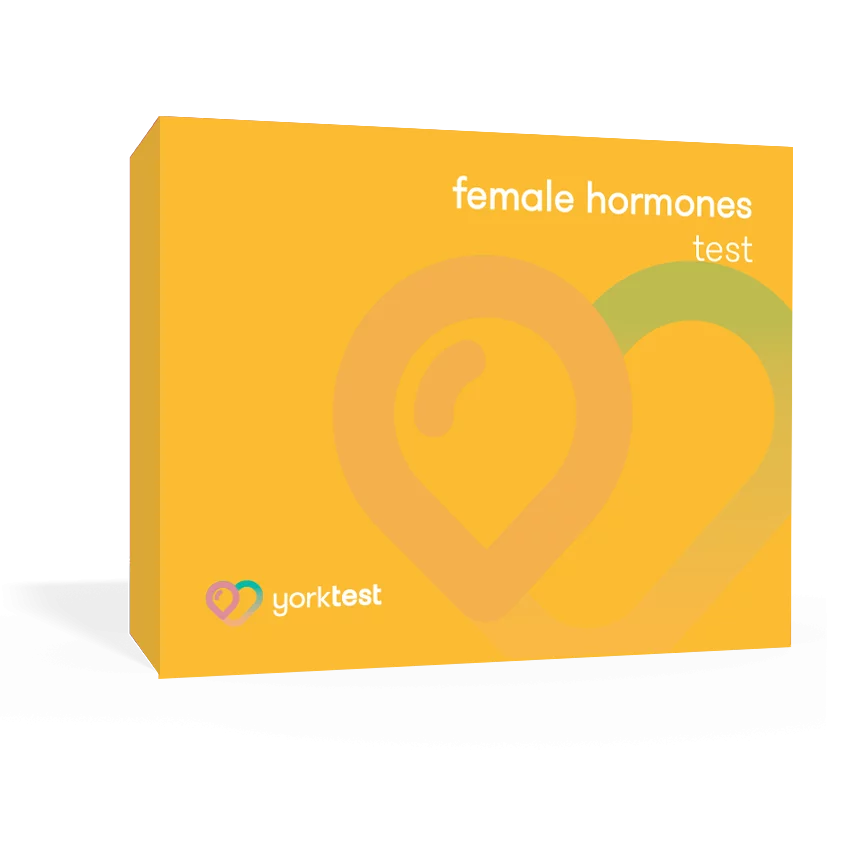
Female Hormones Test
Female Hormones Test
- ✔️ Measures FSH, LH, oestradiol and prolactin in one test
- ✔️ Helps identify perimenopause, PCOS and hormonal imbalances
- ✔️ At-home finger-prick sample — no clinic visit required
- ✔️ UKAS-accredited laboratory analysis for reliable results
- ✔️ Results delivered securely online within 2–5 working days
Price Checker
 Lowest price guarantee
 Includes FREE private prescription


Couldn't load pickup availability
What Is a Female Hormone Test and Who Needs One?
Hormones control far more than most people realise. From your menstrual cycle and fertility to your mood, energy levels, and sleep quality — when something feels off, your hormones are often the first place to look. The female hormone test from YorkTest is a convenient, at-home finger-prick blood test that measures four key reproductive hormones: FSH (follicle-stimulating hormone), LH (luteinising hormone), oestradiol, and prolactin. At just £49, it gives you a meaningful starting point for understanding what your body is doing — without waiting weeks for a GP appointment. If you're already exploring your women's health more broadly, this test fits naturally into that picture.
Hormonal imbalances are more common than many women expect. The NHS estimates that around 13 million women in the UK are currently peri- or post-menopausal, and countless others experience cycle irregularities, unexplained fatigue, or fertility concerns that go unaddressed for months. Having access to a reliable, lab-analysed hormone profile from home can help you have a more informed conversation with your doctor — and that matters.
How Does the YorkTest Female Hormones Test Work?
The process is straightforward. Everything you need is included in the kit, and no clinical training is required. Here's how it works step by step:
- Use the lancet provided to collect a small finger-prick blood sample — similar to a standard blood glucose test.
- Apply the blood drops to the collection card included in the kit.
- Allow the sample to dry fully, then seal it in the prepaid return envelope.
- Post it to YorkTest's accredited laboratory for analysis.
- Receive your results securely online, typically within 2–5 working days of the lab receiving your sample.
The laboratory measures your levels of FSH, LH, oestradiol, and prolactin — four hormones that together reflect the health of your hypothalamic-pituitary-ovarian axis. Abnormal levels in any of these markers can point to conditions including perimenopause, polycystic ovary syndrome (PCOS), hyperprolactinaemia, or primary ovarian insufficiency.
Who Should Consider Using the Female Hormones Test?
This test is designed for adult women who want clarity about their hormonal health. It's particularly useful if you're experiencing symptoms that don't have an obvious explanation. You might benefit from testing if you:
- Have irregular, absent, or unusually heavy periods
- Are experiencing symptoms of perimenopause — such as hot flushes, night sweats, or mood changes
- Are trying to conceive and want to understand your ovarian reserve or ovulation patterns
- Have unexplained fatigue, low libido, hair thinning, or weight changes
- Have been told you may have PCOS or another hormonal condition and want to monitor your levels
It is not intended for use during pregnancy. Women who are currently taking hormonal contraception or hormone replacement therapy (HRT) should be aware that these medications can significantly affect test results — always discuss this with your GP before interpreting findings.
How Does the YorkTest Female Hormones Test Compare to an NHS Blood Test?
| Feature | YorkTest Female Hormones Test | NHS GP Blood Test |
|---|---|---|
| Cost | £49 (no referral needed) | Free (requires GP appointment) |
| Convenience | At-home finger-prick sample | Venepuncture at clinic or hospital |
| Turnaround time | 2–5 working days | Variable — often 1–2 weeks |
| Hormones tested | FSH, LH, oestradiol, prolactin | Varies by GP request |
Is the Female Hormone Test Clinically Reliable?
YorkTest uses UKAS-accredited laboratories for sample analysis, which means the testing process meets recognised quality standards. That said, a female hormone test result — whether from a home kit or a GP surgery — should always be interpreted in context. Hormone levels fluctuate throughout the menstrual cycle, and a single snapshot doesn't always tell the full story. If your results fall outside the reference ranges provided, the next step is to share them with your GP or a specialist. You might also find it helpful to explore vitamins and supplements that support hormonal wellbeing alongside any clinical advice you receive.
This product is a medicine. Speak to your doctor or pharmacist before using if you have an underlying medical condition or are taking other medicines.
Female Hormones Test specifications
| Treatment category | Hormonal health / Diagnostic testing |
| Mechanism of action | Laboratory immunoassay analysis of dried blood spot sample |
| Effective for | Assessing FSH, LH, oestradiol, and prolactin levels |
| Suitable for | Adult women (not for use during pregnancy) |
| Active ingredient | N/A — diagnostic test kit |
| Pack size | 1 test kit |
| UK classification | General sale / OTC diagnostic |
| Preparation | Dried blood spot collection card |
| Route of administration | Finger-prick blood sample (self-collected) |
Specifications of Female Hormones Test
What Is the YorkTest Female Hormones Test and What Is It Used For?
The YorkTest Female Hormones Test is an at-home diagnostic kit that analyses four reproductive hormones from a small finger-prick blood sample. It is used to help women understand their hormonal health — particularly in relation to the menstrual cycle, fertility, perimenopause, and conditions such as PCOS or hyperprolactinaemia. The test measures:
- FSH (follicle-stimulating hormone) — elevated levels may indicate reduced ovarian reserve or menopause
- LH (luteinising hormone) — important for ovulation; raised levels can suggest PCOS
- Oestradiol — the primary form of oestrogen; low levels are associated with perimenopause and amenorrhoea
- Prolactin — elevated prolactin can disrupt ovulation and cause irregular periods or galactorrhoea
This test does not diagnose any medical condition. Results should always be reviewed with a qualified healthcare professional. It is not a substitute for clinical assessment by your GP or gynaecologist.
What Do You Need to Know Before Using the Female Hormones Test?
Before collecting your sample, there are several important considerations to be aware of. Please read the following carefully:
Do not use this test if you:
- Are currently pregnant
- Are under 18 years of age
- Have a bleeding disorder or are taking anticoagulant medication (e.g. warfarin)
- Are unable to obtain an adequate blood sample from a finger-prick
Important warnings:
- Hormonal contraception (the pill, patch, implant, or hormonal coil) can significantly alter FSH, LH, and oestradiol results
- HRT use will affect hormone levels and may make results difficult to interpret
- Results vary depending on where you are in your menstrual cycle — timing your test correctly is essential
- A single abnormal result does not confirm a diagnosis; always follow up with your GP
- If you are experiencing severe symptoms — such as sudden heavy bleeding, severe pelvic pain, or signs of a serious illness — seek medical attention promptly rather than relying on a home test
Known interactions:
- Combined oral contraceptive pill — suppresses FSH and LH, making results unreliable
- Dopamine agonists (e.g. cabergoline, bromocriptine) — lower prolactin levels artificially
- Antipsychotic medications — can raise prolactin levels
- Oestrogen-containing HRT — affects oestradiol readings
How Should You Use the Female Hormones Test?
Timing matters with this test. For women who are still menstruating, the NHS advises that FSH and LH are most informative when measured in the early follicular phase — typically days 2 to 5 of your cycle. Women who are post-menopausal or not currently cycling can collect their sample on any day.
- Wash your hands thoroughly with warm water and dry them well — this improves blood flow to the fingertips.
- Use the lancet provided to prick the side of your fingertip (avoid the very tip, which is more sensitive).
- Gently squeeze your finger to encourage blood flow and apply drops to the marked circles on the collection card.
- Allow the card to dry completely at room temperature for at least 30 minutes — do not use a hairdryer or place it in direct sunlight.
- Seal the dried sample card in the biohazard bag provided, then place it in the prepaid return envelope.
- Post your sample on the same day it is collected, or the following morning at the latest.
- Register your kit online using the unique barcode on your collection card to receive your results.
| Indication | Recommended Test Timing | Notes |
|---|---|---|
| Regular menstrual cycle | Days 2–5 of cycle | Day 1 = first day of full bleed |
| Irregular or absent periods | Any day | Note date of last period on form |
| Post-menopausal | Any day | Confirm menopausal status on form |
What Are the Possible Side Effects of the Female Hormones Test?
As a diagnostic test rather than a medicine, the Female Hormones Test does not carry the same side effect profile as a drug. However, the finger-prick collection process can occasionally cause minor physical reactions.
Common side effects (related to finger-prick sampling):
- Brief, sharp discomfort at the puncture site
- Minor bruising around the fingertip
- Small amount of localised bleeding
Less common side effects:
- Lightheadedness or feeling faint — particularly in those who are anxious about blood
- Localised redness or mild swelling at the puncture site
- Difficulty obtaining enough blood, requiring a second lancet
If you feel faint during sample collection, sit or lie down immediately and wait until you feel better before continuing. If the puncture site shows signs of infection — such as increasing redness, warmth, or discharge — contact your GP. Women who are concerned about their results and need support with next steps may also find it helpful to browse our sexual health range for related products and information.
How Should You Store the Female Hormones Test?
- Store the unopened kit at room temperature (15–25°C), away from direct sunlight and moisture
- Do not refrigerate or freeze the kit components
- Keep out of reach of children
- Once the blood sample has been collected and dried, post it promptly — do not store a completed sample card at home for more than 24 hours
- Check the expiry date on the kit before use — do not use an expired kit
- Dispose of used lancets safely in the sharps disposal pouch provided, or in a suitable sharps container
If you have any questions about storing or using this kit, speak to one of our pharmacists at Cured Pharmacy before proceeding. For women managing related health concerns, our female hair loss collection may also be relevant, as hormonal imbalances are a common contributing factor to hair thinning in women.
References
Written and reviewed by our qualified team
Your safety and success are our highest priorities. Our medical team rigorously evaluates every product and piece of advice we provide, ensuring you receive only the most effective, science-backed solutions available.
Frequently Asked Questions
Where can I buy the YorkTest Female Hormone Test online in the UK?
You can order the YorkTest Female Hormones Test directly from Cured Pharmacy for £49, with fast tracked UK delivery. No GP referral is needed, and the kit arrives discreetly packaged. It's one of the most accessible ways to get a lab-analysed female hormone test without leaving home.
What hormones does the Female Hormones Test measure?
The test measures four hormones: FSH (follicle-stimulating hormone), LH (luteinising hormone), oestradiol, and prolactin. Together, these markers give a broad picture of your reproductive hormonal health. Each plays a distinct role — FSH and LH regulate ovulation, oestradiol reflects oestrogen status, and prolactin affects milk production and cycle regularity.
How does the YorkTest Female Hormone Test work step by step?
You use the lancet in the kit to collect a small finger-prick blood sample, apply it to the collection card, and allow it to dry. You then post it in the prepaid envelope to YorkTest's accredited laboratory. Results are delivered securely online, usually within 2–5 working days of the lab receiving your sample.
When is the best time in my cycle to take the Female Hormones Test?
For women with a regular menstrual cycle, days 2 to 5 (counting day 1 as the first day of full bleeding) are generally recommended for the most informative FSH and LH readings. Women with irregular or absent periods, or those who are post-menopausal, can collect their sample on any day. Always note the date of your last period on the registration form.
Can the Female Hormones Test detect perimenopause or menopause?
Raised FSH levels — particularly above 30 IU/L — alongside symptoms such as hot flushes, night sweats, and irregular periods can be consistent with perimenopause or menopause, according to NHS guidance. However, hormone levels fluctuate, and a single result is not sufficient for a clinical diagnosis. You should always discuss your results with your GP, who may recommend repeat testing.
Will the contraceptive pill affect my Female Hormones Test results?
Yes — combined hormonal contraceptives suppress FSH and LH, which means your results may not reflect your natural hormone levels. The same applies to the hormonal patch, implant, and hormonal coil. If you are using hormonal contraception, speak to your GP before interpreting your results, as they may advise waiting until you have stopped before testing.
Who is the YorkTest Female Hormones Test suitable for?
The test is suitable for adult women who want to understand their hormonal health — including those experiencing irregular periods, suspected perimenopause, fertility concerns, or unexplained symptoms such as fatigue, low libido, or hair thinning. It is not suitable for women who are pregnant, under 18, or who have a bleeding disorder. Women exploring broader women's health concerns may find this test a useful first step.
How long does it take to get results from the Female Hormones Test?
Results are typically available within 2–5 working days of the laboratory receiving your sample. You will receive an email notification when your results are ready, and you can access them securely through the YorkTest online portal. Postal transit time is not included in this estimate, so factor in 1–2 days for delivery to the lab.
Is the YorkTest Female Hormones Test accurate?
YorkTest uses UKAS-accredited laboratories, which means the analysis meets recognised UK quality standards. Dried blood spot testing for reproductive hormones is an established method used in clinical research and private diagnostics. That said, results should always be interpreted alongside your symptoms and medical history by a qualified healthcare professional.
What should I do if my Female Hormones Test results are abnormal?
If any of your results fall outside the reference ranges provided, the most important next step is to book an appointment with your GP. Take a printed or digital copy of your results with you. Your GP may recommend further blood tests, an ultrasound scan, or a referral to a gynaecologist or endocrinologist depending on the findings.
Can I use the Female Hormones Test if I have PCOS?
Yes — the test can be useful for women with known or suspected PCOS, as it measures LH and FSH, which are often imbalanced in this condition. An elevated LH-to-FSH ratio is a recognised feature of PCOS, according to NHS guidance. However, the test should complement — not replace — clinical assessment and ultrasound imaging used to diagnose PCOS.
What are the alternatives to the YorkTest Female Hormones Test?
The main alternative is requesting a hormone blood test through your NHS GP, which is free but may involve a longer wait and requires a clinical appointment. Other private at-home test kits are available from various providers, though the specific hormones tested and laboratory accreditation vary. The YorkTest option is competitively priced at £49 and covers four key markers in one kit.
Can I use the Female Hormones Test to check my fertility?
The test provides useful information relevant to fertility — particularly FSH, which is a marker of ovarian reserve, and LH, which is linked to ovulation. However, it does not measure anti-Müllerian hormone (AMH), which is the most specific marker of ovarian reserve used in fertility clinics. If fertility is your primary concern, discuss a full fertility panel with your GP or a reproductive specialist. You may also find our sexual health collection helpful for related products.
How do I manage any discomfort from the finger-prick sample collection?
Warming your hands under warm water before collecting the sample helps improve blood flow and makes the process easier and less uncomfortable. Use the side of your fingertip rather than the very tip, as this area is less sensitive. If you feel faint at any point, sit or lie down immediately and wait until you feel better before continuing.
How often should I repeat the Female Hormones Test?
There is no fixed recommendation for how often to repeat the test, as this depends on your individual circumstances and what your results show. Women monitoring perimenopause progression or a known hormonal condition may benefit from retesting every 3–6 months, but this should be guided by your GP. Hormone levels naturally fluctuate, so a single result should never be viewed in isolation. If you are also managing related symptoms such as hair thinning, our female hair loss collection may offer additional support.
Written and reviewed by our qualified team

Reviewed by:
Tarun Kumar
Superintendent/ Clinical Lead
📖 Find out more about our team of medical content authors and how we ensure the accuracy of our content with our content guidelines.
Content last updated: 14 Sep 2026
Other popular options


We’re a safe and
regulated UK service

Lowest Price Guarantee

We're convinced you won't find your treatment cheaper, but if you do we'll refund the difference.
Find out more
100% discreet packaging

Discreet, unbranded packaging for every order.
Find out more

Need help?
Talk to our friendly experts now


How our service works

Service setup

Discreet packaging

Express delivery