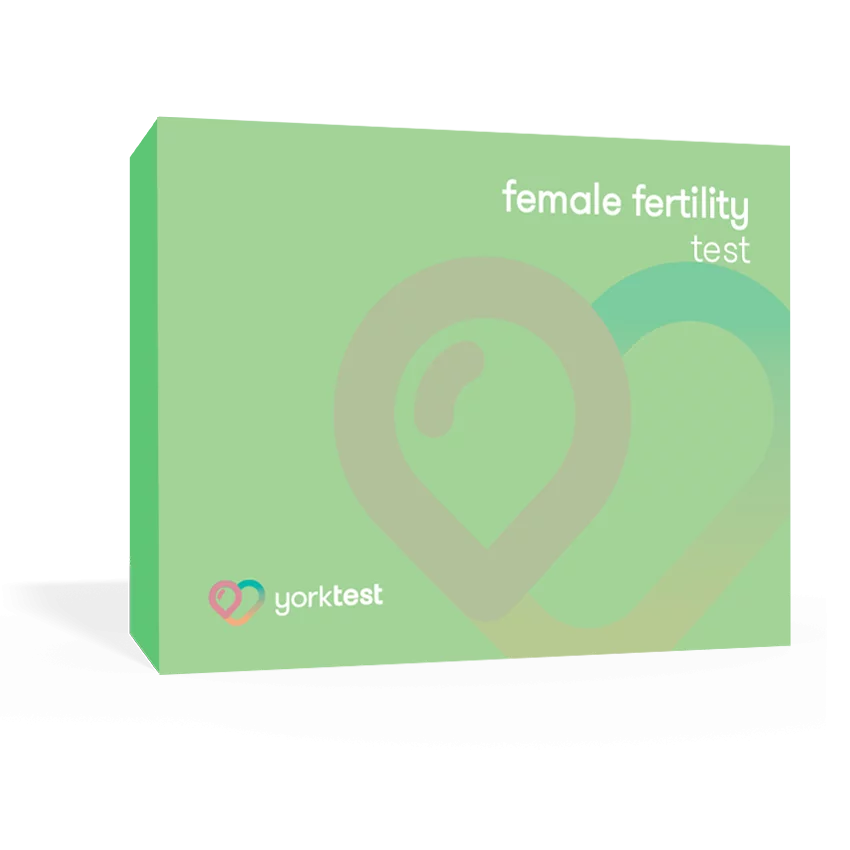
Female Fertility Test
Female Fertility Test
- ✔️ Measures FSH, LH, oestradiol, and AMH from one sample
- ✔️ Assesses ovarian reserve without a GP referral
- ✔️ UKAS-accredited laboratory analysis for reliable results
- ✔️ Suitable for women aged 18 and over, any cycle stage for AMH
- ✔️ Results delivered online within five to seven working days
Price Checker
 Lowest price guarantee
 Includes FREE private prescription


Couldn't load pickup availability
What Is a Female Fertility Test and How Can It Help You?
Thinking about your fertility can feel daunting, especially when you are not sure where to start. The female fertility test from YorkTest is a straightforward at-home blood spot kit that measures four key reproductive hormones — FSH, LH, oestradiol, and AMH — giving you a clearer picture of your ovarian reserve and hormonal health without needing a GP referral. According to the NHS, around one in seven couples in the UK experience difficulty conceiving, so understanding your hormone levels early can be genuinely valuable. If you are also exploring other aspects of your health, you might find our women's health range a useful starting point alongside this test.
At £79.00, this test sits firmly in the accessible end of private fertility screening. You collect a small finger-prick blood sample at home, post it to YorkTest's UKAS-accredited laboratory in a prepaid envelope, and receive your results online — typically within five to seven working days of the lab receiving your sample. Simple, discreet, and done entirely on your own terms.
How Does the YorkTest Female Fertility Test Work?
The test uses dried blood spot (DBS) technology — the same principle used in NHS newborn heel-prick screening. A few drops of blood from your fingertip are absorbed onto a specially treated card, which is then analysed in the laboratory using immunoassay techniques to quantify hormone concentrations. Here is what each hormone tells you:
- FSH (follicle-stimulating hormone): Elevated levels on day 2–5 of your cycle can suggest reduced ovarian reserve or approaching menopause.
- LH (luteinising hormone): Helps assess ovulation patterns and can indicate conditions such as polycystic ovary syndrome (PCOS) when elevated.
- Oestradiol: Measured alongside FSH to give context — high oestradiol can suppress FSH artificially, masking a true result.
- AMH (anti-Müllerian hormone): Produced by follicles in the ovaries, AMH is currently considered one of the most reliable markers of ovarian reserve. Unlike FSH, it can be measured at any point in your cycle.
Who Should Consider Using This Fertility Test?
This test is designed for women aged 18 and over. It is not a diagnostic tool, but it can provide meaningful information for a wide range of situations. You might find it particularly useful if you fall into one of the following groups:
- You have been trying to conceive for six months or more without success.
- You are planning a pregnancy in the next one to three years and want a baseline hormone picture.
- You are experiencing irregular periods, hot flushes, or other symptoms that could suggest early perimenopause.
- You have a family history of early menopause or a condition such as PCOS or endometriosis.
It is worth noting that a normal result does not guarantee fertility, and an abnormal result does not mean you cannot conceive. Results should always be discussed with a healthcare professional for proper interpretation.
How Does the YorkTest Female Fertility Test Compare to NHS Testing?
| Feature | YorkTest Female Fertility Test | NHS GP Referral Blood Test |
|---|---|---|
| Hormones tested | FSH, LH, oestradiol, AMH | Typically FSH and LH (AMH less routinely available) |
| Sample collection | At-home finger-prick (DBS card) | Venous blood draw at GP surgery or clinic |
| Waiting time | 5–7 working days from lab receipt | Variable; can be several weeks for referral |
| Cost | £79.00 | Free on NHS (if clinically indicated) |
Is the YorkTest Female Fertility Test Clinically Reliable?
YorkTest's laboratory holds UKAS accreditation, meaning it meets internationally recognised standards for analytical testing. Dried blood spot analysis for reproductive hormones has been validated in published research and is used in a number of NHS screening programmes. That said, DBS results can occasionally differ slightly from venous blood samples, particularly for oestradiol, so if your results are borderline or unexpected, a follow-up venous sample via your GP is always a sensible next step.
If you are taking hormonal contraception, hormone replacement therapy (HRT), or any other medication that affects your cycle, this can influence your hormone levels and therefore your results. Always disclose current medications when reviewing results with a clinician. You may also want to explore our vitamins and supplements range if you are looking to support your general reproductive health alongside testing.
This product is a medicine. Speak to your doctor or pharmacist before using if you have an underlying medical condition or are taking other medicines.
YorkTest Female Fertility Test specifications
| Treatment category | Female reproductive health / fertility screening |
| Mechanism of action | Dried blood spot immunoassay measuring FSH, LH, oestradiol, and AMH hormone concentrations |
| Effective for | Assessing ovarian reserve and reproductive hormone profile |
| Suitable for | Women aged 18 and over |
| Active ingredient | N/A — diagnostic test kit |
| Pack size | 1 test kit (includes lancets, blood spot card, prepaid return envelope) |
| UK classification | General sale / diagnostic device |
| Preparation | Dried blood spot card |
| Route of administration | Finger-prick blood sample |
Specifications of YorkTest Female Fertility Test
What Is the YorkTest Female Fertility Test and What Is It Used For?
The YorkTest Female Fertility Test is an at-home diagnostic kit that measures four reproductive hormones — FSH, LH, oestradiol, and AMH — from a small finger-prick blood sample. It is used to provide an indication of a woman's ovarian reserve and hormonal reproductive profile. It does not diagnose infertility or guarantee conception outcomes. The NHS advises that women who have been trying to conceive for over a year (or six months if over 35) should speak to their GP, and this test can be a useful first step in gathering information before that conversation.
What Do You Need to Know Before Using the YorkTest Female Fertility Test?
Before using this test, there are several important considerations. The following situations may affect your results or mean the test is not appropriate for you right now:
- You are currently taking hormonal contraception (the pill, patch, implant, hormonal coil, or injection) — these suppress natural hormone levels and will significantly affect results.
- You are taking HRT or any oestrogen-containing medication.
- You are pregnant or breastfeeding.
- You have recently had a miscarriage or fertility treatment — hormone levels may not yet have returned to baseline.
- You have a known bleeding disorder or are taking anticoagulant medication, which may make finger-prick sampling more difficult.
- You are under 18 years of age.
There are no known drug interactions specific to this diagnostic test, as it does not involve ingesting any substance. However, the following medications and supplements are known to influence reproductive hormone levels and may therefore affect how your results are interpreted:
- Combined oral contraceptive pill or progestogen-only pill
- Clomifene (clomiphene citrate)
- Gonadotrophin-releasing hormone (GnRH) analogues
- High-dose biotin (vitamin B7) supplements — can interfere with immunoassay results
How Should You Use the YorkTest Female Fertility Test?
Timing matters with this test. For FSH, LH, and oestradiol, you should ideally collect your sample on days 2–5 of your menstrual cycle (day 1 being the first day of full flow). AMH can be collected at any point in your cycle. Follow these steps carefully:
- Read the full instruction leaflet included in your kit before starting.
- Wash your hands thoroughly with warm water and dry them — warm hands improve blood flow.
- Use the lancet provided to prick the side of your fingertip (not the pad).
- Gently squeeze your finger to encourage blood flow and allow drops to fall onto the numbered circles on the blood spot card.
- Fill all required circles as instructed — do not smear or touch the blood spots.
- Allow the card to dry completely at room temperature for at least 30 minutes before sealing.
- Place the dried card in the biohazard bag provided, seal it, and place it in the prepaid return envelope.
- Post your sample as soon as possible — ideally on the same day, avoiding posting on a Friday or before a bank holiday.
- Register your kit online using the barcode on your card to access your results when ready.
| Hormone | Ideal cycle day for collection | What it indicates |
|---|---|---|
| FSH | Days 2–5 | Ovarian reserve; elevated levels may suggest reduced reserve |
| LH | Days 2–5 | Ovulation signalling; raised ratio to FSH may suggest PCOS |
| Oestradiol | Days 2–5 | Contextualises FSH result; high levels can suppress FSH artificially |
| AMH | Any day of cycle | Ovarian reserve; most stable marker across the cycle |
What Are the Possible Side Effects of the YorkTest Female Fertility Test?
Because this is a diagnostic test rather than a medicine, there are no pharmacological side effects. However, the finger-prick collection process and the emotional impact of receiving results are worth being aware of.
Common effects associated with finger-prick sampling:
- Mild soreness or tenderness at the puncture site
- Small bruise at the fingertip
- Slight bleeding that takes a few minutes to stop
- Temporary light-headedness in people who are sensitive to blood
Less common considerations:
- Anxiety or distress related to receiving unexpected results — if this applies to you, consider having a trusted person with you when you view your results, or speak to your GP beforehand
- Difficulty obtaining an adequate blood sample, particularly in cold conditions or if you are dehydrated
If you find the emotional side of fertility testing difficult, the NHS has resources on fertility and emotional wellbeing that may help. You might also find it reassuring to browse our condoms and sexual health range for broader reproductive health support.
How Should You Store the YorkTest Female Fertility Test?
- Store the unopened kit at room temperature (15–25°C), away from direct sunlight and moisture.
- Do not refrigerate or freeze the kit before use.
- Keep out of reach of children.
- Check the expiry date on the packaging before use — do not use an expired kit.
- Once the blood spot card has been completed and dried, store it in the biohazard bag provided and post it promptly.
- Do not leave a completed blood spot card in a hot environment (e.g. a car in summer) as heat can degrade the sample.
For further guidance on women's reproductive health, including information on irregular periods, PCOS, and early menopause, the NHS website provides detailed, evidence-based resources. If your results raise concerns, your GP is always the right first point of contact. You can also explore our vitamins and supplements collection for products that support general hormonal wellbeing.
References
- https://www.nhs.uk/conditions/infertility/
- https://www.nhs.uk/conditions/infertility/diagnosis/
- https://www.nhs.uk/conditions/polycystic-ovary-syndrome-pcos/
- https://www.nhs.uk/conditions/early-menopause/
- https://www.nhs.uk/conditions/periods/fertility-in-women/
- https://www.nice.org.uk/guidance/cg156
Written and reviewed by our qualified team
Your safety and success are our highest priorities. Our medical team rigorously evaluates every product and piece of advice we provide, ensuring you receive only the most effective, science-backed solutions available.
Frequently Asked Questions
Where can I buy the YorkTest Female Fertility Test online in the UK?
You can order the YorkTest Female Fertility Test directly from Cured Pharmacy online for £79.00 with fast UK delivery. It is also available from the YorkTest website and selected UK pharmacies. Buying from a GPhC-registered pharmacy like Cured ensures you have access to pharmacist support if you have questions about the test or your results.
What hormones does the YorkTest Female Fertility Test measure?
The test measures four reproductive hormones: FSH (follicle-stimulating hormone), LH (luteinising hormone), oestradiol, and AMH (anti-Müllerian hormone). Each hormone provides different information — FSH and LH reflect pituitary signalling to the ovaries, oestradiol provides context for FSH interpretation, and AMH is currently considered one of the most reliable indicators of ovarian reserve. Together, they give a reasonably detailed hormonal snapshot.
How do I use the YorkTest Female Fertility Test step by step?
Warm your hands, prick your fingertip with the lancet provided, and allow blood drops to fall onto the numbered circles on the blood spot card. Let the card dry for at least 30 minutes, seal it in the biohazard bag, and post it in the prepaid envelope. Register your kit barcode online to receive your results digitally within five to seven working days of the lab receiving your sample.
When is the best time in my cycle to take the YorkTest Female Fertility Test?
For FSH, LH, and oestradiol, the ideal window is days 2–5 of your menstrual cycle, where day 1 is the first day of full menstrual flow. AMH is stable throughout the cycle and can be measured on any day. Testing outside this window for FSH and LH may produce results that are harder to interpret accurately.
Can I take the female fertility test while on the contraceptive pill?
No — hormonal contraception suppresses your natural hormone production, which means FSH, LH, and oestradiol results will not reflect your true baseline. AMH is less affected but can still be slightly lower in pill users. YorkTest recommends waiting until you have had at least two to three natural cycles after stopping hormonal contraception before testing.
Who is the YorkTest Female Fertility Test suitable for?
The test is suitable for women aged 18 and over who are not currently using hormonal contraception or HRT. It is particularly relevant for women who have been trying to conceive without success, those planning a future pregnancy, or women experiencing symptoms that might suggest early perimenopause such as irregular periods or hot flushes. It is not suitable during pregnancy or breastfeeding. You can find additional support products in our women's health collection.
Can the YorkTest Female Fertility Test diagnose infertility?
No — this test cannot diagnose infertility. It provides an indication of your reproductive hormone levels and ovarian reserve, but fertility is influenced by many factors beyond hormones, including fallopian tube health, uterine anatomy, and your partner's sperm quality. Any concerning results should be discussed with your GP or a fertility specialist who can arrange further investigations.
How accurate is the YorkTest Female Fertility Test?
YorkTest uses a UKAS-accredited laboratory, which applies the same analytical standards as NHS and private clinic laboratories. Dried blood spot technology is well-validated for reproductive hormone testing, though results can occasionally differ slightly from venous blood samples — particularly for oestradiol. If your results are unexpected or borderline, a follow-up venous blood test via your GP is always recommended for confirmation.
How long does it take to get results from the YorkTest Female Fertility Test?
Results are typically available online within five to seven working days of the laboratory receiving your sample. You will receive an email notification when your results are ready to view via your secure online account. Posting your sample early in the week (Monday to Wednesday) helps avoid weekend delays at the laboratory.
What do my YorkTest Female Fertility Test results mean?
Your results will show your hormone levels alongside reference ranges, with an explanation of what each result may indicate. A low AMH or elevated FSH may suggest reduced ovarian reserve, while an elevated LH-to-FSH ratio can be associated with PCOS. Results are indicative only — a healthcare professional should always review them in the context of your full medical history and symptoms.
What are the alternatives to the YorkTest Female Fertility Test?
Alternatives include NHS GP-requested blood tests for FSH and LH (available if clinically indicated), private clinic hormone panels with venous blood draws, or other at-home fertility test brands. Your GP can also refer you for a transvaginal ultrasound to assess antral follicle count, which is another measure of ovarian reserve used alongside AMH. For broader health monitoring options, browse our electrical health and diagnostic range.
Does a normal AMH result mean I am definitely fertile?
Not necessarily. A normal AMH result suggests you have a reasonable ovarian reserve for your age, but it does not guarantee that your eggs are chromosomally normal, that your fallopian tubes are open, or that other aspects of your reproductive health are functioning optimally. Fertility is multifactorial, and a normal result should be reassuring but not taken as a definitive all-clear.
Can I use the YorkTest Female Fertility Test if I have PCOS?
Yes, you can use the test if you have PCOS, and it may actually provide useful information — women with PCOS often have elevated LH relative to FSH and may have higher-than-average AMH levels due to a greater number of small follicles. However, interpreting results in the context of PCOS can be complex, so discussing your results with a GP or gynaecologist is particularly important.
How often should I repeat the YorkTest Female Fertility Test?
There is no fixed recommendation for how often to repeat the test, but many women choose to retest annually if they are monitoring their ovarian reserve over time, or after a significant life event such as stopping contraception or completing a course of fertility treatment. Your GP or fertility specialist can advise on the most appropriate retesting interval for your individual circumstances.
What should I do if I cannot get enough blood from my finger-prick?
If you are struggling to get enough blood, try warming your hands under warm running water for two to three minutes before attempting the prick, and let your arm hang down by your side to encourage blood flow to your fingertips. Staying well hydrated before the test also helps. If you still cannot collect an adequate sample, contact YorkTest's customer support team — they can advise on next steps or send a replacement lancet.
Written and reviewed by our qualified team

Reviewed by:
Tarun Kumar
Superintendent/ Clinical Lead
📖 Find out more about our team of medical content authors and how we ensure the accuracy of our content with our content guidelines.
Content last updated: 14 Sep 2026
Other popular options


We’re a safe and
regulated UK service

Lowest Price Guarantee

We're convinced you won't find your treatment cheaper, but if you do we'll refund the difference.
Find out more
100% discreet packaging

Discreet, unbranded packaging for every order.
Find out more

Need help?
Talk to our friendly experts now


How our service works

Service setup

Discreet packaging

Express delivery