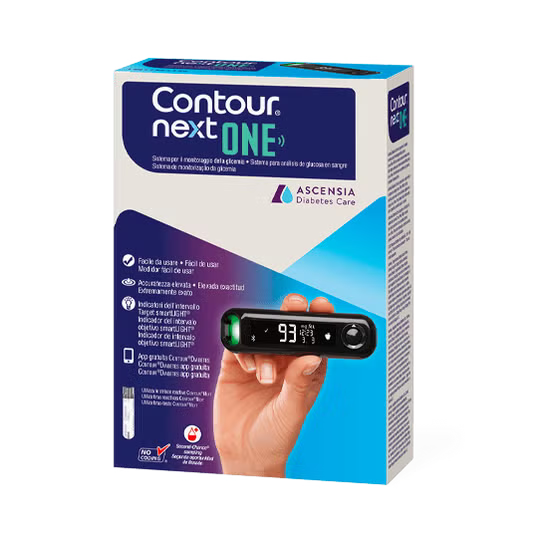
Contour Next ONE Blood Glucose monitoring system
- ✔️ Measures blood glucose in approximately 5 seconds
- ✔️ Second Chance sampling reduces wasted test strips
- ✔️ Bluetooth syncs results to free Contour Diabetes app
- ✔️ Meets ISO 15197:2013 international accuracy standard
- ✔️ Suitable for type 1 and type 2 diabetes self-monitoring
Price Checker
 Lowest price guarantee
 Includes FREE private prescription


Couldn't load pickup availability
What Is a Blood Glucose Monitor and How Can the Contour Next ONE Help?
Managing diabetes day to day means keeping a close eye on your blood sugar levels — and having a reliable tool to do that makes a real difference. The blood glucose monitor from Contour, the Contour Next ONE, is a clinically validated home testing device designed to give you accurate readings quickly and with minimal fuss. Whether you have type 1 or type 2 diabetes, regular self-monitoring helps you and your healthcare team make informed decisions about your diet, activity, and medication. According to the NHS, self-monitoring of blood glucose is an important part of diabetes management for many people. You can explore a full range of testing devices and accessories in our diabetes monitoring collection.
The Contour Next ONE is available from Cured Pharmacy for £49.99 and requires no prescription. It connects via Bluetooth to the free Contour Diabetes app, letting you log, review, and share your readings with your care team. That kind of connectivity is genuinely useful — especially if you're trying to spot patterns over time.
How Does the Contour Next ONE Blood Glucose Monitor Work?
The system works through a process called electrochemical biosensing. When you apply a small drop of blood to a Contour Next test strip, an enzyme on the strip reacts with the glucose in your blood. This reaction generates a tiny electrical current, which the meter measures and converts into a mmol/L reading — displayed on screen in around five seconds.
- Insert a Contour Next test strip into the meter — it powers on automatically
- Use the lancing device to obtain a small blood sample from your fingertip
- Touch the blood drop to the tip of the test strip
- Read your result on the backlit display within approximately 5 seconds
- The result syncs automatically to the Contour Diabetes app via Bluetooth if enabled
The meter also features a "Second Chance" sampling feature, which allows you to apply more blood to the same strip within 60 seconds if the initial sample was insufficient — reducing wasted strips and the need for an additional finger prick.
Who Should Use the Contour Next ONE Blood Glucose Monitor?
This device is suitable for a wide range of people living with diabetes who need to monitor their blood glucose at home. It's particularly well suited to those who want a straightforward, app-connected meter without unnecessary complexity.
- Adults and children with type 1 diabetes who test multiple times daily
- People with type 2 diabetes advised by their GP or diabetes nurse to self-monitor
- Those who prefer smartphone connectivity to track trends over time
- People who find traditional meters fiddly or difficult to read
It is not intended for use on neonates (newborns) or critically ill patients, as results in these groups may not be reliable. Always discuss your monitoring schedule with your GP or diabetes specialist.
How Does the Contour Next ONE Compare to Other Blood Glucose Monitors?
| Feature | Contour Next ONE | Accu-Chek Instant |
|---|---|---|
| Bluetooth connectivity | Yes — syncs to Contour Diabetes app | Yes — syncs to mySugr app |
| Result time | ~5 seconds | ~4 seconds |
| Second Chance sampling | Yes | No |
| Memory capacity | 800 results | 720 results |
Is the Contour Next ONE Accurate and How Should It Be Stored?
The Contour Next ONE meets the ISO 15197:2013 accuracy standard — the international benchmark for blood glucose monitor devices. This means at least 95% of results must fall within ±15% of a laboratory reference value for glucose concentrations above 5.55 mmol/L, and within ±0.83 mmol/L for lower concentrations. That's a reassuring level of precision for everyday home use.
Store the meter and test strips between 4°C and 30°C, away from direct sunlight, moisture, and extreme temperatures. Never store strips in the fridge. Check the expiry date on your strip pot before each use — expired strips can give inaccurate readings. If you're also managing other aspects of your health, our electrical health and diagnostic range includes a variety of home monitoring tools.
This product is a medical device. Speak to your doctor or pharmacist before using if you have an underlying medical condition or are taking other medicines.
Contour Next ONE Blood Glucose Monitoring System specifications
| Treatment category | Diabetes monitoring / blood glucose self-testing |
| Mechanism of action | Electrochemical biosensing — enzyme reaction with blood glucose generates measurable electrical current |
| Effective for | Self-monitoring of blood glucose in people with diabetes |
| Suitable for | Adults and children with type 1 or type 2 diabetes |
| Active ingredient | N/A — diagnostic device |
| Compatible strips | Contour Next test strips |
| UK classification | Class IIb medical device (CE/UKCA marked) |
| Connectivity | Bluetooth — Contour Diabetes app (iOS and Android) |
| Result time | Approximately 5 seconds |
| Memory | 800 results with date and time |
| Route of administration | Fingertip capillary blood sample |
Specifications of Contour Next ONE Blood Glucose Monitoring System
What Is the Contour Next ONE and What Is It Used For?
The Contour Next ONE Blood Glucose Monitoring System is a home-use medical device designed to measure the concentration of glucose in capillary whole blood. It is used by people with diabetes — both type 1 and type 2 — to monitor their blood sugar levels as part of their ongoing diabetes management plan. The NHS recommends that people with type 1 diabetes test their blood glucose regularly, and many people with type 2 diabetes are also advised to self-monitor, particularly if they are taking insulin or certain other medications.
Regular testing helps you understand how food, exercise, illness, and medication affect your glucose levels. It also helps you and your healthcare team identify patterns and adjust your treatment accordingly. This is not a diagnostic device — it cannot be used to diagnose diabetes. If you suspect you have diabetes, speak to your GP.
What Do You Need to Know Before Using the Contour Next ONE?
Before you start using this device, there are some important points to be aware of. Read the full instructions supplied with the meter carefully before your first use.
Do not use this device if:
- You are a neonate (newborn) or critically ill — results may be unreliable in these groups
- The meter or test strips are damaged or the strips have passed their expiry date
- You are experiencing symptoms of severe hypoglycaemia — seek emergency help immediately
- You have haematocrit levels outside the range of 20–60% — results may be inaccurate
Warnings and precautions:
- Always wash and dry your hands thoroughly before testing — residue from food or hand cream can affect results
- Do not use the device for intravenous blood samples or arterial blood
- Certain substances including ascorbic acid (vitamin C) in very high doses may interfere with readings — check with your pharmacist
- Results should always be interpreted alongside clinical symptoms and discussed with your healthcare team
- Keep the lancing device and used lancets out of reach of children
Known interactions:
- High-dose vitamin C supplementation may affect glucose readings — if you take supplements, browse our vitamins and supplements range and check with your pharmacist
- Maltose, galactose, and xylose may cause falsely elevated readings with some glucose oxidase-based strips — Contour Next strips use a different enzyme system designed to minimise this interference
How Should You Use the Contour Next ONE Correctly?
Using the Contour Next ONE correctly is straightforward once you've done it a few times. Follow these steps each time you test:
- Wash your hands with soap and warm water, then dry them thoroughly
- Remove a Contour Next test strip from the pot and close the lid immediately to protect remaining strips from moisture
- Insert the strip into the meter — the device will power on automatically
- Set the lancing device to an appropriate depth and lance the side of your fingertip
- Gently squeeze your finger to produce a small blood drop
- Touch the blood drop to the tip of the test strip — do not smear blood onto the strip
- If the sample is insufficient, you have up to 60 seconds to apply more blood to the same strip (Second Chance sampling)
- Read your result on the display — it will appear in approximately 5 seconds
- Dispose of the used lancet safely in a sharps bin
- Record your result or allow it to sync automatically to the Contour Diabetes app
| User group | Typical testing frequency | Notes |
|---|---|---|
| Type 1 diabetes (adults) | 4–10 times daily | Before meals, before bed, before driving |
| Type 2 diabetes (on insulin) | As directed by GP or nurse | Often before meals and at bedtime |
| Type 2 diabetes (diet/tablet controlled) | As advised by healthcare team | May not need daily testing |
What Are the Possible Side Effects of Using the Contour Next ONE?
As a diagnostic device rather than a medicine, the Contour Next ONE does not cause systemic side effects. However, the finger-lancing process involved in obtaining a blood sample can cause some localised effects.
Common side effects (related to finger lancing):
- Mild pain or discomfort at the lancing site
- Small bruise or mark at the fingertip
- Temporary redness or soreness
Less common side effects:
- Infection at the lancing site if the area is not kept clean — always use a fresh lancet for each test
- Callus formation on frequently used fingertips — rotate testing sites regularly
- Skin sensitivity or irritation in rare cases
If you notice signs of infection — such as increasing redness, swelling, warmth, or discharge — contact your GP. Rotating your lancing sites across different fingers and using the lowest effective depth setting on your lancing device will help minimise discomfort over time. You can also find relevant first aid supplies in our first aid collection.
How Should You Store the Contour Next ONE?
- Store the meter and test strips at temperatures between 4°C and 30°C
- Keep away from direct sunlight, humidity, and extreme heat or cold
- Do not store test strips in the refrigerator
- Always replace the cap on the test strip pot immediately after removing a strip
- Check the expiry date on the strip pot before each use — do not use expired strips
- Keep the device and accessories out of reach of children
- Do not store near strong electromagnetic fields or electronic devices that may interfere with Bluetooth connectivity
References
- https://www.nhs.uk/conditions/diabetes/
- https://www.nhs.uk/conditions/type-1-diabetes/living-with-type-1-diabetes/monitoring-blood-glucose/
- https://www.nhs.uk/conditions/type-2-diabetes/living-with-type-2-diabetes/testing-blood-glucose/
- https://www.nhs.uk/conditions/low-blood-sugar-hypoglycaemia/
- https://www.nhs.uk/conditions/high-blood-sugar-hyperglycaemia/
- https://www.nice.org.uk/guidance/ng17
Written and reviewed by our qualified team
Your safety and success are our highest priorities. Our medical team rigorously evaluates every product and piece of advice we provide, ensuring you receive only the most effective, science-backed solutions available.
Frequently Asked Questions
Where can I buy the Contour Next ONE blood glucose monitor in the UK?
You can buy the Contour Next ONE online from Cured Pharmacy for £49.99, with no prescription required. It is available as an over-the-counter medical device and can be ordered directly to your door. Browse our full diabetes monitoring collection for compatible strips and accessories.
How does the Contour Next ONE blood glucose monitor work?
The Contour Next ONE uses electrochemical biosensing technology — a small blood sample applied to a Contour Next test strip triggers an enzyme reaction that generates a measurable electrical current. The meter converts this current into a blood glucose reading displayed in mmol/L within approximately five seconds. This method is well established and meets the ISO 15197:2013 international accuracy standard for home blood glucose monitors.
How do I use the Contour Next ONE step by step?
Insert a Contour Next test strip into the meter to power it on, then wash and dry your hands thoroughly. Lance the side of your fingertip, apply the blood drop to the tip of the strip, and your result will appear on screen in around five seconds. If the initial blood sample is too small, the Second Chance feature gives you up to 60 seconds to add more blood to the same strip without wasting it.
What is a normal blood glucose reading on the Contour Next ONE?
For most people with diabetes, the NHS advises target blood glucose levels of 4–7 mmol/L before meals and under 8.5 mmol/L two hours after eating, though individual targets vary. Your GP, diabetes nurse, or specialist will set personalised targets based on your type of diabetes, medication, and overall health. Always discuss your readings with your healthcare team rather than adjusting treatment yourself.
Does the Contour Next ONE connect to a smartphone app?
Yes — the Contour Next ONE connects via Bluetooth to the free Contour Diabetes app, available on both iOS and Android devices. The app automatically logs your readings, displays trends and patterns, and allows you to share data with your healthcare team. This connectivity makes it easier to spot how food, exercise, and medication affect your glucose levels over time.
Who is the Contour Next ONE suitable for?
The Contour Next ONE is suitable for adults and children with type 1 or type 2 diabetes who self-monitor their blood glucose at home. It is not intended for use on neonates (newborns) or critically ill patients, as results may be unreliable in these groups. If you are unsure whether this device is right for you, speak to your GP or diabetes nurse before purchasing.
What test strips does the Contour Next ONE use?
The Contour Next ONE is compatible exclusively with Contour Next test strips, which are sold separately. These strips should not be substituted with strips from other brands, as this will produce inaccurate results. Always check the expiry date on the strip pot before use and store strips at room temperature away from moisture.
How accurate is the Contour Next ONE blood glucose monitor?
The Contour Next ONE meets ISO 15197:2013 accuracy requirements, meaning at least 95% of results must fall within ±15% of a laboratory reference value for glucose concentrations above 5.55 mmol/L, and within ±0.83 mmol/L for lower concentrations. Accuracy can be affected by factors such as dirty hands, expired strips, or incorrect storage — always follow the instructions carefully. If a result seems inconsistent with how you feel, repeat the test and contact your healthcare team if in doubt.
Can I use the Contour Next ONE if I have type 2 diabetes?
Yes, the Contour Next ONE is suitable for people with type 2 diabetes, particularly those who are on insulin or have been advised by their GP or diabetes nurse to self-monitor. Not everyone with type 2 diabetes needs to test daily — your healthcare team will advise on the frequency that's right for you. The NHS provides guidance on blood glucose testing for type 2 diabetes on its website.
What should I do if my blood glucose reading is very high or very low?
If your reading is below 4 mmol/L, you may be experiencing hypoglycaemia — follow your healthcare team's sick-day rules and treat with fast-acting carbohydrates such as glucose tablets or a sugary drink. A reading consistently above 10 mmol/L may indicate hyperglycaemia and should be discussed with your GP or diabetes team. In an emergency — such as loss of consciousness — call 999 immediately.
How often should I test my blood glucose with the Contour Next ONE?
Testing frequency depends on your type of diabetes, your medication, and your individual management plan. People with type 1 diabetes may test four to ten times daily, while those with type 2 diabetes on tablets may test less frequently. Your GP, diabetes nurse, or specialist will advise on the schedule that suits your needs — never change your testing frequency without discussing it with your healthcare team first.
How do I manage sore fingertips from regular blood glucose testing?
Rotating your lancing sites across different fingers and using the sides of your fingertips rather than the pads can significantly reduce soreness. Use the lowest effective depth setting on your lancing device and always use a fresh lancet for each test — reusing lancets makes them blunter and more painful. If soreness persists or you notice signs of infection, speak to your GP or practice nurse.
What are the alternatives to the Contour Next ONE blood glucose monitor?
Alternatives include the Accu-Chek Instant, the FreeStyle Optium Neo, and flash glucose monitoring systems such as the FreeStyle Libre, which measures interstitial glucose continuously without routine finger pricks. The right choice depends on your diabetes type, testing frequency, and whether your GP or diabetes team recommends a specific device. You can compare home monitoring options in our electrical health and diagnostic collection.
How long can I use the Contour Next ONE for?
The Contour Next ONE meter itself can be used indefinitely as long as it is functioning correctly and has not been damaged. Test strips have individual expiry dates printed on the pot and must not be used after this date. Lancets should be replaced with every single test — never reuse them, as this increases the risk of infection and makes lancing more painful.
Are there any recent studies on the accuracy of the Contour Next ONE?
The Contour Next ONE has been evaluated in published clinical studies demonstrating compliance with ISO 15197:2013 accuracy standards, with a high proportion of results falling within clinically acceptable ranges. Ascensia Diabetes Care, the manufacturer, has published accuracy data supporting its use in routine self-monitoring. For the most up-to-date clinical evidence, speak to your diabetes healthcare team or consult your GP.
Written and reviewed by our qualified team

Reviewed by:
Tarun Kumar
Superintendent/ Clinical Lead
📖 Find out more about our team of medical content authors and how we ensure the accuracy of our content with our content guidelines.
Content last updated: 14 Sep 2026
Other popular options


We’re a safe and
regulated UK service

Lowest Price Guarantee

We're convinced you won't find your treatment cheaper, but if you do we'll refund the difference.
Find out more
100% discreet packaging

Discreet, unbranded packaging for every order.
Find out more

Need help?
Talk to our friendly experts now


How our service works

Service setup

Discreet packaging

Express delivery