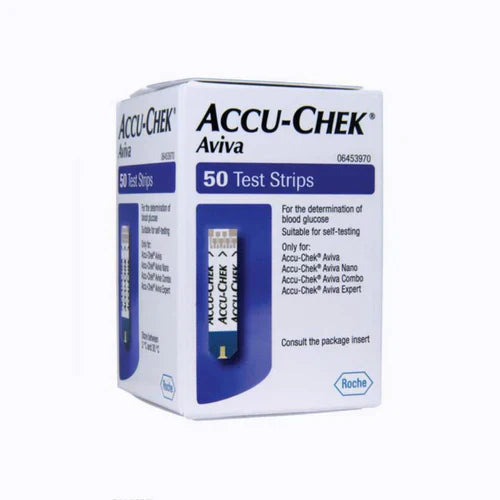
Accu-Chek Aviva - 50 Test Strips
Accu-Chek Aviva - 50 Test Strips
- ✔️ Compatible exclusively with the Accu-Chek Aviva blood glucose meter
- ✔️ Requires only 0.6 microlitres of blood per test
- ✔️ Delivers accurate blood glucose results in approximately 5 seconds
- ✔️ Suitable for type 1, type 2, and gestational diabetes monitoring
- ✔️ 50 strips per pack for consistent, reliable daily testing
Price Checker
 Lowest price guarantee
 Includes FREE private prescription


Couldn't load pickup availability
What Are Accu-Chek Aviva Test Strips and How Do They Help?
Managing diabetes day to day means keeping a close eye on your blood glucose levels — and having reliable, accurate test strips makes all the difference. Accu-Chek Aviva test strips are single-use electrochemical strips designed exclusively for use with the Accu-Chek Aviva blood glucose meter. Each pack contains 50 strips, giving you a solid supply for regular monitoring at home or on the go. At £23.50 per pack, they offer a straightforward, no-fuss option for people who already use the Aviva meter system. You can explore the full range of monitoring supplies in our diabetes monitoring collection.
Blood glucose self-monitoring is a key part of diabetes management for many people, particularly those on insulin therapy or certain oral medications. The NHS recommends that people with type 1 diabetes test their blood glucose levels multiple times daily, and those with type 2 diabetes may also need to test regularly depending on their treatment plan. Having a consistent, trusted strip is essential — inconsistent results can lead to poor treatment decisions.
How Do Accu-Chek Aviva Test Strips Work?
The science behind these strips is straightforward but precise. Each strip contains a glucose oxidase enzyme embedded in an electrochemical sensor. When a tiny blood sample touches the strip, the enzyme reacts with the glucose present in the blood, generating a small electrical current. The Accu-Chek Aviva meter measures this current and converts it into a blood glucose reading displayed in millimoles per litre (mmol/L) — typically within about 5 seconds.
- A minimum blood sample of just 0.6 microlitres is required — a very small fingertip prick
- Blood is drawn into the strip automatically via capillary action — no smearing needed
- The meter checks for underfill and alerts you if the sample is insufficient
- Results are displayed in mmol/L, the standard unit used in the UK
Who Should Use Accu-Chek Aviva Test Strips?
These strips are suitable for adults and children who already own an Accu-Chek Aviva meter and need to self-monitor their blood glucose as part of their diabetes management plan. They are not a standalone diagnostic tool — they are intended for ongoing monitoring, not for diagnosing diabetes in the first place.
- People with type 1 diabetes who test multiple times daily
- People with type 2 diabetes on insulin or certain medications that can cause hypoglycaemia
- Pregnant women with gestational diabetes who require frequent monitoring
- Anyone whose GP or diabetes nurse has recommended regular blood glucose self-testing
How Do Accu-Chek Aviva Strips Compare to Alternative Test Strips?
| Feature | Accu-Chek Aviva (50 strips) | Accu-Chek Guide Strips (50 strips) |
|---|---|---|
| Compatible meter | Accu-Chek Aviva only | Accu-Chek Guide only |
| Sample volume required | 0.6 microlitres | 0.6 microlitres |
| Result time | ~5 seconds | ~4 seconds |
| Strip design | Standard port insertion | Spill-resistant vial with wider dosing area |
How Should You Store Accu-Chek Aviva Test Strips?
Proper storage is crucial for accurate results. Keep your Accu-Chek Aviva test strips in their original container, tightly sealed, at temperatures below 30°C. Avoid storing them in the bathroom or near a window — humidity and heat degrade the enzyme coating and can cause inaccurate readings. Do not refrigerate them either, as condensation when the strips warm up can cause similar problems. Always check the expiry date before use, and once opened, use the strips within 3 months or before the printed expiry date, whichever comes first. If you take high-dose vitamin C supplements, be aware that very high levels of ascorbic acid in the blood may interfere with glucose oxidase-based strips — speak to your pharmacist if you are unsure. You might also find it helpful to browse our vitamins and supplements collection for guidance on supplement use alongside diabetes management.
This product is a medicine. Speak to your doctor or pharmacist before using if you have an underlying medical condition or are taking other medicines.
Accu-Chek Aviva 50 Test Strips specifications
| Treatment category | Diabetes monitoring / blood glucose self-testing |
| Mechanism of action | Electrochemical glucose oxidase reaction |
| Effective for | Measuring capillary blood glucose levels in mmol/L |
| Suitable for | Adults and children with diabetes using the Accu-Chek Aviva meter |
| Active ingredient | Glucose oxidase enzyme electrode |
| Pack size | 50 test strips |
| UK classification | General Sale / OTC medical device |
| Preparation | Single-use electrochemical test strip |
| Route of administration | Capillary blood sample (fingertip) |
Specifications of Accu-Chek Aviva 50 Test Strips
What Are Accu-Chek Aviva Test Strips and What Are They Used For?
Accu-Chek Aviva test strips are single-use diagnostic strips used alongside the Accu-Chek Aviva blood glucose meter to measure the concentration of glucose in a small sample of capillary blood. They are used by people with diabetes — both type 1 and type 2 — to monitor their blood glucose levels at home, helping them and their healthcare team make informed decisions about diet, physical activity, and medication. The NHS advises that self-monitoring of blood glucose is particularly important for people on insulin, as it helps prevent dangerous episodes of hypoglycaemia (low blood sugar) and hyperglycaemia (high blood sugar).
What Do You Need to Know Before Using Accu-Chek Aviva Test Strips?
Before you start using these strips, there are a few important points to be aware of. These strips are a medical device, not a medicine, but accuracy still depends on correct use and storage.
Do not use these strips if:
- You do not own an Accu-Chek Aviva meter — they are not compatible with any other meter model
- The foil seal on the container is broken or damaged
- The strips have passed their expiry date
- The strips have been exposed to extreme heat, moisture, or direct sunlight
Potential interferences to be aware of:
- High-dose ascorbic acid (vitamin C) supplementation may affect glucose oxidase-based readings
- Severely low haematocrit (anaemia) or very high haematocrit (polycythaemia) can influence results
- Certain medications — including some paracetamol-containing products at very high doses — may interfere; speak to your pharmacist if unsure
- Always wash and dry your hands before testing, as food residue on fingers can falsely elevate readings
How Should You Use Accu-Chek Aviva Test Strips?
Using your test strips correctly every time is essential for reliable results. Follow these steps carefully each time you test.
- Wash your hands thoroughly with soap and warm water, then dry them completely
- Remove one test strip from the container and replace the cap immediately
- Insert the strip into the Accu-Chek Aviva meter — the meter will switch on automatically
- Use your lancing device to prick the side of a fingertip
- Gently squeeze the finger to produce a small drop of blood
- Touch the tip of the strip to the blood drop — the strip draws the sample in automatically
- Wait approximately 5 seconds for your result to appear on the meter display
- Record your result in your diabetes diary or app, then safely dispose of the used strip
| Indication | Age Group | Frequency | Notes |
|---|---|---|---|
| Type 1 diabetes | Adults & children | Multiple times daily (as directed by clinician) | Before meals, before bed, before driving |
| Type 2 diabetes (insulin) | Adults | As directed by GP or diabetes nurse | Frequency varies by treatment plan |
| Gestational diabetes | Adults | As directed by midwife or consultant | Often fasting and post-meal testing |
What Are the Possible Side Effects of Using Accu-Chek Aviva Test Strips?
The test strips themselves do not cause systemic side effects, as they are an external medical device. However, the process of obtaining a blood sample by fingertip lancing can cause some localised effects. If you notice persistent skin problems at your testing sites, speak to your diabetes nurse or GP. You can also find useful information about skin care in our skin care collection.
Common effects associated with fingertip lancing:
- Soreness or tenderness at the fingertip
- Small bruises at the lancing site
- Callus formation with very frequent testing
Less common effects:
- Infection at the lancing site if hygiene is not maintained
- Nerve sensitivity changes with prolonged use at the same site
Rotate your lancing sites regularly across different fingers and different areas of each fingertip to minimise discomfort and skin changes.
How Should You Store Accu-Chek Aviva Test Strips?
Correct storage protects the integrity of the enzyme coating on each strip and ensures your readings remain accurate. Poor storage is one of the most common — and easily avoidable — causes of inaccurate blood glucose results. If you are also managing other aspects of your health, our electrical health and diagnostic collection has a range of monitoring tools that may be useful.
- Store in the original container with the cap tightly closed
- Keep at temperatures below 30°C
- Do not refrigerate or freeze
- Keep away from direct sunlight, moisture, and humidity
- Do not store in a bathroom cabinet or near a kitchen sink
- Once opened, use within 3 months or before the expiry date — whichever is sooner
- Check the expiry date printed on the container before each use
- Keep out of reach of children
References
- https://www.nhs.uk/conditions/type-1-diabetes/living-with-type-1-diabetes/checking-your-blood-sugar-level/
- https://www.nhs.uk/conditions/type-2-diabetes/living-with-type-2-diabetes/checking-your-blood-sugar/
- https://www.nhs.uk/conditions/gestational-diabetes/
- https://www.nhs.uk/conditions/low-blood-sugar-hypoglycaemia/
- https://www.nhs.uk/conditions/diabetes/
- https://www.nice.org.uk/guidance/ng17
Written and reviewed by our qualified team
Your safety and success are our highest priorities. Our medical team rigorously evaluates every product and piece of advice we provide, ensuring you receive only the most effective, science-backed solutions available.
Frequently Asked Questions
Where can I buy Accu-Chek Aviva test strips online in the UK?
You can buy Accu-Chek Aviva test strips online directly from Cured Pharmacy without a prescription. They are available as an over-the-counter product for £23.50 per pack of 50. If you have diabetes and your GP has authorised self-monitoring, you may also be able to obtain them on an NHS prescription, which could reduce your cost.
How do Accu-Chek Aviva test strips work in the body?
The strips use an electrochemical glucose oxidase reaction — when blood touches the strip, the enzyme reacts with glucose to produce a tiny electrical current. The Accu-Chek Aviva meter measures this current and converts it into a blood glucose reading in mmol/L. The whole process takes approximately 5 seconds from sample application to result.
Are Accu-Chek Aviva test strips compatible with all Accu-Chek meters?
No — Accu-Chek Aviva test strips are designed exclusively for use with the Accu-Chek Aviva meter. They are not compatible with other Accu-Chek models such as the Guide, Instant, or Performa. Always confirm your meter model before purchasing replacement strips to avoid wasting money on incompatible products.
How do I use Accu-Chek Aviva test strips step by step?
Wash and dry your hands, then remove one strip from the container and insert it into your Accu-Chek Aviva meter. Prick the side of a fingertip with your lancing device, touch the strip tip to the blood drop, and wait around 5 seconds for your result. Record the reading and safely dispose of the used strip — never reuse a strip.
How often should I test my blood glucose using these strips?
Testing frequency depends on your type of diabetes and your treatment plan. People with type 1 diabetes typically test multiple times daily — before meals, before bed, and before driving. People with type 2 diabetes on insulin may also test several times a day, while those on other medications may test less frequently. Always follow the guidance of your GP or diabetes nurse.
Who is eligible to use Accu-Chek Aviva test strips?
These strips are suitable for adults and children with diabetes who own an Accu-Chek Aviva meter and have been advised to self-monitor their blood glucose. They are appropriate for people with type 1 diabetes, type 2 diabetes, and gestational diabetes. They are not intended for diagnosing diabetes — if you think you may have diabetes, speak to your GP. You can browse our diabetes monitoring collection for a full range of testing supplies.
What happens if I get an error reading on my Accu-Chek Aviva meter?
Error readings can occur if the blood sample was too small, the strip was inserted incorrectly, or the strip has been damaged by heat or moisture. Discard the used strip, take a fresh one, and repeat the test following the correct technique. If errors persist, check that your strips are within their expiry date and that your meter is functioning correctly — consult the meter manual or contact Roche Diabetes Care for support.
Can vitamin C supplements affect my Accu-Chek Aviva test strip results?
Yes, very high levels of ascorbic acid (vitamin C) in the blood can interfere with glucose oxidase-based test strips and may produce falsely elevated or altered readings. If you take high-dose vitamin C supplements, discuss this with your pharmacist or diabetes care team. Standard dietary intake of vitamin C is unlikely to cause significant interference.
What is the shelf life of Accu-Chek Aviva test strips?
Each container has an expiry date printed on the label — do not use strips after this date, as accuracy cannot be guaranteed. Once the container has been opened, use the strips within 3 months or before the expiry date, whichever comes first. Always replace the cap tightly after removing a strip to protect the remaining strips from moisture.
How should I store Accu-Chek Aviva test strips correctly?
Store the strips in their original container with the cap tightly closed, at temperatures below 30°C, away from direct sunlight and humidity. Do not refrigerate or freeze them, as condensation can damage the enzyme coating. Avoid storing them in bathrooms or near kitchen sinks where moisture levels are high.
What are the alternatives to Accu-Chek Aviva test strips?
If you are considering switching meters, alternatives include the Accu-Chek Guide system (which uses Guide strips and features a spill-resistant vial), the FreeStyle Optium Neo, or continuous glucose monitoring (CGM) systems such as the FreeStyle Libre. Each system requires its own compatible strips or sensors. Speak to your diabetes nurse before switching, as some systems may be available on NHS prescription.
Can I get Accu-Chek Aviva test strips on the NHS?
Yes, in some cases. If your GP or diabetes team has recommended blood glucose self-monitoring and has authorised test strips on prescription, you may be able to obtain them via your GP surgery. However, NHS prescribing of test strips for type 2 diabetes not on insulin has become more restricted in recent years, so check with your GP. Buying them over the counter from Cured Pharmacy is a convenient alternative if you are not eligible for NHS strips.
How long can I keep using Accu-Chek Aviva test strips?
You can continue using Accu-Chek Aviva test strips for as long as you need to self-monitor your blood glucose and your Accu-Chek Aviva meter remains in working order. There is no clinical limit on long-term use — regular blood glucose monitoring is an ongoing part of diabetes management for many people. Replace strips when they reach their expiry date or if the container has been open for more than 3 months.
What is the latest guidance on blood glucose self-monitoring for people with diabetes?
NICE guidelines (NG17 and NG28) recommend that all adults with type 1 diabetes have access to blood glucose monitoring equipment, including test strips, and should test at least four times daily. For type 2 diabetes, the guidance is more individualised — testing is recommended for those on insulin or at risk of hypoglycaemia. Your diabetes care team will advise on the most appropriate monitoring frequency for your situation.
Do Accu-Chek Aviva test strips hurt to use?
The strips themselves do not cause pain — any discomfort comes from the fingertip lancing process. Modern lancing devices are designed to minimise pain by using very fine lancets and adjustable depth settings. Using the side of the fingertip rather than the pad, and rotating testing sites regularly, can significantly reduce soreness over time. If fingertip discomfort is a concern, speak to your diabetes nurse about alternative site testing options. You may also find helpful products in our first aid collection for managing minor skin irritation.
Written and reviewed by our qualified team

Reviewed by:
Tarun Kumar
Superintendent/ Clinical Lead
📖 Find out more about our team of medical content authors and how we ensure the accuracy of our content with our content guidelines.
Content last updated: 14 Sep 2026
Other popular options


We’re a safe and
regulated UK service

Lowest Price Guarantee

We're convinced you won't find your treatment cheaper, but if you do we'll refund the difference.
Find out more
100% discreet packaging

Discreet, unbranded packaging for every order.
Find out more

Need help?
Talk to our friendly experts now


How our service works

Service setup

Discreet packaging

Express delivery