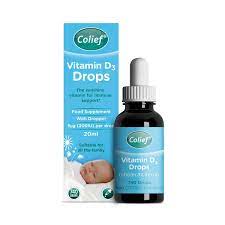
Colief Vitamin D3 Drops - 20ml
- ✔️ Supports healthy bone development in babies from birth
- ✔️ Provides NHS-recommended 400 IU vitamin D3 daily
- ✔️ Easy-to-use dropper for precise infant dosing
- ✔️ Suitable for breastfed and formula-fed babies
- ✔️ Helps prevent vitamin D deficiency and rickets
Price Checker
 Discreet, tracked delivery
 Includes FREE private prescription


Couldn't load pickup availability
What Are Vitamin D Drops for Babies — and Does Your Child Need Them?
If you've been wondering whether your little one is getting enough vitamin D, you're not alone. It's one of the most common questions new parents ask health visitors and pharmacists across the UK. Vitamin D drops for babies are recommended by the NHS for all infants from birth, regardless of whether they are breastfed or formula-fed — and Colief Vitamin D3 Drops make meeting that daily requirement simple and fuss-free. Available from our baby and toddler range at Cured Pharmacy, this 20ml bottle provides a reliable daily source of colecalciferol (vitamin D3) for your growing child.
Vitamin D plays a critical role in calcium and phosphate regulation, both of which are essential for healthy bone development and immune function. The NHS advises that babies under one year should receive 8.5–10 micrograms (340–400 IU) of vitamin D every day. Breastfed babies are particularly at risk of deficiency because breast milk contains very little vitamin D, and even formula-fed babies who consume less than 500ml of formula daily may need a supplement.
How Do Colief Vitamin D3 Drops Work in the Body?
Colief Vitamin D3 Drops contain colecalciferol, the same form of vitamin D that your skin produces naturally when exposed to sunlight. Once swallowed, it follows a clear metabolic pathway:
- Colecalciferol is absorbed from the gastrointestinal tract into the bloodstream.
- It travels to the liver, where it is converted into calcidiol (25-hydroxyvitamin D).
- The kidneys then convert calcidiol into calcitriol, the biologically active form.
- Calcitriol promotes absorption of calcium and phosphate from the gut, supporting bone mineralisation and immune cell function.
Because the UK's climate limits sunlight exposure for much of the year — and because infants spend most of their time indoors — dietary supplementation is the most reliable way to maintain adequate vitamin D levels in young children.
Who Should Use Colief Vitamin D3 Drops?
These drops are designed for babies and young children who need daily vitamin D supplementation. The NHS recommends vitamin D supplements for all babies from birth to one year as a matter of routine. Children aged one to four years should also receive 10 micrograms (400 IU) daily. Colief Vitamin D3 Drops are particularly suitable for:
- Breastfed babies from birth, as breast milk alone does not provide sufficient vitamin D.
- Formula-fed babies consuming less than 500ml of infant formula per day.
- Toddlers and young children with limited sun exposure or dietary intake of vitamin D.
- Families looking for a simple, liquid drop format that is easy to administer.
How Do Colief Vitamin D3 Drops Compare to Other Baby Vitamin D Supplements?
| Feature | Colief Vitamin D3 Drops 20ml | Healthy Start Vitamin Drops |
|---|---|---|
| Active ingredient | Colecalciferol (D3) | Colecalciferol (D3) |
| Additional vitamins | Vitamin D3 only | Vitamins A, C, and D |
| Volume | 20ml | 10ml |
| Availability | Available OTC online and in pharmacy | Free via Healthy Start scheme (eligible families) |
Is Colief Vitamin D3 Suitable for Newborns — and How Should It Be Stored?
Yes. Colief Vitamin D3 Drops are suitable from birth. The liquid drop format makes it straightforward to administer to even very young babies — you can place the dose directly into the mouth or add it to a small amount of milk. If you're also exploring other nutritional support for your child, you may find our vitamins and supplements collection useful for the wider family.
Store the bottle below 25°C, away from direct sunlight and heat sources. Keep the cap tightly closed after each use and store out of reach of children. Do not use after the expiry date printed on the packaging. Vitamin D drops for babies should be discarded after the period of use stated on the label once opened.
This product is a medicine. Speak to your doctor or pharmacist before using if you have an underlying medical condition or are taking other medicines.
Colief Vitamin D3 Drops 20ml specifications
| Treatment category | Vitamin D supplementation |
| Mechanism of action | Provides colecalciferol, which is metabolised to calcitriol to support calcium and phosphate absorption |
| Effective for | Prevention of vitamin D deficiency in babies and young children |
| Suitable for | Babies from birth; toddlers and young children |
| Active ingredient | Colecalciferol (Vitamin D3) |
| Pack size | 20ml |
| UK classification | General Sale List (GSL) |
| Drug class | Fat-soluble vitamin supplement |
| Preparation | Oral drops (liquid) |
| Route of administration | Oral |
Specifications of Colief Vitamin D3 Drops 20ml
What Is Colief Vitamin D3 and What Is It Used For?
Colief Vitamin D3 Drops contain colecalciferol, a form of vitamin D3 that supports healthy bone development, calcium absorption, and immune function in babies and young children. The NHS recommends that all babies from birth to one year receive a daily vitamin D supplement, as breast milk and most diets do not provide sufficient amounts — particularly in the UK, where sunlight exposure is limited for much of the year. These drops are used to prevent vitamin D deficiency and the associated risk of rickets, a condition that causes soft, weakened bones in children.
What Do You Need to Know Before Using Colief Vitamin D3 Drops?
Before giving these drops to your baby, it is important to be aware of the following contraindications and warnings:
- Do not use if your child has hypercalcaemia (high blood calcium levels) or hypervitaminosis D (vitamin D toxicity).
- Do not use if your child has kidney stones (nephrolithiasis) or severe kidney disease without medical supervision.
- Do not use alongside other vitamin D supplements without checking the total daily dose — exceeding the recommended intake can cause toxicity.
- Consult your GP or pharmacist if your child has sarcoidosis or any condition affecting calcium metabolism.
- Always check the label for allergens and excipients if your child has known food allergies.
Known drug interactions at recommended doses are minimal, but be aware of the following:
- Thiazide diuretics may increase the risk of hypercalcaemia when taken alongside vitamin D supplements.
- Certain anticonvulsants (e.g. phenytoin, phenobarbital) may reduce the effectiveness of vitamin D.
- Cholestyramine and orlistat can reduce absorption of fat-soluble vitamins including vitamin D.
How Should You Use Colief Vitamin D3 Drops?
Administering these drops is straightforward. Follow these steps each day:
- Wash your hands thoroughly before handling the dropper.
- Hold the bottle upright and use the dropper to draw up the correct dose.
- Place the drops directly into your baby's mouth, or add to a small amount of breast milk, formula, or food.
- Replace the cap securely after each use.
- Give the drops at the same time each day to help establish a routine.
| Age Group | Recommended Daily Dose | Frequency |
|---|---|---|
| Birth to 1 year | 8.5–10 micrograms (340–400 IU) | Once daily |
| 1–4 years | 10 micrograms (400 IU) | Once daily |
Always follow the dosage instructions on the product label. If you are unsure about the correct dose for your child's age or weight, speak to your pharmacist or health visitor before use.
What Are the Possible Side Effects of Colief Vitamin D3 Drops?
At the recommended daily dose, side effects from vitamin D3 drops are very uncommon. However, it is important to know what to look out for, particularly if the dose is accidentally exceeded.
Common side effects (at recommended doses, these are rare but may include):
- Mild gastrointestinal discomfort
- Loose stools in some infants
Less common side effects (associated with excessive intake — hypervitaminosis D):
- Nausea and vomiting
- Constipation
- Poor appetite or feeding difficulties
- Excessive thirst and increased urination
- Fatigue or irritability
- Hypercalcaemia (raised blood calcium) — seek medical advice immediately if suspected
If you notice any of these symptoms, stop giving the drops and contact your GP or pharmacist promptly. Never give more than the recommended daily dose. You can find further guidance on infant health products in our baby and toddler collection.
How Should You Store Colief Vitamin D3 Drops?
Correct storage helps maintain the quality and safety of the product throughout its shelf life. Follow these guidelines:
- Store below 25°C in a cool, dry place.
- Keep away from direct sunlight and heat sources.
- Always replace the cap tightly after use.
- Keep out of sight and reach of children.
- Do not use after the expiry date printed on the bottle or outer packaging.
- Check the label for any specific guidance on how long the product can be used after opening.
If you have any questions about storage or whether the product is still suitable to use, speak to your pharmacist. For a broader range of health supplements for the whole family, browse our vitamins and supplements collection.
References
- https://www.nhs.uk/conditions/vitamins-and-minerals/vitamin-d/
- https://www.nhs.uk/pregnancy/keeping-well/vitamins-supplements-and-nutrition/
- https://www.nhs.uk/conditions/rickets-and-osteomalacia/
- https://www.nhs.uk/conditions/baby/weaning-and-feeding/vitamins-for-children/
- https://bnf.nice.org.uk/drugs/colecalciferol/
Written and reviewed by our qualified team
Your safety and success are our highest priorities. Our medical team rigorously evaluates every product and piece of advice we provide, ensuring you receive only the most effective, science-backed solutions available.
Frequently Asked Questions
Where can I buy Colief Vitamin D3 Drops online in the UK?
You can buy Colief Vitamin D3 Drops 20ml directly from Cured Pharmacy, a GPhC-registered UK online pharmacy, for just £7.99. Simply add the product to your basket and select your preferred delivery option at checkout. It is available without a prescription as a General Sale List medicine.
How do vitamin D drops for babies work in the body?
Colecalciferol (vitamin D3) is absorbed from the gut into the bloodstream and converted in the liver to calcidiol, then in the kidneys to calcitriol — the active form. Calcitriol regulates calcium and phosphate absorption, which are essential for healthy bone growth and immune development in infants. Without adequate vitamin D, babies are at risk of developing rickets.
How do I give Colief Vitamin D3 Drops to my newborn?
Use the dropper provided to measure the correct dose and place it gently into your baby's mouth, or mix it into a small amount of breast milk or formula. Give the drops once daily, ideally at the same time each day to build a consistent routine. Always wash your hands before handling the dropper.
What is the correct daily dose of vitamin D drops for babies?
The NHS recommends that babies from birth to one year receive 8.5–10 micrograms (340–400 IU) of vitamin D daily. Children aged one to four years should receive 10 micrograms (400 IU) per day. Always check the product label and consult your pharmacist or health visitor if you are unsure.
When is the best time to give Colief Vitamin D3 Drops?
There is no strict requirement for a specific time of day, but giving the drops at the same time each day — for example, during a morning feed — helps you remember and builds a reliable routine. Vitamin D3 is fat-soluble, so giving it alongside a milk feed may support absorption. Consistency matters more than timing.
What are the side effects of Colief Vitamin D3 Drops in babies?
At the recommended dose, side effects are very rare. Excessive intake can cause hypercalcaemia, with symptoms including nausea, vomiting, poor feeding, constipation, and excessive thirst. If you suspect your baby has received too much vitamin D, stop the drops and contact your GP or pharmacist immediately.
How do I manage side effects of Colief Vitamin D3 Drops?
If your baby shows any signs of discomfort after taking the drops, stop use and seek advice from your pharmacist or GP. At the correct recommended dose, side effects are extremely unlikely. Never exceed the stated daily dose, and avoid giving additional vitamin D supplements at the same time without professional guidance.
Who is eligible to use Colief Vitamin D3 Drops?
These drops are suitable for babies from birth and young children up to four years of age. The NHS recommends vitamin D supplementation for all breastfed babies and formula-fed babies consuming less than 500ml of formula daily. Children with limited sun exposure or dietary vitamin D intake also benefit. Browse our baby and toddler range for more infant health products.
What happens if I miss a dose of Colief Vitamin D3 Drops?
If you forget to give a dose, simply administer it as soon as you remember on the same day. Do not give a double dose the following day to make up for a missed one. Missing an occasional dose is unlikely to cause harm, but try to maintain a daily routine for consistent vitamin D levels.
Can I give Colief Vitamin D3 Drops alongside formula milk?
If your baby is consuming 500ml or more of infant formula per day, they may already be receiving sufficient vitamin D, as formula is fortified with the vitamin. However, if your baby drinks less than 500ml of formula daily, a supplement is recommended by the NHS. Check with your health visitor or pharmacist if you are unsure whether supplementation is needed.
Are Colief Vitamin D3 Drops suitable for premature babies?
Premature babies may have higher vitamin D requirements than full-term infants and are often managed with specific supplementation regimens under medical supervision. Always consult your neonatal team, GP, or health visitor before giving any supplement to a premature baby. Do not self-prescribe higher doses without professional advice.
What are alternatives to Colief Vitamin D3 Drops for babies?
Other infant vitamin D supplements available in the UK include Abidec drops, Healthy Start vitamin drops (free for eligible families), and various own-brand infant vitamin D products. Some products also include vitamins A and C alongside vitamin D. Your pharmacist or health visitor can help you choose the most appropriate option. You can also explore our wider vitamins and supplements range for family health products.
How long should babies take vitamin D drops for?
The NHS recommends that babies receive vitamin D supplements from birth until at least one year of age. Children aged one to four years should continue to receive 10 micrograms daily. After the age of four, a balanced diet and sensible sun exposure may be sufficient for most children, though supplementation can continue if dietary intake is limited.
What does the latest research say about vitamin D for infants?
Current evidence consistently supports routine vitamin D supplementation in infants to prevent rickets and support immune development, particularly in countries with limited sunlight such as the UK. The Scientific Advisory Committee on Nutrition (SACN) reviewed the evidence in 2016 and confirmed the recommendation for 10 micrograms daily for all age groups from one year upwards, and 8.5–10 micrograms for infants under one year.
Does Colief Vitamin D3 contain any allergens or artificial additives?
Always check the product label and patient information leaflet for a full list of ingredients and excipients before use, particularly if your child has known allergies. If you have any concerns about specific ingredients, speak to your pharmacist before giving the drops to your baby.
Written and reviewed by our qualified team

Reviewed by:
Tarun Kumar
Superintendent/ Clinical Lead
📖 Find out more about our team of medical content authors and how we ensure the accuracy of our content with our content guidelines.
Content last updated: 14 Sep 2026
Other popular options


We’re a safe and
regulated UK service

100% discreet packaging

Discreet, unbranded packaging for every order.

Need help?
Talk to our friendly experts now


How our service works

Service setup

Discreet packaging

Express delivery