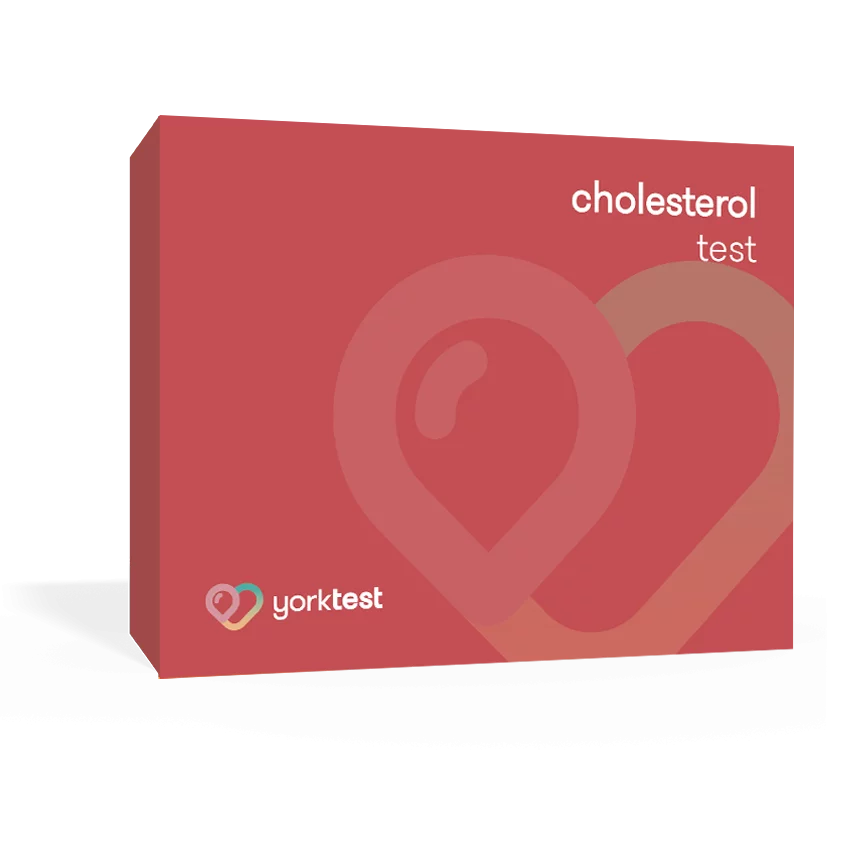
Cholesterol Test
- ✔️ Measures total cholesterol, HDL, LDL and triglycerides at home
- ✔️ Accredited laboratory analysis for reliable lipid results
- ✔️ No GP appointment needed — results delivered digitally
- ✔️ Suitable for adults monitoring cardiovascular health proactively
- ✔️ Identifies raised cholesterol before symptoms develop
Price Checker
 Discreet, tracked delivery
 Includes FREE private prescription


Couldn't load pickup availability
What Is a Cholesterol Home Test and How Can It Help You?
High cholesterol affects around 6 in 10 adults in England, yet most people have no idea their levels are raised because there are no obvious symptoms. That is a genuinely worrying statistic. The cholesterol home test from YorkTest gives you a straightforward way to check your lipid profile without waiting for a GP appointment. For just £59, you can measure your total cholesterol, HDL (high-density lipoprotein), LDL (low-density lipoprotein), and triglyceride levels from the comfort of your own home. If you are already keeping an eye on other health markers, you might also find our diabetes monitoring range useful alongside this test.
Cholesterol itself is not inherently harmful — your body needs it to build cells and produce hormones. The problem arises when LDL cholesterol becomes too high, increasing the risk of fatty deposits building up in your arteries. This can lead to serious conditions including heart attack and stroke. Knowing your numbers is the first step towards doing something about them.
How Does the YorkTest Cholesterol Test Work?
The test uses a simple finger-prick blood sample that you collect yourself at home. Everything you need is included in the kit. Here is how the process works:
- Wash your hands thoroughly with warm water to encourage blood flow to your fingertips.
- Use the sterile lancet provided to prick the side of your fingertip.
- Collect the required volume of blood into the collection tube or onto the sample card.
- Seal your sample securely and place it in the prepaid return envelope.
- Post it to the YorkTest certified laboratory for analysis.
- Receive your results digitally, usually within a few days of the lab receiving your sample.
The laboratory measures four key lipid markers: total cholesterol, HDL cholesterol, LDL cholesterol, and triglycerides. Each result is presented clearly, with reference ranges to help you understand what your numbers mean.
Who Should Consider Using This Cholesterol Test?
This test is suitable for any adult aged 18 or over who wants to understand their cardiovascular risk profile. It is particularly relevant if you have not had a cholesterol check recently, or if you fall into one of the higher-risk groups. The NHS recommends that adults with certain risk factors have their cholesterol checked regularly.
- Adults with a family history of high cholesterol or early heart disease.
- People aged 40 and over who have not had an NHS Health Check.
- Those who are overweight, smoke, or have a diet high in saturated fat.
- Individuals already taking steps to lower their cholesterol who want to track progress.
How Does the YorkTest Cholesterol Test Compare to a GP Blood Test?
| Feature | YorkTest Cholesterol Test | GP Cholesterol Blood Test |
|---|---|---|
| Sample method | Finger-prick at home | Venous blood draw at clinic |
| Markers tested | Total, HDL, LDL, triglycerides | Total, HDL, LDL, triglycerides (and more if requested) |
| Waiting time | No appointment needed | Appointment required; may involve a wait |
| Cost | £59 | Free on NHS (if clinically indicated) |
| Results delivery | Digital, within days | Via GP, timeline varies |
Is the YorkTest Cholesterol Test Clinically Reliable?
YorkTest uses accredited laboratory analysis, meaning your sample is processed under quality-controlled conditions rather than by a simple point-of-care device. That said, a cholesterol home test is a screening tool, not a diagnostic one. If your results fall outside the healthy range — the NHS advises total cholesterol should ideally be 5 mmol/L or below in healthy adults — you should follow up with your GP for a full clinical assessment. Do not make significant changes to medication based on home test results alone. If you are also monitoring other aspects of your health, browsing our vitamins and supplements range may support your wider wellness goals.
This product is a medicine. Speak to your doctor or pharmacist before using if you have an underlying medical condition or are taking other medicines.
YorkTest Cholesterol Test specifications
| Treatment category | Cardiovascular health / Lipid monitoring |
| Mechanism of action | Laboratory analysis of finger-prick blood sample for lipid markers |
| Effective for | Measuring total cholesterol, HDL, LDL, and triglycerides |
| Suitable for | Adults aged 18 and over |
| Active ingredient | N/A — diagnostic test kit |
| Pack size | 1 test kit |
| UK classification | General sale / Diagnostic device |
| Preparation | Finger-prick blood collection kit with prepaid return envelope |
| Route of administration | Finger-prick blood sample (sent to laboratory) |
Specifications of YorkTest Cholesterol Test
What Is the YorkTest Cholesterol Test and What Is It Used For?
The YorkTest Cholesterol Test is an at-home diagnostic kit that measures four key lipid markers in your blood: total cholesterol, HDL cholesterol, LDL cholesterol, and triglycerides. It is used to screen for dyslipidaemia — an imbalance in blood fats — which is a significant risk factor for cardiovascular disease, including coronary heart disease and stroke. The test is not a treatment; it is a monitoring and awareness tool that helps you understand your cardiovascular risk so you can take appropriate action.
High LDL cholesterol and elevated triglycerides are associated with an increased risk of atherosclerosis, where fatty plaques build up inside artery walls. Conversely, low HDL cholesterol is also considered a risk factor. By measuring all four markers together, this test gives you a more complete picture than a simple total cholesterol reading alone.
What Do You Need to Know Before Using the YorkTest Cholesterol Test?
Before using this kit, read the instructions carefully. There are some situations where you should seek medical advice before interpreting your results independently.
Do not use this test as a substitute for medical advice if:
- You have been diagnosed with familial hypercholesterolaemia (FH) — a genetic condition causing very high cholesterol.
- You are currently taking statins or other lipid-lowering medicines; your GP should be monitoring your levels.
- You are pregnant or breastfeeding — cholesterol levels change naturally during pregnancy.
- You have recently had a serious illness, surgery, or infection, as these can temporarily affect lipid levels.
- You are under 18 years of age.
Known interactions and considerations:
- Certain medicines including corticosteroids, beta-blockers, and some diuretics can affect cholesterol readings.
- A high-fat meal in the 12 hours before sampling may elevate triglyceride results — fasting for 9–12 hours before the test is generally recommended for the most accurate triglyceride reading.
- Alcohol consumption in the 24 hours before testing can also raise triglyceride levels.
How Should You Use the YorkTest Cholesterol Test?
Follow these steps carefully to ensure your sample is collected correctly and your results are as accurate as possible. Poor technique is the most common reason for an invalid or inconclusive result.
- Fast for 9–12 hours before collecting your sample (water is fine).
- Wash your hands with warm water and dry them thoroughly.
- Warm your fingertip by rubbing it gently to encourage blood flow.
- Use the sterile lancet to prick the side of your middle or ring finger.
- Wipe away the first drop of blood with the swab provided.
- Collect the required blood volume into the collection tube or onto the sample card as directed.
- Seal the sample securely according to the kit instructions.
- Place the sample in the prepaid return envelope and post it promptly — ideally the same day.
- Register your sample online using the unique barcode in your kit.
- Await your digital results, typically delivered within a few days of laboratory receipt.
| Indication | Age Group | Test Frequency | Notes |
|---|---|---|---|
| General screening | Adults 18+ | As needed / annually | Discuss results with GP if outside range |
| Monitoring known high cholesterol | Adults 18+ | As directed by GP | Do not replace GP monitoring with home testing alone |
| Cardiovascular risk assessment | Adults 40–74 | Every 5 years (NHS Health Check) | Home test can supplement but not replace NHS check |
What Are the Possible Side Effects of the YorkTest Cholesterol Test?
Because this is a diagnostic test rather than a medicine, side effects relate to the finger-prick blood collection process rather than any active ingredient. Most people find the process straightforward and minimally uncomfortable.
Common side effects (related to finger-prick sampling):
- Brief, mild pain or stinging at the puncture site.
- Small amount of bruising around the prick site.
- Minor bleeding that resolves quickly with light pressure.
Less common side effects:
- Feeling faint or lightheaded — particularly if you are anxious about blood or have not eaten (if fasting). Sit down before collecting your sample if you are prone to this.
- Localised redness or tenderness at the puncture site, which should resolve within 24 hours.
If you experience prolonged bleeding, significant swelling, or signs of infection at the puncture site, seek medical advice. If you are concerned about your results — particularly if your total cholesterol is above 7.5 mmol/L — contact your GP promptly. You may also find it helpful to explore our electrical health and diagnostic range for other at-home monitoring tools. For those managing weight as part of a heart-healthy lifestyle, our weight loss range may also be of interest.
How Should You Store the YorkTest Cholesterol Test?
- Store the kit at room temperature (15–25°C), away from direct sunlight and moisture.
- Do not refrigerate or freeze the kit unless the instructions specifically state otherwise.
- Keep out of reach of children.
- Do not use the kit after the expiry date printed on the packaging.
- Once the sample has been collected, post it to the laboratory as soon as possible — do not leave it for more than 24 hours.
- Dispose of the lancet safely using the sharps disposal method described in the kit instructions.
References
- https://www.nhs.uk/conditions/high-cholesterol/
- https://www.nhs.uk/conditions/high-cholesterol/cholesterol-levels/
- https://www.nhs.uk/conditions/high-cholesterol/diagnosis/
- https://www.nhs.uk/conditions/familial-hypercholesterolaemia/
- https://www.nhs.uk/conditions/nhs-health-check/
- https://www.nice.org.uk/guidance/cg181
Written and reviewed by our qualified team
Your safety and success are our highest priorities. Our medical team rigorously evaluates every product and piece of advice we provide, ensuring you receive only the most effective, science-backed solutions available.
Frequently Asked Questions
Where can I buy the YorkTest Cholesterol Test online in the UK?
You can order the YorkTest Cholesterol Test directly from Cured Pharmacy, a GPhC-registered UK online pharmacy, for £59. No prescription is required, and the kit is delivered to your home. It is a convenient option if you want to check your cholesterol without waiting for a GP appointment.
How does the YorkTest Cholesterol Home Test work in the body?
The test analyses a small finger-prick blood sample in an accredited laboratory to measure four lipid markers: total cholesterol, HDL, LDL, and triglycerides. These markers reflect how your body is processing and transporting fats through the bloodstream. Elevated LDL and triglycerides, or low HDL, can indicate an increased risk of cardiovascular disease.
How do I use the YorkTest Cholesterol Test step by step?
Fast for 9–12 hours, then wash and warm your hands before using the lancet to prick your fingertip. Collect the blood sample as directed, seal it, and post it in the prepaid envelope to the YorkTest laboratory. Register your sample online using the barcode in the kit, then await your digital results.
How long does it take to get results from a cholesterol home test?
Results are typically returned within a few working days of the laboratory receiving your sample. You will be notified by email or through the YorkTest online portal. Posting your sample promptly after collection helps avoid any delays.
Do I need to fast before taking the YorkTest Cholesterol Test?
Fasting for 9–12 hours before collecting your sample is generally recommended, particularly for an accurate triglyceride reading. Water is fine to drink during the fasting period. Eating a high-fat meal or drinking alcohol in the hours before testing can temporarily raise your triglyceride levels and skew your results.
Who is eligible to use the YorkTest Cholesterol Test?
The test is suitable for adults aged 18 and over. It is particularly relevant for people with a family history of high cholesterol or heart disease, those aged 40 and over who have not had an NHS Health Check, and anyone who wants to monitor their lipid levels proactively. It is not intended for use in children or as a replacement for GP-supervised monitoring in people with diagnosed conditions.
What do my cholesterol test results actually mean?
Your results will show four values: total cholesterol, HDL (often called "good" cholesterol), LDL ("bad" cholesterol), and triglycerides. The NHS advises that total cholesterol should ideally be 5 mmol/L or below for healthy adults. If any of your values fall outside the reference ranges provided with your results, speak to your GP for further assessment.
What is a healthy cholesterol level in the UK?
According to the NHS, a healthy total cholesterol level is 5 mmol/L or below. HDL cholesterol should ideally be above 1 mmol/L for men and above 1.2 mmol/L for women. LDL cholesterol should be below 3 mmol/L, and triglycerides below 1.7 mmol/L when fasting.
Can I use this test if I am already taking statins?
You can use the test while taking statins, but your GP should already be monitoring your cholesterol levels as part of your treatment. Home testing can give you an interim snapshot between clinical reviews, but it should not replace the monitoring your GP has arranged. Always share your home test results with your doctor.
What are the alternatives to the YorkTest Cholesterol Test?
Alternatives include a cholesterol blood test at your GP surgery (free on the NHS if clinically indicated), an NHS Health Check for adults aged 40–74, or other branded home cholesterol test kits. Some pharmacies also offer point-of-care cholesterol testing in-store. If you are monitoring multiple health markers, our electrical health and diagnostic range includes other at-home monitoring devices.
How often should I check my cholesterol at home?
The right frequency depends on your individual risk factors and whether you have a known lipid disorder. For general screening, many adults check annually or every few years. If you have been advised by your GP to monitor your cholesterol more frequently — for example, after starting a new diet or medication — follow their guidance rather than a fixed schedule.
Is the YorkTest Cholesterol Test accurate?
YorkTest uses accredited laboratory analysis rather than a simple point-of-care device, which generally provides a higher level of accuracy. However, sample quality matters — following the collection instructions carefully is essential. No home test is a substitute for a full clinical assessment, and results should be interpreted alongside your medical history.
What should I do if my cholesterol results are high?
If your total cholesterol is above 5 mmol/L, or if your LDL is elevated, contact your GP to discuss the results. They may recommend lifestyle changes such as dietary modifications and increased physical activity, or they may consider medication such as statins. Do not start or stop any medication based on a home test result alone. You might also explore our vitamins and supplements range for heart-health-supporting nutrients, under GP guidance.
Can high cholesterol cause symptoms I would notice?
In most cases, high cholesterol causes no noticeable symptoms at all — which is exactly why testing matters. In rare cases of very high cholesterol, particularly familial hypercholesterolaemia, you might notice fatty deposits under the skin (xanthomas) or around the eyes (xanthelasmas). For the vast majority of people, a blood test is the only way to know.
What are the latest findings on home cholesterol testing?
Research supports the value of at-home lipid testing as a tool for increasing awareness and encouraging earlier intervention in people who might not otherwise seek testing. Laboratory-based home tests, like the YorkTest kit, are generally considered more reliable than simple point-of-care strips. The NHS continues to promote cholesterol awareness as part of its cardiovascular disease prevention strategy.
Written and reviewed by our qualified team

Reviewed by:
Tarun Kumar
Superintendent/ Clinical Lead
📖 Find out more about our team of medical content authors and how we ensure the accuracy of our content with our content guidelines.
Content last updated: 14 Sep 2026
Other popular options


We’re a safe and
regulated UK service

100% discreet packaging

Discreet, unbranded packaging for every order.

Need help?
Talk to our friendly experts now


How our service works

Service setup

Discreet packaging

Express delivery