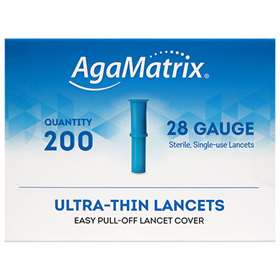
AgaMatrix Ultra - Thin Lancet
AgaMatrix Ultra - Thin Lancet
- ✔️ Designed for near-painless finger-prick blood glucose testing
- ✔️ Ultra-thin needle minimises tissue trauma with every use
- ✔️ Single-use sterile design reduces infection risk significantly
- ✔️ Compatible with most standard lancing devices available in the UK
- ✔️ Ideal for frequent daily testing in adults and children with diabetes
Price Checker
 Lowest price guarantee
 Includes FREE private prescription


Couldn't load pickup availability
What Are Ultra Thin Lancets and How Do They Help With Diabetes Testing?
If you live with diabetes, you'll know that regular blood glucose monitoring is a cornerstone of day-to-day management. The NHS recommends that people with type 1 diabetes, and many with type 2, check their blood sugar levels frequently — sometimes several times a day. That means a lot of finger pricks. So it makes sense to use a lancet that makes the process as comfortable as possible. The ultra thin lancets from AgaMatrix are designed with exactly that in mind: a fine-gauge needle tip that minimises discomfort without compromising on the quality of the blood sample you need. You can find these and other monitoring essentials in our diabetes monitoring collection.
At just £7.19, the AgaMatrix Ultra-Thin Lancet offers an accessible, everyday solution for people who self-monitor at home. Whether you've been managing diabetes for years or have recently started testing, the right lancet really does make a difference to how you feel about the process.
How Do AgaMatrix Ultra-Thin Lancets Work?
The mechanism is straightforward, but the engineering behind it matters. Each lancet features a precision-ground, ultra-thin needle tip that penetrates the skin of the fingertip to produce a small capillary blood sample. The thinner the gauge, the less tissue is displaced — and the less discomfort you feel. Here's how the process works in practice:
- The lancet is loaded into a compatible lancing device and the depth setting is adjusted to suit your skin type.
- The device is pressed firmly against the side of the fingertip — not the pad, which has more nerve endings.
- The spring-loaded mechanism drives the lancet tip through the skin in a controlled, rapid motion.
- A small droplet of blood appears, which is then applied directly to a blood glucose test strip.
- The lancet retracts automatically within the device, reducing the risk of accidental needlestick injury.
Because the tip is ultra-thin, the puncture wound is minimal. This is particularly helpful for people who test multiple times daily, as it reduces cumulative skin trauma over time.
Who Should Use AgaMatrix Ultra-Thin Lancets?
These lancets are suitable for a wide range of people who need to self-monitor their blood glucose. They're especially well-suited to those who find standard lancets uncomfortable or who have sensitive skin. The NHS advises that blood glucose self-monitoring is an important part of managing both type 1 and type 2 diabetes, and having the right equipment makes that easier to sustain long-term.
- Adults with type 1 or type 2 diabetes who self-monitor blood glucose at home.
- People who test frequently and want to minimise fingertip soreness.
- Those with sensitive skin or a lower pain threshold.
- Carers or parents assisting a child with diabetes monitoring (under appropriate medical guidance).
How Do AgaMatrix Ultra-Thin Lancets Compare to Standard Lancets?
| Feature | AgaMatrix Ultra-Thin Lancet | Standard Lancet |
|---|---|---|
| Needle gauge | Ultra-thin (fine gauge) | Standard gauge (thicker) |
| Discomfort level | Minimal | Moderate |
| Suitable for frequent testing | Yes | Less ideal |
| Compatible with lancing devices | Most standard devices | Most standard devices |
How Should You Store AgaMatrix Ultra-Thin Lancets?
Proper storage keeps your lancets sterile and ready to use. Store them below 25°C in a cool, dry place away from direct sunlight and moisture. Keep the packaging sealed until you're ready to use each lancet. Once used, dispose of each lancet immediately in an approved sharps disposal container — never in general household waste. Your local pharmacy or GP surgery can advise on sharps bin collection in your area.
It's also worth noting that if you manage other aspects of your health alongside diabetes, our vitamins and supplements collection includes products that may support general wellbeing. As always, speak to your pharmacist or GP before adding anything new to your routine.
This product is a medicine. Speak to your doctor or pharmacist before using if you have an underlying medical condition or are taking other medicines.
AgaMatrix Ultra-Thin Lancet specifications
| Treatment category | Diabetes monitoring / blood glucose self-testing |
| Mechanism of action | Fine-gauge needle tip creates a small capillary puncture for blood sampling |
| Effective for | Capillary blood glucose sampling |
| Suitable for | Adults and children with diabetes (under medical guidance for children) |
| Active ingredient | N/A — sterile medical device |
| UK classification | Class I Medical Device |
| Preparation | Single-use sterile lancet |
| Route of administration | Percutaneous (finger-prick) |
Specifications of AgaMatrix Ultra-Thin Lancet
What Is the AgaMatrix Ultra-Thin Lancet and What Is It Used For?
The AgaMatrix Ultra-Thin Lancet is a single-use, sterile medical device used to obtain a small capillary blood sample from the fingertip. It is used as part of blood glucose self-monitoring by people living with diabetes. The NHS recommends that people with type 1 diabetes check their blood glucose levels regularly — often before meals, before and after exercise, and at bedtime. Many people with type 2 diabetes also monitor at home, particularly those on insulin or certain other medications.
This lancet is not a medicine. It is a Class I medical device regulated under UK medical device legislation. It does not treat or diagnose diabetes itself — it simply enables you to collect the blood sample needed for testing with a compatible glucose meter and test strip.
What Do You Need to Know Before Using the AgaMatrix Ultra-Thin Lancet?
Before you start using these lancets, there are a few important things to be aware of. They are designed for single use only — reusing a lancet is unsafe and increases infection risk. Always read the instructions provided with your lancing device.
Do not use this product if:
- The packaging is damaged or the lancet appears to have been previously opened.
- You have a known bleeding disorder or are taking anticoagulant medicines such as warfarin — speak to your GP first about safe monitoring practices.
- You have severely impaired circulation in your hands or fingers without first seeking medical advice.
- You are unsure how to use a lancing device safely — ask your diabetes nurse or pharmacist for a demonstration.
Drug and device interactions:
- No pharmacological drug interactions apply, as this is a medical device.
- Certain medicines (e.g. anticoagulants, aspirin) may increase bleeding at the puncture site — this is usually minor but worth noting.
- Always use lancets with a compatible lancing device; using an incompatible device may result in an inadequate blood sample or injury.
How Should You Use the AgaMatrix Ultra-Thin Lancet?
Using a lancet correctly makes the process more comfortable and ensures you get a reliable blood sample. Follow these steps each time you test:
- Wash your hands thoroughly with warm water and soap, then dry them completely.
- Remove one lancet from the pack and insert it firmly into your lancing device until it clicks into place.
- Remove the protective cap from the lancet tip by twisting it off — do not touch the needle.
- Set the depth dial on your lancing device to a level appropriate for your skin thickness (start low and increase if needed).
- Press the lancing device firmly against the side of a fingertip — rotating sites each time helps prevent soreness.
- Activate the device to release the lancet and produce a small blood droplet.
- Apply the blood droplet to your glucose test strip as directed by your meter's instructions.
- After use, carefully remove the lancet and dispose of it immediately in an approved sharps container.
| User Group | Recommended Depth Setting | Frequency of Testing | Notes |
|---|---|---|---|
| Adults with type 1 diabetes | As advised by diabetes team | Multiple times daily | Follow individualised testing plan |
| Adults with type 2 diabetes (on insulin) | As advised by diabetes team | As directed by GP or nurse | May vary by treatment regimen |
| Children (under medical supervision) | Lowest effective setting | As directed by paediatric team | Adult supervision required |
What Are the Possible Side Effects of the AgaMatrix Ultra-Thin Lancet?
Because this is a medical device rather than a medicine, side effects relate to the physical act of skin puncture rather than any pharmacological action. Most people tolerate finger-prick testing well, especially with an ultra thin lancets design that minimises tissue disruption.
Common side effects:
- Mild soreness or tenderness at the puncture site.
- Minor redness around the fingertip after testing.
- Small bruise at the site, particularly with repeated testing in the same spot.
Less common side effects:
- Skin thickening (callus formation) with prolonged, repeated use at the same site — rotating sites helps prevent this.
- Minor bleeding that takes longer than usual to stop, particularly in people taking blood-thinning medicines.
- Infection at the puncture site if lancets are reused or hands are not cleaned before testing — always use a fresh lancet and clean hands.
If you notice signs of infection — such as increasing redness, warmth, swelling, or discharge — contact your GP. You can also explore our first aid collection for wound care products to keep on hand at home.
How Should You Store the AgaMatrix Ultra-Thin Lancet?
- Store below 25°C in a cool, dry location away from direct sunlight.
- Keep in the original packaging until ready to use — this maintains sterility.
- Do not store in a bathroom or near a sink where moisture could compromise the packaging.
- Keep out of reach of children and pets at all times.
- Do not use lancets past their expiry date — check the packaging before each use.
- Dispose of used lancets immediately in an approved sharps disposal container. Contact your local pharmacy or council for sharps bin collection services.
For broader diabetes management support, including test strips and glucose meters, browse our full diabetes monitoring range at Cured Pharmacy.
References
- https://www.nhs.uk/conditions/type-1-diabetes/living-with-type-1-diabetes/monitoring-blood-glucose/
- https://www.nhs.uk/conditions/type-2-diabetes/living-with-type-2-diabetes/checking-your-blood-sugar-level/
- https://www.nhs.uk/conditions/diabetes/
- https://www.nhs.uk/conditions/type-1-diabetes/
- https://www.nice.org.uk/guidance/ng17
Written and reviewed by our qualified team
Your safety and success are our highest priorities. Our medical team rigorously evaluates every product and piece of advice we provide, ensuring you receive only the most effective, science-backed solutions available.
Frequently Asked Questions
Where can I buy AgaMatrix Ultra-Thin Lancets online in the UK?
You can buy AgaMatrix Ultra-Thin Lancets directly from Cured Pharmacy online for £7.19, with no prescription required. They are available in our diabetes monitoring collection alongside compatible test strips and glucose meters. Ordering online means you can have them delivered discreetly to your door without a trip to the high street.
How do AgaMatrix Ultra-Thin Lancets work in the body?
These lancets use a precision-ground, fine-gauge needle tip to create a tiny puncture in the skin of the fingertip, releasing a small droplet of capillary blood. That droplet is then applied to a blood glucose test strip, which reacts with the glucose in your blood to give a reading on your meter. The ultra-thin design means less tissue is displaced, which is why most people find them noticeably more comfortable than standard lancets.
How do I use AgaMatrix Ultra-Thin Lancets step by step?
Start by washing and drying your hands thoroughly, then insert the lancet into your lancing device and remove the protective cap. Set the depth dial to a comfortable level, press the device against the side of a fingertip, and activate it to produce a blood droplet. Apply the droplet to your test strip immediately, then dispose of the used lancet in a sharps container — never in general household waste.
Are AgaMatrix Ultra-Thin Lancets compatible with all lancing devices?
AgaMatrix Ultra-Thin Lancets are designed to be compatible with most standard lancing devices available in the UK. However, it's always worth checking your specific device's manual to confirm compatibility before use. If you're unsure, your pharmacist or diabetes nurse can advise on the best pairing for your equipment.
Can I reuse AgaMatrix Ultra-Thin Lancets to save money?
No — these lancets are single-use only and should never be reused. Reusing a lancet blunts the tip almost immediately, making subsequent finger pricks more painful and increasing the risk of skin infection. Using a fresh lancet every time is both safer and more comfortable, and at £7.19 per pack they represent good value for regular testers.
Who is eligible to use AgaMatrix Ultra-Thin Lancets?
These lancets are suitable for adults and children with diabetes who self-monitor their blood glucose levels at home, as well as carers who assist with testing. They are particularly well-suited to people who test frequently and want to reduce fingertip discomfort. Children should only use lancets under adult supervision and as directed by their paediatric diabetes team.
What are the side effects of using ultra thin lancets for blood glucose testing?
Side effects are generally mild and relate to the physical puncture rather than any medicine. You may notice temporary soreness, minor redness, or small bruises at the testing site, particularly if you test in the same spot repeatedly. Rotating your finger-prick sites each time significantly reduces cumulative skin irritation and the risk of callus formation.
What happens if I accidentally prick the wrong area with a lancet?
If you accidentally prick an unintended area, apply gentle pressure with a clean tissue until any bleeding stops — this usually takes just a few seconds. Clean the area with soap and water and monitor for any signs of infection such as redness, swelling, or warmth over the following days. If you're concerned, contact your GP or pharmacist for advice.
How often should I change the site where I do my finger-prick test?
The NHS recommends rotating your testing sites across different fingers and different areas of each fingertip to prevent soreness and skin thickening. Testing repeatedly in the same spot can lead to callus formation, which may make it harder to obtain a blood sample over time. A good habit is to work systematically across all fingers, giving each site time to recover.
What are the alternatives to AgaMatrix Ultra-Thin Lancets?
Alternatives include other branded lancets such as Accu-Chek Safe-T-Pro Plus or BD Micro-Fine lancets, which are also widely available in the UK. For people who prefer to avoid regular finger-prick testing altogether, continuous glucose monitoring (CGM) systems such as the FreeStyle Libre are available on prescription for eligible patients. Speak to your diabetes team about which monitoring method suits your lifestyle and treatment plan best.
How do I dispose of used AgaMatrix Ultra-Thin Lancets safely?
Used lancets must be disposed of in an approved sharps disposal container — never in general household bins or recycling. Many local pharmacies and GP surgeries offer free sharps bin collection services, and your local council may also provide a collection scheme. Ask your pharmacist for details about the sharps disposal service nearest to you.
How long can I use AgaMatrix Ultra-Thin Lancets for?
You can continue using these lancets for as long as you need to self-monitor your blood glucose — there is no time limit on their use as a product category. Each individual lancet is single-use only and must be discarded after one finger prick. Check the expiry date on the packaging and do not use lancets beyond that date, as sterility cannot be guaranteed.
Do AgaMatrix Ultra-Thin Lancets hurt less than standard lancets?
Most people find ultra thin lancets noticeably more comfortable than standard-gauge lancets because the finer needle tip displaces less tissue during the puncture. Individual experience varies depending on skin thickness, depth setting, and testing technique, but the ultra-thin design is specifically engineered to reduce discomfort. Starting at a lower depth setting and adjusting upward only if needed also helps minimise pain.
Can I use AgaMatrix Ultra-Thin Lancets if I am on blood thinners?
If you take anticoagulant medicines such as warfarin, rivaroxaban, or apixaban, you may notice that the puncture site bleeds slightly more or for slightly longer than usual — this is generally minor and manageable with gentle pressure. You should still be able to use lancets for blood glucose testing, but it's worth mentioning this to your GP or diabetes nurse so they can advise on best practice. Never stop or adjust your anticoagulant medication without medical guidance.
What is the latest guidance on blood glucose self-monitoring for people with diabetes?
NICE guidelines recommend that adults with type 1 diabetes should be offered a choice between self-monitoring of blood glucose and continuous glucose monitoring, taking individual preferences and clinical needs into account. For type 2 diabetes, the frequency and need for self-monitoring depends on treatment type — those on insulin generally need to test more regularly. Always follow the personalised testing plan agreed with your diabetes care team, and explore our electrical health and diagnostic collection for compatible monitoring equipment.
Written and reviewed by our qualified team

Reviewed by:
Tarun Kumar
Superintendent/ Clinical Lead
📖 Find out more about our team of medical content authors and how we ensure the accuracy of our content with our content guidelines.
Content last updated: 14 Sep 2026
Other popular options


We’re a safe and
regulated UK service

Lowest Price Guarantee

We're convinced you won't find your treatment cheaper, but if you do we'll refund the difference.
Find out more
100% discreet packaging

Discreet, unbranded packaging for every order.
Find out more

Need help?
Talk to our friendly experts now


How our service works

Service setup

Discreet packaging

Express delivery