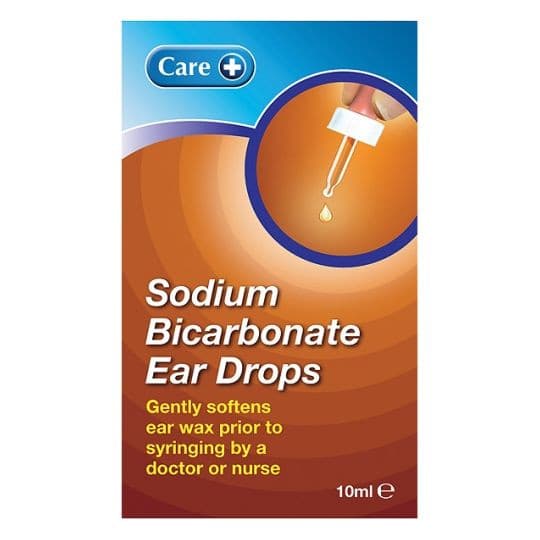
Sodium Bicarbonate Ear Drops
Sodium Bicarbonate Ear Drops
- ✔️ Softens and loosens hardened ear wax effectively
- ✔️ Prepares ears for irrigation or microsuction
- ✔️ Suitable for adults and children with wax build-up
- ✔️ Clinically recognised sodium bicarbonate 5% w/v formula
- ✔️ Short 3–5 day course for fast wax relief
Price Checker
 Lowest price guarantee
 Includes FREE private prescription


Couldn't load pickup availability
What Are Sodium Bicarbonate Ear Drops?
Ear wax is completely normal. Your ears produce it to protect the ear canal from dust, bacteria, and debris. But sometimes wax builds up and becomes hard or impacted — causing muffled hearing, a blocked sensation, or even mild discomfort. That's where sodium bicarbonate ear drops come in. This simple, well-established solution has been used in UK clinical practice for decades to soften ear wax and help restore comfortable hearing. You can browse our full range of ear, nose, and throat products at our Ear Nose Throat collection.
Each bottle contains a 5% w/v solution of sodium bicarbonate in water. It's an over-the-counter product, meaning you don't need a prescription to buy it. At just £3.66, it's an accessible first step before considering ear irrigation or microsuction.
How Do Sodium Bicarbonate Ear Drops Work?
The mechanism is straightforward. Sodium bicarbonate is an alkaline compound. When instilled into the ear canal, it raises the local pH, which disrupts the structure of hardened cerumen (ear wax). This softening effect allows the wax to break apart and either migrate naturally out of the ear or be more easily removed during professional ear irrigation.
- Raises the pH of the ear canal environment
- Softens and emulsifies hardened cerumen
- Facilitates natural wax migration towards the outer ear
- Prepares the ear for syringing or microsuction if needed
The NHS recommends ear drops — including sodium bicarbonate — as a first-line approach to managing ear wax build-up before any physical removal procedure is considered.
Who Should Use Sodium Bicarbonate Ear Drops?
These drops are suitable for adults and children who are experiencing symptoms of ear wax build-up. If you've noticed a gradual reduction in hearing, a feeling of fullness in the ear, or mild earache without signs of infection, ear wax is often the culprit. They're also commonly used in the days leading up to a GP-referred ear irrigation appointment, to soften the wax and make the procedure more effective.
- Adults with mild to moderate ear wax build-up
- Children (under pharmacist or GP guidance)
- People preparing for ear irrigation or microsuction
- Those seeking a non-invasive, drug-free wax softening option
How Do Sodium Bicarbonate Ear Drops Compare to Olive Oil Drops?
| Feature | Sodium Bicarbonate Ear Drops | Olive Oil Ear Drops |
|---|---|---|
| Active ingredient | Sodium bicarbonate 5% w/v | Olive oil |
| Mechanism | Alkaline pH disrupts wax structure | Lubricates and softens wax |
| Speed of action | 3–5 days typical | Several days to weeks |
| NHS recommended | Yes | Yes |
Are Sodium Bicarbonate Ear Drops Suitable for Everyone?
Not quite. While sodium bicarbonate ear drops are safe for most people, there are some situations where you should check with a pharmacist or GP first. Do not use these drops if you have a perforated eardrum, a current ear infection, grommets in place, or if you've had ear surgery. If you're unsure whether your symptoms are caused by wax or something else — such as an infection — always seek professional advice before self-treating. If you're managing other health conditions alongside ear care, you might also find our First Aid collection useful for general health support products.
This product is a medicine. Speak to your doctor or pharmacist before using if you have an underlying medical condition or are taking other medicines.
Sodium Bicarbonate Ear Drops specifications
| Treatment category | Ear wax removal / Ear care |
| Active ingredient | Sodium bicarbonate 5% w/v |
| Mechanism of action | Alkaline solution softens and emulsifies hardened ear wax |
| Route of administration | Otic (ear) |
| Preparation | Aqueous ear drops solution |
| UK classification | General Sale List (GSL) |
| Suitable for | Adults and children (pharmacist guidance advised for young children) |
| Drug class | Cerumenolytic agent |
Specifications of Sodium Bicarbonate Ear Drops
What Is Sodium Bicarbonate Ear Drop Solution and What Is It Used For?
Sodium bicarbonate ear drops contain a 5% w/v aqueous solution of sodium bicarbonate. They are used to soften and loosen hardened or impacted ear wax (cerumen) in the ear canal. The NHS advises that ear drops are the recommended first-line treatment for ear wax build-up before any physical removal method is attempted. These drops do not treat ear infections and are not a substitute for medical assessment if you have ear pain, discharge, or sudden hearing loss.
What Do You Need to Know Before Using Sodium Bicarbonate Ear Drops?
Before using these drops, read the following carefully. There are certain situations where use is not appropriate without medical advice.
Do not use if you:
- Have a perforated (burst) eardrum
- Have grommets or ear tubes in place
- Have an active ear infection (otitis externa or otitis media)
- Have had recent ear surgery
- Are allergic to any ingredient in the formulation
Speak to your pharmacist or GP first if you:
- Are pregnant or breastfeeding
- Are using these drops in a young child
- Have a history of recurring ear problems
- Experience sudden or severe hearing loss
Drug interactions:
- No clinically significant drug interactions are known for topical sodium bicarbonate ear drops used as directed
How Should You Use Sodium Bicarbonate Ear Drops Correctly?
Using ear drops correctly makes a real difference to how well they work. Follow these steps carefully each time you use them. If you're also managing other conditions and looking for related products, our Pain Relief collection includes options for mild earache associated with wax build-up.
- Wash your hands thoroughly before handling the bottle
- Warm the bottle slightly by holding it in your hands for a minute or two — cold drops can cause dizziness
- Tilt your head to one side so the affected ear faces upward
- Gently pull the outer ear upward and backward to straighten the ear canal
- Instil 2–3 drops into the ear canal
- Stay in the tilted position for 2–3 minutes to allow the drops to penetrate
- Place a small piece of cotton wool loosely at the ear opening if needed
- Repeat for the other ear if required
| Indication | Age Group | Dose | Frequency |
|---|---|---|---|
| Ear wax softening | Adults | 2–3 drops per ear | Twice daily for up to 5 days |
| Ear wax softening | Children (pharmacist guidance) | 2–3 drops per ear | Twice daily — seek advice first |
| Pre-irrigation preparation | Adults | 2–3 drops per ear | Twice daily for 3–5 days before appointment |
What Are the Possible Side Effects of Sodium Bicarbonate Ear Drops?
Side effects from sodium bicarbonate ear drops are uncommon when used as directed. Most people tolerate them well. However, as with any medicine, some people may experience unwanted effects.
Common side effects:
- Mild stinging or tingling sensation in the ear canal
- Temporary feeling of fullness or pressure in the ear
- Slight dizziness if drops are too cold when instilled
Less common side effects:
- Skin irritation around the outer ear
- Increased awareness of tinnitus (ringing in the ear) temporarily
Stop using the drops and contact your GP or pharmacist if you experience ear pain, discharge, worsening hearing loss, or any sign of an allergic reaction such as rash or swelling.
How Should You Store Sodium Bicarbonate Ear Drops?
Proper storage keeps the drops effective and safe to use. If you're looking for other health essentials to keep at home, our First Aid collection has a wide range of products for your medicine cabinet.
- Store below 25°C in a cool, dry place
- Keep away from direct sunlight and heat sources
- Keep the bottle tightly closed when not in use
- Keep out of the reach and sight of children
- Do not use after the expiry date printed on the label
- Discard the bottle 28 days after first opening
- Do not store in the bathroom or near a sink where moisture can affect the product
References
Written and reviewed by our qualified team
Your safety and success are our highest priorities. Our medical team rigorously evaluates every product and piece of advice we provide, ensuring you receive only the most effective, science-backed solutions available.
Frequently Asked Questions
Where can I buy sodium bicarbonate ear drops online in the UK?
You can buy sodium bicarbonate ear drops directly from Cured Pharmacy, a GPhC-registered UK online pharmacy, for just £3.66. No prescription is needed as they are available over the counter. Simply add to your basket and choose your preferred delivery option for fast, discreet dispatch.
How do sodium bicarbonate ear drops work in the ear?
Sodium bicarbonate is an alkaline compound that, when placed in the ear canal, raises the local pH and disrupts the chemical structure of hardened ear wax. This softening effect allows the wax to break down and either migrate naturally out of the ear or be removed more easily during professional irrigation. It's a well-established, clinically recognised approach recommended by the NHS.
How do I use sodium bicarbonate ear drops step by step?
Warm the bottle in your hands, tilt your head to one side, and instil 2–3 drops into the affected ear. Stay in that position for 2–3 minutes, then sit upright. Repeat twice daily for up to 5 days, or as directed by your pharmacist or GP.
How long does it take for sodium bicarbonate ear drops to soften ear wax?
Most people notice a difference within 3 to 5 days of consistent twice-daily use. In some cases, particularly with very hard or impacted wax, it may take the full 5-day course before the wax loosens sufficiently. If there's no improvement after one week, speak to your GP about professional ear irrigation or microsuction.
What is the correct dose of sodium bicarbonate ear drops?
The standard dose for adults is 2–3 drops instilled into the affected ear, twice daily. This is typically continued for 3 to 5 days. Always follow the instructions on the product label or the advice of your pharmacist, particularly when using in children.
Can I use sodium bicarbonate ear drops if I have a perforated eardrum?
No — you should not use any ear drops, including sodium bicarbonate, if you have or suspect a perforated eardrum, unless a doctor has specifically told you it is safe to do so. Using drops with a perforated eardrum can cause pain, dizziness, and increase the risk of middle ear infection. If you're unsure, consult your GP before using.
Are sodium bicarbonate ear drops safe for children?
Sodium bicarbonate ear drops can be used in children, but it's important to consult a pharmacist or GP before doing so, especially in young children or infants. The dose and technique are the same as for adults, but professional guidance ensures the drops are appropriate for your child's specific situation. Never attempt to use ear drops in a child who is distressed or uncooperative.
What are the side effects of sodium bicarbonate ear drops?
Side effects are uncommon but may include mild stinging, a temporary sensation of fullness, or slight dizziness if the drops are too cold when applied. Warming the bottle in your hands before use can help reduce these sensations. If you experience ear pain, discharge, or worsening symptoms, stop use and seek medical advice promptly.
Who is eligible to use sodium bicarbonate ear drops?
These drops are suitable for most adults and children experiencing ear wax build-up, provided they do not have a perforated eardrum, active ear infection, grommets, or recent ear surgery. They are available without a prescription. If you have any of the above conditions or are unsure, speak to a pharmacist or GP first — you can also browse our Ear Nose Throat collection for related products.
What happens if I miss a dose of sodium bicarbonate ear drops?
If you forget to use your drops at the usual time, simply apply them as soon as you remember. Do not double up by using extra drops to make up for a missed application. Consistency matters — try to use them at the same times each day to get the best results over the treatment course.
What are the alternatives to sodium bicarbonate ear drops?
The main alternatives for ear wax softening include olive oil ear drops and almond oil ear drops, both of which are also recommended by the NHS. Hydrogen peroxide-based drops are another option available in some pharmacies. Your pharmacist can help you choose the most appropriate product based on your symptoms and medical history.
Can I use sodium bicarbonate ear drops before ear syringing?
Yes — in fact, this is one of the most common reasons people use them. Using ear drops for 3 to 5 days before an ear irrigation appointment softens the wax, making the procedure quicker, more comfortable, and more effective. Your GP or practice nurse may specifically recommend this as part of your pre-treatment preparation.
How long can you use sodium bicarbonate ear drops for?
These drops are intended for short-term use — typically 3 to 5 days per treatment course. They are not designed for long-term daily use. If your ear wax keeps returning frequently, speak to your GP about the underlying cause and whether regular ear care or professional removal is more appropriate for you.
Can sodium bicarbonate ear drops cause tinnitus?
Sodium bicarbonate ear drops do not cause tinnitus, but some people may temporarily notice a heightened awareness of existing tinnitus as the wax shifts during treatment. This is usually short-lived. Interestingly, ear wax build-up itself is a known cause of temporary tinnitus, so clearing the wax may actually help reduce it. If tinnitus worsens or persists, consult your GP.
What are the latest findings on using ear drops for wax removal?
Current NHS and NICE guidance continues to support the use of ear drops — including sodium bicarbonate — as the first-line approach for managing ear wax build-up before any physical removal. Evidence consistently shows that softening drops improve the success rate of subsequent irrigation. If you're looking for other health essentials, our Baby and Toddler collection includes ear care products suitable for younger patients.
Written and reviewed by our qualified team

Reviewed by:
Tarun Kumar
Superintendent/ Clinical Lead
📖 Find out more about our team of medical content authors and how we ensure the accuracy of our content with our content guidelines.
Content last updated: 14 Sep 2026
Other popular options


We’re a safe and
regulated UK service

Lowest Price Guarantee

We're convinced you won't find your treatment cheaper, but if you do we'll refund the difference.
Find out more
100% discreet packaging

Discreet, unbranded packaging for every order.
Find out more

Need help?
Talk to our friendly experts now


How our service works

Service setup

Discreet packaging

Express delivery