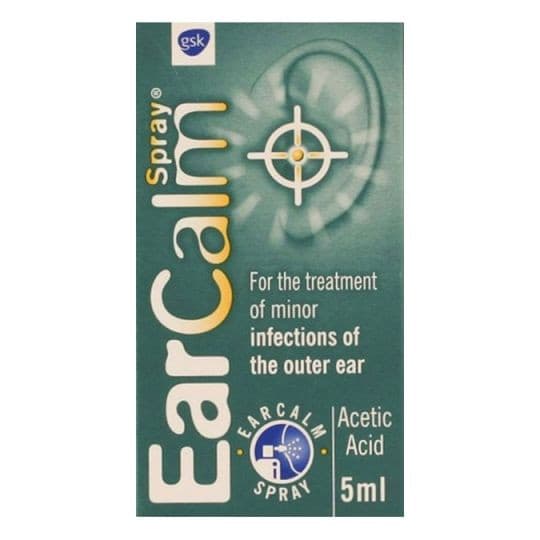
Earcalm Spray 5ml
Earcalm Spray 5ml
- ✔️ Treats outer ear infections (otitis externa) effectively
- ✔️ Restores ear canal's natural acidic pH balance
- ✔️ Prevents swimmer's ear after water exposure
- ✔️ Metered spray delivers consistent, controlled dose
- ✔️ Suitable for adults and children aged 12 and over
Price Checker
 Lowest price guarantee
 Includes FREE private prescription


Couldn't load pickup availability
What Is EarCalm Ear Infection Spray?
If you've ever had that maddening itch deep inside your ear, followed by soreness and a feeling of fullness, you'll know how disruptive an outer ear infection can be. EarCalm ear infection spray is a pharmacy-only (P) medicine containing 2% acetic acid, specifically formulated to treat and help prevent otitis externa — the medical term for an infection of the outer ear canal. It's available without a prescription and is one of the most widely recommended OTC options for this condition in the UK. You can browse our full range of ear, nose, and throat products if you're looking for additional support alongside this treatment.
Otitis externa is surprisingly common. It often follows swimming, excessive ear cleaning, or the use of hearing aids and earphones. The ear canal becomes inflamed, sometimes infected with bacteria or fungi, and the result is pain, itching, and discharge. EarCalm Spray works by targeting the root cause rather than just masking symptoms.
How Does EarCalm Spray Work?
The active ingredient is acetic acid at a 2% concentration. Acetic acid is a naturally occurring weak acid — the same compound found in vinegar, though in a carefully controlled pharmaceutical formulation here. When sprayed into the ear canal, it lowers the local pH, creating an acidic environment that is hostile to the bacteria and fungi that cause outer ear infections. Most organisms responsible for otitis externa, including Pseudomonas aeruginosa and Staphylococcus aureus, cannot thrive in an acidic environment.
- Lowers ear canal pH to inhibit microbial growth
- Targets both bacterial and fungal pathogens
- Helps restore the ear canal's natural slightly acidic environment
- Reduces inflammation associated with infection
The spray format delivers the solution directly and evenly into the ear canal, which is more consistent than ear drops that can pool unevenly depending on head position.
Who Should Use EarCalm Spray?
EarCalm Spray is suitable for adults and young people aged 12 and over who are experiencing symptoms of otitis externa, or who want to prevent recurrence after activities that expose the ear to water. It's particularly useful for:
- Swimmers and water sports enthusiasts prone to "swimmer's ear"
- People who wear hearing aids or in-ear headphones regularly
- Those who have had previous episodes of outer ear infection
- Adults experiencing mild-to-moderate ear canal itching, soreness, or discharge
It is not suitable for children under 12, and it must not be used if you have a perforated eardrum or grommets. If you're unsure whether your symptoms are from the outer ear or middle ear, always check with a pharmacist or GP before using any ear treatment.
How Does EarCalm Spray Compare to Ear Drop Alternatives?
| Feature | EarCalm Spray 5ml | Acetic Acid Ear Drops (e.g. 2% solution) |
|---|---|---|
| Active ingredient | Acetic acid 2% w/v | Acetic acid 2% w/v |
| Application method | Metered spray — consistent dose | Drops — variable dose, position-dependent |
| Prescription required | No (Pharmacy medicine) | Sometimes (depends on brand/formulation) |
| Suitable age | 12 years and over | Varies by product |
Is EarCalm Spray Safe to Store and Use Long-Term?
EarCalm Spray should be stored below 25°C, away from direct sunlight, and kept out of the reach of children. Do not refrigerate. Once opened, check the expiry date on the packaging and do not use beyond it. The spray nozzle should be kept clean and the cap replaced after each use to avoid contamination.
As with any ear treatment, this is not intended for indefinite use. If you find yourself needing it repeatedly over several weeks, that's a signal to speak to your GP — recurrent otitis externa can sometimes indicate an underlying skin condition such as eczema or psoriasis affecting the ear canal. If you're managing other minor ailments alongside ear care, our pain relief range may also be helpful for managing associated ear discomfort.
This product is a medicine. Speak to your doctor or pharmacist before using if you have an underlying medical condition or are taking other medicines.
EarCalm Spray 5ml specifications
| Treatment category | Outer ear infection (otitis externa) |
| Active ingredient | Acetic acid 2% w/v |
| Mechanism of action | Lowers ear canal pH to inhibit bacterial and fungal growth |
| Suitable for | Adults and children aged 12 years and over |
| Pack size | 5ml |
| Strength | 2% w/v acetic acid |
| UK classification | Pharmacy medicine (P) |
| Drug class | Topical antimicrobial / acidifying agent |
| Preparation | Metered-dose spray solution |
| Route of administration | Otic (into the ear canal) |
Specifications of EarCalm Spray 5ml
What Is EarCalm Spray and What Is It Used For?
EarCalm Spray 5ml is an over-the-counter medicine used to treat otitis externa — an infection or inflammation of the outer ear canal. It contains acetic acid 2% w/v as its active ingredient. The spray is used both to treat an active outer ear infection and to help prevent recurrence, particularly in people who are prone to getting swimmer's ear. It is licensed for use in adults and children aged 12 years and over in the UK.
Symptoms of otitis externa that this product can help address include itching inside the ear canal, mild-to-moderate pain, a feeling of fullness or blockage, and sometimes a clear or slightly cloudy discharge. It is not a treatment for middle ear infections (otitis media), which typically cause deeper pain and may be associated with fever or hearing loss.
What Do You Need to Know Before Using EarCalm Spray?
Before using this spray, it's important to check that it's appropriate for your situation. There are specific circumstances where it must not be used.
Do not use EarCalm Spray if:
- You have a perforated (burst) eardrum
- You have grommets (ventilation tubes) fitted in your ear
- You are allergic to acetic acid or any other ingredient in the spray
- You are under 12 years of age
- You have had ear surgery in the past 3 months (seek medical advice first)
Warnings and precautions:
- If you experience severe pain, significant hearing loss, or fever alongside ear symptoms, see a GP — these may indicate a middle ear infection requiring antibiotics
- Do not insert the nozzle deeply into the ear canal; gentle placement at the entrance is sufficient
- If symptoms do not improve within 48 hours of starting treatment, consult a pharmacist or GP
- Use with caution if you have a history of skin conditions affecting the ear canal, such as eczema
Known drug interactions:
- No clinically significant drug interactions are currently known for topical acetic acid ear spray
- If you are using other ear drops or ear treatments concurrently, speak to your pharmacist before combining them
How Should You Use EarCalm Spray?
Using EarCalm Spray correctly makes a real difference to how well it works. The spray is designed to deliver a consistent, metered dose directly into the ear canal. Follow these steps carefully each time you use it.
- Wash your hands thoroughly before handling the spray
- Remove the protective cap from the nozzle
- Tilt your head to one side so the affected ear faces upward
- Gently insert the nozzle into the entrance of the ear canal — do not push it in deeply
- Press the pump once to release one metered spray
- Keep your head tilted for approximately one minute to allow the solution to coat the canal
- Gently wipe away any excess solution from the outer ear with a clean tissue
- Replace the cap after use
| Indication | Age Group | Dose | Frequency |
|---|---|---|---|
| Treatment of otitis externa | Adults and children 12+ | 1 spray per affected ear | 3 times daily, up to 7 days |
| Prevention (e.g. after swimming) | Adults and children 12+ | 1 spray per ear | Once after water exposure |
| Children under 12 | Under 12 years | Not suitable — do not use | |
If you're also managing related symptoms such as sinus congestion or a sore throat alongside your ear infection, you may find our cold and flu range useful for broader symptom relief.
What Are the Possible Side Effects of EarCalm Spray?
Like all medicines, EarCalm Spray can cause side effects, although not everyone experiences them. Most side effects are mild and localised to the ear.
Common side effects:
- Mild stinging or burning sensation in the ear canal immediately after spraying
- Temporary discomfort or warmth inside the ear
- Mild irritation of the ear canal skin
Less common side effects:
- Increased itching in the ear canal
- Localised skin redness around the ear entrance
- Rarely, hypersensitivity reactions — stop use and seek medical advice if this occurs
If you notice any worsening of symptoms, significant pain, or signs of an allergic reaction (such as swelling, rash, or difficulty breathing), stop using the spray immediately and contact your GP or call 111.
How Should You Store EarCalm Spray?
Correct storage helps maintain the effectiveness of the spray and keeps it safe to use.
- Store below 25°C in a cool, dry place
- Do not refrigerate or freeze
- Keep away from direct sunlight and heat sources
- Keep the cap on the nozzle when not in use
- Keep out of the reach and sight of children
- Do not use after the expiry date printed on the packaging
- Do not dispose of medicines via wastewater or household waste — return unused medicines to your pharmacy
If you're looking after your general health alongside treating an ear infection, our vitamins and supplements range includes immune-supporting options that may be worth exploring.
References
Written and reviewed by our qualified team
Your safety and success are our highest priorities. Our medical team rigorously evaluates every product and piece of advice we provide, ensuring you receive only the most effective, science-backed solutions available.
Frequently Asked Questions
Where can I buy EarCalm Spray online in the UK?
You can buy EarCalm Spray 5ml online from Cured Pharmacy, a GPhC-registered UK online pharmacy, for £8.09. It is a pharmacy-only (P) medicine, so it is available without a prescription but requires a brief suitability check. You can also find it in most UK high street pharmacies.
How does EarCalm Spray work in the ear?
EarCalm Spray contains 2% acetic acid, which lowers the pH inside the ear canal to create an acidic environment. This inhibits the growth of bacteria and fungi that cause outer ear infections. It essentially restores the ear canal's natural slightly acidic state, which is disrupted by water exposure, cleaning, or infection.
How do I use EarCalm Spray step by step?
Tilt your head so the affected ear faces upward, gently place the nozzle at the entrance of the ear canal, and press the pump once to release one spray. Keep your head tilted for about one minute to let the solution coat the canal, then wipe away any excess with a clean tissue. Replace the cap after every use.
How many times a day should I use EarCalm Spray?
For treating an active outer ear infection, use EarCalm Spray three times daily for up to seven days. For prevention — for example, after swimming — one spray per ear after water exposure is the recommended approach. Do not exceed the stated dose without speaking to a pharmacist.
What are the side effects of EarCalm Spray?
The most commonly reported side effect is a mild stinging or burning sensation in the ear canal immediately after application, which usually settles within a minute or two. Less commonly, some people experience increased itching or localised skin irritation. If you notice any signs of an allergic reaction, stop use and seek medical advice promptly.
Can I use EarCalm Spray if I have a perforated eardrum?
No — EarCalm Spray must not be used if you have a perforated eardrum or if you have grommets fitted. Using it in these circumstances could cause harm to the middle ear. If you are unsure whether your eardrum is intact, consult your GP before using any ear spray or drops.
How long can I use EarCalm Spray for?
EarCalm Spray should not be used for more than seven days continuously without medical advice. If your symptoms have not improved within 48 hours of starting treatment, you should consult a pharmacist or GP, as you may need a prescription antibiotic ear treatment. Prolonged or recurrent infections should always be assessed by a healthcare professional.
Is EarCalm Spray suitable for children?
EarCalm Spray is suitable for adults and young people aged 12 years and over. It should not be used in children under 12 years of age. If your child under 12 has ear pain or suspected infection, take them to see a GP rather than using an OTC ear spray.
Can I use EarCalm Spray to prevent swimmer's ear?
Yes — EarCalm Spray is specifically recommended for prevention of otitis externa in people who are prone to swimmer's ear. Applying one spray to each ear after swimming or bathing helps restore the ear canal's natural acidic environment and reduces the risk of infection developing. It's a practical option for regular swimmers. You can find it alongside other relevant products in our ear, nose, and throat range.
What happens if I miss a dose of EarCalm Spray?
If you miss a scheduled application, simply use it as soon as you remember and then continue with your regular schedule. Do not apply a double dose to make up for a missed one. Consistency matters with topical ear treatments, so try to use it at roughly the same times each day.
Can I use EarCalm Spray alongside other ear drops?
You should not use EarCalm Spray at the same time as other ear drops without first speaking to a pharmacist. Combining ear preparations can alter the pH balance or reduce the effectiveness of one or both treatments. Your pharmacist can advise on the safest approach if you have been prescribed or are using another ear product.
What are the alternatives to EarCalm Spray for outer ear infections?
Alternatives include prescription antibiotic ear drops (such as ciprofloxacin or neomycin-based preparations) for more severe infections, or other OTC acetic acid ear drop formulations. For mild cases, keeping the ear dry and avoiding irritants is also recommended by the NHS. Browse our ear, nose, and throat collection for related products.
Who is eligible to buy EarCalm Spray without a prescription?
EarCalm Spray is available as a pharmacy-only (P) medicine to adults and young people aged 12 and over who do not have a perforated eardrum, grommets, or a known allergy to acetic acid. A brief suitability check is required when purchasing from a registered pharmacy, including online pharmacies like Cured Pharmacy.
Can I use EarCalm Spray during pregnancy or breastfeeding?
There is no specific evidence of harm from topical acetic acid ear spray during pregnancy or breastfeeding, given the very limited systemic absorption. However, as with any medicine during pregnancy or breastfeeding, you should consult your GP or midwife before using EarCalm Spray to confirm it is appropriate for your individual circumstances.
What is the latest guidance on treating outer ear infections in the UK?
Current NHS guidance recommends keeping the ear dry, avoiding cotton buds, and using topical acetic acid preparations as a first-line OTC treatment for mild otitis externa. Antibiotic ear drops are reserved for more severe or persistent cases. NICE clinical guidance also supports the use of acetic acid sprays as an effective and well-tolerated option for managing outer ear infections in primary care.
Written and reviewed by our qualified team

Reviewed by:
Tarun Kumar
Superintendent/ Clinical Lead
📖 Find out more about our team of medical content authors and how we ensure the accuracy of our content with our content guidelines.
Content last updated: 14 Sep 2026
Other popular options


We’re a safe and
regulated UK service

Lowest Price Guarantee

We're convinced you won't find your treatment cheaper, but if you do we'll refund the difference.
Find out more
100% discreet packaging

Discreet, unbranded packaging for every order.
Find out more

Need help?
Talk to our friendly experts now


How our service works

Service setup

Discreet packaging

Express delivery