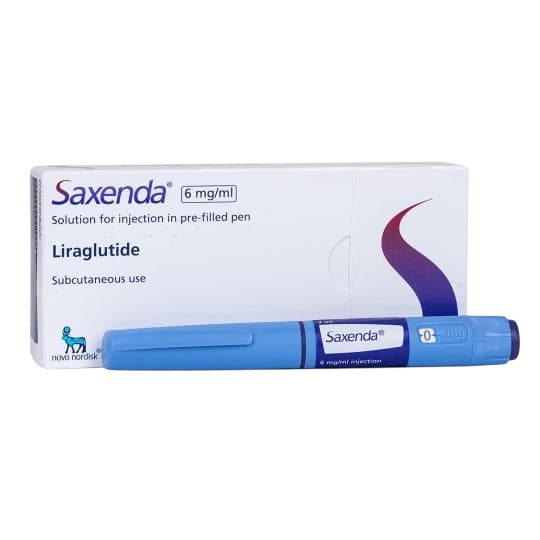
Saxenda
Saxenda
- ✔️ Clinically approved liraglutide injection for adult weight management
- ✔️ Reduces appetite by mimicking natural GLP-1 gut hormone
- ✔️ Supports up to 8% body weight loss over 56 weeks
- ✔️ Suitable for adults with BMI 30+ or 27+ with comorbidities
- ✔️ Once-daily injection with simple dose escalation schedule
Price Checker
 Lowest price guarantee
 Includes FREE private prescription


Couldn't load pickup availability
Want to Buy Saxenda Online Safely?
Saxenda is a once-daily injectable medicine containing liraglutide 6mg/ml, licensed in the UK for weight management in adults. It is manufactured by Novo Nordisk and belongs to a class of medicines called GLP-1 receptor agonists. If you are looking to buy Saxenda online, it is important to do so through a GPhC-registered pharmacy that requires a valid prescription which is exactly what Cured Pharmacy provides. You can explore our full range of weight loss treatments to find the right option for your needs.
Saxenda is not a quick fix. It works best when used alongside a calorie-controlled diet and regular physical activity, as part of a structured weight management programme. Clinical trials have shown it can support meaningful, sustained weight loss when used correctly and under appropriate medical supervision.
How Does Saxenda Work in the Body?
Saxenda works by mimicking glucagon-like peptide-1 (GLP-1), a hormone naturally released by the gut after eating. By activating GLP-1 receptors in the brain, it helps regulate appetite and food intake. Here is how the mechanism unfolds:
- Liraglutide binds to GLP-1 receptors in the hypothalamus, reducing hunger signals
- It slows gastric emptying, meaning food stays in your stomach longer and you feel fuller
- It reduces cravings and the desire to overeat, particularly for high-calorie foods
- It may also improve insulin sensitivity, which is beneficial for people with prediabetes or type 2 diabetes
The result is a gradual reduction in calorie intake, which combined with lifestyle changes leads to progressive weight loss over weeks and months.
Who Is Saxenda Suitable For?
Saxenda is licensed for adults who meet specific clinical criteria. It is not suitable for everyone, and a prescriber will assess your eligibility before issuing a prescription. You may be a suitable candidate if you:
- Have a BMI of 30 kg/m² or above (classified as obese)
- Have a BMI of 27 kg/m² or above with at least one weight-related comorbidity, such as type 2 diabetes, hypertension, or dyslipidaemia
- Are committed to making long-term dietary and lifestyle changes
- Have not achieved adequate weight loss through diet and exercise alone
Saxenda is not recommended during pregnancy or breastfeeding, and it is not licensed for use in children under 12 years of age. Always disclose your full medical history to your prescriber.
How Does Saxenda Compare to Other Weight Loss Injections?
| Feature | Saxenda (Liraglutide) | Wegovy (Semaglutide) |
|---|---|---|
| Active ingredient | Liraglutide 6mg/ml | Semaglutide 2.4mg |
| Injection frequency | Once daily | Once weekly |
| Average weight loss | Approx. 5–8% body weight | Approx. 10–15% body weight |
| UK licence status | Licensed for weight management | Licensed for weight management |
How Should Saxenda Be Stored and Who Should Avoid It?
Unopened Saxenda pens must be stored in a refrigerator between 2°C and 8°C. Once you begin using a pen, it can be kept at room temperature (below 30°C) or in the fridge for up to 30 days. Never freeze Saxenda a frozen pen must be discarded. Keep it away from direct heat and sunlight. If you manage other health conditions alongside your weight, you may also find our diabetes monitoring range useful to track relevant health markers during treatment.
Saxenda should not be used by anyone with a personal or family history of medullary thyroid carcinoma (MTC) or Multiple Endocrine Neoplasia syndrome type 2 (MEN 2). It is also contraindicated in patients with a prior serious hypersensitivity reaction to liraglutide. Always inform your prescriber of all medicines you are currently taking.
This product is a medicine. Speak to your doctor or pharmacist before using if you have an underlying medical condition or are taking other medicines.
Saxenda specifications
| Treatment category | Weight management / Obesity |
| Mechanism of action | GLP-1 receptor agonist — reduces appetite and slows gastric emptying |
| Effective for | Weight loss in adults with obesity or overweight with comorbidities |
| Suitable for | Adults aged 18+ with BMI ≥30, or BMI ≥27 with weight-related conditions |
| Active ingredient | Liraglutide 6mg/ml |
| Pack sizes | 1 pre-filled pen (3ml), 3 pre-filled pens (3ml each) |
| Strengths | 6mg/ml solution for injection |
| UK classification | Prescription Only Medicine (POM) |
| Drug class | GLP-1 receptor agonist |
| Preparation | Solution for injection in a pre-filled pen |
| Route of administration | Subcutaneous injection |
Specifications of Saxenda
What Is Saxenda and What Is It Used For?
Saxenda contains liraglutide 6mg/ml and is a prescription-only injectable medicine used to support weight management in adults. It is indicated as an adjunct to a reduced-calorie diet and increased physical activity in adults with an initial BMI of 30 kg/m² or greater, or 27 kg/m² or greater in the presence of at least one weight-related comorbidity. Saxenda is not a standalone treatment it is designed to complement meaningful lifestyle changes.
What Do You Need to Know Before Using Saxenda?
Before starting Saxenda, your prescriber will review your medical history carefully. There are several important contraindications and warnings to be aware of:
- Do not use Saxenda if you have a personal or family history of medullary thyroid carcinoma (MTC)
- Do not use if you have Multiple Endocrine Neoplasia syndrome type 2 (MEN 2)
- Avoid if you have had a serious allergic reaction to liraglutide or any of the excipients
- Not recommended during pregnancy or breastfeeding
- Use with caution if you have a history of pancreatitis seek immediate medical advice if you develop severe abdominal pain
- Not suitable for patients with severe renal or hepatic impairment
- Not licensed for use in patients with type 1 diabetes or for the treatment of diabetic ketoacidosis
Saxenda may interact with other medicines. Known interactions include:
- Insulin and other antidiabetic agents increased risk of hypoglycaemia; dose adjustment may be required
- Oral medicines Saxenda slows gastric emptying, which may affect the absorption rate of orally administered drugs
- Warfarin and other anticoagulants monitor INR more closely when starting or stopping Saxenda
How Should You Use Saxenda Correctly?
Saxenda is injected subcutaneously once daily. The dose is gradually increased over five weeks to minimise gastrointestinal side effects. Follow these steps each time you inject:
- Wash your hands thoroughly before handling the pen
- Attach a new needle to the pen for each injection
- Perform a flow check (prime the pen) before your first injection from each new pen
- Select your injection site abdomen, upper thigh, or upper arm
- Rotate injection sites with each dose to avoid skin reactions
- Insert the needle at a 90-degree angle and press the dose button until the counter returns to zero
- Hold the needle in place for at least 6 seconds before withdrawing
- Dispose of the used needle safely in a sharps container
| Week | Daily Dose | Notes |
|---|---|---|
| Week 1 | 0.6mg | Initiation dose — not a therapeutic dose |
| Week 2 | 1.2mg | Dose escalation |
| Week 3 | 1.8mg | Dose escalation |
| Week 4 | 2.4mg | Dose escalation |
| Week 5 onwards | 3.0mg | Maintenance dose |
What Are the Possible Side Effects of Saxenda?
Like all medicines, Saxenda can cause side effects, though not everyone experiences them. Most gastrointestinal side effects are mild to moderate and tend to improve after the first few weeks of treatment.
Common side effects (affecting more than 1 in 10 people):
- Nausea
- Vomiting
- Diarrhoea
- Constipation
- Headache
- Low blood sugar (hypoglycaemia), particularly when used with other antidiabetic medicines
Less common side effects (affecting up to 1 in 10 people):
- Injection site reactions (redness, bruising, or itching)
- Dizziness
- Dry mouth
- Fatigue
- Increased heart rate (tachycardia)
- Gallstones (cholelithiasis)
- Raised lipase or amylase levels (markers of pancreatic stress)
If you experience severe or persistent abdominal pain, signs of an allergic reaction (swelling of the face, lips, or throat, difficulty breathing), or symptoms of pancreatitis, stop using Saxenda and seek urgent medical attention. You may also find it helpful to browse our sickness and nausea range for supportive remedies during the initial adjustment period.
How Should You Store Saxenda?
- Store unopened pens in a refrigerator at 2°C–8°C do not freeze
- Once in use, the pen can be stored below 30°C or in the refrigerator for up to 30 days
- Keep away from direct heat, sunlight, and freezing temperatures
- Always replace the pen cap after each use to protect from light
- Keep out of the reach and sight of children
- Do not use after the expiry date printed on the label
- Dispose of used pens and needles in an approved sharps container
References
- https://www.nhs.uk/conditions/obesity/
- https://www.nhs.uk/conditions/weight-loss-surgery/afterwards/
- https://www.nhs.uk/live-well/healthy-weight/managing-your-weight/understanding-calories/
- https://www.nhs.uk/conditions/type-2-diabetes/managing-type-2-diabetes/managing-weight/
- https://bnf.nice.org.uk/drugs/liraglutide/
Written and reviewed by our qualified team
Your safety and success are our highest priorities. Our medical team rigorously evaluates every product and piece of advice we provide, ensuring you receive only the most effective, science-backed solutions available.
Frequently Asked Questions
Where can I buy Saxenda online in the UK?
You can buy Saxenda online through a GPhC-registered pharmacy like Cured Pharmacy, provided you complete a clinical consultation confirming your eligibility. Saxenda is a prescription-only medicine, so a valid prescription must be issued before it can be dispensed. Always avoid unregulated websites that offer it without a prescription, as this is both illegal and unsafe.
How does Saxenda work in the body?
Saxenda contains liraglutide, a GLP-1 receptor agonist that mimics a natural gut hormone called glucagon-like peptide-1. It acts on receptors in the brain to reduce appetite, slows the rate at which your stomach empties, and helps you feel fuller for longer after eating. Over time, this leads to a reduction in calorie intake and progressive weight loss when combined with lifestyle changes.
How do I inject Saxenda step by step?
Attach a new needle to the pen, prime it before first use, then inject subcutaneously into your abdomen, upper thigh, or upper arm. Hold the needle in place for at least 6 seconds after pressing the dose button, then withdraw and dispose of the needle in a sharps container. Rotate your injection site each day to reduce the risk of skin reactions.
What is the correct starting dose of Saxenda?
The starting dose is 0.6mg once daily for the first week — this is an initiation dose to help your body adjust, not a therapeutic dose. The dose is then increased by 0.6mg each week over five weeks until you reach the maintenance dose of 3mg once daily. Your prescriber will guide you through this escalation schedule.
What is the best time of day to inject Saxenda?
Saxenda can be injected at any time of day, with or without food — the key is to inject it at roughly the same time each day to maintain consistent levels in your body. Many people find it easiest to incorporate it into a morning or evening routine. If you change your preferred injection time, ensure the gap between doses is not less than 12 hours.
How do I manage nausea when starting Saxenda?
Nausea is the most commonly reported side effect, particularly during the dose escalation phase, but it usually improves within the first few weeks as your body adjusts. Eating smaller, more frequent meals, avoiding rich or fatty foods, and staying well hydrated can all help reduce discomfort. If nausea is severe or persistent, speak to your prescriber — they may slow the dose escalation schedule.
Who is eligible for Saxenda in the UK?
Saxenda is licensed for adults aged 18 and over with a BMI of 30 kg/m² or above, or a BMI of 27 kg/m² or above alongside at least one weight-related health condition such as type 2 diabetes, high blood pressure, or high cholesterol. It must be used as part of a structured weight management programme that includes dietary changes and increased physical activity. A prescriber will assess your full medical history before approving treatment.
What happens if I miss a dose of Saxenda?
If you miss a dose and your next scheduled injection is more than 12 hours away, inject the missed dose as soon as you remember. If it is less than 12 hours until your next dose, skip the missed dose entirely and continue with your regular schedule. Never inject two doses at the same time to make up for a missed one.
How long do you need to stay on Saxenda?
If you have not lost at least 5% of your initial body weight after 12 weeks on the full 3mg maintenance dose, your prescriber will likely recommend stopping Saxenda, as it is unlikely to be effective for you. For those who do respond well, treatment duration varies and is reviewed regularly by the prescriber. Some patients continue for a year or more under ongoing medical supervision.
Can Saxenda be used alongside other weight loss treatments?
Saxenda should not be combined with other GLP-1 receptor agonists or with other weight loss medicines unless specifically directed by a prescriber. It can be used alongside lifestyle interventions such as a calorie-controlled diet and exercise programme. If you are considering complementary approaches, our weight loss range includes supportive over-the-counter options that may be discussed with your pharmacist.
What are the alternatives to Saxenda for weight loss?
Alternatives to Saxenda include Wegovy (semaglutide 2.4mg), which is a once-weekly GLP-1 injection that has shown greater average weight loss in clinical trials, and orlistat, an oral capsule that works by reducing fat absorption in the gut. The right choice depends on your medical history, preferences, and prescriber assessment. Speak to your pharmacist or GP to discuss which option is most appropriate for you.
Is Saxenda safe for people with type 2 diabetes?
Saxenda can be used in people with type 2 diabetes, but it is not licensed as a diabetes treatment — it is licensed specifically for weight management. If you take insulin or other antidiabetic medicines alongside Saxenda, your prescriber may need to adjust your doses to reduce the risk of hypoglycaemia. Regular blood glucose monitoring is advisable, and our diabetes monitoring range can help you keep track.
Can Saxenda cause pancreatitis?
There have been reports of acute pancreatitis in patients using liraglutide, though a direct causal link has not been definitively established. If you develop severe, persistent abdominal pain — particularly pain that radiates to your back — stop using Saxenda and seek urgent medical attention. Saxenda is not recommended for patients with a history of pancreatitis.
What are the latest clinical findings on Saxenda?
The SCALE (Satiety and Clinical Adiposity — Liraglutide Evidence) clinical trial programme demonstrated that liraglutide 3mg produced significantly greater weight loss than placebo over 56 weeks when combined with lifestyle intervention. Participants lost an average of approximately 8% of their body weight compared to around 2.6% in the placebo group. Saxenda remains one of the most extensively studied injectable weight loss medicines currently available in the UK.
How should I dispose of used Saxenda pens and needles?
Used needles must be removed from the pen immediately after each injection and placed in an approved sharps disposal container — never in household waste or recycling. Once the sharps container is full, contact your local council or pharmacy for safe disposal guidance. The used pen itself can be disposed of in your normal household waste once all needles have been safely removed and discarded.
Patient Information Leaflet
Important - Before taking any medication, it is always important to read the Patient Information Leaflet (PIL)
View Patient Information Leaflet (PDF)Written and reviewed by our qualified team

Reviewed by:
Tarun Kumar
Superintendent/ Clinical Lead
📖 Find out more about our team of medical content authors and how we ensure the accuracy of our content with our content guidelines.
Content last updated: 14 Sep 2026
Other popular options


We’re a safe and
regulated UK service

Lowest Price Guarantee

We're convinced you won't find your treatment cheaper, but if you do we'll refund the difference.
Find out more
100% discreet packaging

Discreet, unbranded packaging for every order.
Find out more

Need help?
Talk to our friendly experts now


How our service works

Service setup

Discreet packaging

Express delivery