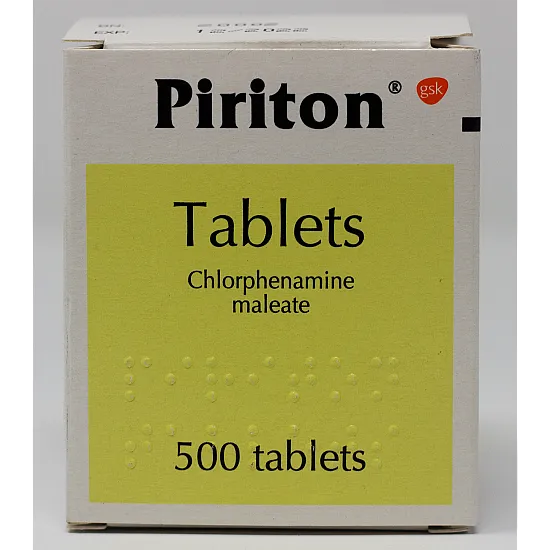
Piriton Hayfever Relief 4mg Tablets - 500 Tablets
Piriton Hayfever Relief 4mg Tablets - 500 Tablets
- ✔️ Relieves hayfever, urticaria, and allergic rhinitis symptoms effectively
- ✔️ Contains 4mg chlorphenamine maleate per tablet — clinically established dose
- ✔️ Starts working within approximately 30 minutes of taking a dose
- ✔️ 500-tablet bulk pack ideal for extended seasonal allergy management
- ✔️ Suitable for adults and children aged 6 years and over
Price Checker
 Lowest price guarantee
 Includes FREE private prescription


Couldn't load pickup availability
What Are Piriton 500 Tablets and How Do They Help With Allergies?
If you suffer from hayfever, skin reactions, or other allergic conditions, you'll know how disruptive symptoms can be. Piriton 500 tablets offer a practical, cost-effective solution — a bulk pack of 500 chlorphenamine maleate 4mg tablets designed for those who rely on antihistamine relief regularly throughout the allergy season and beyond. Each tablet contains 4mg of chlorphenamine maleate, a well-established first-generation antihistamine with a long track record of use in the UK. You can browse the full range of allergy and hayfever treatments at our allergy and hay fever collection.
Chlorphenamine has been used clinically for decades and is listed on the NHS as a treatment for allergic conditions including hayfever, urticaria (hives), insect bites, and food allergies. It's available over the counter without a prescription, making it accessible for most adults and children over one year of age when used correctly.
How Does Chlorphenamine Work to Relieve Allergy Symptoms?
Chlorphenamine belongs to the class of medicines known as first-generation antihistamines. When your body encounters an allergen — pollen, pet dander, dust mites — it releases a chemical called histamine. Histamine binds to H1 receptors throughout the body, triggering the familiar cascade of sneezing, itching, watery eyes, and a runny nose. Chlorphenamine works by competitively blocking those H1 receptors, reducing the allergic response at its source.
- Blocks H1 histamine receptors in peripheral tissues and the central nervous system
- Reduces histamine-driven symptoms: sneezing, itching, rhinorrhoea, urticaria
- Onset of action typically within 30 minutes of an oral dose
- Duration of effect approximately 4 to 6 hours per dose
Because it crosses the blood-brain barrier, chlorphenamine can also cause sedation — a property that makes it useful in some situations (such as relieving itching at night) but means you should exercise caution around driving or operating machinery.
Who Is Piriton Hayfever Relief Suitable For?
Piriton tablets are suitable for a wide range of people dealing with allergic conditions. They're particularly useful if you need fast-acting relief or if you find non-drowsy antihistamines less effective for your symptoms. That said, they're not appropriate for everyone — always read the label and check with your pharmacist if you're unsure.
- Adults and children aged 1 year and over (age-appropriate doses apply)
- People with seasonal allergic rhinitis (hayfever)
- Those experiencing urticaria, insect bites, or contact dermatitis
- Individuals with food or drug allergies requiring short-term symptom relief
How Do Piriton Tablets Compare to Non-Drowsy Antihistamines?
| Feature | Piriton 4mg (Chlorphenamine) | Cetirizine 10mg (Non-Drowsy) |
|---|---|---|
| Generation | First-generation antihistamine | Second-generation antihistamine |
| Sedation risk | Yes — commonly causes drowsiness | Low — less likely to cause sedation |
| Onset of action | ~30 minutes | ~1 hour |
| Dosing frequency | Every 4–6 hours (up to 4 times daily) | Once daily |
| Suitable for children | From 1 year (with correct dose) | From 2 years (with correct dose) |
How Should You Store Piriton 500 Tablets?
Store your piriton 500 tablets below 25°C in a dry place, away from direct sunlight and moisture. Keep them out of reach and sight of children at all times. Do not use the tablets after the expiry date printed on the packaging. If you're also managing skin-related allergy symptoms, you may find our skin care collection helpful for complementary topical relief.
This product is a medicine. Speak to your doctor or pharmacist before using if you have an underlying medical condition or are taking other medicines.
Piriton Hayfever Relief 4mg Tablets - 500 Tablets specifications
| Treatment category | Allergy & Hayfever |
| Active ingredient | Chlorphenamine maleate 4mg |
| Mechanism of action | H1 histamine receptor antagonist |
| Drug class | First-generation antihistamine |
| Preparation | Tablet |
| Route of administration | Oral |
| Strengths | 4mg |
| Pack sizes | 500 tablets |
| UK classification | General Sale List (GSL) |
| Suitable for | Adults and children aged 1 year and over |
| Effective for | Hayfever, urticaria, insect bites, food allergies, allergic rhinitis |
Specifications of Piriton Hayfever Relief 4mg Tablets - 500 Tablets
What Is Piriton Hayfever Relief and What Is It Used For?
Piriton Hayfever Relief 4mg Tablets contain chlorphenamine maleate, a first-generation antihistamine used to treat a range of allergic conditions. The NHS recognises chlorphenamine as an effective treatment for hayfever (seasonal allergic rhinitis), urticaria (hives), insect bites and stings, food allergies, and reactions to medicines. It works by blocking the action of histamine — the chemical your immune system releases when it encounters an allergen — thereby reducing symptoms such as sneezing, itching, a runny nose, and watery eyes. The 500-tablet pack is particularly suited to those who use chlorphenamine regularly or who manage allergy symptoms across an extended season.
What Do You Need to Know Before Using Piriton Tablets?
Before taking chlorphenamine tablets, it's important to check whether this medicine is appropriate for you. Do not take Piriton if any of the following apply:
- You are allergic to chlorphenamine maleate or any other ingredient in the tablet
- You are taking or have taken monoamine oxidase inhibitors (MAOIs) within the last 14 days
- You have angle-closure glaucoma
- You have urinary retention or an enlarged prostate
- You are in the first trimester of pregnancy
- Your child is under 1 year of age
Speak to your pharmacist or GP before taking Piriton if you have epilepsy, liver disease, cardiovascular disease, or difficulty passing urine. The following medicines may interact with chlorphenamine:
- Sedatives, sleeping tablets, or anxiolytics — increased sedation risk
- Tricyclic antidepressants — enhanced anticholinergic effects
- Alcohol — significantly increases drowsiness
- Other antihistamines — risk of additive effects
- Phenytoin — chlorphenamine may inhibit its metabolism
How Should You Use Piriton Hayfever Relief Tablets?
Always take Piriton exactly as directed on the label or as advised by your pharmacist. Swallow the tablets whole with a glass of water. Taking them with food may help reduce the chance of stomach upset.
- Read the patient information leaflet before taking your first dose
- Take one tablet (4mg) for adults, or the age-appropriate dose for children
- Repeat every 4 to 6 hours as needed
- Do not exceed the maximum daily dose for your age group
- Avoid alcohol while taking this medicine
- Do not drive or operate machinery if you feel drowsy
| Age Group | Dose | Frequency | Maximum Daily Dose |
|---|---|---|---|
| Adults & children 12+ | 1 tablet (4mg) | Every 4–6 hours | 24mg (6 tablets) |
| Children 6–12 years | ½ tablet (2mg) | Every 4–6 hours | 12mg |
| Children 1–5 years | Use liquid formulation | As directed by pharmacist | Consult pharmacist |
If you're also looking for relief from related symptoms such as nasal congestion or sore throat, our ear, nose and throat collection includes a range of complementary products.
What Are the Possible Side Effects of Piriton Tablets?
Like all medicines, chlorphenamine can cause side effects, although not everyone experiences them. Being aware of what to look out for helps you use this medicine safely.
Common side effects:
- Drowsiness or sedation
- Dry mouth, nose, or throat
- Dizziness or impaired coordination
- Headache
- Blurred vision
- Difficulty passing urine
Less common side effects:
- Nausea or stomach upset
- Palpitations or tachycardia
- Skin rashes or photosensitivity
- Paradoxical excitability (particularly in children)
- Confusion or disorientation (more common in elderly patients)
Stop taking Piriton and seek immediate medical attention if you experience signs of a serious allergic reaction, such as swelling of the face, lips, or throat, difficulty breathing, or a severe skin rash. If you're managing sleep disruption caused by allergy symptoms, you may also find our sleep aid collection useful alongside your allergy treatment.
How Should You Store Piriton Hayfever Relief Tablets?
- Store below 25°C in a dry place away from direct heat and sunlight
- Keep the tablets in their original packaging until use
- Keep out of the sight and reach of children
- Do not use after the expiry date printed on the pack
- Do not dispose of medicines via wastewater or household waste — return unused tablets to your pharmacy
References
Written and reviewed by our qualified team
Your safety and success are our highest priorities. Our medical team rigorously evaluates every product and piece of advice we provide, ensuring you receive only the most effective, science-backed solutions available.
Frequently Asked Questions
Where can I buy Piriton 500 tablets online in the UK?
You can buy piriton 500 tablets directly from Cured Pharmacy, a GPhC-registered UK online pharmacy offering fast, discreet delivery. The 500-tablet bulk pack at £29.99 represents excellent value for those who use chlorphenamine regularly throughout the hayfever season. Browse our full allergy and hay fever collection for additional options.
How does chlorphenamine work in the body?
Chlorphenamine is a first-generation antihistamine that competitively blocks H1 histamine receptors, preventing histamine from triggering allergy symptoms such as sneezing, itching, and a runny nose. It begins to work within approximately 30 minutes of taking a dose and its effects typically last 4 to 6 hours. Because it crosses the blood-brain barrier, it can also cause sedation as a side effect.
What is the correct chlorphenamine dose for adults?
The standard adult dose is one 4mg tablet every 4 to 6 hours as needed, up to a maximum of 6 tablets (24mg) in any 24-hour period. You should not exceed this maximum dose. Always follow the patient information leaflet or your pharmacist's guidance.
Can Piriton tablets be given to children?
Piriton 4mg tablets can be used in children aged 6 years and over, with a half-tablet (2mg) dose every 4 to 6 hours. For children aged 1 to 5 years, the liquid formulation of chlorphenamine is more appropriate and easier to dose accurately. Children under 1 year should not be given chlorphenamine.
Does Piriton cause drowsiness?
Yes, drowsiness is one of the most commonly reported side effects of Piriton because chlorphenamine crosses the blood-brain barrier and has sedating properties. You should avoid driving, cycling, or operating heavy machinery after taking it. If drowsiness is a concern, speak to your pharmacist about non-drowsy antihistamine alternatives such as cetirizine or loratadine.
Is Piriton safe to take during pregnancy?
Chlorphenamine is not recommended during the first trimester of pregnancy and should only be used in later pregnancy if clearly necessary and under medical supervision. The NHS advises speaking to your GP or midwife before taking any antihistamine during pregnancy. Do not self-medicate with Piriton if you are pregnant without professional advice.
Can I take Piriton with other medicines?
Chlorphenamine can interact with several medicines, including MAOIs, tricyclic antidepressants, sedatives, sleeping tablets, and other antihistamines. Alcohol also significantly increases the sedating effect. Always tell your pharmacist or GP about all medicines you are taking before starting Piriton.
What happens if I miss a dose of Piriton?
If you miss a dose, take it as soon as you remember — unless it is nearly time for your next scheduled dose, in which case skip the missed one and carry on as normal. Never take a double dose to make up for a missed one. Piriton is taken as needed rather than on a strict schedule for most people, so missing a dose is rarely a significant concern.
What are the alternatives to Piriton for hayfever?
Second-generation antihistamines such as cetirizine (10mg) and loratadine (10mg) are commonly used non-drowsy alternatives for hayfever. Nasal corticosteroid sprays such as beclometasone are also recommended by the NHS for persistent hayfever symptoms. Your pharmacist can help you choose the most suitable option based on your symptoms and lifestyle.
How long can you take Piriton tablets for?
Piriton is generally used short-term for acute allergy symptoms, and the 500-tablet pack is well suited to seasonal use across the hayfever season. If you find you need it continuously for more than a few weeks, it's worth speaking to your GP to review your allergy management plan. Long-term use without medical review is not recommended.
Can Piriton be used for skin allergies and hives?
Yes, chlorphenamine is an effective treatment for urticaria (hives), contact dermatitis, insect bites and stings, and other skin-related allergic reactions. The NHS lists these as recognised indications for chlorphenamine. For topical relief alongside oral treatment, you may also find our skin care collection helpful.
Is Piriton available without a prescription in the UK?
Yes, Piriton 4mg tablets are classified as a General Sale List (GSL) medicine in the UK, meaning they can be purchased without a prescription from pharmacies, supermarkets, and registered online pharmacies. The 500-tablet pack available here is sold through Cured Pharmacy, a GPhC-registered online pharmacy. No prescription is required to order.
What is the best time to take Piriton for hayfever?
Because pollen counts are typically highest in the morning and early evening, taking a dose of chlorphenamine before you go outside or before peak pollen times can help manage symptoms proactively. Given its sedating properties, some people find it particularly useful taken at night to relieve itching and improve sleep. Your pharmacist can advise on the best timing for your individual situation.
Can I take Piriton if I have glaucoma or prostate problems?
No — Piriton is contraindicated in people with angle-closure glaucoma and should be used with caution or avoided in those with urinary retention or an enlarged prostate, as chlorphenamine has anticholinergic properties that can worsen these conditions. Always speak to your GP or pharmacist before taking Piriton if you have either of these conditions.
What are the latest research findings on chlorphenamine for allergies?
Chlorphenamine remains a well-established, clinically validated antihistamine that has been in use for over 70 years. Current NHS and NICE guidance continues to recommend it as an effective option for acute allergic reactions, particularly where sedation is acceptable or beneficial. While newer second-generation antihistamines are preferred for daily use due to their reduced sedation profile, chlorphenamine retains a clear clinical role in allergy management.
Written and reviewed by our qualified team

Reviewed by:
Tarun Kumar
Superintendent/ Clinical Lead
📖 Find out more about our team of medical content authors and how we ensure the accuracy of our content with our content guidelines.
Content last updated: 14 Sep 2026
Other popular options


We’re a safe and
regulated UK service

Lowest Price Guarantee

We're convinced you won't find your treatment cheaper, but if you do we'll refund the difference.
Find out more
100% discreet packaging

Discreet, unbranded packaging for every order.
Find out more

Need help?
Talk to our friendly experts now


How our service works

Service setup

Discreet packaging

Express delivery