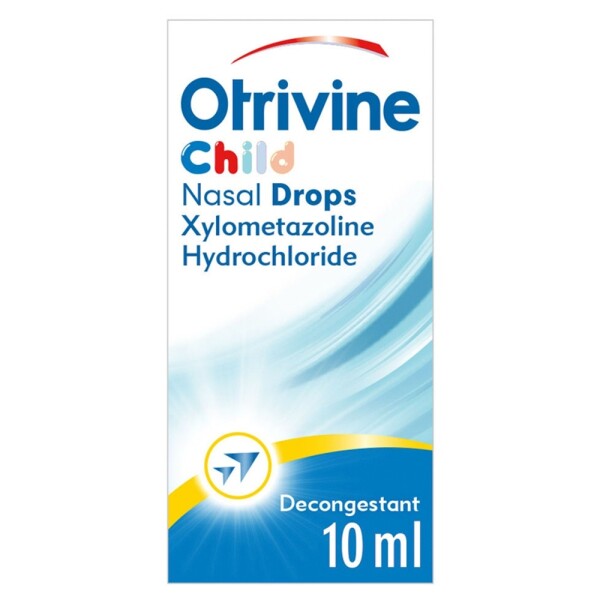
Otrivine Child Nasal Drops - 10ml
Otrivine Child Nasal Drops - 10ml
- ✔️ Relieves blocked nose in children aged 6–12 years
- ✔️ Contains xylometazoline 0.05% for targeted nasal decongestion
- ✔️ Fast-acting formula — works within minutes of application
- ✔️ Suitable for congestion caused by colds, sinusitis, or hay fever
- ✔️ Compact 10ml bottle — easy to use at home or on the go
Price Checker
 Lowest price guarantee
 Includes FREE private prescription


Couldn't load pickup availability
What Are Otrivine Child Nasal Drops and How Do They Help?
When your child has a blocked nose — whether from a cold, sinusitis, or seasonal congestion — it can make sleeping, eating, and simply breathing feel like a struggle. Otrivine child nasal drops offer targeted, fast-acting relief for children aged 6 to 12 years, helping to clear congestion so they can get back to feeling like themselves. Each 10ml bottle contains xylometazoline hydrochloride 0.05%, a well-established nasal decongestant used widely across the UK. You can find this product alongside other trusted remedies in our ear, nose and throat range.
Nasal congestion in children is incredibly common, particularly during the winter months when colds and upper respiratory infections circulate freely. The NHS notes that most colds clear up on their own within 7 to 10 days, but in the meantime, managing symptoms matters — especially for younger children who struggle to blow their noses effectively. These drops provide short-term symptomatic relief while your child's immune system does the hard work.
How Do Otrivine Child Nasal Drops Work in the Body?
Xylometazoline hydrochloride belongs to a class of medicines called alpha-adrenergic agonists. When applied to the nasal mucosa, it acts locally to constrict the small blood vessels lining the nasal passages. This reduces swelling of the nasal mucous membranes and decreases the production of mucus, opening up the airway within minutes.
- Xylometazoline binds to alpha-adrenergic receptors in nasal blood vessel walls
- Blood vessels narrow (vasoconstriction), reducing blood flow to the nasal lining
- Swelling of the nasal mucosa decreases
- Airflow through the nasal passages improves, easing breathing
- Effect typically begins within a few minutes and can last several hours
Because the medicine works locally rather than being absorbed systemically in significant amounts, it is generally well tolerated when used correctly and for the recommended duration.
Who Should Use Otrivine Child Nasal Drops?
These drops are specifically formulated for children aged 6 to 12 years. They are not suitable for adults or for children under 6 — adults should use the standard Otrivine formulation containing 0.1% xylometazoline instead. If your child is experiencing nasal congestion due to any of the following, these drops may be appropriate:
- Common cold or upper respiratory tract infection
- Sinusitis causing nasal blockage
- Allergic rhinitis (hay fever) with nasal congestion as a symptom
- Congestion making it difficult for your child to sleep or feed
Always check with a pharmacist if your child has any underlying health conditions before using this product.
How Do Otrivine Child Nasal Drops Compare to Saline Nasal Drops?
| Feature | Otrivine Child Nasal Drops | Saline Nasal Drops |
|---|---|---|
| Active ingredient | Xylometazoline hydrochloride 0.05% | Sodium chloride (salt solution) |
| Age suitability | Children aged 6–12 years | All ages including infants |
| Speed of action | Within minutes | Gradual (moisturises and loosens mucus) |
| Maximum duration of use | 7 consecutive days | No restriction |
| Risk of rebound congestion | Yes, if used beyond 7 days | No |
Is It Safe to Store Otrivine Child Nasal Drops at Home?
Storing this medicine correctly is straightforward. Keep the bottle below 25°C, away from direct sunlight, and always out of the reach and sight of children. Once opened, the drops should be used within 28 days — check the bottle for the expiry date and discard any unused product after this period. Do not use the drops if the solution appears discoloured or cloudy.
If you are managing your child's cold symptoms alongside other conditions, our cold and flu collection includes a range of complementary products to help the whole family through the season. Otrivine child nasal drops are an over-the-counter (P) medicine, meaning they are available without a prescription but should be used under pharmacist guidance where needed.
This product is a medicine. Speak to your doctor or pharmacist before using if you have an underlying medical condition or are taking other medicines.
Otrivine Child Nasal Drops 10ml specifications
| Treatment category | Nasal decongestant |
| Mechanism of action | Alpha-adrenergic agonist — vasoconstriction of nasal mucosa |
| Effective for | Nasal congestion due to colds, sinusitis, allergic rhinitis |
| Suitable for | Children aged 6–12 years |
| Active ingredient | Xylometazoline hydrochloride 0.05% |
| Pack size | 10ml |
| Strength | 0.05% w/v |
| UK classification | Pharmacy (P) medicine |
| Drug class | Sympathomimetic decongestant |
| Preparation | Aqueous nasal drops |
| Route of administration | Intranasal |
Specifications of Otrivine Child Nasal Drops 10ml
What Are Otrivine Child Nasal Drops and What Are They Used For?
Otrivine child nasal drops contain xylometazoline hydrochloride 0.05% as the active ingredient. They are used to relieve nasal congestion — a blocked or stuffy nose — in children aged 6 to 12 years. The drops work locally inside the nose to reduce swelling of the nasal lining, making it easier for your child to breathe. They are suitable for short-term use only and should not replace treatment of the underlying cause of congestion.
Common reasons a child might need these drops include the common cold, sinusitis, or nasal congestion associated with allergic rhinitis. The NHS advises that most colds in children are caused by viruses and do not require antibiotics, but symptom relief can make a significant difference to your child's comfort and sleep quality.
What Do You Need to Know Before Using Otrivine Child Nasal Drops?
Before using these drops, read the following carefully. There are situations where this medicine should not be used, and others where extra caution is needed.
Do not use Otrivine child nasal drops if your child:
- Is under 6 years of age
- Has had neurosurgery involving the nasal passages (transsphenoidal hypophysectomy)
- Is allergic to xylometazoline hydrochloride or any other ingredient in the product
- Has dry nasal mucosa (atrophic rhinitis)
Use with caution and speak to a pharmacist or GP first if your child has:
- Heart disease or high blood pressure (hypertension)
- An overactive thyroid (hyperthyroidism)
- Diabetes mellitus
- Glaucoma (raised pressure in the eye)
- An enlarged prostate (not applicable in children, but relevant for adult carers using the product themselves)
Known drug interactions — do not use alongside:
- Monoamine oxidase inhibitors (MAOIs) — including those stopped within the last 14 days
- Tricyclic antidepressants (e.g. amitriptyline)
- Other sympathomimetic medicines
How Should You Use Otrivine Child Nasal Drops Correctly?
Always use this medicine exactly as described in the patient information leaflet or as directed by your pharmacist. Do not give more than the recommended dose, and do not use for longer than 7 consecutive days without medical advice.
- Wash your hands thoroughly before use
- Ask your child to blow their nose gently if they are able to
- Tilt your child's head back slightly
- Hold the dropper tip just inside one nostril — do not insert deeply
- Apply 1 to 2 drops into the nostril
- Ask your child to sniff gently to distribute the drops
- Repeat for the other nostril
- Replace the cap securely after use
- Do not share the bottle with other people
| Age Group | Dose | Frequency | Maximum Duration |
|---|---|---|---|
| Children aged 6–12 years | 1–2 drops per nostril | Up to 3 times daily | 7 consecutive days |
| Children under 6 years | Not suitable — do not use | ||
| Adults and children over 12 | Use adult Otrivine formulation (0.1%) instead | ||
What Are the Possible Side Effects of Otrivine Child Nasal Drops?
Like all medicines, Otrivine child nasal drops can cause side effects, although not everyone experiences them. Most side effects are mild and localised to the nose.
Common side effects:
- Temporary burning or stinging sensation inside the nose
- Nasal dryness or irritation
- Sneezing shortly after application
- Increased nasal discharge initially
Less common side effects:
- Rebound nasal congestion (rhinitis medicamentosa) — particularly with use beyond 7 days
- Headache
- Nausea
- Rapid or irregular heartbeat (palpitations) — seek medical advice if this occurs
- Raised blood pressure — rare but possible, especially with excessive use
If your child experiences any serious or unexpected symptoms, stop using the drops and contact your GP or call NHS 111. You can also browse our baby and toddler range for age-appropriate alternatives if these drops are not suitable for your child.
How Should You Store Otrivine Child Nasal Drops?
Correct storage helps maintain the effectiveness and safety of the product. Follow these guidelines:
- Store below 25°C in a cool, dry place
- Keep away from direct sunlight and heat sources
- Keep the bottle tightly closed when not in use
- Do not store in the bathroom or near a sink where humidity is high
- Keep out of the reach and sight of children at all times
- Do not use after the expiry date printed on the bottle
- Discard any remaining product 28 days after first opening
- Do not dispose of medicines via wastewater or household waste — return unused medicines to your pharmacy
If you are looking for additional support during cold and flu season, our vitamins and supplements collection includes products that may help support your child's immune health alongside symptomatic treatments.
References
Written and reviewed by our qualified team
Your safety and success are our highest priorities. Our medical team rigorously evaluates every product and piece of advice we provide, ensuring you receive only the most effective, science-backed solutions available.
Frequently Asked Questions
Where can I buy Otrivine child nasal drops online in the UK?
You can buy Otrivine child nasal drops online from Cured Pharmacy, a GPhC-registered UK online pharmacy, for just £4.99. They are available over the counter without a prescription for children aged 6 to 12 years. Simply add to your basket and choose your preferred delivery option at checkout.
How do Otrivine child nasal drops work in the body?
The active ingredient, xylometazoline hydrochloride 0.05%, is a sympathomimetic decongestant that acts on alpha-adrenergic receptors in the nasal blood vessel walls. This causes vasoconstriction — narrowing of the blood vessels — which reduces swelling of the nasal mucosa and opens up the airway. The effect is localised to the nose and typically begins within a few minutes of application.
How do I use Otrivine child nasal drops step by step?
Wash your hands, then ask your child to blow their nose gently if they can. Tilt their head back slightly, place the dropper just inside one nostril, and apply 1 to 2 drops, then repeat on the other side. Ask your child to sniff gently afterwards, and replace the cap securely — do not share the bottle with anyone else.
What is the correct dose of Otrivine child nasal drops for my child?
For children aged 6 to 12 years, the recommended dose is 1 to 2 drops in each nostril, up to three times daily. Do not exceed three doses in any 24-hour period, and do not use for more than 7 consecutive days. If symptoms persist beyond this, consult your GP or pharmacist.
When is the best time to use Otrivine child nasal drops?
Many parents find it most helpful to use the drops before bedtime, as nasal congestion often worsens when lying down and can disrupt sleep. You can also use them before meals if congestion is making it difficult for your child to eat comfortably. Space doses evenly throughout the day and never exceed three applications in 24 hours.
What are the side effects of Otrivine child nasal drops?
Common side effects include temporary nasal stinging, burning, dryness, or sneezing shortly after use — these are usually mild and short-lived. Using the drops for longer than 7 days can cause rebound congestion (rhinitis medicamentosa), where the nose becomes more blocked than before. Rarely, palpitations or headache may occur; if these happen, stop use and seek medical advice.
How do I manage side effects of Otrivine child nasal drops?
Mild nasal irritation usually settles on its own within a few minutes of application and does not require treatment. To avoid rebound congestion, always stick to the 7-day maximum duration and never exceed the recommended dose. If your child experiences palpitations, significant discomfort, or any unusual symptoms, stop the drops immediately and contact your pharmacist or GP.
Can I use Otrivine child nasal drops for a child under 6 years old?
No — Otrivine child nasal drops are not suitable for children under 6 years of age. For younger children, saline nasal drops or sprays are a safe alternative that can help loosen and clear mucus without any age restrictions. You can explore suitable options in our baby and toddler collection, or speak to your pharmacist for personalised advice.
Who is eligible to use Otrivine child nasal drops?
These drops are suitable for children aged 6 to 12 years who have nasal congestion due to a cold, sinusitis, or allergic rhinitis. They should not be used in children with certain conditions including atrophic rhinitis, heart disease, hyperthyroidism, or glaucoma without medical advice. Always check with a pharmacist if your child has any underlying health conditions or takes other medicines.
What happens if I accidentally give my child too many drops?
If your child receives more than the recommended dose, contact NHS 111 or your nearest A&E immediately — do not wait for symptoms to appear. Overdose with xylometazoline in children can cause serious effects including drowsiness, slow heart rate, and low blood pressure. Always keep the bottle out of reach of children and store it securely after use.
What happens if I miss a dose of Otrivine child nasal drops?
If you miss a dose, simply apply the drops when you next remember — but only if it is not too close to the time of the next scheduled dose. Do not double up to make up for a missed application. These drops are used as needed for symptom relief, so strict timing is less critical than with regular prescription medicines.
How long can my child use Otrivine nasal drops for?
Otrivine child nasal drops should not be used for more than 7 consecutive days. Using them for longer than this can lead to a condition called rhinitis medicamentosa, where the nasal lining becomes dependent on the decongestant and congestion worsens when the drops are stopped. If your child's symptoms persist beyond a week, see your GP for further assessment.
What are the alternatives to Otrivine child nasal drops?
Saline nasal drops or sprays are a gentle, drug-free alternative suitable for all ages, including infants, and carry no risk of rebound congestion. For children whose congestion is linked to allergies, antihistamines or nasal corticosteroid sprays (prescribed by a GP) may be more appropriate for longer-term management. You can also browse our allergy and hay fever collection for relevant over-the-counter options.
Can Otrivine child nasal drops be used alongside other cold medicines?
You should be cautious about combining these drops with other decongestant-containing products, as this increases the risk of side effects such as raised blood pressure or palpitations. Always check with your pharmacist before giving your child more than one cold or congestion remedy at the same time. Avoid use alongside MAOIs or tricyclic antidepressants.
What are the latest findings on xylometazoline nasal drops in children?
Xylometazoline has been used as a nasal decongestant for decades and remains one of the most widely studied topical sympathomimetics. Current clinical guidance, including that from the BNF, supports its short-term use (up to 7 days) in children aged 6 and over at the 0.05% concentration. There is no new evidence to suggest it is unsafe when used as directed, but prolonged use continues to be discouraged due to the well-documented risk of rebound congestion.
Written and reviewed by our qualified team

Reviewed by:
Tarun Kumar
Superintendent/ Clinical Lead
📖 Find out more about our team of medical content authors and how we ensure the accuracy of our content with our content guidelines.
Content last updated: 14 Sep 2026
Other popular options


We’re a safe and
regulated UK service

Lowest Price Guarantee

We're convinced you won't find your treatment cheaper, but if you do we'll refund the difference.
Find out more
100% discreet packaging

Discreet, unbranded packaging for every order.
Find out more

Need help?
Talk to our friendly experts now


How our service works

Service setup

Discreet packaging

Express delivery