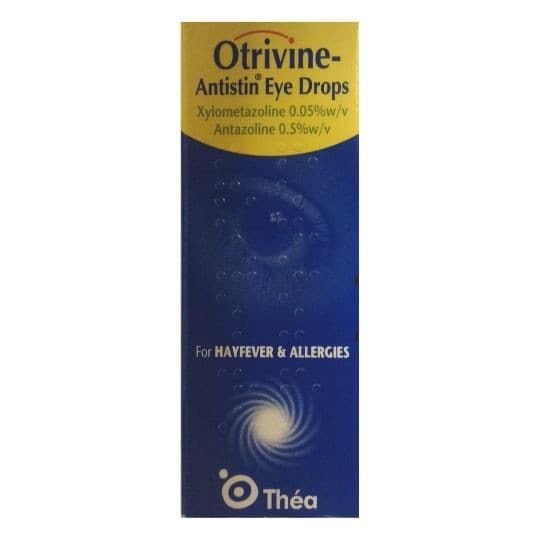
Otrivine Antistin Eye Drops 10ml
- ✔️ Relieves itchy, red eyes caused by allergic conjunctivitis
- ✔️ Dual-action formula targets both itching and redness simultaneously
- ✔️ Contains antihistamine antazoline and decongestant xylometazoline
- ✔️ Suitable for adults and children aged 12 years and over
- ✔️ Compact 10ml bottle — easy to carry during hay fever season
Price Checker
 Lowest price guarantee
 Includes FREE private prescription


Couldn't load pickup availability
What Are Otrivine Antistin Eye Drops Used For?
If your eyes are itching, watering, and turning red every time pollen season hits, you are not alone. Allergic conjunctivitis affects millions of people in the UK each year, and finding fast, reliable relief matters. Otrivine Antistin eye drops are a dual-action, over-the-counter solution designed specifically to tackle the itching and redness that come with allergic eye reactions — including those triggered by hay fever, pet dander, and dust mites. Each 10ml bottle is compact, easy to use, and available without a prescription.
Allergic conjunctivitis occurs when the eyes react to airborne allergens, releasing histamine that causes inflammation, itching, and visible redness. The NHS recognises allergic conjunctivitis as one of the most common eye complaints associated with hay fever. If you are already managing other allergy symptoms, you may find it helpful to explore our allergy and hay fever range alongside this product.
How Do Otrivine Antistin Eye Drops Work?
Otrivine Antistin works through two complementary mechanisms, which is what sets it apart from single-ingredient eye drops. The two active ingredients each target a different part of the allergic response:
- Antazoline sulphate (0.5%) — an antihistamine that competitively blocks H1 histamine receptors in the conjunctiva, reducing the itch and irritation triggered by allergen exposure.
- Xylometazoline hydrochloride (0.05%) — a sympathomimetic decongestant that causes vasoconstriction (narrowing of blood vessels) in the eye, visibly reducing redness within minutes.
- Together, these ingredients address both the itch and the redness simultaneously, rather than one symptom at a time.
- The drops are instilled directly onto the ocular surface, allowing localised action with minimal systemic absorption at the recommended dose.
This combination approach means you are not just masking one symptom — you are addressing the underlying histamine-driven irritation and the vascular response at the same time.
Who Is Otrivine Antistin Suitable For?
These drops are intended for adults and children aged 12 and over who experience itchy, red, or irritated eyes due to allergic causes. They are particularly useful during high pollen seasons or in environments with known allergens. That said, they are not appropriate for everyone.
Otrivine Antistin eye drops are suitable for:
- Adults and adolescents aged 12 years and over
- People with seasonal allergic conjunctivitis (hay fever-related eye symptoms)
- Those with perennial allergic conjunctivitis triggered by dust mites or pet hair
- Individuals who need quick, short-term relief from eye redness and itching
How Do Otrivine Antistin Eye Drops Compare to Alternatives?
| Feature | Otrivine Antistin Eye Drops | Sodium Cromoglicate Eye Drops |
|---|---|---|
| Active ingredients | Antazoline + Xylometazoline | Sodium cromoglicate 2% |
| Mechanism | Antihistamine + decongestant | Mast cell stabiliser |
| Speed of relief | Fast (within minutes) | Slower (preventative use) |
| Maximum duration of use | 7 consecutive days | Can be used longer term |
How Should You Store Otrivine Antistin Eye Drops?
Proper storage keeps the drops safe and effective. Store the bottle below 25°C, away from direct sunlight and out of reach of children. Once opened, the drops must be discarded after 28 days — even if liquid remains — because the preservative system may no longer be effective beyond this point. Do not use the drops if the solution appears cloudy or discoloured.
If you wear contact lenses, remove them before applying the drops and wait at least 15 minutes before reinserting. For a broader look at products that support eye health, visit our eye care collection. Always check the expiry date printed on the bottle before use.
This product is a medicine. Speak to your doctor or pharmacist before using if you have an underlying medical condition or are taking other medicines.
Otrivine Antistin Eye Drops 10ml specifications
| Treatment category | Allergic conjunctivitis / Eye allergy relief |
| Mechanism of action | Antihistamine (antazoline) + sympathomimetic decongestant (xylometazoline) |
| Effective for | Itching, redness, and irritation of the eyes due to allergy |
| Suitable for | Adults and children aged 12 years and over |
| Active ingredients | Antazoline sulphate 0.5%, Xylometazoline hydrochloride 0.05% |
| Pack size | 10ml |
| UK classification | P (Pharmacy medicine) |
| Drug class | Antihistamine / Nasal and ocular decongestant |
| Preparation | Sterile aqueous eye drops solution |
| Route of administration | Ophthalmic (topical to the eye) |
Specifications of Otrivine Antistin Eye Drops 10ml
What Is Otrivine Antistin and What Is It Used For?
Otrivine Antistin Eye Drops 10ml is a licensed, over-the-counter medicine used to relieve the symptoms of allergic conjunctivitis. This includes the itching, redness, watering, and general irritation that occur when the eyes are exposed to allergens such as grass pollen, tree pollen, animal dander, or house dust mites. It contains two active ingredients — antazoline sulphate and xylometazoline hydrochloride — working together to provide dual-action symptom relief. The drops are for short-term use only and should not replace investigation into the underlying cause of your eye symptoms.
What Do You Need to Know Before Using Otrivine Antistin?
Before using these drops, it is important to check whether they are appropriate for you. Do not use Otrivine Antistin if any of the following apply:
- You are under 12 years of age
- You have narrow-angle glaucoma or are at risk of it
- You are allergic to antazoline, xylometazoline, or any other ingredient in the formulation
- You are currently taking monoamine oxidase inhibitors (MAOIs) or have taken them within the last 14 days
- You are pregnant or breastfeeding — seek pharmacist or GP advice first
- You have a known eye infection or injury — these drops are for allergic symptoms only
The following medicines may interact with Otrivine Antistin. Tell your pharmacist if you are taking:
- Tricyclic antidepressants (e.g. amitriptyline)
- Antihypertensive medicines (blood pressure-lowering drugs)
- Other sympathomimetic agents
- MAOIs — concurrent use is contraindicated
If you wear soft contact lenses, remove them before instilling the drops. The preservative benzalkonium chloride can be absorbed by soft lenses and may cause eye irritation.
How Should You Use Otrivine Antistin Eye Drops?
Always use this medicine exactly as described in the patient information leaflet or as directed by your pharmacist. The steps below outline correct instillation technique:
- Wash your hands thoroughly with soap and water before handling the bottle.
- Tilt your head back slightly and look upward.
- Gently pull down your lower eyelid to create a small pocket.
- Hold the dropper tip close to your eye without touching it, and squeeze 1 to 2 drops into the pocket.
- Close your eye gently for 1 to 2 minutes. Avoid blinking excessively.
- Press lightly on the inner corner of your eye (nasolacrimal occlusion) to reduce systemic absorption.
- Repeat in the other eye if needed. Replace the cap immediately after use.
| Indication | Age Group | Dose | Frequency |
|---|---|---|---|
| Allergic conjunctivitis | Adults & children 12+ | 1–2 drops per affected eye | Up to 3 times daily |
| Allergic conjunctivitis | Under 12 years | Not recommended | — |
What Are the Possible Side Effects of Otrivine Antistin?
Like all medicines, Otrivine Antistin can cause side effects, although not everyone experiences them. Most are mild and temporary.
Common side effects:
- Temporary stinging or burning sensation immediately after instillation
- Mild eye irritation or watering
- Transient blurred vision (avoid driving until vision clears)
Less common side effects:
- Rebound redness (reactive hyperaemia) if used for longer than 7 days
- Dryness of the eye surface
- Headache
- Raised intraocular pressure — particularly relevant in those with undiagnosed glaucoma
- Systemic effects such as palpitations or raised blood pressure (rare at recommended doses)
Stop using the drops and seek medical advice if you experience eye pain, significant vision changes, or symptoms that worsen rather than improve. You can find further guidance on managing eye conditions through the NHS website.
How Should You Store Otrivine Antistin Eye Drops?
- Store below 25°C in a cool, dry place
- Keep away from direct sunlight and heat sources
- Do not freeze the solution
- Keep the bottle tightly closed when not in use
- Discard 28 days after first opening, regardless of remaining volume
- Keep out of the sight and reach of children
- Do not use after the expiry date printed on the label
If you are managing multiple allergy-related conditions alongside your eye symptoms, our ear, nose and throat range includes products that may help with nasal congestion and related hay fever symptoms.
References
Written and reviewed by our qualified team
Your safety and success are our highest priorities. Our medical team rigorously evaluates every product and piece of advice we provide, ensuring you receive only the most effective, science-backed solutions available.
Frequently Asked Questions
Where can I buy Otrivine Antistin eye drops online in the UK?
You can buy Otrivine Antistin Eye Drops 10ml directly from Cured Pharmacy, a GPhC-registered online pharmacy, for just £4.59. They are classed as a Pharmacy (P) medicine, so they are available without a prescription but should be purchased from a regulated source. You can also browse our full eye care collection for related products.
How do Otrivine Antistin eye drops work in the body?
Otrivine Antistin contains antazoline sulphate, an antihistamine that blocks H1 receptors in the conjunctiva to reduce itching, and xylometazoline hydrochloride, a decongestant that constricts blood vessels to reduce visible redness. The two ingredients work together to address both the itch and the redness caused by allergic conjunctivitis. Because the drops are applied directly to the eye, they act locally with minimal systemic absorption at the recommended dose.
How do I use Otrivine Antistin eye drops step by step?
Wash your hands before use, tilt your head back, and gently pull down your lower eyelid to form a small pocket. Instil 1 to 2 drops into the pocket without letting the dropper tip touch your eye, then close your eye gently for one to two minutes. Replace the cap immediately and avoid touching the tip to any surface to prevent contamination.
How many times a day can I use Otrivine Antistin eye drops?
The recommended frequency is up to three times daily, with 1 to 2 drops per affected eye at each application. You should not exceed this frequency, as overuse can lead to rebound redness and reduced effectiveness. If your symptoms require more frequent relief, speak to your pharmacist or GP about alternative treatments.
How long can I use Otrivine Antistin eye drops for?
Otrivine Antistin should not be used for more than 7 consecutive days without medical advice. Prolonged use of the xylometazoline component can cause rebound redness, where the eyes become redder once the drops wear off. If your symptoms persist beyond a week, consult your GP or pharmacist to explore longer-term management options.
What are the side effects of Otrivine Antistin eye drops?
The most common side effects are temporary stinging, burning, or mild irritation immediately after applying the drops, which usually settles within a minute or two. Less commonly, you may experience transient blurred vision, dryness, or headache. Rebound redness can occur if the drops are used for longer than the recommended 7-day period.
Who should not use Otrivine Antistin eye drops?
These drops are not suitable for children under 12 years, people with narrow-angle glaucoma, or anyone taking MAOIs or tricyclic antidepressants. They should also be used with caution in people with cardiovascular conditions, hypertension, or hyperthyroidism. If you are pregnant or breastfeeding, always check with your pharmacist or GP before using.
Can I use Otrivine Antistin eye drops with contact lenses?
No — you should remove soft contact lenses before applying the drops and wait at least 15 minutes before reinserting them. The preservative benzalkonium chloride in the formulation can be absorbed by soft lens material and may cause irritation to the eye surface. Hard (rigid gas-permeable) lenses should also be removed prior to use.
What happens if I miss a dose of Otrivine Antistin eye drops?
If you forget to apply a dose, use the drops as soon as you remember — unless it is nearly time for your next scheduled application. In that case, skip the missed dose and continue as normal. Never apply extra drops to make up for a missed dose, as this increases the risk of side effects.
Are Otrivine Antistin eye drops safe during pregnancy?
The safety of Otrivine Antistin during pregnancy has not been fully established, and the product is not recommended for use in pregnancy without medical advice. Xylometazoline is a sympathomimetic agent, and caution is advised particularly in the first trimester. Always speak to your GP or midwife before using any eye drops or medicines during pregnancy.
What are the best alternatives to Otrivine Antistin eye drops?
Alternatives for allergic conjunctivitis include sodium cromoglicate 2% eye drops (e.g. Opticrom), which act as a mast cell stabiliser and are suitable for longer-term preventative use. Oral antihistamines such as cetirizine or loratadine can also help manage systemic hay fever symptoms including eye irritation — you can explore options in our allergy and hay fever range. For more severe or persistent symptoms, your GP may consider prescription olopatadine eye drops.
Can Otrivine Antistin eye drops be used for dry eyes?
No — Otrivine Antistin is specifically formulated for allergic conjunctivitis and is not appropriate for dry eye syndrome. Dry eye is caused by insufficient tear production or poor tear quality, which requires lubricating eye drops (artificial tears) rather than antihistamine or decongestant drops. Using Otrivine Antistin for dry eyes could actually worsen dryness over time.
Do Otrivine Antistin eye drops interact with other medicines?
Yes — Otrivine Antistin can interact with MAOIs, tricyclic antidepressants, and antihypertensive medicines. The xylometazoline component has sympathomimetic activity, which means it can potentially raise blood pressure or interact with medicines that affect the cardiovascular system. Always tell your pharmacist about all medicines you are taking before using these drops.
What is the latest research on antihistamine eye drops for allergic conjunctivitis?
Current clinical guidance supports the use of topical antihistamine and decongestant combinations for short-term relief of allergic conjunctivitis, with mast cell stabilisers preferred for longer-term or preventative management. The NHS recommends antihistamine eye drops as a first-line option for mild to moderate allergic eye symptoms. For persistent or severe cases, referral to an ophthalmologist or allergy specialist may be appropriate.
How should I store Otrivine Antistin eye drops after opening?
Once opened, Otrivine Antistin eye drops must be used within 28 days and then discarded, even if liquid remains in the bottle. Store the bottle below 25°C, away from direct sunlight, and keep the cap tightly closed between uses. Do not store in the bathroom or near heat sources, and always keep out of reach of children.
Written and reviewed by our qualified team

Reviewed by:
Tarun Kumar
Superintendent/ Clinical Lead
📖 Find out more about our team of medical content authors and how we ensure the accuracy of our content with our content guidelines.
Content last updated: 14 Sep 2026
Other popular options


We’re a safe and
regulated UK service

Lowest Price Guarantee

We're convinced you won't find your treatment cheaper, but if you do we'll refund the difference.
Find out more
100% discreet packaging

Discreet, unbranded packaging for every order.
Find out more

Need help?
Talk to our friendly experts now


How our service works

Service setup

Discreet packaging

Express delivery