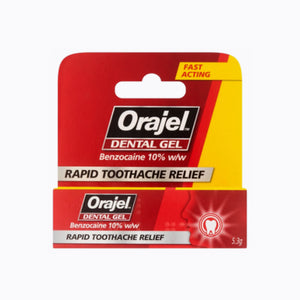
Orajel Dental Gel Pain Relief - 5.3g
Orajel Dental Gel Pain Relief - 5.3g
- ✔️ Temporarily numbs toothache pain within minutes of application
- ✔️ Contains 10% benzocaine for targeted local anaesthetic action
- ✔️ Suitable for adults and children aged 12 and over
- ✔️ Compact 5.3g tube ideal for use at home or on the go
- ✔️ Relieves gum irritation and minor mouth ulcer discomfort
Price Checker
 Lowest price guarantee
 Includes FREE private prescription


Couldn't load pickup availability
Is Orajel Dental Gel Right for Your Toothache?
Toothache can strike at the worst possible moment — a weekend, a bank holiday, or the evening before a dental appointment. When you need something fast, orajel dental gel is one of the most recognised over-the-counter options available in the UK. This 5.3g tube contains 10% benzocaine, a topical local anaesthetic that temporarily numbs the affected area to ease dental pain. It's compact, easy to use, and available without a prescription. You can browse our full range of dental products if you're looking for additional oral care support alongside this gel.
Toothache is one of the most common reasons people visit a pharmacist for advice. According to the NHS, dental pain can range from mild sensitivity to severe, throbbing discomfort — and while this gel won't treat the underlying cause, it can provide meaningful short-term relief while you wait for a dental appointment.
How Does Orajel Dental Gel Work to Relieve Pain?
The active ingredient in this gel is benzocaine at a concentration of 10%. Benzocaine is a local anaesthetic that works by blocking sodium channels in nerve cell membranes, which prevents pain signals from being transmitted to the brain. The result is a temporary numbing effect at the site of application.
- Benzocaine is applied directly to the gum or tooth surface
- It penetrates the mucous membrane and inhibits nerve conduction locally
- Pain relief typically begins within a few minutes of application
- The effect is temporary and will wear off as the gel disperses
It's worth noting that this gel addresses the symptom — pain — rather than the cause. If you have an abscess, cracked tooth, or decay, you'll still need to see a dentist. Think of it as a bridge, not a solution.
Who Is Orajel Dental Gel Suitable For?
This gel is designed for adults and children aged 12 and over who are experiencing temporary dental pain. It's particularly useful in situations where immediate dental care isn't available. That said, it's not appropriate for everyone.
- Adults with toothache awaiting a dental appointment
- People with minor gum irritation or mouth ulcer discomfort
- Individuals aged 12 and over who can apply the gel carefully
- Those who need short-term relief (up to 7 days)
It is not suitable for children under 12, and anyone with a known allergy to benzocaine or other local anaesthetics should avoid it. If you're unsure whether this product is right for you, speak to a pharmacist before purchasing.
How Does Orajel Dental Gel Compare to Other Toothache Remedies?
| Feature | Orajel Dental Gel 5.3g | Oral Analgesic (e.g. Ibuprofen) |
|---|---|---|
| Active ingredient | Benzocaine 10% | Ibuprofen 200–400mg |
| Route of action | Topical (local) | Systemic (whole body) |
| Speed of onset | Within minutes | 30–60 minutes |
| Suitable for under 12s | No | Age-dependent (check product) |
How Should You Store Orajel Dental Gel?
Store this product below 25°C, away from direct sunlight and heat sources. Keep the tube tightly closed when not in use, and always store it out of the reach and sight of children. Do not use the gel after the expiry date printed on the tube or packaging.
If you're managing multiple health concerns alongside dental pain, our pain relief collection includes a range of options that may complement your care. As with all medicines, check the label carefully before use and consult a pharmacist if you have any doubts about suitability.
This product is a medicine. Speak to your doctor or pharmacist before using if you have an underlying medical condition or are taking other medicines.
Orajel Dental Gel Pain Relief 5.3g specifications
| Treatment category | Dental pain relief |
| Active ingredient | Benzocaine 10% |
| Mechanism of action | Topical local anaesthetic — blocks sodium channels in nerve membranes |
| Effective for | Toothache, gum pain, minor mouth ulcer discomfort |
| Suitable for | Adults and children aged 12 and over |
| Pack size | 5.3g |
| UK classification | General Sale List (GSL) |
| Drug class | Local anaesthetic |
| Preparation | Topical gel |
| Route of administration | Topical application to oral mucosa |
Specifications of Orajel Dental Gel Pain Relief 5.3g
What Is Orajel Dental Gel and What Is It Used For?
Orajel Dental Gel is a topical local anaesthetic gel used for the temporary relief of toothache and dental pain. It contains 10% benzocaine as its active ingredient, which works by numbing the affected area of the gum or tooth. It is an over-the-counter (OTC) medicine available without a prescription in the UK.
This gel is intended for short-term use only. It does not treat the underlying dental condition causing the pain — whether that's decay, an abscess, or a cracked tooth. If your pain persists beyond 7 days, or worsens, you should seek dental or medical advice promptly. You can also explore our oral health collection for complementary products to support your dental care routine.
What Do You Need to Know Before Using Orajel Dental Gel?
Before using this gel, read the following carefully. There are certain situations where this product should not be used, and others where caution is needed.
Do not use Orajel Dental Gel if you:
- Are allergic to benzocaine, other local anaesthetics of the ester type, or any other ingredient in the gel
- Are under 12 years of age
- Have a condition called glucose-6-phosphate dehydrogenase (G6PD) deficiency
- Have a history of methaemoglobinaemia
Use with caution and speak to a pharmacist or GP if you:
- Are pregnant or breastfeeding
- Have broken or damaged skin or mucosa in the mouth
- Are taking medicines that may interact (see below)
- Have any known allergies to dental anaesthetics
Known drug interactions:
- Benzocaine may interact with sulphonamide antibiotics — inform your pharmacist if you are taking these
- Use with other local anaesthetics may increase the risk of side effects
- No significant systemic interactions are expected at topical doses in healthy adults
How Should You Use Orajel Dental Gel?
Always use this gel exactly as directed on the label. Do not apply more than the recommended amount, and do not use it more frequently than advised.
- Wash your hands thoroughly before use
- Using a clean fingertip or cotton bud, apply a small amount of gel (approximately 0.5cm) directly to the affected tooth or gum
- Allow the gel to remain on the area — do not rinse immediately
- Avoid eating or drinking for at least 30 minutes after application if possible
- Repeat up to four times daily as needed
- Do not use for more than 7 days without seeking dental advice
| Indication | Age Group | Dose | Frequency |
|---|---|---|---|
| Toothache / dental pain | Adults and children 12+ | Small amount (~0.5cm strip) | Up to 4 times daily |
| Gum irritation | Adults and children 12+ | Small amount (~0.5cm strip) | Up to 4 times daily |
| Under 12 years | Not applicable | Not recommended | Not recommended |
What Are the Possible Side Effects of Orajel Dental Gel?
Like all medicines, Orajel Dental Gel can cause side effects, although not everyone experiences them. Most side effects are mild and localised to the area of application.
Common side effects:
- Temporary numbness beyond the intended application site
- Mild burning or stinging sensation on application
- Localised redness or irritation of the gum
Less common side effects:
- Allergic reaction — including rash, swelling, or difficulty breathing (seek immediate medical help)
- Methaemoglobinaemia — a rare but serious condition where the blood's ability to carry oxygen is reduced; symptoms include pale, grey, or blue-coloured skin, shortness of breath, and fatigue
- Contact dermatitis around the mouth in sensitive individuals
If you notice any signs of a serious allergic reaction or methaemoglobinaemia, stop using the gel immediately and seek urgent medical attention. For general pain management support, our first aid collection includes products that may help in the interim.
How Should You Store Orajel Dental Gel?
- Store below 25°C in a cool, dry place
- Keep away from direct sunlight and heat sources
- Keep the cap tightly closed after each use
- Store out of the reach and sight of children
- Do not use after the expiry date printed on the tube
- Do not dispose of medicines via wastewater or household waste — return unused medicines to your pharmacy
References
Written and reviewed by our qualified team
Your safety and success are our highest priorities. Our medical team rigorously evaluates every product and piece of advice we provide, ensuring you receive only the most effective, science-backed solutions available.
Frequently Asked Questions
Where can I buy Orajel Dental Gel online in the UK?
You can buy Orajel Dental Gel 5.3g directly from Cured Pharmacy, a GPhC-registered UK online pharmacy, for just £3.85. It's available without a prescription and can be ordered for fast home delivery. Browse our full dental products range for more oral care options.
How does Orajel Dental Gel work in the body?
Orajel Dental Gel contains 10% benzocaine, a local anaesthetic that blocks sodium channels in the nerve cell membranes at the site of application. This prevents pain signals from travelling to the brain, producing a temporary numbing effect. It acts locally on the gum or tooth surface and does not enter the bloodstream in significant amounts when used as directed.
How do I apply Orajel Dental Gel step by step?
Wash your hands first, then apply a small amount — roughly a 0.5cm strip — directly to the affected tooth or gum using a clean fingertip or cotton bud. Allow the gel to sit on the area without rinsing, and try to avoid eating or drinking for at least 30 minutes afterwards. You can repeat this up to four times a day as needed.
How quickly does Orajel Dental Gel start working?
Most people notice a numbing effect within a few minutes of applying the gel to the affected area. The duration of relief varies between individuals but typically lasts for a short period before the gel disperses. Reapplication up to four times daily is permitted if needed.
How often can I use Orajel Dental Gel each day?
You can apply Orajel Dental Gel up to four times daily. Do not exceed this frequency, and do not use the gel for more than 7 consecutive days without seeking advice from a dentist or pharmacist. Persistent dental pain always warrants a professional assessment.
Is Orajel Dental Gel safe for children?
Orajel Dental Gel is not recommended for children under 12 years of age. This is because benzocaine carries a small risk of methaemoglobinaemia in younger children, which is why regulatory guidance advises against its use in this age group. If your child has dental pain, speak to a pharmacist or GP for suitable alternatives.
Can I use Orajel Dental Gel if I am pregnant or breastfeeding?
If you are pregnant or breastfeeding, you should speak to your pharmacist or GP before using Orajel Dental Gel. While topical benzocaine is applied locally and systemic absorption is minimal, professional guidance is always recommended during pregnancy and lactation to ensure safety for you and your baby.
What are the side effects of Orajel Dental Gel?
Common side effects include a mild burning or stinging sensation on application, temporary numbness beyond the intended area, and localised gum irritation. Rarely, an allergic reaction or a serious condition called methaemoglobinaemia may occur — if you experience pale or bluish skin, shortness of breath, or swelling, stop use immediately and seek urgent medical help.
Who should not use Orajel Dental Gel?
You should not use this gel if you are allergic to benzocaine or other ester-type local anaesthetics, if you are under 12 years old, or if you have a condition called G6PD deficiency or a history of methaemoglobinaemia. Always check the full list of ingredients before use and consult a pharmacist if you are unsure.
Does Orajel Dental Gel treat the cause of toothache?
No — orajel dental gel provides temporary symptomatic relief only and does not treat the underlying cause of dental pain. Whether your toothache is caused by decay, an abscess, a cracked tooth, or gum disease, you will still need to see a dentist for proper diagnosis and treatment. Use the gel as a short-term measure while you arrange an appointment.
Can I use Orajel Dental Gel for mouth ulcers?
Orajel Dental Gel can help relieve the discomfort associated with minor mouth ulcers, as benzocaine numbs the affected area temporarily. However, if your mouth ulcer persists for more than 3 weeks, is unusually large, or keeps returning, you should seek medical advice as this may require further investigation. Visit our oral health section for additional mouth ulcer products.
What happens if I accidentally swallow Orajel Dental Gel?
Swallowing a small amount of the gel as used in normal application is unlikely to cause serious harm in adults, but you should avoid deliberately swallowing it. If a child swallows a significant amount, or if you experience any unusual symptoms after accidental ingestion, contact NHS 111 or your nearest A&E immediately. Always keep the tube out of reach of children.
How long can I use Orajel Dental Gel for?
You should not use Orajel Dental Gel for more than 7 consecutive days without seeking dental or medical advice. Prolonged use without addressing the underlying cause of pain is not recommended. If your symptoms persist or worsen, book an appointment with your dentist as soon as possible.
What are the alternatives to Orajel Dental Gel for toothache?
Alternatives include oral analgesics such as paracetamol or ibuprofen, which work systemically to reduce pain and inflammation, or clove oil-based products, which have a traditional use in dental pain relief. Your pharmacist can advise on the most appropriate option based on your individual circumstances and any other medicines you may be taking.
Are there any medicines that interact with Orajel Dental Gel?
Benzocaine may interact with sulphonamide antibiotics, potentially reducing their effectiveness. Using multiple local anaesthetic products simultaneously may also increase the risk of side effects. Always inform your pharmacist of all medicines you are currently taking — including over-the-counter products — before using this gel.
Written and reviewed by our qualified team

Reviewed by:
Tarun Kumar
Superintendent/ Clinical Lead
📖 Find out more about our team of medical content authors and how we ensure the accuracy of our content with our content guidelines.
Content last updated: 14 Sep 2026
Other popular options


We’re a safe and
regulated UK service

Lowest Price Guarantee

We're convinced you won't find your treatment cheaper, but if you do we'll refund the difference.
Find out more
100% discreet packaging

Discreet, unbranded packaging for every order.
Find out more

Need help?
Talk to our friendly experts now


How our service works

Service setup

Discreet packaging

Express delivery