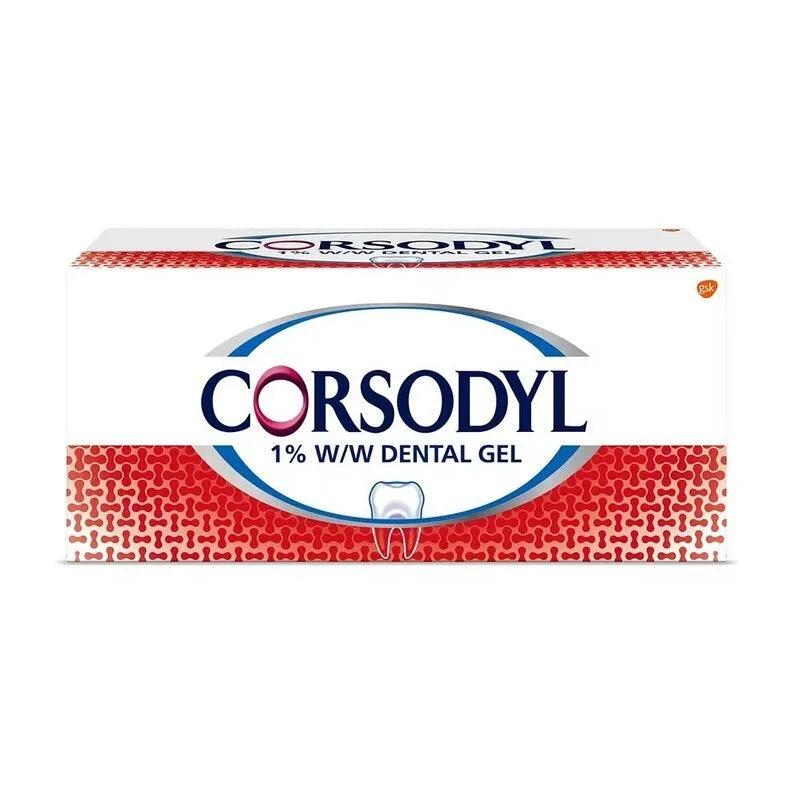
Corsodyl Dental Gel- 50g
Corsodyl Dental Gel- 50g
- ✔️ Targets bacteria that cause gum disease and gingivitis
- ✔️ Contains 1% chlorhexidine for sustained antibacterial action
- ✔️ Treats mouth ulcers and minor oral infections directly
- ✔️ Suitable for adults and young people over 12 years
- ✔️ Gel formulation stays in contact longer than mouthwash
Price Checker
 Lowest price guarantee
 Includes FREE private prescription


Couldn't load pickup availability
What Is Corsodyl Dental Gel and How Does It Help Your Gums?
If your gums bleed when you brush, feel sore, or look swollen, you are not alone. Gum disease is one of the most common oral health problems in the UK, affecting millions of adults at some point in their lives. Corsodyl dental gel is a clinically established antiseptic gel that targets the bacteria responsible for gum disease, mouth ulcers, and other oral infections — helping to restore gum health when used correctly. Available from our dental products collection, this 50g tube offers a straightforward, pharmacist-recommended option for managing mild to moderate gum problems at home.
The gel contains 1% chlorhexidine digluconate as its active ingredient. Chlorhexidine is a well-established antiseptic agent with a long history of use in dentistry. It works by binding to oral tissues and releasing its antibacterial action over time — a property known as substantivity. This means it keeps working even after you have applied it, giving you sustained protection between applications.
How Does Corsodyl Dental Gel Work Against Gum Disease?
Chlorhexidine digluconate disrupts the outer membrane of bacterial cells, causing them to leak and die. Because it binds to oral surfaces, it continues to act for several hours after application. Here is how the mechanism works in practice:
- Chlorhexidine binds to negatively charged bacterial cell walls, destabilising the membrane.
- This causes leakage of intracellular components, killing the bacteria.
- The gel adheres to gum tissue and tooth surfaces, providing prolonged antibacterial activity.
- Regular use reduces plaque accumulation, which is the primary driver of gingivitis and periodontitis.
Because the gel formulation is thicker than a mouthwash, it stays in contact with the affected area for longer — making it particularly useful for targeting specific spots such as a sore gum around a tooth or a mouth ulcer.
Who Should Use Corsodyl Dental Gel?
This gel is suitable for adults and children over 12 years of age who are experiencing mild to moderate gum problems or oral infections. It is particularly helpful if you have been advised by your dentist to improve your gum health between appointments. It is also commonly used after dental procedures to reduce the risk of infection.
- Adults with gingivitis (inflamed, bleeding gums)
- People with mouth ulcers or minor oral infections
- Patients recovering from dental surgery or tooth extraction
- Those wearing dentures who experience gum soreness
It is not suitable for children under 12 without dental supervision. If you are unsure whether this product is right for you, speak to your pharmacist or dentist before use.
How Does Corsodyl Dental Gel Compare to Corsodyl Mouthwash?
| Feature | Corsodyl Dental Gel 50g | Corsodyl Mouthwash 0.2% |
|---|---|---|
| Active ingredient | Chlorhexidine digluconate 1% | Chlorhexidine digluconate 0.2% |
| Application method | Applied directly to gums/ulcers | Rinsed around the mouth |
| Best for | Targeted localised treatment | General oral antiseptic rinsing |
| Contact time | Longer — gel stays in place | Shorter — rinsed away |
Is Corsodyl Dental Gel Safe to Store at Home?
Yes. The gel should be stored below 25°C, away from direct sunlight, and kept out of the reach of children. Do not use it after the expiry date printed on the tube. If you are managing multiple health conditions and looking for other products alongside your oral care routine, you might also find our oral health collection useful for complementary products.
Corsodyl dental gel is an over-the-counter medicine. While it does not require a prescription, it is still a medicine and should be used as directed. Speak to your doctor or pharmacist before using if you have an underlying medical condition or are taking other medicines.
Corsodyl Dental Gel 50g specifications
| Treatment category | Oral antiseptic / Dental care |
| Active ingredient | Chlorhexidine digluconate 1% w/w |
| Mechanism of action | Disrupts bacterial cell membranes; broad-spectrum antibacterial |
| Effective against | Gingivitis, mouth ulcers, minor oral infections |
| Suitable for | Adults and children over 12 years |
| Pack size | 50g tube |
| Strength | 1% chlorhexidine digluconate |
| UK classification | General Sale List (GSL) |
| Drug class | Antiseptic |
| Preparation | Topical gel |
| Route of administration | Topical (oral mucosa) |
Specifications of Corsodyl Dental Gel 50g
What Is Corsodyl Dental Gel and What Is It Used For?
Corsodyl Dental Gel 50g is a topical antiseptic gel containing 1% chlorhexidine digluconate. It is used to treat and help prevent gum disease (gingivitis), mouth ulcers, oral thrush, and infections following dental procedures. The NHS recognises chlorhexidine as an effective antibacterial agent for oral use. It is available without a prescription and is suitable for adults and young people over 12 years of age.
What Do You Need to Know Before Using Corsodyl Dental Gel?
Before using this gel, read the following carefully. Do not use it if any of the contraindications below apply to you.
Do not use Corsodyl Dental Gel if you:
- Are allergic to chlorhexidine digluconate or any other ingredient in the gel
- Are under 12 years of age (unless directed by a dentist)
- Have previously had a severe allergic reaction (anaphylaxis) to chlorhexidine
Warnings and precautions:
- Avoid contact with eyes and ears — rinse thoroughly with water if accidental contact occurs
- Do not swallow the gel
- Prolonged use may cause brown staining of teeth, tongue, and dental restorations
- Tell your dentist you are using this product before any dental procedure
- If you are pregnant or breastfeeding, consult your GP or midwife before use
Drug interactions:
- Chlorhexidine may be inactivated by some toothpaste ingredients (such as sodium lauryl sulphate) — leave at least 30 minutes between brushing and applying the gel
- No significant systemic drug interactions are known at topical doses
How Should You Use Corsodyl Dental Gel?
Using the gel correctly makes a real difference to how well it works. Follow these steps each time you apply it:
- Brush your teeth as normal and wait at least 30 minutes before applying the gel.
- Squeeze a small pea-sized amount of gel onto a clean fingertip or soft toothbrush.
- Apply directly to the affected gum area or mouth ulcer.
- Gently massage into the gum line if treating gingivitis.
- Do not rinse your mouth, eat, or drink for at least 30 minutes after application.
- Repeat twice daily — morning and evening — unless otherwise directed.
| Indication | Age Group | Dose | Frequency |
|---|---|---|---|
| Gingivitis / gum disease | Adults & over 12s | Small amount applied to gums | Twice daily |
| Mouth ulcers | Adults & over 12s | Small amount applied to ulcer | Twice daily |
| Post-dental procedure | Adults & over 12s | As directed by dentist | As directed |
| Children under 12 | Under 12 | Only under dental supervision | |
If you are also managing other aspects of your health, our vitamins and supplements collection includes products that support immune health, which may complement your oral care routine.
What Are the Possible Side Effects of Corsodyl Dental Gel?
Like all medicines, Corsodyl Dental Gel can cause side effects, although not everyone experiences them. The most frequently reported ones relate to the nature of chlorhexidine itself.
Common side effects:
- Brown staining of teeth, tongue, and dental restorations
- Temporary alteration in taste sensation
- Mild burning or tingling sensation on application
Less common side effects:
- Localised irritation or soreness of the mouth lining
- Swollen or sore salivary glands (parotid gland swelling)
- Desquamation (peeling) of the oral mucosa in sensitive individuals
Serious allergic reactions to chlorhexidine are rare but have been reported. Seek immediate medical attention if you develop swelling of the face, lips, or throat, difficulty breathing, or a widespread skin rash after use.
How Should You Store Corsodyl Dental Gel?
Correct storage keeps the gel effective for its full shelf life. Follow these guidelines:
- Store below 25°C in a cool, dry place
- Keep away from direct sunlight and heat sources
- Keep the cap tightly closed when not in use
- Keep out of the reach and sight of children
- Do not use after the expiry date printed on the tube
- Do not dispose of medicines via wastewater or household waste — return unused product to your pharmacy
If you are looking for other products to support your overall health alongside your dental care, browse our ear, nose and throat collection for related oral and throat health products.
References
Written and reviewed by our qualified team
Your safety and success are our highest priorities. Our medical team rigorously evaluates every product and piece of advice we provide, ensuring you receive only the most effective, science-backed solutions available.
Frequently Asked Questions
Where can I buy Corsodyl Dental Gel online in the UK?
You can buy Corsodyl Dental Gel 50g online from Cured Pharmacy for just £4.99, with fast UK delivery straight to your door. It is available without a prescription as a General Sale List medicine. Browse our full dental products collection for more oral care options.
How does Corsodyl Dental Gel work in the mouth?
Corsodyl Dental Gel contains 1% chlorhexidine digluconate, which binds to bacterial cell membranes and disrupts their structure, killing the bacteria that cause gum disease and oral infections. Because chlorhexidine adheres to oral tissues, it continues to release its antibacterial action for several hours after application. This sustained effect — known as substantivity — is what makes it particularly effective for treating gingivitis and mouth ulcers.
How do I use Corsodyl Dental Gel step by step?
Apply a small pea-sized amount of gel directly to the affected gum or ulcer using a clean fingertip or soft toothbrush, twice daily. Wait at least 30 minutes after brushing your teeth before applying, and do not eat, drink, or rinse your mouth for 30 minutes afterwards. Consistent twice-daily use gives the best results.
What is the correct dose of Corsodyl Dental Gel for adults?
For adults and young people over 12, a small pea-sized amount applied directly to the affected area twice daily is the standard recommended dose. Do not apply more than directed, as this will not speed up healing and may increase the risk of staining. Always follow the instructions in the patient information leaflet supplied with the product.
Does Corsodyl Dental Gel stain your teeth?
Yes, chlorhexidine digluconate is known to cause brown staining of teeth, the tongue, and dental restorations — particularly with prolonged use. This staining is usually reversible with professional dental cleaning and improved oral hygiene. To minimise staining, avoid tea, coffee, and red wine during treatment where possible.
How long can you use Corsodyl Dental Gel for?
Corsodyl Dental Gel is intended for short-term use, typically for up to one month. If your symptoms have not improved after this period, or if they worsen at any point, you should consult your dentist or GP. Long-term unsupervised use is not recommended due to the risk of tooth staining and potential disruption to the natural oral microbiome.
Can I use Corsodyl Dental Gel if I am pregnant or breastfeeding?
Corsodyl Dental Gel is applied topically to the gums and systemic absorption is minimal, but you should always speak to your GP or midwife before using any medicine during pregnancy or while breastfeeding. Gum disease is actually more common during pregnancy due to hormonal changes, so seeking dental advice early is important. Your dentist can advise on the safest approach for your situation.
What are the side effects of Corsodyl Dental Gel and how do I manage them?
The most common side effects are tooth and tongue staining and a temporary change in taste, both of which are generally reversible. Less commonly, you may experience mild mouth irritation or soreness at the application site. If you develop any signs of a serious allergic reaction — such as facial swelling, difficulty breathing, or a widespread rash — stop using the gel immediately and seek urgent medical attention.
Who is eligible to use Corsodyl Dental Gel?
Corsodyl Dental Gel is suitable for adults and young people aged 12 and over who have gum disease, mouth ulcers, or minor oral infections. It is not recommended for children under 12 without dental supervision, and those with a known allergy to chlorhexidine should not use it. If you have any underlying health conditions or take regular medicines, check with your pharmacist before starting treatment.
What happens if I miss a dose of Corsodyl Dental Gel?
If you forget to apply the gel at your usual time, simply apply it as soon as you remember and then continue with your normal twice-daily routine. Do not apply a double dose to make up for a missed application. Consistency is important for the best results, so try to apply it at the same times each day.
Can I use Corsodyl Dental Gel with my regular toothpaste?
Yes, but you should leave a gap of at least 30 minutes between brushing with toothpaste and applying the gel. Some toothpaste ingredients — particularly sodium lauryl sulphate — can inactivate chlorhexidine and reduce its effectiveness. Applying the gel after this waiting period ensures it works as intended.
What are the alternatives to Corsodyl Dental Gel?
Alternatives include Corsodyl Mouthwash (0.2% chlorhexidine) for a more general antiseptic rinse, or other antiseptic gels such as those containing benzydamine or povidone-iodine for mouth ulcers. Your dentist or pharmacist can help you choose the most appropriate product based on your specific symptoms. You can also explore our oral health collection for a wider range of options.
Can Corsodyl Dental Gel be used on dentures?
Corsodyl Dental Gel is designed for application to the gums and oral mucosa, not for soaking or cleaning dentures directly. However, if you have gum soreness or infection beneath a denture, applying the gel to the affected gum tissue may help. Speak to your dentist if you are experiencing persistent problems with your dentures, as a proper fit assessment may also be needed.
Is there any latest research on chlorhexidine gel for gum disease?
Chlorhexidine remains one of the most studied antiseptic agents in dentistry, with decades of clinical evidence supporting its use in reducing plaque and gingivitis. Current dental guidelines continue to recommend it as an adjunct to mechanical cleaning (brushing and flossing) for managing gum disease. Research also continues to explore its role in preventing infections after dental implant procedures.
Can Corsodyl Dental Gel help with mouth ulcers?
Yes — corsodyl dental gel can be applied directly to mouth ulcers to reduce bacterial load and help prevent secondary infection, which may speed up healing. The NHS notes that most mouth ulcers heal on their own within one to two weeks, but antiseptic gels can help manage discomfort and reduce the risk of complications. If ulcers are large, persistent, or recurring frequently, see your GP or dentist for further investigation.
Written and reviewed by our qualified team

Reviewed by:
Tarun Kumar
Superintendent/ Clinical Lead
📖 Find out more about our team of medical content authors and how we ensure the accuracy of our content with our content guidelines.
Content last updated: 14 Sep 2026
Other popular options


We’re a safe and
regulated UK service

Lowest Price Guarantee

We're convinced you won't find your treatment cheaper, but if you do we'll refund the difference.
Find out more
100% discreet packaging

Discreet, unbranded packaging for every order.
Find out more

Need help?
Talk to our friendly experts now


How our service works

Service setup

Discreet packaging

Express delivery