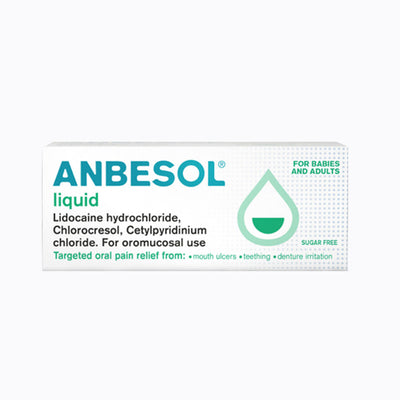
Anbesol Oral Liquid 10ml
- ✔️ Temporarily numbs mouth ulcers, teething pain, and sore gums
- ✔️ Contains lidocaine for fast-acting topical oral pain relief
- ✔️ Antiseptic formula helps reduce infection risk at sore sites
- ✔️ Suitable for babies from 5 months and adults alike
- ✔️ Liquid format reaches awkward areas of the mouth easily
Price Checker
 Discreet, tracked delivery
 Includes FREE private prescription


Couldn't load pickup availability
What Is Anbesol Oral Liquid and How Does It Help?
Anbesol oral liquid is a topical anaesthetic and antiseptic solution designed to provide fast, targeted relief from oral pain. Whether you're dealing with a sore mouth ulcer, the discomfort of teething, or minor dental pain, this 10ml liquid offers a straightforward, easy-to-apply option. At just £4.99, it's an accessible choice for families and individuals alike. You can find it alongside other trusted products in our dental products collection.
The liquid format makes it particularly useful for reaching awkward spots in the mouth — something a gel can sometimes struggle with. It's been a trusted name in oral pain relief for many years, and it remains one of the more recognisable options available over the counter in the UK.
How Does Anbesol Oral Liquid Work to Relieve Pain?
The relief comes from a combination of three active ingredients, each playing a distinct role:
- Lidocaine hydrochloride 0.9% — a local anaesthetic that temporarily blocks nerve signals in the area where it's applied, reducing the sensation of pain
- Chlorocresol 0.1% — an antiseptic agent that helps reduce the risk of bacterial infection at the site of irritation
- Cetylpyridinium chloride 0.02% — another antiseptic component that supports oral hygiene and helps keep the affected area clean
Together, these ingredients work at the surface of the oral tissue. The lidocaine acts quickly to numb the area, while the antiseptic components help create a cleaner environment for healing. It doesn't treat the underlying cause of pain — but it does make the discomfort far more manageable while your body does its job.
Who Is Anbesol Oral Liquid Suitable For?
This product is suitable for a fairly wide range of people, which is part of what makes it so useful to keep in the medicine cabinet. That said, it's not appropriate for everyone, so it's worth checking before you use it.
Anbesol oral liquid is generally suitable for:
- Adults and children aged 5 months and over
- Babies experiencing teething discomfort (from 5 months)
- Adults with painful mouth ulcers or minor gum irritation
- People with temporary dental pain while awaiting a dentist appointment
It is not suitable for those with a known allergy to local anaesthetics, particularly amide-type anaesthetics like lidocaine. If you're unsure whether this applies to you, speak to your pharmacist before use.
How Does Anbesol Oral Liquid Compare to Similar Products?
| Feature | Anbesol Oral Liquid | Bonjela Teething Gel |
|---|---|---|
| Active anaesthetic | Lidocaine hydrochloride 0.9% | Choline salicylate 8.7% |
| Antiseptic component | Yes (chlorocresol, cetylpyridinium) | Yes (cetalkonium chloride) |
| Suitable age | 5 months and over | Not recommended under 16 (adult formula) |
| Format | Liquid (easy to apply to awkward areas) | Gel |
How Should You Store Anbesol Oral Liquid?
Store your anbesol oral liquid below 25°C, away from direct sunlight and heat sources. Keep the bottle tightly closed when not in use, and always store it out of the reach and sight of children. Do not use the product after the expiry date printed on the label.
If you're looking for other products to support your family's health, our baby and toddler collection includes a range of trusted options for little ones. Once opened, use the liquid within the period stated in the patient information leaflet — typically within a few months.
This product is a medicine. Speak to your doctor or pharmacist before using if you have an underlying medical condition or are taking other medicines.
Anbesol Oral Liquid 10ml specifications
| Treatment category | Oral pain relief / Dental |
| Mechanism of action | Topical local anaesthetic and antiseptic |
| Effective for | Teething, mouth ulcers, minor dental pain |
| Suitable for | Adults and children aged 5 months and over |
| Active ingredient | Lidocaine hydrochloride 0.9%, Chlorocresol 0.1%, Cetylpyridinium chloride 0.02% |
| Pack size | 10ml |
| UK classification | General Sale List (GSL) |
| Drug class | Local anaesthetic / Antiseptic |
| Preparation | Topical oral liquid |
| Route of administration | Topical (oral mucosa) |
Specifications of Anbesol Oral Liquid 10ml
What Is Anbesol Oral Liquid and What Is It Used For?
Anbesol oral liquid is a topical preparation containing a local anaesthetic and two antiseptic agents. It is used to relieve pain and discomfort associated with mouth ulcers, teething in infants aged 5 months and over, and minor dental pain such as sore gums. The NHS notes that mouth ulcers are a common condition that usually resolve on their own, but topical treatments can help manage the discomfort in the meantime. This product works directly at the site of pain, providing temporary relief without the need for a prescription.
What Do You Need to Know Before Using Anbesol Oral Liquid?
Before using this product, it's important to check whether it's appropriate for you or your child. There are certain situations where you should not use it, and others where extra caution is needed.
Do not use Anbesol Oral Liquid if:
- You are allergic to lidocaine, any other local anaesthetic, or any of the other ingredients
- Your baby is under 5 months of age
- The affected area shows signs of serious infection — seek dental or medical advice instead
Take care and speak to your pharmacist or GP if:
- You are pregnant or breastfeeding
- You have liver or kidney problems
- You are using other medicines that contain local anaesthetics
- Symptoms do not improve within seven days
Drug interactions to be aware of:
- No clinically significant interactions are expected at the doses used topically
- If you are taking anti-arrhythmic medicines, mention this to your pharmacist as a precaution
How Should You Use Anbesol Oral Liquid?
Using this product correctly is straightforward, but it's worth following the steps carefully to get the most from it — and to keep things safe, especially when using it for a young child.
- Wash your hands thoroughly before applying
- Using a clean cotton bud or the tip of a clean finger, apply a small amount of the liquid directly to the affected area
- Gently dab — do not rub vigorously
- Allow the liquid to remain on the area; do not rinse immediately
- Repeat up to four times daily as needed
- Do not swallow the liquid
The NHS advises that teething symptoms in babies can also be managed with other measures such as chilled (not frozen) teething rings and gentle gum massage. Anbesol oral liquid can be used alongside these approaches.
| Indication | Age Group | Dose | Frequency |
|---|---|---|---|
| Teething | 5 months and over | Small amount on cotton bud or fingertip | Up to 4 times daily |
| Mouth ulcers | Adults and children | Small amount applied directly to ulcer | Up to 4 times daily |
| Minor dental pain | Adults | Small amount applied to affected gum | Up to 4 times daily |
What Are the Possible Side Effects of Anbesol Oral Liquid?
Like all medicines, Anbesol oral liquid can cause side effects, although not everyone experiences them. Most side effects are mild and localised to the area of application.
Common side effects:
- Temporary numbness or tingling at the application site
- Mild burning or stinging sensation immediately after application
Less common side effects:
- Localised irritation or redness of the oral mucosa
- Allergic reactions — including rash, swelling, or difficulty breathing (rare but serious; stop use and seek immediate medical help)
If you notice any unexpected reaction, stop using the product and contact your pharmacist or GP. You can also find a range of other pain relief options if this product is not suitable for you.
How Should You Store Anbesol Oral Liquid?
- Store below 25°C
- Keep away from direct sunlight and heat
- Keep the bottle tightly closed when not in use
- Store out of the reach and sight of children
- Do not use after the expiry date printed on the bottle
- Do not dispose of medicines via wastewater or household waste — ask your pharmacist how to dispose of medicines you no longer need
If you're managing multiple health products at home, our oral health collection has a wide range of products to support your everyday dental care routine.
References
Written and reviewed by our qualified team
Your safety and success are our highest priorities. Our medical team rigorously evaluates every product and piece of advice we provide, ensuring you receive only the most effective, science-backed solutions available.
Frequently Asked Questions
Where can I buy Anbesol Oral Liquid online in the UK?
You can buy Anbesol Oral Liquid 10ml directly from Cured Pharmacy for just £4.99, with no prescription required. It's a General Sale List (GSL) medicine, meaning it's available over the counter. Browse our full dental products collection for more oral health options.
How does Anbesol Oral Liquid work in the body?
Anbesol Oral Liquid works by applying a local anaesthetic — lidocaine hydrochloride — directly to the painful area of the mouth, temporarily blocking nerve signals and reducing the sensation of pain. It also contains two antiseptic agents, chlorocresol and cetylpyridinium chloride, which help keep the affected area clean and reduce the risk of infection. The action is localised, meaning it doesn't enter the bloodstream in any meaningful amount at the doses used.
How do I apply Anbesol Oral Liquid step by step?
Start by washing your hands, then apply a small amount of the liquid to a clean cotton bud or the tip of your finger. Gently dab it onto the affected area — whether that's a mouth ulcer, sore gum, or teething area — and allow it to sit without rinsing. You can repeat this up to four times a day as needed.
What is the correct dose of Anbesol Oral Liquid for babies?
For babies aged 5 months and over, apply a small amount of Anbesol Oral Liquid to the affected gum area using a clean cotton bud or fingertip, up to four times daily. Do not use in babies under 5 months of age. If you're unsure about the right amount, speak to your pharmacist before use.
How long does Anbesol Oral Liquid take to work?
Anbesol Oral Liquid typically begins to numb the affected area within a few minutes of application, as the lidocaine acts quickly on the surface of the oral tissue. The relief is temporary in nature, which is why you can reapply up to four times daily. If you find the pain is not improving at all after a couple of days, it's worth speaking to your dentist or GP.
Can I use Anbesol Oral Liquid for mouth ulcers?
Yes — Anbesol Oral Liquid is one of the indicated uses for mouth ulcers, helping to numb the painful area and reduce discomfort while the ulcer heals naturally. The NHS notes that most mouth ulcers clear up on their own within one to two weeks. If your ulcer lasts longer than three weeks or keeps coming back, see your GP or dentist.
What are the side effects of Anbesol Oral Liquid?
Most people tolerate Anbesol Oral Liquid well, but some may experience a temporary tingling, numbness, or mild burning sensation at the application site immediately after use. Allergic reactions are rare but possible — signs include swelling, rash, or difficulty breathing, in which case you should stop use and seek urgent medical attention. If you experience any unexpected or persistent side effects, contact your pharmacist or GP.
Is Anbesol Oral Liquid safe during pregnancy?
There is limited data on the use of Anbesol Oral Liquid during pregnancy, so it's important to speak to your GP or pharmacist before using it if you are pregnant or breastfeeding. Because it is applied topically in small amounts, systemic absorption is minimal, but professional guidance is still recommended. Your pharmacist can help you weigh up the options.
Who should not use Anbesol Oral Liquid?
You should not use Anbesol Oral Liquid if you are allergic to lidocaine or any other local anaesthetic, or if you are allergic to any of the other ingredients listed in the product. It should also not be used in babies under 5 months of age. If you have liver or kidney problems, or are taking anti-arrhythmic medicines, speak to your pharmacist first.
What are the alternatives to Anbesol Oral Liquid?
Alternatives for oral pain relief include other topical products such as Dentinox teething gel or Calgel, as well as non-medicated approaches like chilled teething rings for babies. For mouth ulcers, your pharmacist may suggest corticosteroid pellets or other topical treatments. You can explore more options in our oral health collection.
How long can you use Anbesol Oral Liquid for?
Anbesol Oral Liquid is intended for short-term use only — generally no longer than seven days without seeking further advice. If your symptoms persist beyond this point, or if they worsen, you should consult your GP or dentist to rule out an underlying cause. Prolonged use without professional review is not recommended.
Can Anbesol Oral Liquid be used for toothache?
Anbesol Oral Liquid can provide temporary relief from minor dental pain and sore gums, but it is not a treatment for toothache caused by decay, abscess, or infection. The NHS advises seeing a dentist as soon as possible if you have toothache, as the underlying cause will need to be treated. Use the liquid only as a short-term measure while you wait for your appointment.
What happens if I accidentally swallow Anbesol Oral Liquid?
Anbesol Oral Liquid is not intended to be swallowed, and you should take care to avoid this, particularly when using it for young children. If a small amount is accidentally ingested, it is unlikely to cause serious harm given the small volume involved, but you should contact NHS 111 or your pharmacist for advice. In the case of a larger accidental ingestion, seek medical attention promptly.
Does Anbesol Oral Liquid interact with other medicines?
At the small topical doses used, Anbesol Oral Liquid is not expected to cause clinically significant interactions with most medicines. However, if you are taking anti-arrhythmic drugs (medicines for heart rhythm problems), it is worth mentioning this to your pharmacist as a precaution, since lidocaine can have cardiac effects at higher systemic doses. Always tell your pharmacist about all medicines you are taking.
What is the latest guidance on using lidocaine-based products for teething?
Regulatory bodies including the MHRA have previously issued guidance advising caution with lidocaine-containing teething products in very young infants, particularly those under 5 months. Anbesol Oral Liquid is licensed for use from 5 months of age, and when used as directed, it is considered appropriate for this age group. Always follow the product instructions and consult your pharmacist or health visitor if you have any concerns about managing your baby's teething symptoms.
Written and reviewed by our qualified team

Reviewed by:
Tarun Kumar
Superintendent/ Clinical Lead
📖 Find out more about our team of medical content authors and how we ensure the accuracy of our content with our content guidelines.
Content last updated: 14 Sep 2026
Other popular options


We’re a safe and
regulated UK service

100% discreet packaging

Discreet, unbranded packaging for every order.

Need help?
Talk to our friendly experts now


How our service works

Service setup

Discreet packaging

Express delivery