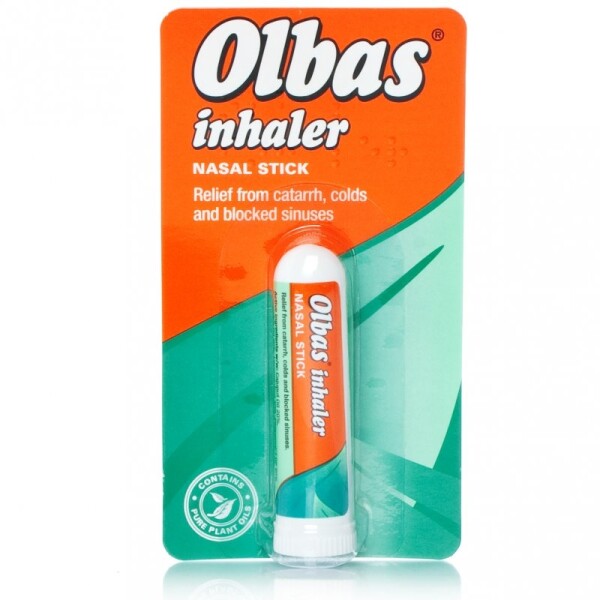
Olbas Inhaler - 1 Stick
Olbas Inhaler - 1 Stick
- ✔️ Relieves nasal congestion from colds, flu, and hay fever
- ✔️ Contains eucalyptus and menthol for fast decongestant vapour action
- ✔️ Pocket-sized stick — discreet and ready to use anywhere
- ✔️ Suitable for adults and children aged 3 and over
- ✔️ No rebound congestion risk unlike some medicated nasal sprays
Price Checker
 Lowest price guarantee
 Includes FREE private prescription


Couldn't load pickup availability
What Is the Olbas Inhaler and How Does It Relieve Congestion?
Blocked nose. Stuffy sinuses. That heavy, foggy feeling that makes it hard to breathe, sleep, or concentrate. If any of that sounds familiar, you are not alone — nasal congestion is one of the most common complaints seen by UK pharmacists, particularly during cold and flu season or when pollen counts rise. The olbas inhaler is a compact, pocket-sized decongestant stick designed to give you fast, on-the-go relief without the need for sprays, tablets, or a prescription. Available at Cured Pharmacy for just £2.99, it is a simple, affordable option worth knowing about.
The Olbas inhaler contains a carefully selected blend of plant-derived essential oils — including eucalyptus oil, menthol, cajuput oil, clove oil, juniper berry oil, mint oil, and methyl salicylate. These ingredients have a long history of use in inhalation-based remedies for nasal congestion. If you are also dealing with sneezing, itchy eyes, or a runny nose alongside your congestion, you might find it useful to explore our allergy and hay fever range for complementary options.
How Does the Olbas Inhaler Work to Clear Your Nose?
The mechanism is straightforward. When you hold the inhaler beneath your nostril and breathe in, the volatile essential oils are carried into the nasal passages as vapour. This vapour interacts with the mucous membranes lining the nose, producing a cooling, decongestant sensation that helps ease the feeling of blockage. It does not chemically shrink blood vessels the way some medicated nasal sprays do — instead, it works through sensory and mild physiological effects of the essential oil blend.
- Menthol activates cold-sensitive receptors in the nasal lining, creating a sensation of improved airflow
- Eucalyptus oil has recognised decongestant properties and is widely used in inhalation remedies
- Cajuput and mint oils contribute to the overall vapour effect, supporting easier breathing
- Clove oil and methyl salicylate add to the warming, aromatic quality of the blend
Who Should Use the Olbas Inhaler and Is It Right for You?
This product is suitable for adults and children aged 3 and over who are experiencing nasal congestion. It is particularly useful for people who prefer a non-medicated, drug-free approach to managing a blocked nose — whether that is caused by a cold, flu, sinusitis, or seasonal allergies. It is also a handy option for those who find nasal sprays uncomfortable or who need something discreet enough to use at work or while travelling.
- Adults with a blocked nose due to cold or flu
- People with hay fever-related nasal congestion
- Children aged 3 and over (with adult supervision)
- Anyone wanting a portable, non-prescription decongestant option
How Does the Olbas Inhaler Compare to Other Decongestant Options?
| Feature | Olbas Inhaler Stick | Medicated Nasal Spray (e.g. xylometazoline) |
|---|---|---|
| Active ingredients | Essential oils (eucalyptus, menthol, cajuput) | Synthetic decongestant (xylometazoline HCl) |
| Suitable for children under 12 | Yes, from age 3 | Varies — some not suitable under 12 |
| Risk of rebound congestion | No known risk | Yes, if used for more than 7 days |
| Portability | Pocket-sized stick — very portable | Bottle — less discreet |
How Should You Store the Olbas Inhaler and Is It Clinically Suitable for You?
Store your olbas inhaler below 25°C, away from direct sunlight and heat sources. Always replace the cap firmly after use — this preserves the essential oil vapour and extends the life of the stick. Keep it out of reach of children when not in use, even though it is suitable for children aged 3 and over with supervision.
If you have asthma, chronic obstructive pulmonary disease (COPD), or any other respiratory condition, speak to your pharmacist before using this product. The same applies if you are pregnant, breastfeeding, or taking other medicines. For those managing cold and flu symptoms more broadly, our cold and flu collection includes a range of additional remedies that may help alongside this inhaler.
This product is a medicine. Speak to your doctor or pharmacist before using if you have an underlying medical condition or are taking other medicines.
Olbas Inhaler - 1 Stick specifications
| Treatment category | Nasal congestion relief |
| Mechanism of action | Inhalation of essential oil vapours to ease nasal congestion |
| Effective for | Blocked nose due to colds, flu, hay fever, sinusitis |
| Suitable for | Adults and children aged 3 and over |
| Active ingredients | Cajuput oil, clove oil, eucalyptus oil, juniper berry oil, menthol, methyl salicylate, mint oil |
| Pack size | 1 inhaler stick |
| UK classification | General Sale List (GSL) |
| Drug class | Aromatic inhalation / decongestant |
| Preparation | Solid inhaler stick |
| Route of administration | Nasal inhalation |
Specifications of Olbas Inhaler - 1 Stick
What Is the Olbas Inhaler and What Is It Used For?
The Olbas inhaler is an over-the-counter (OTC) aromatic inhalation product used to relieve nasal congestion. It contains a blend of essential oils — including eucalyptus oil, menthol, cajuput oil, clove oil, juniper berry oil, mint oil, and methyl salicylate — which release vapour when held near the nose. It is used to ease the blocked, stuffy sensation associated with colds, flu, sinusitis, and hay fever. It is classified as a General Sale List (GSL) medicine in the UK, meaning it can be purchased without a prescription from pharmacies and general retailers.
What Do You Need to Know Before Using the Olbas Inhaler?
Before using this product, read the following carefully. There are certain situations where you should not use it, or where you should seek advice first.
Do not use the Olbas inhaler if:
- You are allergic to any of the active or inactive ingredients (including any of the essential oils listed)
- The person using it is under 3 years of age
- You have been advised by a healthcare professional to avoid aromatic inhalations
Speak to your pharmacist or GP before use if:
- You have asthma or any chronic respiratory condition such as COPD
- You are pregnant or breastfeeding
- You are using this product for a child aged 3–12 years
- Your symptoms have persisted for more than 7 days without improvement
- You have a known sensitivity to salicylates or essential oils
Drug interactions:
- No significant drug interactions are currently documented for this product when used as directed
- If you are taking any prescribed medicines, it is always sensible to check with your pharmacist
How Should You Use the Olbas Inhaler Correctly?
Using the Olbas inhaler is simple, but it is important to follow the correct technique to get the most benefit and avoid irritation.
- Remove the cap from the inhaler stick
- Hold the stick just below one nostril — do not insert it into the nostril
- Breathe in slowly and gently through that nostril
- Repeat for the other nostril if needed
- Replace the cap firmly after each use to preserve the vapour
| Indication | Age Group | Dose | Frequency |
|---|---|---|---|
| Nasal congestion (cold/flu/hay fever) | Adults and children aged 12+ | 1–2 inhalations per nostril | As needed throughout the day |
| Nasal congestion | Children aged 3–11 | 1 inhalation per nostril | As needed, with adult supervision |
| Not suitable | Under 3 years | — | — |
If you are also experiencing ear or throat discomfort alongside your congestion, our ear, nose and throat collection may have additional products to support your recovery.
What Are the Possible Side Effects of the Olbas Inhaler?
Side effects with the Olbas inhaler are uncommon when used as directed. However, as with any medicine, some people may experience unwanted effects. Stop using the product and seek advice from a pharmacist or GP if any side effect concerns you.
Common side effects:
- Sneezing on first use
- Mild tingling or cooling sensation in the nasal passages
Less common side effects:
- Skin irritation if the stick accidentally contacts the skin around the nose
- Eye irritation if vapour drifts towards the eyes — avoid directing the inhaler towards your face
- Headache in sensitive individuals, particularly with prolonged or excessive use
- Allergic reaction (rare) — symptoms may include rash, itching, or worsening breathing; seek immediate medical attention if this occurs
How Should You Store the Olbas Inhaler Safely?
Correct storage keeps the product effective and safe for the duration of its use.
- Store below 25°C in a cool, dry place
- Keep away from direct sunlight and heat sources
- Always replace the cap after use to prevent the essential oils from evaporating
- Keep out of the reach and sight of young children
- Do not use after the expiry date printed on the packaging
- Do not store in the bathroom or near a sink where moisture may affect the product
If you are looking for additional support during cold and flu season, our pain relief collection includes options for headache and body aches that often accompany nasal congestion.
References
Written and reviewed by our qualified team
Your safety and success are our highest priorities. Our medical team rigorously evaluates every product and piece of advice we provide, ensuring you receive only the most effective, science-backed solutions available.
Frequently Asked Questions
Where can I buy the Olbas inhaler online in the UK?
You can buy the Olbas inhaler directly from Cured Pharmacy online for just £2.99, with fast UK delivery. It is a General Sale List (GSL) medicine, so no prescription is needed. It is also available from some high street pharmacies and supermarkets across the UK.
How does the Olbas inhaler work in the body?
The Olbas inhaler releases vapours from a blend of essential oils — including eucalyptus, menthol, and cajuput — when held near the nostril. These vapours interact with the mucous membranes in the nasal passages, producing a cooling, decongestant sensation that helps ease the feeling of blockage. Unlike medicated nasal sprays, it does not chemically constrict blood vessels, so there is no risk of rebound congestion with normal use.
How do I use the Olbas inhaler step by step?
Remove the cap, hold the stick just beneath one nostril without inserting it, and inhale slowly and gently. Repeat for the other nostril if needed, then replace the cap firmly after use. Never insert the stick directly into the nostril, as this could cause irritation.
How often can I use the Olbas inhaler throughout the day?
The Olbas inhaler can be used as needed throughout the day whenever you feel congested. There is no strict maximum number of uses per day, but avoid excessive or prolonged use beyond what is necessary. If your symptoms persist for more than 7 days, speak to your pharmacist or GP.
Is the Olbas inhaler safe for children to use?
The Olbas inhaler is not suitable for children under 3 years of age. For children aged 3 and over, it can be used under adult supervision. If you are unsure whether it is appropriate for your child, speak to a pharmacist before use — you can also browse our baby and toddler range for age-appropriate alternatives.
Can I use the Olbas inhaler during pregnancy or while breastfeeding?
If you are pregnant or breastfeeding, you should speak to your GP or pharmacist before using the Olbas inhaler, as some essential oils may not be recommended during these periods. This is a precautionary measure rather than a confirmed contraindication, but professional guidance is always advisable. Do not self-treat without checking first.
What are the side effects of the Olbas inhaler?
Side effects are uncommon but may include sneezing on first use, a mild tingling or cooling sensation in the nose, or skin irritation if the stick contacts the skin around the nostrils. In rare cases, sensitive individuals may experience a headache or eye irritation from the vapour. Stop use and seek pharmacist advice if any side effect persists or worsens.
Who is eligible to use the Olbas inhaler?
The Olbas inhaler is suitable for adults and children aged 3 and over who are experiencing nasal congestion due to colds, flu, hay fever, or sinusitis. It is not suitable for children under 3 or for anyone with a known allergy to any of the essential oil ingredients. People with asthma or other respiratory conditions should seek pharmacist advice before use.
What happens if I use the Olbas inhaler too much?
Using the Olbas inhaler excessively may increase the likelihood of mild side effects such as headache or nasal irritation. Unlike some medicated decongestant sprays, it does not carry a risk of rebound congestion, but overuse is still not recommended. If you feel you are relying on it very frequently, speak to your pharmacist about whether an underlying condition needs addressing.
What are the alternatives to the Olbas inhaler for nasal congestion?
Alternatives include medicated nasal sprays containing xylometazoline or oxymetazoline, saline nasal rinses, steam inhalation, and oral decongestants such as pseudoephedrine (available from pharmacies). Each option has different suitability depending on your age, health conditions, and how long you have been congested. You can explore more options in our ear, nose and throat collection.
How long does one Olbas inhaler stick last?
A single Olbas inhaler stick typically lasts several weeks with regular daily use, though this depends on how frequently you use it. Keeping the cap firmly replaced after each use helps preserve the essential oil vapour and extends the product's effective life. Once the vapour is no longer noticeable on inhalation, the stick should be replaced.
Can I use the Olbas inhaler if I have asthma?
If you have asthma, you should speak to your pharmacist or GP before using the Olbas inhaler, as inhaled essential oil vapours may potentially trigger symptoms in some individuals. This does not mean it is definitely unsuitable for you, but professional guidance is important. Your pharmacist can help you weigh up the options based on your specific asthma management plan.
Is the Olbas inhaler the same as Olbas oil?
The Olbas inhaler and Olbas oil contain similar essential oil blends, but they are different product formats. Olbas oil is a liquid that can be applied to a tissue or added to hot water for steam inhalation, while the Olbas inhaler is a solid stick designed for direct nasal inhalation on the go. The inhaler is more portable and convenient for use outside the home.
How long can I keep using the Olbas inhaler for?
The Olbas inhaler can be used for as long as your congestion symptoms persist, but if symptoms have not improved after 7 days, you should consult a pharmacist or GP to rule out an underlying condition. There is no strict maximum duration for use, unlike some medicated nasal sprays which should not be used for more than 7 consecutive days. Always check the expiry date on the packaging.
What is the latest research on essential oil inhalers for nasal congestion?
Research into menthol and eucalyptus-based inhalation remedies suggests they can improve the subjective sensation of nasal airflow, even when objective airway resistance is unchanged — this is a well-recognised effect documented in clinical literature. The NHS acknowledges steam inhalation and aromatic remedies as commonly used self-care approaches for cold-related congestion. While they are not a cure, they can provide meaningful symptomatic relief for many people.
Written and reviewed by our qualified team

Reviewed by:
Tarun Kumar
Superintendent/ Clinical Lead
📖 Find out more about our team of medical content authors and how we ensure the accuracy of our content with our content guidelines.
Content last updated: 14 Sep 2026
Other popular options


We’re a safe and
regulated UK service

Lowest Price Guarantee

We're convinced you won't find your treatment cheaper, but if you do we'll refund the difference.
Find out more
100% discreet packaging

Discreet, unbranded packaging for every order.
Find out more

Need help?
Talk to our friendly experts now


How our service works

Service setup

Discreet packaging

Express delivery