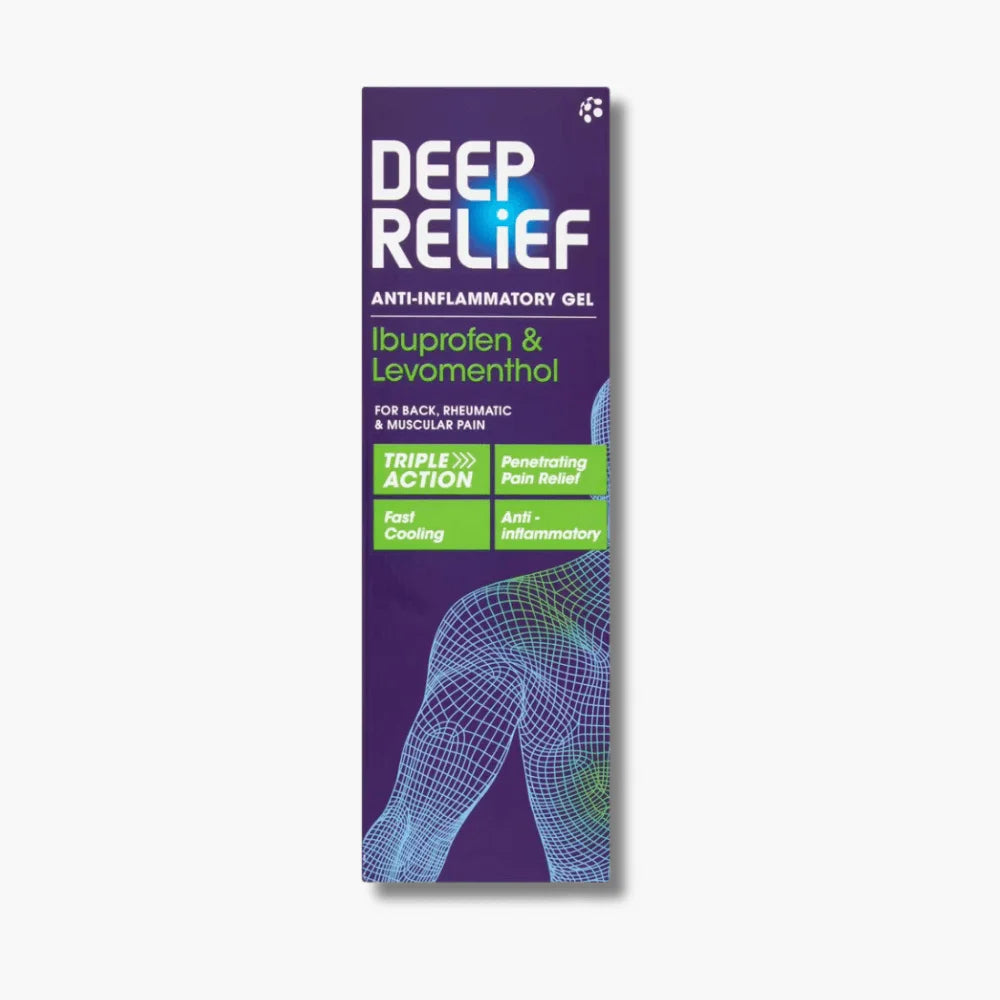
Deep Relief Anti Inflammatory Gel 100g
Deep Relief Anti Inflammatory Gel 100g
- ✔️ Targets joint and muscle pain directly at the source
- ✔️ Contains ibuprofen 5% to reduce inflammation effectively
- ✔️ Levomenthol provides instant cooling relief on application
- ✔️ Suitable for backache, sprains, strains, and rheumatic pain
- ✔️ Lower systemic absorption than oral ibuprofen tablets
Price Checker
 Lowest price guarantee
 Includes FREE private prescription


Couldn't load pickup availability
What Is Deep Relief Anti Inflammatory Gel and How Does It Help?
If you are dealing with aching joints, a stiff back, or sore muscles after exercise, finding something that actually works — and works quickly — matters. Deep relief anti inflammatory gel is a dual-action topical treatment that combines two active ingredients to tackle both pain and inflammation directly at the source. It is available over the counter without a prescription, making it a convenient option for everyday musculoskeletal discomfort. You can browse the full range of topical options in our pain relief collection if you want to compare alternatives.
Each 100g tube contains ibuprofen 5% and levomenthol 3%. Ibuprofen is a well-established non-steroidal anti-inflammatory drug (NSAID), and levomenthol adds a cooling, soothing effect that many people find immediately comforting. Together, they make this gel a popular choice for conditions ranging from backache to sports injuries.
How Does Deep Relief Anti Inflammatory Gel Work in the Body?
Understanding the mechanism helps you use the product more confidently. Here is how each ingredient contributes:
- Ibuprofen (5%): Penetrates the skin and inhibits cyclo-oxygenase (COX) enzymes, reducing the production of prostaglandins — the chemicals responsible for pain, swelling, and inflammation in tissues.
- Levomenthol (3%): Activates cold-sensitive receptors (TRPM8 channels) in the skin, creating a cooling sensation that temporarily distracts from pain signals and soothes the affected area.
- Topical delivery: Because the gel is applied directly to the skin, ibuprofen reaches the underlying tissue with lower systemic absorption than oral tablets, reducing the risk of gastrointestinal side effects.
- Local action: The gel works at the site of pain rather than throughout the whole body, which is particularly useful for localised conditions like a sprained ankle or a sore knee.
Who Should Use Deep Relief Anti Inflammatory Gel?
This gel is suitable for adults and young people aged 14 and over who are experiencing localised pain and inflammation. It is particularly well suited to:
- People with backache, lumbago, or fibrositis
- Those suffering from rheumatic pain or mild arthritis symptoms in joints
- Individuals recovering from sports injuries such as sprains, strains, or bruising
- Anyone with muscle soreness following physical activity or overexertion
It is not suitable for everyone, though. People with a known hypersensitivity to ibuprofen, aspirin, or other NSAIDs should avoid it. It should not be used during pregnancy without medical advice, and it is not recommended for children under 14. Always read the label carefully before use.
How Does Deep Relief Gel Compare to Other Topical Pain Gels?
| Feature | Deep Relief Anti Inflammatory Gel | Voltarol Emulgel (Diclofenac 1%) |
|---|---|---|
| Active ingredient(s) | Ibuprofen 5% + Levomenthol 3% | Diclofenac diethylammonium 1.16% |
| Cooling sensation | Yes (levomenthol) | No |
| NSAID class | Ibuprofen (propionic acid) | Diclofenac (acetic acid) |
| Pack size available | 100g | 50g, 100g |
| OTC availability | Yes | Yes |
Is Deep Relief Anti Inflammatory Gel Safe to Store at Home?
Storage is straightforward. Keep the tube below 25°C, away from direct sunlight and heat sources. Make sure the cap is replaced firmly after each use to prevent the gel from drying out. As with all medicines, store it out of the reach and sight of children. You can also explore our creams and ointments collection for other topical treatments you might want to keep in your home medicine cabinet.
Do not use the gel after the expiry date printed on the tube or carton. If the gel changes colour or consistency, do not use it — dispose of it safely via your local pharmacy.
This product is a medicine. Speak to your doctor or pharmacist before using if you have an underlying medical condition or are taking other medicines.
Deep Relief Anti Inflammatory Gel 100g specifications
| Treatment category | Pain relief / Anti-inflammatory |
| Active ingredients | Ibuprofen 5%, Levomenthol 3% |
| Mechanism of action | COX enzyme inhibition (ibuprofen); TRPM8 receptor activation (levomenthol) |
| Preparation | Topical gel |
| Route of administration | Topical (cutaneous) |
| Pack size | 100g |
| UK classification | General Sale List (GSL) / Pharmacy (P) medicine |
| Drug class | Non-steroidal anti-inflammatory drug (NSAID) |
| Suitable for | Adults and young people aged 14 and over |
| Effective for | Backache, muscle pain, joint pain, sprains, strains, rheumatic pain |
Specifications of Deep Relief Anti Inflammatory Gel 100g
What Is Deep Relief Anti Inflammatory Gel and What Is It Used For?
Deep Relief Anti Inflammatory Gel is a topical medicine used to relieve localised pain and inflammation. It contains two active ingredients — ibuprofen 5% and levomenthol 3% — and is applied directly to the skin over the painful area. It is indicated for the symptomatic relief of backache, rheumatic and muscular pain, sprains, strains, neuralgia, and sports injuries in adults and young people aged 14 and over.
The NHS recognises ibuprofen as an effective treatment for pain and inflammation, and topical formulations are often recommended when oral NSAIDs are not suitable or when localised treatment is preferred. This gel offers a targeted approach, meaning you are treating the area that hurts rather than taking a systemic medicine.
What Do You Need to Know Before Using Deep Relief Anti Inflammatory Gel?
Before applying this gel, it is important to check whether it is appropriate for you. Do not use Deep Relief Anti Inflammatory Gel if any of the following apply:
- You are allergic to ibuprofen, aspirin, or any other NSAID
- You have ever had an allergic reaction (such as asthma, rhinitis, or urticaria) triggered by aspirin or NSAIDs
- You are in the third trimester of pregnancy (28 weeks or beyond)
- You are applying it to broken, infected, or inflamed skin
- You are applying it near the eyes, mouth, or mucous membranes
- You are under 14 years of age
Speak to your pharmacist or GP before using this gel if you have kidney, liver, or heart problems, or if you are taking any of the following medicines:
- Anticoagulants such as warfarin (topical ibuprofen may have a small systemic effect)
- Other NSAIDs, including oral ibuprofen or naproxen
- Lithium or methotrexate
- Antihypertensive medicines or diuretics
How Should You Use Deep Relief Anti Inflammatory Gel?
Using the gel correctly ensures you get the most benefit while minimising any risk of irritation. Follow these steps each time you apply it:
- Wash and dry your hands before use.
- Squeeze a small amount of gel (approximately 4–10cm, depending on the size of the area) onto your fingertips.
- Gently massage the gel into the skin over the painful area until it is fully absorbed.
- Wash your hands thoroughly after application, unless your hands are the area being treated.
- Do not cover the treated area with an airtight dressing or bandage.
- Avoid contact with eyes, mouth, and broken skin.
| Indication | Age Group | Dose | Frequency |
|---|---|---|---|
| Muscle and joint pain | Adults and young people aged 14+ | 4–10cm strip of gel | Up to 3–4 times daily |
| Backache / rheumatic pain | Adults and young people aged 14+ | 4–10cm strip of gel | Up to 3–4 times daily |
| Children under 14 | Not applicable | Not recommended | Not recommended |
What Are the Possible Side Effects of Deep Relief Anti Inflammatory Gel?
Like all medicines, Deep Relief Anti Inflammatory Gel can cause side effects, although not everyone experiences them. Most side effects are localised to the skin at the application site and are mild.
Common side effects (may affect up to 1 in 10 people):
- Mild skin redness or erythema at the application site
- Itching or a tingling sensation (often related to the levomenthol)
- Dry or flaking skin where the gel has been applied
Less common side effects (may affect up to 1 in 100 people):
- Contact dermatitis or a localised rash
- Burning sensation at the application site
- Photosensitivity — increased sensitivity to sunlight on treated skin
- Rarely, systemic effects such as gastrointestinal discomfort if large amounts are absorbed
Stop using the gel and seek medical advice if you develop a severe skin reaction, widespread rash, or any signs of an allergic reaction such as swelling of the face or difficulty breathing. You can find additional first aid guidance in our first aid collection.
How Should You Store Deep Relief Anti Inflammatory Gel?
Correct storage keeps the gel effective for its full shelf life. Follow these guidelines:
- Store below 25°C in a cool, dry place
- Keep away from direct sunlight and heat sources
- Replace the cap firmly after each use
- Do not freeze
- Keep out of the reach and sight of children
- Do not use after the expiry date printed on the tube or carton
- Dispose of unused medicine via your local pharmacy — do not pour down the sink or throw in household waste
If you are managing multiple health conditions and need to keep several medicines at home, it is worth exploring our vitamins and supplements collection for complementary products that support joint and muscle health alongside topical treatments.
References
- https://www.nhs.uk/medicines/ibuprofen-for-adults/
- https://www.nhs.uk/conditions/anti-inflammatory-medicines-nsaids/
- https://www.nhs.uk/conditions/back-pain/
- https://www.nhs.uk/conditions/sprains-and-strains/
- https://www.nhs.uk/conditions/rheumatoid-arthritis/treatment/
- https://bnf.nice.org.uk/drugs/ibuprofen/
Written and reviewed by our qualified team
Your safety and success are our highest priorities. Our medical team rigorously evaluates every product and piece of advice we provide, ensuring you receive only the most effective, science-backed solutions available.
Frequently Asked Questions
Where can I buy Deep Relief Anti Inflammatory Gel online in the UK?
You can buy Deep Relief Anti Inflammatory Gel 100g directly from Cured Pharmacy, a GPhC-registered UK online pharmacy. It is available without a prescription as an over-the-counter medicine. Simply add it to your basket and it will be dispatched to your door. You can also browse our full pain relief collection for related products.
How does Deep Relief Anti Inflammatory Gel work in the body?
Deep Relief Gel contains ibuprofen, an NSAID that inhibits COX enzymes and reduces prostaglandin production — the chemicals that cause pain, swelling, and inflammation. Levomenthol activates cold-sensitive receptors in the skin, producing a cooling sensation that soothes discomfort. Together, these two ingredients provide both anti-inflammatory and analgesic effects at the site of application.
How do I apply Deep Relief Anti Inflammatory Gel step by step?
Wash your hands, then squeeze a 4–10cm strip of gel onto your fingertips and massage it gently into the skin over the painful area until fully absorbed. Wash your hands again after application unless your hands are the area being treated. Do not cover the area with an airtight dressing, and avoid contact with eyes and mucous membranes.
How many times a day can I use Deep Relief Gel?
You can apply Deep Relief Anti Inflammatory Gel up to three to four times daily. Space applications evenly throughout the day and do not exceed the recommended frequency. If your symptoms have not improved after two weeks of regular use, speak to your pharmacist or GP.
What are the side effects of Deep Relief Anti Inflammatory Gel?
The most common side effects are localised to the skin and include mild redness, itching, tingling, or dryness at the application site. Less commonly, some people experience contact dermatitis or increased sensitivity to sunlight on treated skin. If you develop a severe rash, swelling, or difficulty breathing, stop use immediately and seek medical attention.
Can I use Deep Relief Gel if I am pregnant?
Deep Relief Gel is not recommended during pregnancy, particularly from 20 weeks onwards, as ibuprofen — even applied topically — may carry risks to fetal development. If you are pregnant or trying to conceive, always consult your GP or midwife before using any NSAID-containing product. There are alternative pain relief options your healthcare provider can advise on.
Is Deep Relief Anti Inflammatory Gel suitable for children?
Deep Relief Anti Inflammatory Gel is not recommended for children under 14 years of age. For teenagers aged 14 and over, it may be used under adult supervision, but it is always worth checking with a pharmacist first. For younger children with pain or inflammation, speak to your GP about age-appropriate alternatives.
What is the difference between Deep Relief Gel and ibuprofen tablets?
Deep Relief Gel delivers ibuprofen directly to the affected tissue through the skin, resulting in lower systemic absorption compared to oral ibuprofen tablets. This makes it a useful option for people who experience stomach upset with oral NSAIDs or who prefer a localised treatment. However, for widespread pain or inflammation, oral ibuprofen may be more appropriate — speak to your pharmacist for guidance.
Can I use Deep Relief Gel alongside oral ibuprofen?
Using Deep Relief Gel at the same time as oral ibuprofen is generally not recommended, as this increases the total amount of ibuprofen your body is exposed to and raises the risk of side effects. Always check with your pharmacist before combining topical and oral NSAIDs. If you need additional pain relief, your pharmacist can suggest safe combinations.
How long does it take for Deep Relief Gel to start working?
Many people notice the cooling sensation from levomenthol almost immediately after application. The anti-inflammatory effect of ibuprofen typically begins within 30 to 60 minutes as it penetrates the skin and reaches the underlying tissue. For best results, apply the gel consistently at regular intervals throughout the day as directed.
How long can you use Deep Relief Anti Inflammatory Gel for?
Deep Relief Gel is intended for short-term use only — generally no longer than two weeks without medical advice. If your pain persists beyond two weeks or worsens, you should consult your GP to rule out an underlying condition. Prolonged use of topical NSAIDs without review is not recommended.
Who should not use Deep Relief Anti Inflammatory Gel?
You should not use this gel if you are allergic to ibuprofen, aspirin, or other NSAIDs, or if you have previously had asthma, urticaria, or rhinitis triggered by these medicines. It should also be avoided on broken, infected, or inflamed skin, and is not suitable for children under 14 or for use during the third trimester of pregnancy. Always read the full patient information leaflet before use.
What are the alternatives to Deep Relief Anti Inflammatory Gel?
Alternatives include other topical NSAIDs such as diclofenac gel (e.g. Voltarol), or non-NSAID options such as topical capsaicin cream for nerve-related pain. You can explore a range of options in our creams and ointments collection. Your pharmacist can help you choose the most appropriate product based on your specific condition and medical history.
What are the latest studies on topical ibuprofen for pain relief?
Clinical evidence supports the use of topical ibuprofen for localised musculoskeletal pain, with studies showing it can be as effective as oral ibuprofen for conditions such as knee osteoarthritis and soft tissue injuries, with fewer gastrointestinal side effects. The NHS and NICE acknowledge topical NSAIDs as a first-line option for localised joint pain, particularly in older adults. Research continues to support their use as a safer alternative to systemic NSAIDs for appropriate patients.
Can Deep Relief Gel be used for arthritis pain?
Yes, Deep Relief Anti Inflammatory Gel can be used to relieve mild rheumatic and arthritic pain in joints such as the knees, hands, and elbows. It is particularly useful for localised joint pain where a targeted approach is preferred over systemic medication. If you have a diagnosed arthritic condition, discuss long-term pain management with your GP or rheumatologist.
Written and reviewed by our qualified team

Reviewed by:
Tarun Kumar
Superintendent/ Clinical Lead
📖 Find out more about our team of medical content authors and how we ensure the accuracy of our content with our content guidelines.
Content last updated: 14 Sep 2026
Other popular options


We’re a safe and
regulated UK service

Lowest Price Guarantee

We're convinced you won't find your treatment cheaper, but if you do we'll refund the difference.
Find out more
100% discreet packaging

Discreet, unbranded packaging for every order.
Find out more

Need help?
Talk to our friendly experts now


How our service works

Service setup

Discreet packaging

Express delivery