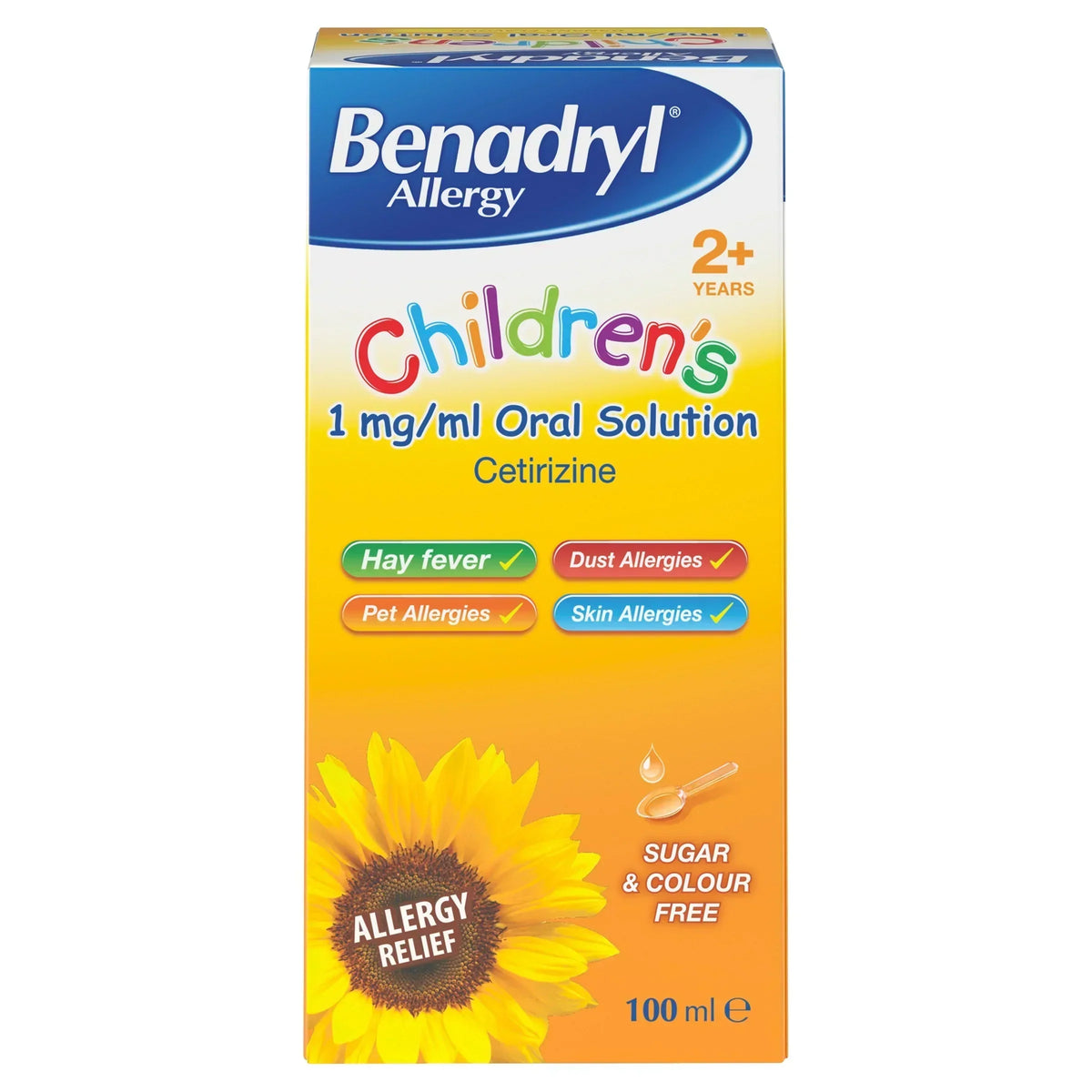
Benadryl Allergy Children's 1mg/ml Oral Solution - 120ml
Benadryl Allergy Children's 1mg/ml Oral Solution - 120ml
- ✔️ Relieves hay fever, hives and allergic rhinitis in children
- ✔️ Sugar-free formula suitable for children aged 2 to 12 years
- ✔️ Non-drowsy cetirizine causes less sedation than older antihistamines
- ✔️ Starts working within approximately one hour of each dose
- ✔️ Accurate liquid dosing with measuring device included
Price Checker
 Lowest price guarantee
 Includes FREE private prescription


Couldn't load pickup availability
Is Benadryl Children's Oral Solution a Good Children's Antihistamine Liquid?
When your child is sneezing, rubbing their eyes, or breaking out in hives, you want something that works — and works safely. Benadryl Allergy Children's 1mg/ml Oral Solution is a licensed, sugar-free antihistamine designed specifically for children aged 2 years and over. Each 120ml bottle contains cetirizine hydrochloride at a concentration of 1mg per ml, making it straightforward to measure an accurate dose. You can find it alongside other allergy and hay fever treatments at Cured Pharmacy, available without a prescription.
Cetirizine is a second-generation antihistamine, which means it's far less likely to cause sedation than older antihistamines like chlorphenamine. That matters when your child still needs to concentrate at school or get a good night's sleep. The solution is sugar-free and comes with a measuring device, so dosing is as simple as it can be.
How Does Benadryl Children's Oral Solution Work?
Allergic reactions happen when the immune system overreacts to a harmless substance — pollen, pet dander, dust mites — and releases a chemical called histamine. Histamine then binds to H1 receptors throughout the body, triggering the familiar cascade of symptoms: sneezing, itching, watery eyes, and a runny nose. Cetirizine works by selectively blocking those H1 receptors, stopping histamine from doing its job.
- Cetirizine is absorbed quickly from the gut after an oral dose.
- It reaches peak plasma concentration within approximately one hour.
- Because it crosses the blood-brain barrier only minimally, it causes less drowsiness than first-generation antihistamines.
- A single dose provides relief for up to 24 hours, though the children's dosing schedule uses twice-daily administration in younger age groups.
Who Should Use Benadryl Children's Oral Solution?
This product is suitable for children who experience allergic symptoms and need a liquid formulation — either because they cannot swallow tablets or because an accurate, weight-appropriate dose is easier to achieve with a measured liquid. It is licensed for children aged 2 to 12 years, though children aged 6 and over who can swallow tablets may also be offered cetirizine in tablet form.
- Children aged 2–12 years with seasonal allergic rhinitis (hay fever).
- Children with perennial allergic rhinitis triggered by year-round allergens such as dust mites or pet hair.
- Children experiencing urticaria (hives) or allergic skin reactions.
- Children who require a sugar-free formulation due to dietary requirements or dental health concerns.
It is not suitable for children under 2 years of age. If your child has kidney or liver problems, speak to your GP or pharmacist before use, as dose adjustment may be needed.
How Does Benadryl Children's Solution Compare to Other Children's Allergy Medicines?
| Feature | Benadryl Children's 1mg/ml Solution | Piriton Syrup (Chlorphenamine 2mg/5ml) |
|---|---|---|
| Active ingredient | Cetirizine hydrochloride | Chlorphenamine maleate |
| Generation of antihistamine | Second-generation (non-drowsy) | First-generation (may cause drowsiness) |
| Minimum age | 2 years | 1 year (under medical supervision) |
| Sugar-free | Yes | No |
How Should You Store Benadryl Children's Oral Solution?
This children's antihistamine liquid should be stored below 25°C, away from direct sunlight and heat sources. Keep the bottle tightly closed when not in use. As with all medicines, store it out of the reach and sight of children — ideally in a locked medicine cabinet. If you're also managing other health products for your child, our baby and toddler range includes a variety of age-appropriate health essentials.
Do not use the solution after the expiry date printed on the label. Once opened, check the product leaflet for any specific in-use shelf-life guidance. If the solution looks discoloured or contains particles, do not use it.
This product is a medicine. Speak to your doctor or pharmacist before using if you have an underlying medical condition or are taking other medicines.
Benadryl Allergy Children's 1mg/ml Oral Solution 120ml specifications
| Treatment category | Allergic rhinitis, urticaria |
| Mechanism of action | Selective H1 histamine receptor antagonist |
| Effective for | Hay fever, hives, allergic skin reactions |
| Suitable for | Children aged 2–12 years |
| Active ingredient | Cetirizine hydrochloride 1mg/ml |
| Pack size | 120ml |
| Strength | 1mg/ml |
| UK classification | P (Pharmacy medicine) |
| Drug class | Second-generation antihistamine |
| Preparation | Oral solution |
| Route of administration | Oral |
Specifications of Benadryl Allergy Children's 1mg/ml Oral Solution 120ml
What Is Benadryl Allergy Children's Oral Solution and What Is It Used For?
Benadryl Allergy Children's 1mg/ml Oral Solution contains cetirizine hydrochloride, a second-generation antihistamine used to relieve the symptoms of allergic conditions in children aged 2 to 12 years. It is indicated for seasonal allergic rhinitis (hay fever), perennial allergic rhinitis, and urticaria (hives). The NHS recognises cetirizine as one of the preferred non-drowsy antihistamines for managing these conditions. The sugar-free liquid formulation makes it suitable for children who cannot swallow tablets and for those with dietary restrictions.
What Do You Need to Know Before Using Benadryl Children's Oral Solution?
Before giving this medicine to your child, read the following carefully. There are certain situations where this product should not be used, or where extra caution is needed.
Do not use if your child:
- Is under 2 years of age.
- Is allergic to cetirizine hydrochloride, hydroxyzine, or any other ingredient in the solution.
- Has severe kidney disease (end-stage renal impairment).
Speak to a doctor or pharmacist first if your child:
- Has any degree of kidney or liver impairment — dose adjustment may be required.
- Has epilepsy or a history of seizures.
- Is due to have allergy skin-prick testing — antihistamines should be stopped several days beforehand.
Known drug interactions:
- CNS depressants (including sedatives and some prescription medicines) — may increase the risk of drowsiness.
- Alcohol — should be avoided, as it may enhance any sedative effect.
- Theophylline — may slightly reduce the clearance of cetirizine at high doses.
How Should You Use Benadryl Children's Oral Solution?
Always follow the dosage instructions on the label or as directed by your pharmacist. Use the measuring device provided — never use a household spoon, as this can lead to inaccurate dosing.
- Shake the bottle gently before use if instructed on the label.
- Use the oral syringe or measuring cup provided to draw up the correct dose.
- Give the dose directly into your child's mouth or mix with a small amount of water if needed.
- Replace the cap securely after each use.
- Record the time of each dose to avoid accidental double-dosing.
| Age Group | Dose | Frequency | Maximum Daily Dose |
|---|---|---|---|
| 2–6 years | 2.5ml (2.5mg) | Twice daily | 5ml (5mg) |
| 6–12 years | 5ml (5mg) | Twice daily | 10ml (10mg) |
If your child also experiences cold or flu symptoms alongside their allergy, you may find our cold and flu range helpful for managing those separately.
What Are the Possible Side Effects of Benadryl Children's Oral Solution?
Like all medicines, cetirizine can cause side effects, although not every child will experience them. Most side effects are mild and resolve on their own.
Common side effects (may affect up to 1 in 10 children):
- Drowsiness or fatigue
- Headache
- Dry mouth
- Dizziness
- Stomach pain or nausea
Less common side effects (may affect up to 1 in 100 children):
- Agitation or restlessness (particularly in younger children)
- Diarrhoea
- Skin rash or itching
- Difficulty passing urine
Stop giving the medicine and seek immediate medical attention if your child develops signs of a serious allergic reaction, such as swelling of the face, lips, or throat, difficulty breathing, or a severe skin rash. These reactions are rare but require urgent assessment.
How Should You Store Benadryl Children's Oral Solution?
Correct storage helps maintain the medicine's effectiveness and keeps your child safe. If you're organising a home medicine cabinet, our first aid collection has useful products to keep alongside it.
- Store below 25°C in a cool, dry place.
- Keep away from direct sunlight and heat sources.
- Keep the bottle tightly closed when not in use.
- Store out of the reach and sight of children.
- Do not use after the expiry date printed on the label.
- Do not dispose of medicines via wastewater or household waste — return unused medicine to your pharmacy.
References
Written and reviewed by our qualified team
Your safety and success are our highest priorities. Our medical team rigorously evaluates every product and piece of advice we provide, ensuring you receive only the most effective, science-backed solutions available.
Frequently Asked Questions
Where can I buy Benadryl Allergy Children's Oral Solution online in the UK?
You can buy Benadryl Allergy Children's 1mg/ml Oral Solution directly from Cured Pharmacy, a GPhC-registered UK online pharmacy, for £6.99 per 120ml bottle. No prescription is needed, as it is classified as a Pharmacy (P) medicine. It is also available from some high street pharmacies and supermarkets across the UK.
How does Benadryl Children's Oral Solution work in the body?
The active ingredient, cetirizine hydrochloride, selectively blocks H1 histamine receptors throughout the body. When histamine is prevented from binding to these receptors, the typical allergy symptoms — sneezing, itching, runny nose, and watery eyes — are significantly reduced. Because cetirizine crosses the blood-brain barrier only minimally, it is far less likely to cause drowsiness than older antihistamines.
What age can children take Benadryl Allergy Children's Oral Solution?
This product is licensed for children aged 2 years and over, up to 12 years of age. It must not be given to children under 2 years old. For children aged 12 and over, adult cetirizine formulations at the standard 10mg dose are generally more appropriate — speak to a pharmacist for guidance.
What is the correct dose of Benadryl Children's 1mg/ml for my child?
Children aged 2 to 6 years should receive 2.5ml (2.5mg) twice daily, giving a maximum daily dose of 5mg. Children aged 6 to 12 years should receive 5ml (5mg) twice daily, up to a maximum of 10mg per day. Always use the measuring device supplied with the bottle and never exceed the stated dose.
Does Benadryl Children's Oral Solution cause drowsiness?
Cetirizine is classified as a non-drowsy antihistamine, meaning it is much less sedating than first-generation antihistamines such as chlorphenamine. However, a small number of children may still experience mild drowsiness, particularly at the start of treatment. If your child seems unusually sleepy, avoid activities that require alertness and speak to your pharmacist.
How do I use Benadryl Children's Oral Solution step by step?
Use the oral syringe or measuring cup provided to draw up the correct dose for your child's age group. Give the dose directly into your child's mouth, or mix it with a small amount of water if preferred. Replace the cap tightly after each use and record the time of each dose to avoid accidental double-dosing.
What is the best time to give Benadryl Children's Oral Solution?
There is no strict requirement to give cetirizine at a specific time of day, but establishing a consistent routine — such as morning and evening with meals — helps ensure doses are not missed. If hay fever symptoms are worse in the morning, giving the first dose the evening before can help provide overnight coverage. Consistency matters more than the exact time.
Can I give Benadryl Children's Solution alongside other medicines?
You should always speak to a pharmacist before combining this product with other medicines. Cetirizine may interact with sedatives, CNS depressants, and high-dose theophylline. If your child is taking any prescription medicines, check with your GP or pharmacist before starting this antihistamine.
What should I do if I accidentally give my child too much?
If you think your child has received more than the recommended dose, contact NHS 111 immediately or take them to your nearest A&E department. Bring the bottle and packaging with you so medical staff can see exactly what was taken and how much. Do not wait for symptoms to appear before seeking advice.
What happens if I miss a dose of Benadryl Children's Oral Solution?
If you miss a dose, give it as soon as you remember — unless it is nearly time for the next scheduled dose. In that case, skip the missed dose and continue with the regular schedule. Never give a double dose to make up for a missed one, as this increases the risk of side effects.
Who is eligible to use Benadryl Allergy Children's Oral Solution?
This product is suitable for children aged 2 to 12 years who experience allergic rhinitis or urticaria. It is not suitable for children under 2 years, or for those with severe kidney disease. Children with liver or kidney impairment should only use it under medical supervision, as dose adjustment may be necessary.
What are the alternatives to Benadryl Children's Oral Solution?
The main alternative children's antihistamine liquid available in the UK is Piriton Syrup, which contains chlorphenamine — a first-generation antihistamine that is more likely to cause drowsiness. Loratadine syrup is another non-drowsy option sometimes used in children. You can explore the full range of allergy and hay fever treatments at Cured Pharmacy to compare options.
How long can my child use Benadryl Children's Oral Solution for?
For seasonal hay fever, the solution can be used throughout the allergy season, which typically runs from late March to September in the UK. For perennial allergic rhinitis or chronic urticaria, longer-term use may be appropriate under the guidance of a GP. If symptoms persist beyond a few weeks without improvement, seek medical advice.
Is Benadryl Children's Oral Solution sugar-free?
Yes, Benadryl Allergy Children's 1mg/ml Oral Solution is sugar-free, making it suitable for children with dietary restrictions or those whose dentist has advised avoiding sugar-containing medicines. It is also free from gluten, though always check the full ingredient list on the packaging if your child has specific allergies or intolerances.
What are the latest findings on cetirizine use in children?
Cetirizine has been used in children for several decades and has a well-established safety and efficacy profile, supported by extensive clinical evidence. Current NHS and NICE guidance continues to recommend second-generation antihistamines like cetirizine as first-line treatment for allergic rhinitis in children. If you have concerns about long-term use, our ear, nose and throat range includes additional products that may complement allergy management.
Written and reviewed by our qualified team

Reviewed by:
Tarun Kumar
Superintendent/ Clinical Lead
📖 Find out more about our team of medical content authors and how we ensure the accuracy of our content with our content guidelines.
Content last updated: 14 Sep 2026
Other popular options


We’re a safe and
regulated UK service

Lowest Price Guarantee

We're convinced you won't find your treatment cheaper, but if you do we'll refund the difference.
Find out more
100% discreet packaging

Discreet, unbranded packaging for every order.
Find out more

Need help?
Talk to our friendly experts now


How our service works

Service setup

Discreet packaging

Express delivery