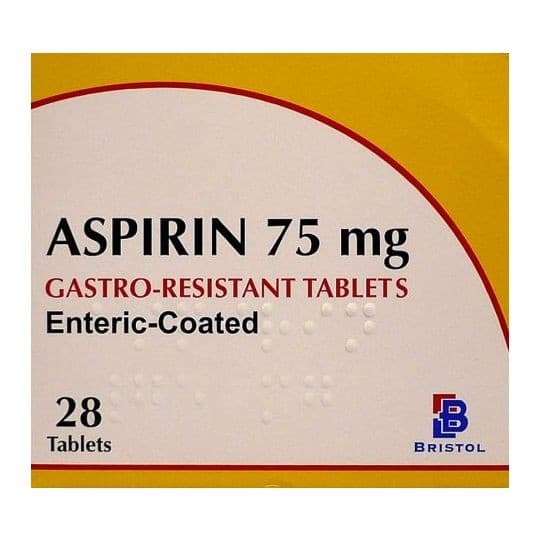
Aspirin 75mg Gastro-Resistant Tablets 28s
Aspirin 75mg Gastro-Resistant Tablets 28s
- ✔️ Reduces platelet clumping to lower heart attack risk
- ✔️ Gastro-resistant coating protects stomach lining daily
- ✔️ Once-daily 75mg dose for consistent antiplatelet action
- ✔️ Clinically indicated for post-heart attack and stroke prevention
- ✔️ Suitable for long-term cardiovascular protection in adults
Price Checker
 Lowest price guarantee
 Includes FREE private prescription


Couldn't load pickup availability
What Are Aspirin 75mg Gastro-Resistant Tablets?
If your doctor has recommended a daily low-dose aspirin to protect your heart, you are far from alone. Millions of people across the UK take aspirin 75mg gastro-resistant tablets every day as part of their cardiovascular care. Bristol Aspirin 75mg Gastro-Resistant Tablets 28s offer a straightforward, affordable way to maintain that daily routine — available over the counter for just £1.33 per pack. The gastro-resistant coating is an important feature: it means the tablet passes through your stomach before dissolving in the small intestine, which helps reduce the risk of stomach irritation that plain aspirin can sometimes cause.
Low-dose aspirin is one of the most widely studied medicines in cardiovascular medicine. It is used as an antiplatelet agent — meaning it helps prevent blood clots from forming in your arteries. If you are managing a heart condition or have been told you are at elevated risk of a heart attack or stroke, this small daily tablet can play a meaningful role in your overall treatment plan. You can also explore our vitamins and supplements range if you are looking to support your heart health alongside prescribed medicines.
How Do Aspirin 75mg Gastro-Resistant Tablets Work?
Aspirin belongs to a class of medicines called non-steroidal anti-inflammatory drugs (NSAIDs), but at 75mg — a much lower dose than you would take for pain relief — its primary role is as an antiplatelet agent. Here is how it works:
- Aspirin irreversibly inhibits an enzyme called cyclo-oxygenase (COX-1) inside platelets.
- This blocks the production of thromboxane A2, a chemical that normally causes platelets to clump together.
- With less thromboxane A2 available, platelets are less "sticky" and less likely to form dangerous clots.
- Because the effect is irreversible, it lasts for the entire lifespan of the platelet — roughly 7 to 10 days — which is why a once-daily dose is sufficient.
The gastro-resistant (enteric) coating delays dissolution until the tablet reaches the small intestine, bypassing the stomach lining and reducing the chance of gastric side effects such as irritation or ulceration.
Who Should Use Aspirin 75mg Gastro-Resistant Tablets?
These tablets are intended for adults who have been advised by a doctor or healthcare professional to take daily low-dose aspirin. They are not a general pain reliever at this dose — the 75mg strength is specifically for antiplatelet therapy. Common reasons a doctor might recommend this include:
- Secondary prevention after a heart attack (myocardial infarction)
- Secondary prevention after an ischaemic stroke or transient ischaemic attack (TIA)
- Established coronary artery disease or peripheral arterial disease
- Certain cardiac procedures such as coronary stent placement
It is important to note that aspirin 75mg is not recommended for primary prevention (i.e., in people who have never had a cardiovascular event) unless specifically directed by a doctor, as the bleeding risks may outweigh the benefits in lower-risk individuals.
How Do Aspirin 75mg Tablets Compare to Standard Aspirin?
| Feature | Aspirin 75mg Gastro-Resistant (This Product) | Standard Aspirin 300mg |
|---|---|---|
| Primary use | Antiplatelet / cardiovascular protection | Pain relief, fever, inflammation |
| Dose | 75mg once daily | 300–900mg up to 4 times daily |
| Gastro-resistant coating | Yes — reduces stomach irritation | Usually no |
| Suitable for long-term use | Yes, under medical supervision | Not recommended long-term without advice |
Is This Product Suitable for Everyone, and How Should It Be Stored?
Not everyone is a suitable candidate for daily aspirin 75mg gastro-resistant tablets. People with a known allergy to aspirin or other NSAIDs, those with active peptic ulcers, haemophilia or other bleeding disorders, and those with severe kidney or liver impairment should not use this product without explicit medical guidance. Pregnant women — particularly in the third trimester — should also seek advice before use. If you are already taking anticoagulants, other NSAIDs, or medicines for pain relief, speak to your pharmacist before adding aspirin to your routine.
Store your tablets below 25°C in a dry place, away from direct sunlight and out of the reach and sight of children. Do not use after the expiry date printed on the packaging. Keep them in their original blister pack until you are ready to take them.
This product is a medicine. Speak to your doctor or pharmacist before using if you have an underlying medical condition or are taking other medicines.
Aspirin 75mg Gastro-Resistant Tablets 28s specifications
| Treatment category | Cardiovascular / Antiplatelet |
| Mechanism of action | Irreversible COX-1 inhibition; reduces thromboxane A2 production |
| Effective for | Secondary prevention of heart attack and stroke |
| Suitable for | Adults advised by a doctor to take daily low-dose aspirin |
| Active ingredient | Aspirin 75mg |
| Pack size | 28 tablets |
| Strength | 75mg |
| UK classification | General Sale List (GSL) |
| Drug class | NSAID / Antiplatelet agent |
| Preparation | Gastro-resistant tablet |
| Route of administration | Oral |
Specifications of Aspirin 75mg Gastro-Resistant Tablets 28s
What Is Aspirin 75mg and What Is It Used For?
Bristol Aspirin 75mg Gastro-Resistant Tablets contain aspirin as the active ingredient. At this low dose, aspirin is not used for pain relief — it works as an antiplatelet medicine, helping to prevent blood clots from forming inside arteries. It is used in adults who have already experienced a cardiovascular event such as a heart attack or stroke, or who have been diagnosed with conditions such as coronary artery disease or peripheral arterial disease. Your doctor will have assessed your individual risk and benefit before recommending this medicine.
The gastro-resistant coating means the tablet does not dissolve in the stomach. Instead, it passes through to the small intestine where it is absorbed. This design helps protect the stomach lining from the irritation that aspirin can sometimes cause when taken in its uncoated form.
What Do You Need to Know Before Using Aspirin 75mg Tablets?
Before taking these tablets, it is essential to check whether they are appropriate for you. Do not take aspirin 75mg gastro-resistant tablets if any of the following apply:
- You are allergic to aspirin, salicylates, or any other NSAID (e.g. ibuprofen, naproxen)
- You have an active peptic ulcer or history of gastrointestinal bleeding
- You have haemophilia or another bleeding disorder
- You have severe kidney, liver, or heart failure
- You are in the third trimester of pregnancy
- You are under 16 years of age (risk of Reye's syndrome)
- You have glucose-6-phosphate dehydrogenase (G6PD) deficiency
Aspirin can interact with a number of other medicines. Always tell your pharmacist or doctor if you are taking any of the following:
- Anticoagulants such as warfarin or heparin — increased bleeding risk
- Other NSAIDs such as ibuprofen — may reduce aspirin's antiplatelet effect and increase GI risk
- Clopidogrel or other antiplatelet agents — combined use increases bleeding risk
- Methotrexate — aspirin can increase methotrexate toxicity
- Selective serotonin reuptake inhibitors (SSRIs) — increased risk of bleeding
- Antidiabetic medicines — aspirin may enhance their glucose-lowering effect
- Corticosteroids — increased risk of gastrointestinal ulceration
How Should You Use Aspirin 75mg Gastro-Resistant Tablets?
Always use this medicine exactly as your doctor or pharmacist has told you. The gastro-resistant tablet should be swallowed whole — do not crush, chew, or break it, as this destroys the protective coating. Taking it with or after food can further reduce the chance of stomach discomfort.
- Take one tablet once daily at approximately the same time each day.
- Swallow the tablet whole with a full glass of water.
- Take with or after food where possible.
- Do not take more than one tablet per day unless specifically directed by your doctor.
- If you miss a dose, take it as soon as you remember on the same day. If it is the next day, skip the missed dose — do not double up.
| Indication | Age Group | Dose | Frequency |
|---|---|---|---|
| Secondary cardiovascular prevention | Adults (16+) | 75mg | Once daily |
| Children under 16 | Under 16 | Not recommended | — |
What Are the Possible Side Effects of Aspirin 75mg Tablets?
Like all medicines, aspirin 75mg can cause side effects, although not everyone experiences them. The gastro-resistant formulation is specifically designed to reduce stomach-related effects. If you are concerned about any side effects, speak to your pharmacist or GP. You might also find it helpful to browse our indigestion range if you experience mild stomach discomfort.
Common side effects (may affect up to 1 in 10 people):
- Gastrointestinal discomfort or nausea
- Dyspepsia (indigestion)
- Increased tendency to bruise or bleed
Less common side effects (may affect up to 1 in 100 people):
- Gastrointestinal bleeding (black or tarry stools — seek medical attention immediately)
- Skin rash or urticaria
- Bronchospasm in people with aspirin-sensitive asthma
- Tinnitus (ringing in the ears) — more common at higher doses
- Hypersensitivity reactions including angioedema
Stop taking aspirin and seek urgent medical attention if you notice signs of serious bleeding, an allergic reaction, or difficulty breathing.
How Should You Store Aspirin 75mg Gastro-Resistant Tablets?
Correct storage helps maintain the quality and effectiveness of your tablets throughout their shelf life. Follow these guidelines:
- Store below 25°C in a cool, dry place
- Keep away from direct sunlight and moisture
- Do not store in a bathroom or near a sink
- Keep out of the reach and sight of children
- Do not use after the expiry date printed on the blister pack or carton
- Do not dispose of medicines via wastewater or household waste — return unused tablets to your pharmacy
If you are managing multiple medicines as part of a cardiovascular care plan, it is worth checking whether you also need to monitor related health markers. Our electrical health and diagnostic range includes blood pressure monitors and other tools that can help you keep track of your heart health at home.
References
Written and reviewed by our qualified team
Your safety and success are our highest priorities. Our medical team rigorously evaluates every product and piece of advice we provide, ensuring you receive only the most effective, science-backed solutions available.
Frequently Asked Questions
Where can I buy aspirin 75mg gastro-resistant tablets online in the UK?
You can buy Bristol Aspirin 75mg Gastro-Resistant Tablets directly from Cured Pharmacy, a GPhC-registered UK online pharmacy. They are available over the counter without a prescription for adults who have been advised by a doctor to take daily low-dose aspirin. Simply add them to your basket and choose your preferred delivery option at checkout.
How do aspirin 75mg gastro-resistant tablets work in the body?
Aspirin 75mg works by irreversibly blocking the enzyme cyclo-oxygenase-1 (COX-1) inside platelets, which reduces the production of thromboxane A2 — a chemical that causes platelets to clump together. With less thromboxane A2, your platelets are less likely to form dangerous clots inside arteries. Because the effect is permanent for each platelet, a single daily dose is enough to maintain antiplatelet protection throughout the day.
What is the correct dose of aspirin 75mg gastro-resistant tablets?
The standard antiplatelet dose is one 75mg tablet taken once daily, swallowed whole with a full glass of water. It is best taken with or after food to minimise any stomach discomfort. Always follow the specific instructions given by your doctor or pharmacist, and do not take more than one tablet per day unless explicitly advised to do so.
What is the best time of day to take aspirin 75mg?
There is no single universally agreed "best" time, but many people find it easiest to take their daily aspirin at the same time each day to build a consistent habit — for example, with breakfast. Some research has suggested evening dosing may have a marginal benefit for platelet inhibition, but your doctor's or pharmacist's advice should always take priority. Consistency matters more than the specific time of day.
Why are these tablets gastro-resistant and does it make a difference?
The gastro-resistant (enteric) coating prevents the tablet from dissolving in the stomach, allowing it to pass through to the small intestine before being absorbed. This significantly reduces the risk of direct gastric irritation, which is one of the most common reasons people experience discomfort with plain aspirin. For people taking aspirin long-term, this coating can make daily use considerably more comfortable.
Who should not take aspirin 75mg tablets?
Aspirin 75mg is not suitable for children under 16 years of age due to the risk of Reye's syndrome, a rare but serious condition. It should also be avoided by people with a known allergy to aspirin or other NSAIDs, those with active peptic ulcers or a history of gastrointestinal bleeding, and individuals with severe kidney, liver, or heart failure. Women in the third trimester of pregnancy should not take aspirin unless specifically directed by their doctor.
Can I take aspirin 75mg with ibuprofen or other painkillers?
Taking ibuprofen alongside aspirin 75mg is generally not recommended, as ibuprofen can interfere with aspirin's antiplatelet effect and increase the risk of gastrointestinal bleeding. If you need a painkiller, paracetamol is usually considered a safer option alongside low-dose aspirin — but always check with your pharmacist first. You can browse our pain relief range for suitable alternatives.
What happens if I miss a dose of aspirin 75mg?
If you forget to take your tablet, take it as soon as you remember on the same day. If you only remember the following day, skip the missed dose entirely and continue with your normal schedule. Never take two tablets to make up for a missed one, as this does not improve the antiplatelet effect and may increase the risk of side effects.
What are the side effects of aspirin 75mg gastro-resistant tablets?
The most common side effects include mild gastrointestinal discomfort, nausea, and an increased tendency to bruise or bleed. Less commonly, some people may experience gastrointestinal bleeding (indicated by black or tarry stools), skin rash, or bronchospasm in those with aspirin-sensitive asthma. If you notice any signs of serious bleeding or an allergic reaction, stop taking the tablets and seek medical attention immediately.
How do I manage stomach side effects from aspirin 75mg?
Taking your tablet with or after food is one of the simplest ways to reduce stomach discomfort. The gastro-resistant coating already provides significant protection, but eating beforehand adds an extra layer of comfort. If you continue to experience persistent indigestion or stomach pain, speak to your GP — they may consider prescribing a proton pump inhibitor (PPI) such as omeprazole alongside your aspirin.
Can I take aspirin 75mg if I am pregnant or breastfeeding?
Aspirin should be avoided in the third trimester of pregnancy as it may affect the baby's circulation and delay labour. In some specific high-risk pregnancies, doctors may prescribe low-dose aspirin earlier in pregnancy — but this is always under close medical supervision. If you are breastfeeding, aspirin is generally not recommended; speak to your midwife, GP, or pharmacist for personalised advice.
How long do you stay on aspirin 75mg tablets?
Most people who are prescribed aspirin 75mg for secondary cardiovascular prevention take it long-term — often for the rest of their lives — as the ongoing antiplatelet effect is what provides protection. The decision to continue, adjust, or stop treatment should always be made in consultation with your doctor. Never stop taking aspirin abruptly without medical advice, as this could increase your risk of a cardiovascular event.
What are the alternatives to aspirin 75mg for cardiovascular protection?
The main alternative antiplatelet medicines used in the UK include clopidogrel, ticagrelor, and prasugrel, all of which are prescription-only medicines. In some cases, doctors prescribe dual antiplatelet therapy — aspirin combined with one of these agents — particularly after a coronary stent procedure. The choice of antiplatelet therapy depends on your individual medical history and is always a decision made by your doctor.
Is aspirin 75mg suitable for primary prevention of heart disease?
Current NHS and NICE guidance does not recommend aspirin 75mg for primary prevention (i.e., in people who have never had a heart attack or stroke) in the general population, because the risk of bleeding may outweigh the cardiovascular benefit in lower-risk individuals. It is primarily recommended for secondary prevention in people who have already had a cardiovascular event. Always follow your doctor's specific advice regarding your own risk profile.
What are the latest studies on low-dose aspirin for heart health?
Recent large-scale trials, including the ASPREE and ARRIVE studies, have reinforced that low-dose aspirin's benefits are clearest in secondary prevention — that is, in people who have already had a cardiovascular event. These studies found that in healthy older adults without prior cardiovascular disease, the bleeding risks of daily aspirin were not offset by sufficient cardiovascular benefit. Research in this area continues to evolve, so it is always worth discussing the latest evidence with your GP. You can also support your overall health with products from our vitamins and supplements collection.
Written and reviewed by our qualified team

Reviewed by:
Tarun Kumar
Superintendent/ Clinical Lead
📖 Find out more about our team of medical content authors and how we ensure the accuracy of our content with our content guidelines.
Content last updated: 14 Sep 2026
Other popular options


We’re a safe and
regulated UK service

Lowest Price Guarantee

We're convinced you won't find your treatment cheaper, but if you do we'll refund the difference.
Find out more
100% discreet packaging

Discreet, unbranded packaging for every order.
Find out more

Need help?
Talk to our friendly experts now


How our service works

Service setup

Discreet packaging

Express delivery