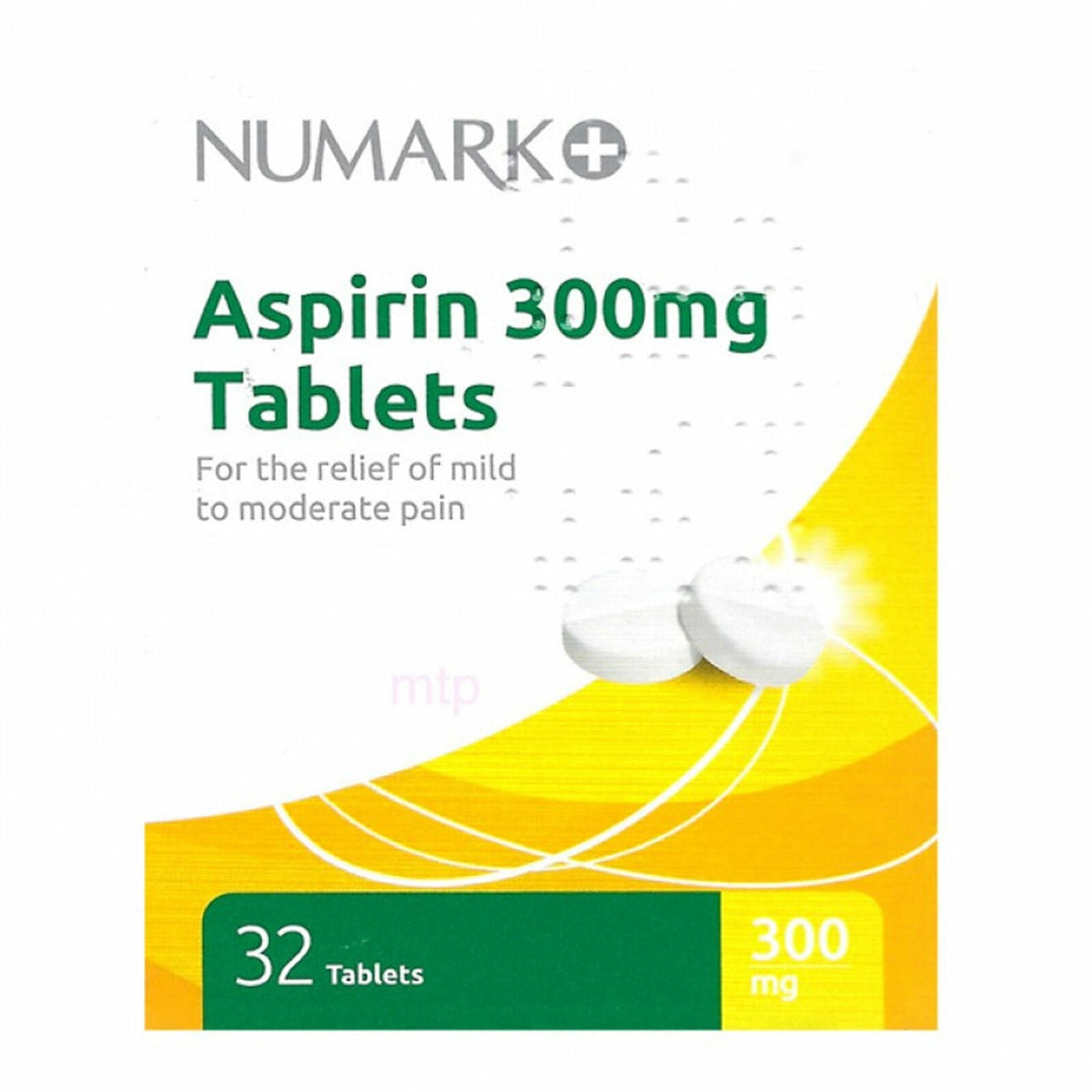
Numark Aspirin Tablets 300mg 32 Tablets (brand may vary)
Numark Aspirin Tablets 300mg 32 Tablets (brand may vary)
- ✔️ Relieves mild to moderate pain, fever, and inflammation
- ✔️ Works within 30–60 minutes of taking a dose
- ✔️ Suitable for adults and young people aged 16 and over
- ✔️ Each pack contains 32 tablets for convenient home use
- ✔️ Clinically established NSAID with a well-understood safety profile
Price Checker
 Lowest price guarantee
 Includes FREE private prescription


Couldn't load pickup availability
What Are Aspirin 300mg Tablets Used For?
If you're looking for a reliable, no-fuss option for everyday pain relief, aspirin 300mg tablets are one of the most widely used over-the-counter medicines in the UK. Each pack contains 32 tablets, making it a practical choice to keep in your medicine cabinet at home. Aspirin has been used for over a century and remains a trusted option for managing mild to moderate pain, reducing fever, and easing inflammation. You can browse our full range of pain relief products if you'd like to compare your options.
Aspirin belongs to a class of medicines called non-steroidal anti-inflammatory drugs (NSAIDs). It's available without a prescription for adults and is suitable for a range of common complaints — from headaches and toothache to period pain and the aches that come with a cold or flu.
How Do Aspirin 300mg Tablets Work?
Aspirin works by blocking enzymes called cyclooxygenase-1 (COX-1) and cyclooxygenase-2 (COX-2). These enzymes are responsible for producing prostaglandins — chemical messengers that trigger pain, fever, and swelling in the body. By reducing prostaglandin production, aspirin helps to relieve discomfort and bring down a raised temperature.
- Inhibits COX-1 and COX-2 enzymes throughout the body
- Reduces prostaglandin synthesis, lowering pain signals
- Decreases inflammation at the site of injury or infection
- Lowers body temperature by acting on the hypothalamus
- At low doses (75mg), also inhibits platelet aggregation — though this 300mg product is for pain relief, not cardiovascular use
Who Is Suitable for Aspirin 300mg Tablets?
These tablets are intended for adults aged 16 and over. They're particularly useful for people who need occasional, short-term relief from common painful conditions. That said, aspirin isn't right for everyone — always read the label carefully before use.
- Adults aged 16 and over with mild to moderate pain
- People with headaches, toothache, or muscular aches
- Those experiencing fever or flu-like symptoms
- Adults with period pain or rheumatic pain
How Do Aspirin 300mg Tablets Compare to Paracetamol?
| Feature | Aspirin 300mg Tablets | Paracetamol 500mg Tablets |
|---|---|---|
| Active ingredient | Aspirin (NSAID) | Paracetamol (analgesic/antipyretic) |
| Anti-inflammatory action | Yes | No |
| Suitable for children under 16 | No | Yes (age-appropriate dose) |
| Risk of stomach irritation | Higher | Lower |
| Suitable in pregnancy | Generally no (especially third trimester) | Usually yes (with medical advice) |
How Should You Store Aspirin 300mg Tablets?
Store your aspirin 300mg tablets below 25°C in a dry place, away from direct sunlight and moisture. Keep them out of reach and sight of children at all times. Do not use the tablets after the expiry date printed on the packaging — if in doubt, return them to your local pharmacy for safe disposal. If you're managing multiple health conditions, you might also find our vitamins and supplements range useful for supporting your general wellbeing alongside any pain management routine.
This product is a medicine. Speak to your doctor or pharmacist before using if you have an underlying medical condition or are taking other medicines.
Numark Aspirin Tablets 300mg 32 Tablets specifications
| Treatment category | Pain relief, antipyretic, anti-inflammatory |
| Mechanism of action | COX-1 and COX-2 enzyme inhibition; reduces prostaglandin synthesis |
| Effective for | Mild to moderate pain, fever, inflammation |
| Suitable for | Adults and young people aged 16 and over |
| Active ingredient | Aspirin 300mg |
| Pack size | 32 tablets |
| Strength | 300mg per tablet |
| UK classification | General Sale List (GSL) |
| Drug class | Non-steroidal anti-inflammatory drug (NSAID) |
| Preparation | Tablet |
| Route of administration | Oral |
Specifications of Numark Aspirin Tablets 300mg 32 Tablets
What Is Aspirin 300mg and What Is It Used For?
Aspirin 300mg tablets contain the active ingredient aspirin, an NSAID used to relieve mild to moderate pain, reduce fever, and ease inflammation. Common uses include headaches, toothache, period pain, muscular aches, and the symptoms of colds and flu. It is available over the counter for adults and young people aged 16 and over without a prescription.
What Do You Need to Know Before Using Aspirin 300mg Tablets?
Before taking these tablets, it's important to check whether aspirin is appropriate for you. There are several situations where aspirin should be avoided entirely.
Do not take aspirin 300mg tablets if you:
- Are under 16 years of age (risk of Reye's syndrome)
- Are allergic to aspirin, ibuprofen, or any other NSAID
- Have or have had a peptic ulcer or gastrointestinal bleeding
- Are in the third trimester of pregnancy
- Have severe kidney, liver, or heart failure
- Have haemophilia or another bleeding disorder
Tell your pharmacist or doctor if you:
- Have asthma — aspirin can trigger bronchospasm in some people
- Are pregnant or breastfeeding
- Have gout — aspirin can raise uric acid levels
- Have uncontrolled high blood pressure
Known drug interactions — aspirin may interact with:
- Warfarin and other anticoagulants (increased bleeding risk)
- Ibuprofen and other NSAIDs (increased side effect risk)
- Methotrexate (increased toxicity)
- Selective serotonin reuptake inhibitors (SSRIs) — increased bleeding risk
- Corticosteroids — increased risk of gastrointestinal ulceration
- Antidiabetic medicines — aspirin may affect blood glucose levels
How Should You Use Aspirin 300mg Tablets?
Always take aspirin exactly as directed on the label. Swallow the tablets whole with a full glass of water, and ideally take them with or after food to reduce the risk of stomach upset. Never crush or chew the tablets unless the product is specifically formulated for that purpose.
- Check you are not allergic to aspirin or NSAIDs before taking
- Take 1–3 tablets (300–900mg) with a full glass of water
- Take with or after food to protect your stomach
- Allow at least 4–6 hours between doses
- Do not exceed 4g (approximately 13 tablets) in any 24-hour period
- Do not use for more than 3 days without speaking to a pharmacist or GP
| Indication | Age Group | Dose | Frequency |
|---|---|---|---|
| Mild to moderate pain / fever | Adults and young people 16+ | 300–900mg (1–3 tablets) | Every 4–6 hours; max 4g/24 hours |
| Children under 16 | Under 16 | Not recommended | Not applicable |
What Are the Possible Side Effects of Aspirin 300mg Tablets?
Like all medicines, aspirin can cause side effects, although not everyone experiences them. If you're concerned about any reaction, stop taking the tablets and speak to your pharmacist or GP. You might also want to explore our indigestion range if stomach discomfort becomes an issue.
Common side effects:
- Stomach irritation or discomfort
- Nausea
- Indigestion
- Heartburn
Less common side effects:
- Gastrointestinal bleeding (black or tarry stools — seek urgent medical advice)
- Allergic reactions including skin rash, itching, or swelling
- Bronchospasm or worsening of asthma symptoms
- Tinnitus (ringing in the ears) — particularly at higher doses
- Prolonged bleeding time
How Should You Store Aspirin 300mg Tablets?
Correct storage helps maintain the effectiveness and safety of your tablets. Follow these guidelines to keep your aspirin in good condition. If you're building a home first aid kit, our first aid collection has everything you might need alongside your pain relief essentials.
- Store below 25°C in a cool, dry place
- Keep away from direct sunlight and moisture
- Keep out of reach and sight of children
- Do not use after the expiry date printed on the pack
- Do not store in a bathroom or near a sink
- Return unused or expired tablets to your pharmacy for safe disposal
References
- https://www.nhs.uk/medicines/aspirin-for-pain-relief/
- https://www.nhs.uk/medicines/aspirin-for-pain-relief/about-aspirin-for-pain-relief/
- https://www.nhs.uk/medicines/aspirin-for-pain-relief/who-can-and-cannot-take-aspirin-for-pain-relief/
- https://www.nhs.uk/medicines/aspirin-for-pain-relief/side-effects-of-aspirin-for-pain-relief/
- https://www.nhs.uk/medicines/aspirin-for-pain-relief/how-and-when-to-take-aspirin-for-pain-relief/
- https://bnf.nice.org.uk/drugs/aspirin/
Written and reviewed by our qualified team
Your safety and success are our highest priorities. Our medical team rigorously evaluates every product and piece of advice we provide, ensuring you receive only the most effective, science-backed solutions available.
Frequently Asked Questions
Where can I buy aspirin 300mg tablets online in the UK?
You can buy aspirin 300mg tablets online from Cured Pharmacy, a GPhC-registered UK online pharmacy. The 32-tablet pack is available for just £0.89 with fast UK delivery. It's one of the most affordable options for everyday pain relief available online.
How do aspirin 300mg tablets work in the body?
Aspirin works by inhibiting COX-1 and COX-2 enzymes, which reduces the production of prostaglandins — the chemicals that cause pain, fever, and inflammation. This mechanism makes it effective for a wide range of mild to moderate painful conditions. The effect begins within 30–60 minutes of taking a dose.
How do I take aspirin 300mg tablets step by step?
Follow these steps for safe use:
- Check you are 16 or over and have no contraindications
- Take 1–3 tablets (300–900mg) with a full glass of water
- Take with or after food to reduce stomach irritation
- Wait at least 4–6 hours before taking another dose
- Do not exceed 4g (approximately 13 tablets) in 24 hours
If symptoms persist beyond 3 days, speak to your pharmacist or GP.
What is the correct dose of aspirin 300mg for adults?
The standard adult dose for pain relief or fever is 300–900mg (1–3 tablets) every 4–6 hours, up to a maximum of 4g in any 24-hour period. Always use the lowest effective dose for the shortest time necessary. Do not take more than directed on the label.
When is the best time to take aspirin 300mg tablets?
There is no single "best" time of day — take aspirin when you need pain relief or when your temperature is raised. However, always take it with or after food to minimise the risk of stomach irritation. Avoid taking it on an empty stomach, particularly if you have a sensitive digestive system.
Who should not take aspirin 300mg tablets?
Aspirin is not suitable for everyone. Do not take it if you:
- Are under 16 years old
- Are allergic to aspirin or other NSAIDs
- Have a peptic ulcer or history of gastrointestinal bleeding
- Are in the third trimester of pregnancy
- Have severe kidney, liver, or heart failure
Always speak to your pharmacist if you are unsure whether aspirin is right for you.
What are the side effects of aspirin 300mg tablets?
The most common side effects are stomach irritation, nausea, and indigestion — taking aspirin with food usually helps. Less commonly, it can cause gastrointestinal bleeding, allergic reactions, or worsening of asthma. If you notice black or tarry stools, stop taking aspirin and seek urgent medical advice.
How do I manage stomach side effects from aspirin?
The simplest way to reduce stomach irritation is to always take aspirin with food and a full glass of water. If you regularly experience indigestion or discomfort, speak to your pharmacist — they may suggest an antacid or an alternative pain reliever. You can also browse our indigestion range for suitable products.
Can I take aspirin 300mg with ibuprofen or paracetamol?
Taking aspirin with ibuprofen is generally not recommended, as both are NSAIDs and the combination significantly increases the risk of gastrointestinal side effects and bleeding. Aspirin can usually be taken alongside paracetamol, but always check with your pharmacist first. Never combine medicines without professional advice.
What happens if I miss a dose of aspirin 300mg?
If you miss a dose and are taking aspirin for short-term pain relief, simply take the next dose when needed — there is no need to double up. Aspirin 300mg is taken as required rather than on a fixed schedule, so missing a dose is not usually a concern. If you are taking aspirin under medical supervision for another reason, follow your doctor's specific guidance.
Can I take aspirin 300mg tablets during pregnancy?
Aspirin 300mg is generally not recommended during pregnancy, particularly in the third trimester, as it can affect the baby's circulation and may delay labour. If you are pregnant or trying to conceive, always speak to your GP or midwife before taking any pain relief. Low-dose aspirin (75mg) is sometimes prescribed in pregnancy under medical supervision, but this is a different product and dose.
Is aspirin 300mg suitable for children?
No — aspirin must not be given to children under 16 years of age due to the risk of a rare but serious condition called Reye's syndrome, which can cause liver and brain damage. For children's pain relief and fever, paracetamol or ibuprofen in age-appropriate formulations are recommended instead. You can find suitable options in our baby and toddler range.
How long can you take aspirin 300mg tablets for?
Aspirin 300mg tablets are intended for short-term use only — typically no more than 3 consecutive days without medical advice. If your pain or fever persists beyond this, you should consult your GP or pharmacist to rule out an underlying cause. Long-term use of aspirin at this dose is not recommended without medical supervision due to the risk of gastrointestinal complications.
What are the alternatives to aspirin 300mg tablets?
Common alternatives for mild to moderate pain relief include:
- Paracetamol 500mg — gentler on the stomach, suitable for most adults and children
- Ibuprofen 200–400mg — another NSAID, also anti-inflammatory
- Codeine-containing combination products — for more severe pain (pharmacy-only)
Browse our full pain relief collection to compare your options.
What are the latest studies on aspirin for pain relief?
Aspirin remains a well-established analgesic and antipyretic, and its mechanism of action is thoroughly understood. Recent research has focused more on low-dose aspirin for cardiovascular prevention, though guidelines around this have evolved — the NHS no longer routinely recommends low-dose aspirin for primary prevention of heart disease in the general population. For pain relief at 300mg, the evidence base remains robust and it continues to be recommended by the NHS for short-term use in adults.
Written and reviewed by our qualified team

Reviewed by:
Tarun Kumar
Superintendent/ Clinical Lead
📖 Find out more about our team of medical content authors and how we ensure the accuracy of our content with our content guidelines.
Content last updated: 14 Sep 2026
Other popular options


We’re a safe and
regulated UK service

Lowest Price Guarantee

We're convinced you won't find your treatment cheaper, but if you do we'll refund the difference.
Find out more
100% discreet packaging

Discreet, unbranded packaging for every order.
Find out more

Need help?
Talk to our friendly experts now


How our service works

Service setup

Discreet packaging

Express delivery