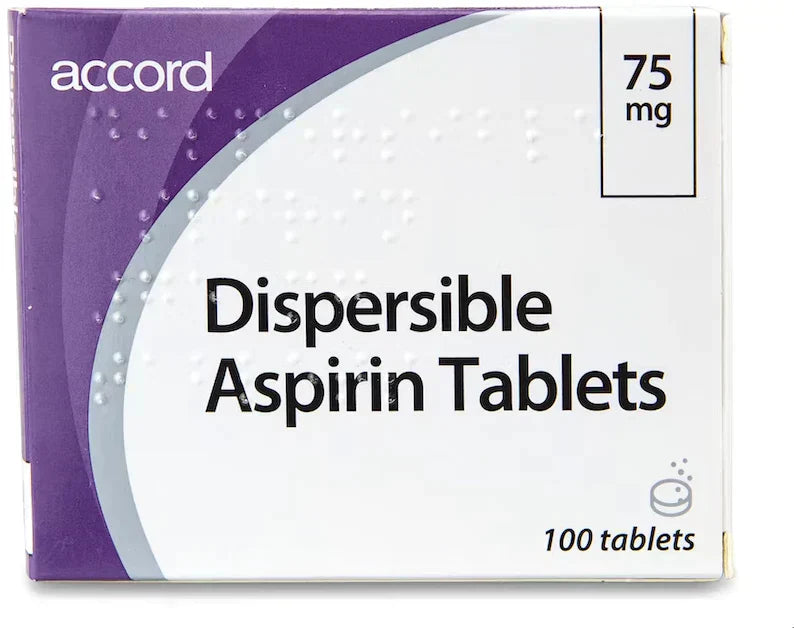
Aspirin Dispersible 75mg - 28 Tablets
Aspirin Dispersible 75mg - 28 Tablets
- ✔️ Reduces risk of heart attack and stroke in at-risk adults
- ✔️ Antiplatelet action begins within hours of first dose
- ✔️ Dispersible formula is gentler on the stomach lining
- ✔️ Suitable for long-term daily cardiovascular prevention use
- ✔️ One tablet once daily — simple, consistent dosing routine
Price Checker
 Lowest price guarantee
 Includes FREE private prescription


Couldn't load pickup availability
What Are Aspirin 75mg Dispersible Tablets?
If your doctor has told you to take a daily low-dose aspirin, you are not alone. Millions of people across the UK take it every day as part of their cardiovascular care. Aspirin 75mg dispersible tablets are one of the most widely used antiplatelet medicines available over the counter, helping to reduce the risk of heart attacks and strokes in people who are already at risk. Each pack contains 28 tablets, making it easy to keep a month's supply to hand — and at just £1.49, it is one of the most cost-effective options available. If you are managing your heart health alongside other conditions, you might also find our vitamins and supplements range useful for broader cardiovascular support.
Aspirin has been used medicinally for well over a century, but its role in preventing blood clots is a more modern discovery. At the low dose of 75mg, it is not being used as a painkiller — it is working specifically on your platelets, the tiny blood cells that trigger clotting. This distinction matters, because the dose and mechanism are quite different from the higher doses used for pain relief.
How Do Aspirin 75mg Dispersible Tablets Work?
Aspirin belongs to a class of medicines called antiplatelets. At 75mg, it works by irreversibly blocking an enzyme called cyclo-oxygenase-1 (COX-1) inside your platelets. Here is what that means in practice:
- COX-1 normally helps produce a substance called thromboxane A2, which causes platelets to stick together.
- By blocking COX-1, aspirin reduces thromboxane A2 production.
- With less thromboxane A2, platelets are less likely to clump and form dangerous clots.
- Because the effect is irreversible, it lasts for the entire lifespan of the platelet — roughly 7 to 10 days — even after a single dose.
This is why consistency matters. Taking your tablet at the same time each day keeps the antiplatelet effect steady and reliable. Missing doses can leave gaps in protection, particularly in people who have already had a cardiovascular event.
Who Should Use Aspirin 75mg Dispersible Tablets?
These tablets are intended for adults who have been advised by a doctor or healthcare professional to take low-dose aspirin. They are not a general-purpose painkiller at this dose. The NHS recommends low-dose aspirin primarily for secondary prevention — that is, reducing the risk of a further event in people who have already experienced one. Suitable candidates typically include:
- Adults who have previously had a heart attack or unstable angina
- People who have had an ischaemic stroke or transient ischaemic attack (TIA)
- Those with peripheral arterial disease
- Individuals with certain types of atrial fibrillation, as directed by their cardiologist
It is not recommended for primary prevention (i.e., in people who have never had a cardiovascular event) unless specifically advised by a doctor, as the bleeding risks may outweigh the benefits in that group.
How Does Aspirin 75mg Compare to Clopidogrel?
| Feature | Aspirin 75mg Dispersible | Clopidogrel 75mg |
|---|---|---|
| Mechanism | COX-1 inhibitor (reduces thromboxane A2) | ADP receptor blocker (P2Y12 inhibitor) |
| Availability | Over the counter (OTC) | Prescription only (POM) |
| Common use | Secondary cardiovascular prevention | Post-stent, ACS, stroke prevention |
| GI side effects | Moderate risk — dispersible form reduces irritation | Generally lower GI irritation |
Is Aspirin 75mg Suitable for Long-Term Use and How Should It Be Stored?
For most people taking aspirin 75mg dispersible tablets on medical advice, long-term daily use is both safe and intended. Your doctor will have weighed the benefits against any individual risks before recommending it. That said, it is worth having a regular review — particularly if your other medications change, or if you develop any new health conditions such as a stomach ulcer or kidney problems. If you are also managing conditions like diabetes, our diabetes monitoring range can help you keep track of your wider health picture.
Store your tablets below 25°C in a dry place, away from direct sunlight and moisture. Keep them out of reach and sight of children. Do not use after the expiry date printed on the packaging. The dispersible formulation is designed to be dissolved in water before swallowing, which can help reduce direct contact with the stomach lining compared to standard tablets.
This product is a medicine. Speak to your doctor or pharmacist before using if you have an underlying medical condition or are taking other medicines.
Aspirin Dispersible 75mg - 28 Tablets specifications
| Treatment category | Cardiovascular / Antiplatelet |
| Mechanism of action | Irreversible COX-1 inhibitor; reduces thromboxane A2-mediated platelet aggregation |
| Effective for | Secondary prevention of heart attack, stroke, and TIA |
| Suitable for | Adults aged 16 and over on medical advice |
| Active ingredient | Aspirin 75mg |
| Pack size | 28 tablets |
| Strength | 75mg |
| UK classification | General Sale List (GSL) |
| Drug class | Antiplatelet / NSAID (at low dose, used as antiplatelet) |
| Preparation | Dispersible tablet |
| Route of administration | Oral |
Specifications of Aspirin Dispersible 75mg - 28 Tablets
What Is Aspirin 75mg and What Is It Used For?
Aspirin 75mg dispersible tablets contain aspirin as the active ingredient. At this low dose, aspirin acts as an antiplatelet medicine rather than a painkiller. It is used to reduce the risk of blood clots forming in the arteries, which can cause heart attacks and strokes. The NHS recommends it primarily for adults who have already experienced a cardiovascular event, such as a heart attack, ischaemic stroke, or transient ischaemic attack (TIA). It may also be used in people with stable angina, peripheral arterial disease, or following certain cardiac procedures, always under medical supervision.
What Do You Need to Know Before Using Aspirin 75mg?
Before taking these tablets, it is important to check whether they are suitable for you. There are several conditions and circumstances where aspirin should be avoided or used with caution.
Do not take aspirin 75mg if you:
- Are allergic to aspirin or any other non-steroidal anti-inflammatory drug (NSAID)
- Have an active stomach ulcer or history of gastrointestinal bleeding
- Have haemophilia or another bleeding disorder
- Are under 16 years of age (risk of Reye's syndrome)
- Are in the third trimester of pregnancy
- Have severe liver or kidney disease
Tell your doctor or pharmacist if you are taking any of the following, as interactions may occur:
- Warfarin or other anticoagulants (increased bleeding risk)
- Clopidogrel or other antiplatelet medicines (dual antiplatelet therapy requires medical supervision)
- Ibuprofen or naproxen (may reduce aspirin's antiplatelet effect)
- SSRIs such as fluoxetine or sertraline (increased bleeding risk)
- Methotrexate (aspirin can increase methotrexate toxicity)
- ACE inhibitors or diuretics (aspirin may reduce their effectiveness at higher doses)
How Should You Use Aspirin 75mg Dispersible Tablets?
- Remove one tablet from the blister pack.
- Place the tablet in a small glass of water (approximately half a glass).
- Stir gently until the tablet has fully dispersed.
- Drink the entire contents of the glass immediately.
- Take once daily, at the same time each day, as directed by your doctor.
- Do not crush or chew the tablet if swallowing whole — use the dispersible method for best results.
| Indication | Age Group | Dose | Frequency |
|---|---|---|---|
| Secondary cardiovascular prevention | Adults (16+) | 75mg | Once daily |
| Post-heart attack (acute phase — hospital only) | Adults (16+) | 300mg loading dose | Single dose (hospital setting) |
| Children under 16 | Under 16 | Not recommended | Contraindicated |
If you are unsure about your dose, always check with your GP or pharmacist. You can also browse our pain relief range if you need a separate medicine for aches and pains, as aspirin 75mg is not intended for that purpose at this dose.
What Are the Possible Side Effects of Aspirin 75mg?
Like all medicines, aspirin 75mg can cause side effects, although not everyone experiences them. The dispersible formulation is gentler on the stomach than standard tablets, but gastrointestinal effects are still the most commonly reported.
Common side effects:
- Stomach irritation or discomfort
- Nausea
- Indigestion or heartburn
- Increased tendency to bruise
Less common side effects:
- Gastrointestinal bleeding (black or tarry stools — seek urgent medical advice)
- Allergic reactions including rash, itching, or swelling
- Worsening of asthma symptoms in aspirin-sensitive individuals
- Tinnitus (ringing in the ears) — more common at higher doses but worth reporting
- Prolonged bleeding from cuts or wounds
If you notice any signs of serious bleeding — such as blood in your urine, vomit, or stools — stop taking the tablets and seek medical attention immediately. For people managing multiple conditions, it is worth keeping an eye on your overall health. Our electrical health and diagnostic range includes blood pressure monitors and other tools that can help you stay on top of your cardiovascular health at home.
How Should You Store Aspirin 75mg Dispersible Tablets?
- Store below 25°C in a cool, dry place
- Keep away from direct sunlight and moisture
- Do not store in the bathroom or near a sink
- Keep out of reach and sight of children
- Do not use after the expiry date printed on the packaging
- Do not transfer tablets to a different container — keep in original blister pack
- Dispose of unused medicines safely — return to your local pharmacy for disposal
References
Written and reviewed by our qualified team
Your safety and success are our highest priorities. Our medical team rigorously evaluates every product and piece of advice we provide, ensuring you receive only the most effective, science-backed solutions available.
Frequently Asked Questions
Where can I buy aspirin 75mg dispersible tablets online in the UK?
You can buy aspirin 75mg dispersible tablets directly from Cured Pharmacy, a GPhC-registered UK online pharmacy. They are available without a prescription for adults who have been advised by a doctor to take low-dose aspirin. Simply add to your basket and your order will be dispatched quickly and discreetly.
How does aspirin 75mg work in the body?
Aspirin 75mg irreversibly blocks the COX-1 enzyme inside platelets, which reduces the production of thromboxane A2 — a substance that causes platelets to clump together. With less thromboxane A2, your blood is less likely to form dangerous clots in the arteries. This antiplatelet effect lasts for the full lifespan of each platelet, roughly 7 to 10 days.
How do I take aspirin 75mg dispersible tablets step by step?
Place one tablet in a small glass of water and stir until it has fully dissolved, then drink the entire glass. You can also swallow the tablet whole with a full glass of water if preferred. Take it once daily at the same time each day, as directed by your doctor or pharmacist.
What is the correct dose of aspirin for preventing heart attacks?
The standard antiplatelet dose recommended by the NHS for secondary cardiovascular prevention is 75mg once daily in adults. This is much lower than the doses used for pain relief (300–900mg) and works through a different mechanism. Never increase your dose without speaking to your doctor first.
What is the best time of day to take aspirin 75mg?
Most people take their daily aspirin in the morning, often with or after breakfast to reduce the chance of stomach irritation. The most important thing is consistency — taking it at the same time every day helps maintain a steady antiplatelet effect. Some doctors may advise taking it at night, so follow your individual guidance.
What are the side effects of aspirin 75mg and how do I manage them?
The most common side effects are stomach irritation, nausea, and indigestion. Taking the dispersible tablet dissolved in water, and always with food, can help reduce these effects. If you experience black or tarry stools, unusual bruising, or signs of an allergic reaction, stop taking the tablets and seek medical advice promptly.
Who should not take aspirin 75mg dispersible tablets?
Aspirin 75mg is not suitable for children under 16, people with active stomach ulcers, those allergic to aspirin or NSAIDs, or anyone with a bleeding disorder such as haemophilia. It should also be avoided in the third trimester of pregnancy and in people with severe liver or kidney disease. Always check with your GP or pharmacist if you are unsure.
What happens if I miss a dose of aspirin 75mg?
If you forget to take your tablet, take it as soon as you remember — unless it is nearly time for your next dose, in which case skip the missed one entirely. Never take two tablets at once to compensate for a missed dose. Simply continue your usual once-daily schedule the following day.
Can I take aspirin 75mg with ibuprofen or other painkillers?
Regular use of ibuprofen alongside aspirin 75mg can interfere with aspirin's antiplatelet effect and increase the risk of gastrointestinal bleeding. Paracetamol is generally considered a safer choice for pain relief if you are on daily low-dose aspirin. Always speak to your pharmacist before combining medicines — you can also browse our pain relief range for suitable alternatives.
Is aspirin 75mg safe to take long term?
For people who have been prescribed low-dose aspirin for cardiovascular prevention, long-term daily use is both intended and generally safe under medical supervision. Your doctor should review your medication periodically to ensure the benefits continue to outweigh any risks, particularly if your health circumstances change. Do not stop taking it without speaking to your GP first, as this could increase your risk of a cardiovascular event.
What are the alternatives to aspirin 75mg for heart attack prevention?
Clopidogrel is the most commonly used alternative antiplatelet medicine, particularly for people who cannot tolerate aspirin due to stomach problems or allergy. Other options such as ticagrelor or prasugrel are used in specific clinical situations, usually following acute coronary syndrome or stent placement. These alternatives are all prescription-only medicines, so your doctor will advise which is most appropriate for you.
Can I take aspirin 75mg if I have asthma?
Some people with asthma are sensitive to aspirin and NSAIDs, and taking aspirin can trigger or worsen asthma symptoms in these individuals — a condition sometimes called aspirin-exacerbated respiratory disease. If you have asthma, you must speak to your doctor before starting aspirin 75mg. If you have been taking it without problems, it is generally considered safe to continue under medical guidance.
Does aspirin 75mg interact with warfarin?
Yes — taking aspirin alongside warfarin significantly increases the risk of bleeding, as both medicines affect the blood's ability to clot through different mechanisms. This combination is sometimes used intentionally in specific high-risk cardiovascular situations, but only under close medical supervision with regular INR monitoring. Never start aspirin if you are on warfarin without first consulting your doctor or anticoagulation clinic.
What are the latest studies on low-dose aspirin for heart disease?
Recent research, including large trials such as ASPREE and ARRIVE, has led to updated guidance suggesting that low-dose aspirin is most beneficial for secondary prevention (people who have already had a cardiovascular event) rather than primary prevention in otherwise healthy adults. The NHS and NICE guidance reflects this, recommending aspirin 75mg primarily for those with established cardiovascular disease. If you are unsure whether aspirin is right for you, your GP is the best person to advise based on your individual risk profile.
Is aspirin 75mg suitable during pregnancy or breastfeeding?
Aspirin 75mg is contraindicated in the third trimester of pregnancy due to risks to the baby and complications during labour. In some specific high-risk pregnancies, low-dose aspirin is prescribed under medical supervision from the first trimester to reduce the risk of pre-eclampsia — but this must only be done on a doctor's advice. If you are pregnant, planning a pregnancy, or breastfeeding, always speak to your GP or midwife before taking any medicine. You can also explore our women's health range for other products relevant to your care.
Written and reviewed by our qualified team

Reviewed by:
Tarun Kumar
Superintendent/ Clinical Lead
📖 Find out more about our team of medical content authors and how we ensure the accuracy of our content with our content guidelines.
Content last updated: 14 Sep 2026
Other popular options


We’re a safe and
regulated UK service

Lowest Price Guarantee

We're convinced you won't find your treatment cheaper, but if you do we'll refund the difference.
Find out more
100% discreet packaging

Discreet, unbranded packaging for every order.
Find out more

Need help?
Talk to our friendly experts now


How our service works

Service setup

Discreet packaging

Express delivery