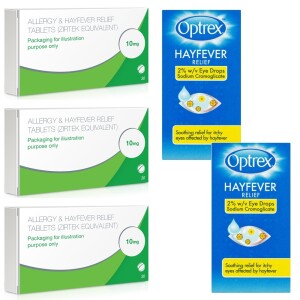
Allergy & Hayfever Relief Cetirizine and Optrex Allergy Eye Drops Bundle - 30 Tablets
Allergy & Hayfever Relief Cetirizine and Optrex Allergy Eye Drops Bundle - 30 Tablets
- ✔️ Relieves sneezing, runny nose, and itchy eyes simultaneously
- ✔️ Cetirizine 10mg targets histamine receptors for fast allergy relief
- ✔️ Optrex eye drops soothe red, watery, itchy eyes directly
- ✔️ Suitable for adults and children aged six and over
- ✔️ Non-drowsy formula ideal for daytime hayfever management
Price Checker
 Lowest price guarantee
 Includes FREE private prescription


Couldn't load pickup availability
Is Cetirizine and Eye Drops for Hayfever the Right Bundle for You?
Hayfever affects roughly one in five people in the UK, and for many, the symptoms hit from multiple angles at once — sneezing, a streaming nose, and eyes that itch and water relentlessly. This bundle tackles both fronts. You get 30 cetirizine hydrochloride 10mg tablets alongside Optrex Allergy Eye Drops, giving you a straightforward, dual-action approach to managing seasonal allergic rhinitis and allergic conjunctivitis. If you're looking for cetirizine and eye drops for hayfever in a single, convenient purchase, this bundle is designed with exactly that in mind. Browse our full range of allergy and hay fever treatments if you'd like to compare other options.
At just £6.50, this bundle offers genuine value for anyone managing hayfever symptoms across the spring and summer months. Both products are available over the counter and do not require a prescription, making them easy to access when pollen counts rise.
How Does This Allergy Bundle Work in the Body?
The two products in this bundle work through different but complementary mechanisms, targeting allergy symptoms at their source.
- Cetirizine hydrochloride is a second-generation antihistamine. It selectively blocks peripheral H1 histamine receptors, preventing histamine — the chemical your immune system releases in response to allergens like pollen — from triggering symptoms such as sneezing, nasal congestion, and skin itching.
- Optrex Allergy Eye Drops contain sodium cromoglicate, a mast cell stabiliser. Rather than blocking histamine after it's released, sodium cromoglicate prevents mast cells in the eye from releasing histamine in the first place, reducing redness, itching, and watering of the eyes.
- Together, the oral tablet addresses systemic symptoms while the eye drops provide targeted local relief — a combination that covers the most common hayfever complaints.
Who Should Use This Cetirizine and Optrex Bundle?
This bundle is suitable for adults and children aged 6 and over who experience seasonal allergic rhinitis (hayfever) or perennial allergic rhinitis triggered by dust mites, pet dander, or mould. It's particularly useful if your symptoms include both nasal and eye involvement — which is very common. That said, it's not right for everyone.
This bundle is well suited to:
- Adults aged 18 and over with seasonal or year-round hayfever
- Children aged 6–11 (at a reduced cetirizine dose — see dosage section)
- People who find older antihistamines like chlorphenamine too sedating
- Anyone experiencing both nasal symptoms and itchy, watery eyes simultaneously
How Does This Bundle Compare to Buying Separately?
| Feature | This Bundle | Buying Separately |
|---|---|---|
| Cost | £6.50 for both products | Typically £4–£6 each product |
| Symptom coverage | Systemic + ocular relief | Depends on products chosen |
| Convenience | Single order, one delivery | Multiple purchases needed |
| Active ingredients | Cetirizine + sodium cromoglicate | Variable |
Is This Bundle Suitable to Store at Home Year-Round?
Absolutely. Both products are straightforward to store. Keep the cetirizine tablets in their original packaging, below 25°C, away from moisture and direct sunlight. The Optrex eye drops should also be stored below 25°C and discarded after the period indicated on the packaging once opened — typically 28 days. Keeping a supply at home means you're prepared when pollen season starts unexpectedly. If you also need support for eye-related conditions beyond hayfever, take a look at our eye care collection for additional options.
This product is a medicine. Speak to your doctor or pharmacist before using if you have an underlying medical condition or are taking other medicines.
Allergy & Hayfever Relief Cetirizine and Optrex Allergy Eye Drops Bundle - 30 Tablets specifications
| Treatment category | Allergy / Hayfever Relief |
| Mechanism of action | H1 receptor antagonist (cetirizine); mast cell stabiliser (sodium cromoglicate) |
| Effective for | Seasonal allergic rhinitis, allergic conjunctivitis, perennial allergic rhinitis |
| Suitable for | Adults and children aged 6 and over |
| Active ingredient (tablet) | Cetirizine hydrochloride 10mg |
| Active ingredient (eye drops) | Sodium cromoglicate 2% |
| Pack size | 30 tablets + 1 bottle Optrex Allergy Eye Drops |
| UK classification | P (Pharmacy medicine) |
| Drug class | Antihistamine (tablet); Mast cell stabiliser (eye drops) |
| Preparation | Film-coated tablet; Sterile eye drops solution |
| Route of administration | Oral (tablet); Ocular (eye drops) |
Specifications of Allergy & Hayfever Relief Cetirizine and Optrex Allergy Eye Drops Bundle - 30 Tablets
What Is This Allergy Bundle and What Is It Used For?
This bundle combines two over-the-counter medicines to address the most common hayfever symptoms. Cetirizine hydrochloride 10mg tablets are an antihistamine used to relieve sneezing, runny nose, itchy skin, and nasal congestion caused by allergic rhinitis. Optrex Allergy Eye Drops contain sodium cromoglicate 2%, which is used specifically to relieve itchy, red, and watery eyes associated with allergic conjunctivitis. Used together, they provide relief for both the nasal and ocular symptoms that so often occur side by side during hayfever season.
What Do You Need to Know Before Using This Bundle?
Before using either product, read the following carefully. Some people should not use cetirizine or sodium cromoglicate eye drops without first speaking to a pharmacist or GP.
Do not use cetirizine tablets if you:
- Are allergic to cetirizine hydrochloride, hydroxyzine, or any other ingredient in the tablet
- Have severe kidney disease (end-stage renal failure)
- Are under 6 years of age
- Are pregnant or breastfeeding without first seeking medical advice
Do not use Optrex Allergy Eye Drops if you:
- Wear soft contact lenses (remove lenses before use and wait at least 15 minutes before reinserting)
- Are allergic to sodium cromoglicate or any other ingredient in the drops
- Have an eye infection — treat the infection first
Known drug interactions with cetirizine:
- Alcohol — may increase sedative effects
- Sedatives, sleeping tablets, or anxiolytics — combined sedation risk
- Ritonavir — may increase cetirizine plasma levels
- Other antihistamines — avoid concurrent use
How Should You Use This Allergy Bundle Correctly?
Using both products correctly ensures you get the most from this bundle. Follow these steps for each product.
Cetirizine tablets — step-by-step:
- Take one 10mg tablet by mouth, with or without food.
- Swallow the tablet whole with a glass of water.
- Take once daily, at the same time each day if possible.
- Do not crush or chew the tablet.
- Do not take more than one tablet in 24 hours.
Optrex Allergy Eye Drops — step-by-step:
- Wash your hands thoroughly before use.
- Tilt your head back and gently pull down the lower eyelid.
- Instil 1–2 drops into each affected eye.
- Blink gently and avoid rubbing your eyes.
- Replace the cap immediately after use.
| Product | Age Group | Dose | Frequency |
|---|---|---|---|
| Cetirizine 10mg tablet | Adults & children 12+ | 1 tablet (10mg) | Once daily |
| Cetirizine 10mg tablet | Children 6–11 | ½ tablet (5mg) | Once or twice daily |
| Optrex Allergy Eye Drops | Adults & children 6+ | 1–2 drops per eye | Up to 4 times daily |
If you're managing multiple allergy symptoms and want to explore additional options, our ear, nose and throat collection includes further products for nasal congestion and related complaints.
What Are the Possible Side Effects of This Bundle?
Like all medicines, both products in this bundle can cause side effects, though not everyone experiences them.
Common side effects of cetirizine:
- Drowsiness or fatigue
- Dry mouth
- Headache
- Dizziness
- Stomach discomfort or nausea
Less common side effects of cetirizine:
- Agitation or restlessness (more common in children)
- Skin rash or itching
- Difficulty passing urine
Side effects associated with Optrex Allergy Eye Drops:
- Mild, transient stinging or burning on instillation
- Temporary blurred vision immediately after use
- Eye irritation in sensitive individuals
Stop using either product and seek medical advice if you experience signs of a serious allergic reaction, such as swelling of the face, lips, or throat, difficulty breathing, or a severe skin rash.
How Should You Store This Bundle?
- Store cetirizine tablets below 25°C in a dry place, away from direct sunlight and moisture
- Keep tablets in their original blister packaging until use
- Store Optrex eye drops below 25°C; do not refrigerate unless stated on the label
- Discard the eye drops 28 days after first opening
- Keep both products out of the reach and sight of children
- Do not use either product after the expiry date printed on the packaging
If you're also dealing with cold or flu symptoms alongside your allergy symptoms, our cold and flu collection may have additional products to help you feel more comfortable.
References
Written and reviewed by our qualified team
Your safety and success are our highest priorities. Our medical team rigorously evaluates every product and piece of advice we provide, ensuring you receive only the most effective, science-backed solutions available.
Frequently Asked Questions
Where can I buy cetirizine and eye drops for hayfever online in the UK?
You can buy this cetirizine and Optrex allergy eye drops bundle directly from Cured Pharmacy online for just £6.50. No prescription is needed — it is classified as a Pharmacy (P) medicine available over the counter. Simply add it to your basket and it will be dispatched to your door. You can also browse our full allergy and hay fever range for additional options.
How does cetirizine work for hayfever symptoms?
Cetirizine is a second-generation antihistamine that works by selectively blocking H1 histamine receptors throughout the body. When you're exposed to pollen or another allergen, your immune system releases histamine, which causes sneezing, itching, and a runny nose. By blocking those receptors, cetirizine prevents histamine from triggering those reactions. It is less likely to cause drowsiness than older antihistamines such as chlorphenamine, making it a popular choice for daytime use.
How do the Optrex Allergy Eye Drops work differently from the tablets?
Optrex Allergy Eye Drops contain sodium cromoglicate 2%, which is a mast cell stabiliser rather than an antihistamine. Instead of blocking histamine after it has been released, sodium cromoglicate prevents the mast cells in your eye tissue from releasing histamine in the first place. This makes the eye drops particularly effective when used regularly before and during allergen exposure. The tablets and eye drops therefore complement each other by working through different mechanisms.
How do I use the Optrex Allergy Eye Drops step by step?
Start by washing your hands thoroughly. Tilt your head back, gently pull down your lower eyelid, and instil 1–2 drops into each affected eye. Blink gently afterwards and avoid rubbing your eyes. Replace the cap immediately after use and discard the bottle 28 days after opening. If you wear soft contact lenses, remove them before applying the drops and wait at least 15 minutes before reinserting.
What is the correct dose of cetirizine for adults and children?
Adults and children aged 12 and over should take one 10mg cetirizine tablet once daily — do not exceed this dose in any 24-hour period. Children aged 6 to 11 years should take half a tablet (5mg) once or twice daily, depending on symptom severity. Always check the patient information leaflet and consult a pharmacist if you are unsure about the appropriate dose for a child.
What is the best time of day to take cetirizine?
Cetirizine can be taken at any time of day, with or without food. Many people prefer to take it in the evening because, although it is less sedating than older antihistamines, some individuals still experience mild drowsiness. Taking it at night means any drowsiness occurs during sleep rather than during the day. If you find it does not cause drowsiness, taking it in the morning can help protect you throughout the day when pollen counts are typically highest.
Can I take cetirizine every day throughout hayfever season?
Yes, cetirizine is suitable for daily use throughout the hayfever season. The NHS advises that antihistamines can be taken regularly during periods of allergen exposure to keep symptoms under control. If your symptoms persist beyond the hayfever season or worsen despite treatment, speak to your GP or pharmacist. Long-term daily use beyond the recommended period should always be discussed with a healthcare professional.
What are the most common side effects of cetirizine?
The most commonly reported side effects of cetirizine include drowsiness, dry mouth, headache, and dizziness. These are generally mild and tend to improve as your body adjusts to the medicine. If drowsiness is a concern, avoid driving or operating heavy machinery until you know how cetirizine affects you. Contact your pharmacist if side effects are troublesome or do not resolve.
How do I manage side effects from this allergy bundle?
If cetirizine causes drowsiness, try taking it in the evening rather than the morning. Staying well hydrated can help with dry mouth. For any stinging from the eye drops, this is usually brief and settles within a minute or two of instillation. If you experience persistent eye irritation, redness, or worsening symptoms after using the drops, stop use and consult a pharmacist. Serious allergic reactions to either product are rare but require immediate medical attention.
Who is eligible to use this cetirizine and Optrex bundle?
This bundle is suitable for adults and children aged 6 and over who experience hayfever or allergic conjunctivitis. It is not suitable for people with severe kidney disease, those allergic to cetirizine or sodium cromoglicate, or children under 6 years of age. Pregnant or breastfeeding women should consult a pharmacist or GP before use. People taking sedatives, sleeping tablets, or other antihistamines should also seek advice first.
Is this bundle suitable for use during pregnancy?
The safety of cetirizine during pregnancy has not been fully established, and the NHS advises speaking to a GP or pharmacist before taking antihistamines if you are pregnant. Sodium cromoglicate eye drops are generally considered lower risk due to minimal systemic absorption, but you should still seek professional advice before using any medicine during pregnancy. Your pharmacist can help you weigh up the benefits and risks for your individual situation.
What happens if I miss a dose of cetirizine?
If you miss a dose of cetirizine, take it as soon as you remember — unless it is nearly time for your next dose, in which case skip the missed dose entirely. Never take a double dose to make up for a missed one. Missing an occasional dose is unlikely to cause significant problems, but taking cetirizine consistently each day will give you the most reliable symptom control during hayfever season.
What are the alternatives to this cetirizine and eye drops bundle?
Alternative oral antihistamines include loratadine (non-drowsy), fexofenadine, and chlorphenamine (more sedating). For eye symptoms, other sodium cromoglicate eye drops or antihistamine eye drops such as those containing azelastine may be considered. Nasal corticosteroid sprays are also recommended by the NHS for moderate-to-severe hayfever. You can explore further options in our allergy and hay fever collection.
How long can you use this bundle for?
Cetirizine tablets can be used for the duration of the hayfever season, which in the UK typically runs from late March through to September depending on the pollen type. The Optrex eye drops should be discarded 28 days after opening regardless of how much remains. If your symptoms persist year-round or do not respond to treatment after a reasonable period, speak to your GP, as you may benefit from a different treatment approach or allergy testing.
What does the latest research say about cetirizine for hayfever?
Cetirizine remains one of the most widely studied and clinically supported second-generation antihistamines available. The NHS and NICE both recommend second-generation antihistamines like cetirizine as a first-line treatment for allergic rhinitis due to their favourable efficacy and tolerability profile compared to first-generation options. Sodium cromoglicate eye drops are similarly well-established, with a long safety record for managing allergic conjunctivitis. No new safety concerns have emerged from recent reviews of either ingredient.
Written and reviewed by our qualified team

Reviewed by:
Tarun Kumar
Superintendent/ Clinical Lead
📖 Find out more about our team of medical content authors and how we ensure the accuracy of our content with our content guidelines.
Content last updated: 14 Sep 2026
Other popular options


We’re a safe and
regulated UK service

Lowest Price Guarantee

We're convinced you won't find your treatment cheaper, but if you do we'll refund the difference.
Find out more
100% discreet packaging

Discreet, unbranded packaging for every order.
Find out more

Need help?
Talk to our friendly experts now


How our service works

Service setup

Discreet packaging

Express delivery