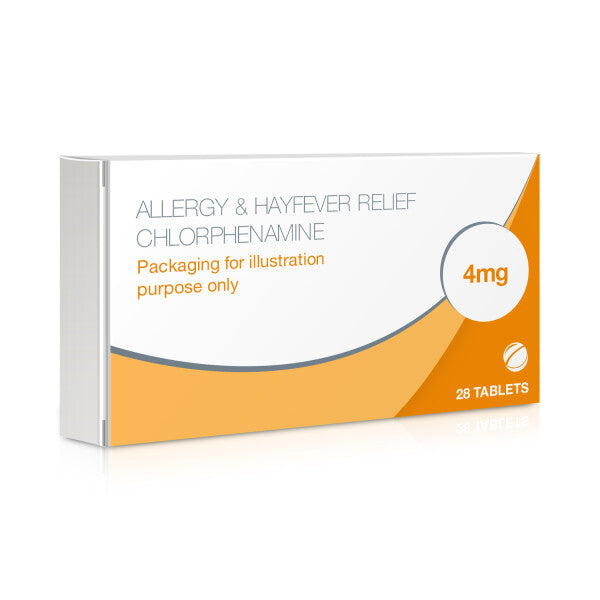
Allergy & Hayfever Chlorphenamine - 28 Tablets
Allergy & Hayfever Chlorphenamine - 28 Tablets
- ✔️ Relieves hay fever, hives, and allergic rhinitis symptoms
- ✔️ Contains chlorphenamine maleate 4mg per tablet
- ✔️ Starts working within 30 minutes of taking a dose
- ✔️ Suitable for adults and children aged 6 and over
- ✔️ 28 tablets per pack — affordable allergy relief at £1.99
Price Checker
 Lowest price guarantee
 Includes FREE private prescription


Couldn't load pickup availability
What Are Chlorphenamine Tablets and How Do They Help Allergies?
If sneezing fits, itchy eyes, and a constantly runny nose are making your day miserable, you are not alone. Hay fever affects around 1 in 5 people in the UK, and allergic reactions can strike at any time of year. Chlorphenamine tablets are one of the most widely used over-the-counter antihistamines available, offering fast-acting relief from a range of allergy symptoms. At just £1.99 for 28 tablets, this is an affordable option that has been trusted by patients and pharmacists for decades. You can browse our full range of treatments in our allergy and hay fever collection.
Each tablet contains chlorphenamine maleate 4mg as the active ingredient. This is a first-generation antihistamine, meaning it works quickly and is well-established in clinical practice. It is licensed in the UK for the relief of hay fever, allergic rhinitis, urticaria (hives), insect bites and stings, food allergies, and other hypersensitivity reactions.
How Does Chlorphenamine Work to Relieve Allergy Symptoms?
When your body encounters an allergen — pollen, pet dander, dust mites — it releases a chemical called histamine. Histamine binds to receptors throughout the body and triggers the familiar cascade of symptoms: sneezing, itching, watery eyes, and nasal congestion. Chlorphenamine works by competitively blocking these H1 histamine receptors, stopping histamine from binding and preventing those symptoms from developing.
- Absorbed from the gastrointestinal tract after oral administration
- Reaches peak plasma concentration within 2–3 hours
- Crosses the blood-brain barrier, contributing to its sedative effect
- Metabolised in the liver and excreted primarily via the kidneys
Because it is a first-generation antihistamine, it does have a sedating effect for many people. This is worth bearing in mind if you need to drive or concentrate at work.
Who Should Use Chlorphenamine Tablets?
These tablets are suitable for a broad range of patients dealing with allergic conditions. They are particularly useful during the hay fever season, but they can also help manage symptoms triggered by animals, dust, or certain foods. That said, they are not appropriate for everyone.
- Adults and children aged 6 years and over
- People experiencing hay fever or seasonal allergic rhinitis
- Those with urticaria (hives) or skin reactions from insect bites
- Patients with mild food allergy symptoms (under medical guidance)
They are not recommended for children under 6, pregnant or breastfeeding women without medical advice, or people with certain conditions such as glaucoma, urinary retention, or epilepsy. Always check with your pharmacist if you are unsure.
How Do Chlorphenamine Tablets Compare to Non-Drowsy Antihistamines?
| Feature | Chlorphenamine 4mg (This Product) | Loratadine 10mg (Non-Drowsy) |
|---|---|---|
| Generation | First-generation | Second-generation |
| Sedating effect | Yes — commonly causes drowsiness | Minimal — generally non-sedating |
| Dosing frequency | Every 4–6 hours (up to 6 tablets/day) | Once daily |
| Suitable for driving | No — avoid driving after use | Generally yes, with caution |
| Price (28 tablets) | £1.99 | Typically £2.50–£5.00 |
How Should You Store Chlorphenamine Tablets and Are They Right for You?
Store your chlorphenamine tablets below 25°C in a dry place, away from direct sunlight. Keep them out of reach and sight of children. Do not use them after the expiry date printed on the packaging. If you are managing multiple allergy symptoms — for example, itchy eyes alongside nasal congestion — you might also want to explore our eye care collection for complementary relief options.
It is worth thinking carefully about whether a sedating antihistamine suits your lifestyle. If you work shifts, drive regularly, or need to stay alert during the day, a non-drowsy alternative may be more practical. Speak to your pharmacist — they can help you choose the right option based on your symptoms and daily routine.
This product is a medicine. Speak to your doctor or pharmacist before using if you have an underlying medical condition or are taking other medicines.
Allergy & Hayfever Chlorphenamine 28 Tablets specifications
| Treatment category | Allergy & Hay Fever |
| Mechanism of action | H1 histamine receptor antagonist |
| Effective for | Hay fever, allergic rhinitis, urticaria, insect bites, food allergy symptoms |
| Suitable for | Adults and children aged 6 years and over |
| Active ingredient | Chlorphenamine maleate 4mg |
| Pack size | 28 tablets |
| Strength | 4mg per tablet |
| UK classification | General Sale List (GSL) |
| Drug class | First-generation antihistamine |
| Preparation | Tablet |
| Route of administration | Oral |
Specifications of Allergy & Hayfever Chlorphenamine 28 Tablets
What Is Chlorphenamine and What Is It Used For?
Chlorphenamine maleate 4mg tablets are an antihistamine medicine used to relieve the symptoms of allergic conditions. According to the NHS, antihistamines are the main medicines used for hay fever and work best when taken before symptoms begin. This product is suitable for adults and children aged 6 and over and is available without a prescription.
It is used to treat:
- Hay fever and seasonal allergic rhinitis
- Perennial (year-round) allergic rhinitis
- Urticaria (hives) and skin rashes caused by allergies
- Reactions to insect bites and stings
- Mild food allergy symptoms
- Allergic conjunctivitis (itchy, watery eyes)
What Do You Need to Know Before Using Chlorphenamine Tablets?
Do not take these tablets if any of the following apply to you:
- You are allergic to chlorphenamine or any other ingredient in the tablet
- You are under 6 years of age
- You have acute asthma or a lower respiratory tract condition
- You have angle-closure glaucoma
- You have urinary retention or an enlarged prostate
- You are taking monoamine oxidase inhibitors (MAOIs) or have taken them in the last 14 days
- You are pregnant or breastfeeding — seek medical advice first
- You have epilepsy or a history of seizures
The following medicines may interact with chlorphenamine:
- MAOIs — risk of serious interaction; do not combine
- Tricyclic antidepressants — increased sedative and anticholinergic effects
- Other sedatives, sleeping tablets, or anxiolytics — additive drowsiness
- Alcohol — significantly increases sedation; avoid completely
- Anticholinergic medicines — increased risk of dry mouth, urinary retention, and constipation
How Should You Use Chlorphenamine Tablets?
Always take this medicine exactly as described in the patient information leaflet. If you are unsure, ask your pharmacist. Taking it with food or a glass of milk can help reduce the chance of stomach upset.
- Check the expiry date on the packaging before use
- Swallow the tablet whole with a glass of water
- Take with food if your stomach feels sensitive
- Do not crush or chew the tablet unless advised to do so
- Do not exceed the maximum daily dose for your age group
- Do not drive or operate machinery after taking this medicine
| Age Group | Dose | Frequency | Maximum Daily Dose |
|---|---|---|---|
| Adults & children 12+ | 1 tablet (4mg) | Every 4–6 hours | 6 tablets (24mg) |
| Children 6–12 years | ½ tablet (2mg) | Every 4–6 hours | 3 tablets (12mg) |
| Children under 6 | Not recommended | ||
What Are the Possible Side Effects of Chlorphenamine Tablets?
Like all medicines, chlorphenamine can cause side effects, although not everyone experiences them. The NHS notes that drowsiness is the most commonly reported effect with first-generation antihistamines. If you find the sedation problematic, speak to your pharmacist about whether a non-sedating alternative might suit you better. You can also explore our cold and flu collection if your symptoms overlap with a seasonal illness.
Common side effects:
- Drowsiness and sedation
- Dry mouth, nose, and throat
- Blurred vision
- Difficulty passing urine
- Headache
Less common side effects:
- Dizziness or impaired coordination
- Nausea or stomach upset
- Palpitations
- Skin rashes or photosensitivity
- Paradoxical excitability (particularly in children)
Stop taking the tablets and seek medical advice immediately if you experience difficulty breathing, severe skin reactions, or signs of an allergic reaction to the medicine itself.
How Should You Store Chlorphenamine Tablets?
- Store below 25°C in a dry place
- Keep away from direct sunlight and moisture
- Keep out of the sight and reach of children
- Do not use after the expiry date printed on the pack
- Do not dispose of medicines via wastewater or household waste — return unused tablets to your pharmacy
References
Written and reviewed by our qualified team
Your safety and success are our highest priorities. Our medical team rigorously evaluates every product and piece of advice we provide, ensuring you receive only the most effective, science-backed solutions available.
Frequently Asked Questions
Where can I buy chlorphenamine tablets online in the UK?
You can buy Allergy & Hayfever Chlorphenamine 28 Tablets directly from Cured Pharmacy for just £1.99, with fast dispatch from our GPhC-registered UK pharmacy. No prescription is needed as these are a General Sale List medicine. Browse our full allergy and hay fever collection for additional options.
How do chlorphenamine tablets work in the body?
Chlorphenamine is a first-generation antihistamine that blocks H1 histamine receptors, preventing histamine from triggering allergy symptoms such as sneezing, itching, and a runny nose. It is absorbed from the gut and reaches peak levels in the blood within 2–3 hours. Because it crosses the blood-brain barrier, it can cause drowsiness as a side effect.
What is the correct dose of chlorphenamine tablets for adults?
The standard adult dose is one 4mg tablet every four to six hours as needed, up to a maximum of six tablets (24mg) in any 24-hour period. Do not exceed this dose. If your symptoms are not controlled at the maximum dose, speak to your GP or pharmacist.
Can children take chlorphenamine tablets?
Chlorphenamine tablets are suitable for children aged 6 years and over, but the dose is lower than for adults. Children aged 6–12 should take half a tablet (2mg) every four to six hours, with a maximum of three tablets in 24 hours. These tablets are not suitable for children under 6 years of age.
Will chlorphenamine tablets make me drowsy?
Yes, drowsiness is a very common side effect of chlorphenamine because it is a sedating, first-generation antihistamine. You should avoid driving, cycling, or operating heavy machinery after taking it. Alcohol will significantly worsen the sedative effect, so avoid drinking while using this medicine.
What is the best time to take chlorphenamine tablets?
For hay fever, taking a tablet before you are exposed to your trigger — such as before going outdoors during high pollen counts — can help prevent symptoms from developing. Because chlorphenamine causes drowsiness, many people find it most convenient to take a dose in the evening. Always follow the dosing intervals and do not take more than the maximum daily dose.
What are the side effects of chlorphenamine tablets?
Common side effects include drowsiness, dry mouth, blurred vision, and difficulty urinating. Less common effects include headache, dizziness, nausea, and palpitations. In children, paradoxical excitability (becoming hyperactive rather than drowsy) can occasionally occur. Contact your pharmacist or GP if any side effect is severe or persistent.
How do I manage the drowsiness caused by chlorphenamine?
The most practical way to manage drowsiness is to take your dose in the evening or at a time when you do not need to drive or concentrate. Avoid alcohol entirely while taking this medicine. If daytime drowsiness is a significant problem for you, speak to your pharmacist about switching to a non-sedating second-generation antihistamine such as loratadine or cetirizine.
What happens if I miss a dose of chlorphenamine?
If you miss a dose, take it as soon as you remember — unless it is nearly time for your next scheduled dose, in which case skip the missed one entirely. Never take two doses at the same time to compensate for a missed dose. Chlorphenamine is taken as needed, so missing an occasional dose is unlikely to cause problems.
Who should not take chlorphenamine tablets?
These tablets are not suitable for children under 6, people taking MAOIs, those with angle-closure glaucoma, urinary retention, or acute asthma. Pregnant or breastfeeding women should seek medical advice before use. People with epilepsy or liver problems should also consult their GP or pharmacist first.
Can I take chlorphenamine tablets with other medicines?
Chlorphenamine can interact with several medicines, including MAOIs, tricyclic antidepressants, sedatives, sleeping tablets, and other antihistamines. Taking it alongside any of these can increase the risk of serious side effects. Always tell your pharmacist about all medicines, supplements, and herbal remedies you are currently taking before starting chlorphenamine.
What are the alternatives to chlorphenamine tablets?
Non-sedating second-generation antihistamines such as loratadine (10mg once daily) and cetirizine (10mg once daily) are popular alternatives that are less likely to cause drowsiness. Nasal corticosteroid sprays are also recommended by the NHS for persistent hay fever symptoms. You can explore a wider range of options in our ear, nose and throat collection.
How long can you take chlorphenamine tablets for?
Chlorphenamine is intended for short-term use to manage acute allergy symptoms. During hay fever season, it can be used as needed throughout the season. If you find you need to take it continuously for more than a few weeks, or if your symptoms are not well controlled, speak to your GP about longer-term allergy management options.
Can I take chlorphenamine tablets during pregnancy?
Chlorphenamine is not recommended during pregnancy without medical advice, particularly during the first trimester. The NHS advises that pregnant women should speak to their GP or midwife before taking any antihistamine. Your doctor can advise on the safest option for managing allergy symptoms during pregnancy.
What is the latest guidance on using chlorphenamine for hay fever?
Current NHS guidance recommends antihistamines as a first-line treatment for mild to moderate hay fever symptoms. However, for more persistent or severe symptoms, nasal corticosteroid sprays are now considered more effective by clinical guidelines. Chlorphenamine remains a useful option for short-term or as-needed relief, particularly when sedation at night is acceptable or even beneficial.
Written and reviewed by our qualified team

Reviewed by:
Tarun Kumar
Superintendent/ Clinical Lead
📖 Find out more about our team of medical content authors and how we ensure the accuracy of our content with our content guidelines.
Content last updated: 14 Sep 2026
Other popular options


We’re a safe and
regulated UK service

Lowest Price Guarantee

We're convinced you won't find your treatment cheaper, but if you do we'll refund the difference.
Find out more
100% discreet packaging

Discreet, unbranded packaging for every order.
Find out more

Need help?
Talk to our friendly experts now


How our service works

Service setup

Discreet packaging

Express delivery