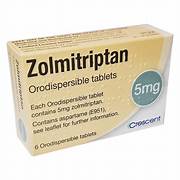
Zolmitriptan
Zolmitriptan
- ✔️ Targets migraine pain at its neurological source
- ✔️ Provides relief within one to two hours of dosing
- ✔️ Treats migraines with or without visual aura
- ✔️ Suitable for adults who have not responded to standard painkillers
- ✔️ Available in a convenient low-dose 2.5mg tablet form
Price Checker
 Lowest price guarantee
 Includes FREE private prescription


Couldn't load pickup availability
What Are Zolmitriptan Tablets and How Do They Treat Migraines?
If you've ever been floored by a migraine, you'll know it's far more than just a bad headache. The throbbing pain, nausea, and sensitivity to light can make even the simplest tasks feel impossible. Zolmitriptan tablets are a prescription-strength triptan medicine specifically designed to treat migraine attacks in adults — with or without aura. Available from Cured Pharmacy from just £24.99, this medicine targets the root cause of your migraine rather than simply masking the pain. For anyone who regularly experiences debilitating migraines, having an effective treatment to hand can make a real difference to daily life. You can also explore our wider pain relief collection for complementary options.
Zolmitriptan belongs to a group of medicines called triptans, or serotonin (5-HT1) receptor agonists. It is not a painkiller in the traditional sense — it works on the specific biological mechanisms that cause migraines. According to the NHS, triptans are one of the most effective treatments available for migraine attacks and are recommended when standard painkillers haven't provided adequate relief.
How Does Zolmitriptan Work to Relieve a Migraine?
Understanding how this medicine works can help you use it more confidently. During a migraine, blood vessels in the brain dilate and certain chemicals — including serotonin — are released, triggering pain signals. Zolmitriptan acts on specific receptors to reverse this process.
- Binds selectively to serotonin 5-HT1B and 5-HT1D receptors in the brain
- Causes constriction (narrowing) of dilated cranial blood vessels
- Inhibits the release of pro-inflammatory neuropeptides such as CGRP
- Blocks pain signal transmission along the trigeminal nerve pathway
The result? Headache pain, nausea, and sensitivity to light and sound are all reduced — often within one to two hours of taking the tablet. It's worth noting that zolmitriptan treats an active migraine; it is not used to prevent them from occurring in the first place.
Who Is Zolmitriptan Suitable For?
Zolmitriptan is licensed for use in adults aged 18 and over who have a confirmed diagnosis of migraine. It is suitable for migraines both with and without aura. That said, it isn't right for everyone, and a clinical assessment is always required before dispensing.
- Adults aged 18 and over with a confirmed migraine diagnosis
- People whose migraines do not respond adequately to standard analgesics
- Those experiencing migraines with or without visual aura
- Patients who have previously tolerated triptan medicines without serious adverse effects
It is not suitable for use in children or adolescents under 18, and it should not be used to treat hemiplegic migraine, basilar migraine, or cluster headaches.
How Does Zolmitriptan Compare to Other Triptan Medicines?
| Feature | Zolmitriptan | Sumatriptan |
|---|---|---|
| Drug class | Triptan (5-HT1 agonist) | Triptan (5-HT1 agonist) |
| Usual starting dose | 2.5mg | 50mg |
| Onset of action | Approx. 1 hour | Approx. 30–60 minutes |
| Available forms | Tablets, orodispersible tablets, nasal spray | Tablets, injection, nasal spray |
Is Zolmitriptan Safe to Store at Home?
Yes — storing zolmitriptan correctly at home is straightforward. Keep it in its original packaging, below 25°C, away from direct sunlight and moisture. A bedroom drawer or medicine cabinet works well. Do not store it in the bathroom, where humidity can affect the tablets. Always keep medicines out of the reach and sight of children.
If you're managing multiple health conditions alongside migraines, it's worth knowing that our sickness and nausea collection includes products that may help with migraine-related nausea. Always check with your pharmacist before combining treatments.
This product is a medicine. Speak to your doctor or pharmacist before using if you have an underlying medical condition or are taking other medicines.
Zolmitriptan specifications
| Treatment category | Migraine treatment |
| Mechanism of action | Selective serotonin 5-HT1B/1D receptor agonist |
| Effective for | Acute migraine attacks with or without aura |
| Suitable for | Adults aged 18 and over |
| Active ingredient | Zolmitriptan |
| Strengths | 2.5mg |
| Pack sizes | 6 tablets |
| UK classification | Prescription Only Medicine (POM) |
| Drug class | Triptan / Serotonin receptor agonist |
| Preparation | Film-coated tablet |
| Route of administration | Oral |
Specifications of Zolmitriptan
What Is Zolmitriptan and What Is It Used For?
Zolmitriptan is a triptan medicine used to treat acute migraine headaches in adults. It is taken at the onset of a migraine attack — either with or without aura — to relieve head pain, nausea, and sensitivity to light and sound. It does not prevent migraines from happening and should not be taken as a daily preventative treatment. According to the NHS, triptans are the recommended treatment for moderate to severe migraines when over-the-counter painkillers have not worked adequately.
What Do You Need to Know Before Using Zolmitriptan?
Before taking zolmitriptan, it's essential to be aware of the following contraindications and warnings. This medicine is not suitable for everyone.
Do not take zolmitriptan if you:
- Have uncontrolled or severe hypertension (high blood pressure)
- Have ischaemic heart disease, angina, or a history of heart attack
- Have had a stroke or transient ischaemic attack (TIA)
- Have peripheral vascular disease
- Are taking or have taken a monoamine oxidase inhibitor (MAOI) within the last two weeks
- Are allergic to zolmitriptan or any of the tablet's ingredients
- Have hemiplegic or basilar migraine
Drug interactions — tell your pharmacist if you are taking:
- MAOIs (e.g. phenelzine, tranylcypromine) — risk of serious serotonin syndrome
- Moclobemide — increases zolmitriptan plasma levels significantly
- SSRIs or SNRIs — potential risk of serotonin syndrome
- Ergotamine or ergot-derived medicines — do not take within 24 hours of zolmitriptan
- Cimetidine — may increase zolmitriptan levels; maximum dose 5mg in 24 hours
- Other triptans — do not combine within 24 hours
If you are pregnant, planning to become pregnant, or breastfeeding, speak to your doctor before using this medicine. Use during pregnancy is not recommended unless clearly necessary.
How Should You Use Zolmitriptan?
Always use zolmitriptan exactly as directed by your prescriber or pharmacist. Taking it as soon as your migraine begins gives you the best chance of effective relief.
- Take one 2.5mg tablet at the first sign of a migraine headache
- Swallow the tablet whole with a glass of water
- If your migraine improves but then returns, you may take a second dose after at least two hours
- Do not take a second dose if the first had no effect at all on the same attack
- Do not exceed 10mg (four 2.5mg tablets) in any 24-hour period
| Indication | Age Group | Dose | Frequency |
|---|---|---|---|
| Acute migraine | Adults 18+ | 2.5mg | Once at onset; repeat after 2 hrs if needed. Max 10mg/24 hrs |
| Acute migraine (hepatic impairment) | Adults 18+ | 2.5mg | Max 5mg in 24 hours — seek medical advice |
| Children / adolescents | Under 18 | Not recommended | Not applicable |
Be aware of medication overuse headache (MOH). Using any acute migraine treatment — including triptans — on more than 10 days per month can lead to chronic daily headache. If you find yourself needing zolmitriptan very frequently, speak to your GP. You might also find it helpful to browse our pain relief range for additional support between migraine episodes.
What Are the Possible Side Effects of Zolmitriptan?
Like all medicines, zolmitriptan can cause side effects, although not everyone experiences them. Most are mild and resolve on their own.
Common side effects (may affect up to 1 in 10 people):
- Dizziness or lightheadedness
- Tingling or numbness (paraesthesia)
- Sensation of warmth, heaviness, or pressure in the chest, throat, or limbs
- Nausea
- Dry mouth
- Muscle weakness or aching
Less common side effects (may affect up to 1 in 100 people):
- Palpitations or increased heart rate
- Abdominal pain or discomfort
- Polyuria (passing urine more frequently)
- Allergic reactions including skin rash or urticaria
Seek immediate medical attention if you experience chest pain, tightness, or pressure that is severe or does not resolve — particularly if it spreads to your arm or jaw. These could be signs of a serious cardiac event. Serotonin syndrome (agitation, confusion, rapid heart rate, high temperature) is rare but requires urgent medical attention.
How Should You Store Zolmitriptan?
- Store below 25°C in a dry place
- Keep away from direct sunlight and heat sources
- Do not store in the bathroom or near a sink
- Keep in the original packaging until use
- Keep out of the reach and sight of children
- Do not use after the expiry date printed on the pack
- Do not dispose of medicines via wastewater or household waste — return unused tablets to your pharmacy
If you're managing other health conditions alongside migraines, our vitamins and supplements range includes options such as magnesium, which some evidence suggests may support migraine management when used alongside prescribed treatment.
References
Written and reviewed by our qualified team
Your safety and success are our highest priorities. Our medical team rigorously evaluates every product and piece of advice we provide, ensuring you receive only the most effective, science-backed solutions available.
Frequently Asked Questions
Where can I buy zolmitriptan tablets online in the UK?
You can buy zolmitriptan tablets online through Cured Pharmacy, a GPhC-registered online pharmacy. You'll complete a short clinical questionnaire so our pharmacist team can confirm the medicine is appropriate for you. Once approved, your order is dispatched discreetly to your door.
How does zolmitriptan work in the body?
Zolmitriptan binds to serotonin 5-HT1B and 5-HT1D receptors in the brain, causing dilated blood vessels to narrow and blocking the release of pain-triggering chemicals along the trigeminal nerve. This combination of actions tackles both the vascular and neurological components of a migraine attack. It does not prevent migraines — it treats them once they have started.
How long does zolmitriptan take to work?
Most people begin to notice relief within one hour of taking zolmitriptan, with significant improvement typically seen within two hours. Taking it as early as possible during a migraine attack — ideally at the first sign of head pain — tends to give the best results. It may be less effective if taken during the aura phase before pain begins.
What is the correct dose of zolmitriptan for adults?
The standard adult dose is one 2.5mg tablet taken at the onset of a migraine. If the migraine returns after initial relief, a second 2.5mg dose may be taken at least two hours later. The maximum dose is 10mg in any 24-hour period. Do not take a second dose if the first had no effect on the same attack.
Can I take zolmitriptan with paracetamol or ibuprofen?
Yes, zolmitriptan can generally be taken alongside paracetamol or ibuprofen for additional pain relief during a migraine. Some people find combining a triptan with a standard analgesic more effective than either medicine alone. Always check with your pharmacist before combining treatments, particularly if you have other health conditions.
Who should not take zolmitriptan?
Zolmitriptan is not suitable for people with uncontrolled high blood pressure, ischaemic heart disease, a history of stroke or TIA, peripheral vascular disease, or hemiplegic or basilar migraine. It should also be avoided by anyone currently taking or who has recently taken an MAOI antidepressant. Always complete the clinical questionnaire honestly so our pharmacist can assess your suitability.
What are the most common side effects of zolmitriptan?
The most commonly reported side effects include dizziness, tingling or numbness, a sensation of warmth or heaviness in the chest or limbs, nausea, and dry mouth. These effects are usually mild and short-lived, resolving without treatment. If you experience severe chest pain or tightness, seek medical attention immediately.
Is zolmitriptan the same as sumatriptan?
Both zolmitriptan and sumatriptan belong to the triptan class and work via the same mechanism, but they are distinct medicines with different dosing, pharmacokinetics, and available formulations. Some people find one triptan works better for them than another, and it may take a couple of trials under medical guidance to find the most effective option for you. Our pain relief collection includes further information on migraine treatment options.
Can I take zolmitriptan during pregnancy?
Zolmitriptan is not recommended during pregnancy unless your doctor has specifically advised it and determined that the benefit outweighs any potential risk. If you are pregnant, planning to become pregnant, or breastfeeding, always speak to your GP or midwife before taking any triptan medicine. There are limited data on its safety in pregnancy.
What happens if I take too much zolmitriptan?
Taking more than the recommended dose of zolmitriptan increases the risk of side effects, including raised blood pressure and cardiovascular effects. If you think you have taken too much, contact NHS 111 or go to your nearest A&E immediately. Always keep medicines in their original packaging to avoid accidental overdose.
What should I do if zolmitriptan does not work for my migraine?
If zolmitriptan does not relieve your migraine, do not take a second dose for the same attack. Rest in a quiet, dark room and consider whether a standard analgesic such as paracetamol or ibuprofen might help. If your migraines are frequently not responding to treatment, speak to your GP — there are other triptan options and preventative treatments available.
Can zolmitriptan cause medication overuse headache?
Yes. Using zolmitriptan — or any acute migraine treatment — on more than 10 days per month can lead to medication overuse headache (MOH), also known as rebound headache. This results in more frequent, harder-to-treat headaches over time. If you find yourself reaching for migraine treatment very regularly, speak to your GP about preventative options.
How long can I keep taking zolmitriptan?
Zolmitriptan is intended for acute (as-needed) use only — it is not a daily preventative medicine. There is no fixed maximum duration of use, but if you are using it frequently, your GP should review your migraine management plan. Long-term frequent use raises the risk of medication overuse headache and warrants a clinical review.
Are there any alternatives to zolmitriptan for migraines?
Yes — other triptans such as sumatriptan, rizatriptan, and eletriptan are available alternatives, and your GP can advise which may suit you best. Non-triptan options include NSAIDs, paracetamol, and anti-emetics for nausea. For those with frequent migraines, preventative treatments such as topiramate or propranolol may also be considered. Browse our sickness and nausea collection for products that may help with migraine-related nausea.
What are the latest findings on triptan medicines like zolmitriptan?
Triptans remain a well-established and clinically supported treatment for acute migraine, with decades of evidence behind them. More recent research has focused on newer CGRP-targeting treatments (such as gepants and lasmiditan) as alternatives for people who cannot tolerate triptans. However, triptans like zolmitriptan continue to be recommended as first-line acute treatment by NICE and the NHS for eligible patients.
Written and reviewed by our qualified team

Reviewed by:
Tarun Kumar
Superintendent/ Clinical Lead
📖 Find out more about our team of medical content authors and how we ensure the accuracy of our content with our content guidelines.
Content last updated: 14 Sep 2026
Other popular options


We’re a safe and
regulated UK service

Lowest Price Guarantee

We're convinced you won't find your treatment cheaper, but if you do we'll refund the difference.
Find out more
100% discreet packaging

Discreet, unbranded packaging for every order.
Find out more

Need help?
Talk to our friendly experts now


How our service works

Service setup

Discreet packaging

Express delivery