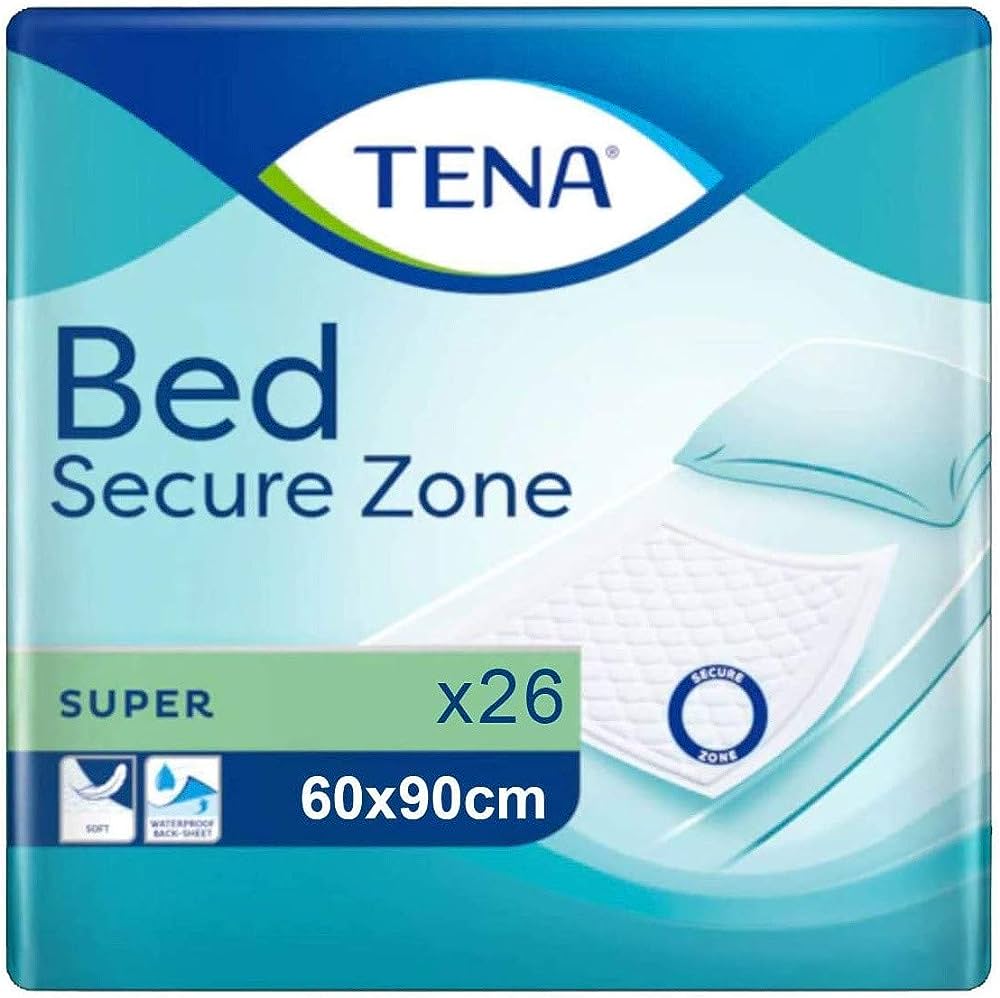
tena bed pads super 60 x 90cm
- ✔️ Protects mattresses from urinary and faecal incontinence leaks
- ✔️ Superabsorbent polymer core locks fluid away from skin
- ✔️ Generous 60x90cm size suits adults of all builds
- ✔️ Waterproof backing prevents leakage through to bedding
- ✔️ Soft top sheet helps reduce skin irritation overnight
Price Checker
 Lowest price guarantee
 Includes FREE private prescription


Couldn't load pickup availability
What Are Bed Pads for Incontinence?
TENA Bed Pads Super 60x90cm are disposable, highly absorbent bed protection pads designed to manage urinary and faecal incontinence during sleep or rest. If you or someone you care for experiences bladder leakage at night, these pads offer a practical, hygienic layer of protection between the person and the mattress. Incontinence is far more common than many people realise — the NHS estimates that between 3 and 6 million people in the UK are affected by some degree of urinary incontinence, and managing it well at night is a key part of maintaining dignity and skin health. You can also explore our women's health range for additional continence and personal care products.
At just £14.99 per pack, these pads represent a cost-effective solution for home use, care settings, or hospital discharge. The 60x90cm size provides generous coverage, making them suitable for adults of all builds. They are single-use and disposable, which keeps hygiene simple and straightforward.
How Do TENA Bed Pads Super Work?
The absorbency in these pads comes from a carefully engineered multi-layer construction. Here is how each layer contributes:
- Soft top sheet: A non-woven surface layer that feels gentle against skin and allows fluid to pass through quickly.
- Acquisition and distribution layer: Spreads fluid evenly across the pad to prevent pooling in one area.
- Superabsorbent polymer (SAP) core: Locks fluid away inside the pad, converting it into a gel so it cannot be released back onto the skin.
- Waterproof backing: A polyethylene film layer that prevents any fluid from passing through to the mattress or bedding beneath.
This layered system means that even if the person moves during the night, absorbed fluid stays locked inside the pad rather than spreading. The result is a drier surface and better skin protection overnight.
Who Should Use TENA Bed Pads Super?
These pads are suitable for a wide range of people and care situations. They are particularly useful where nighttime incontinence is a concern, or where someone has limited mobility and cannot always reach the toilet in time.
- Adults with urinary or faecal incontinence, including stress, urge, or mixed incontinence
- Elderly individuals in home or residential care settings
- Post-operative patients recovering from surgery affecting bladder control
- People with neurological conditions such as multiple sclerosis or Parkinson's disease that affect bladder function
- Carers managing incontinence for a family member or patient at home
They are not intended as a substitute for appropriate medical assessment of incontinence. If incontinence is new or worsening, the NHS recommends speaking to your GP, who can refer you to a continence service for assessment and treatment options.
How Do TENA Bed Pads Compare to Reusable Alternatives?
| Feature | TENA Bed Pads Super 60x90cm | Reusable Washable Bed Pads |
|---|---|---|
| Absorbency | High — SAP core locks fluid away | Moderate — depends on fabric layers |
| Hygiene | Single-use, disposed after each use | Requires washing at high temperature |
| Convenience | No laundering needed | Laundry time and energy costs involved |
| Environmental impact | Generates waste | Lower long-term waste if maintained |
| Cost per use | Low upfront cost per pad | Higher initial cost, lower per-use cost over time |
Are TENA Bed Pads Suitable for Sensitive Skin?
Skin integrity is a genuine concern for anyone using incontinence products regularly. Prolonged contact with moisture is one of the leading causes of incontinence-associated dermatitis (IAD), a painful skin condition that can develop quickly in vulnerable individuals. The bed pads for incontinence in the TENA Super range are designed with a soft top sheet that helps wick moisture away from the skin surface, reducing the risk of prolonged wetness. However, no pad eliminates the need for regular changing — pads should always be replaced promptly once soiled.
If you are managing skin health alongside incontinence, you may also find our skin care range helpful for barrier creams and skin protection products recommended for use alongside incontinence pads.
This product is a medical device/continence aid. Speak to your doctor, district nurse, or pharmacist before using if you have an underlying skin condition, are at risk of pressure sores, or are managing incontinence in a clinical care setting.
TENA Bed Pads Super 60x90cm specifications
| Treatment category | Incontinence management / bed protection |
| Mechanism of action | Superabsorbent polymer core locks fluid; waterproof backing prevents leakage |
| Effective for | Urinary and faecal incontinence protection during sleep or rest |
| Suitable for | Adults; elderly patients; post-operative patients; care home use |
| Active ingredient | Superabsorbent polymer (SAP) — non-medicinal absorbent material |
| Pack size | Available in standard pack (quantity varies by retailer) |
| Pad dimensions | 60 x 90 cm |
| UK classification | Medical device / continence aid (not a licensed medicine) |
| Preparation | Disposable non-woven pad with waterproof backing |
| Route of administration | Topical surface use — placed under patient on bed |
Specifications of TENA Bed Pads Super 60x90cm
What Are TENA Bed Pads Super and What Are They Used For?
TENA Bed Pads Super 60x90cm are single-use, disposable absorbent pads placed on top of a mattress or bed sheet to protect bedding from urinary or faecal incontinence. They are used in home care, residential care, and hospital settings to maintain hygiene, protect mattresses, and support skin health in people who experience incontinence during sleep or periods of rest.
Incontinence is a common condition affecting millions of adults in the UK. It can result from weakened pelvic floor muscles, neurological conditions, prostate problems in men, or age-related changes in bladder function. These pads do not treat the underlying cause of incontinence — they manage the practical consequences of it. If you are experiencing new or worsening incontinence, the NHS recommends seeking assessment from your GP or a specialist continence service.
What Do You Need to Know Before Using TENA Bed Pads Super?
These pads are generally safe for most adults, but there are some important points to be aware of before use:
- Do not use as a substitute for appropriate medical assessment and treatment of incontinence
- Do not leave a soiled pad in contact with skin for extended periods — this increases the risk of incontinence-associated dermatitis (IAD) and pressure ulcers
- Not suitable for use as a wound dressing or for any purpose other than incontinence bed protection
- If the person using the pad has fragile or broken skin, seek advice from a district nurse or tissue viability nurse before use
- Dispose of used pads hygienically — do not flush down the toilet
- Keep out of reach of children and do not allow children to play with pads due to small parts and choking risk from the absorbent core if torn
Drug interactions: As a non-medicinal device, TENA Bed Pads Super do not interact with any medicines. However, if you are using topical skin barrier creams or emollients on the skin that will be in contact with the pad, be aware that some products may slightly affect the pad's surface absorbency. Our creams and ointments range includes skin barrier products suitable for use alongside incontinence aids.
How Should You Use TENA Bed Pads Super?
- Remove the pad from its packaging and unfold it fully.
- Place the pad on the bed with the soft, non-woven surface facing upward.
- Ensure the waterproof backing faces downward, in contact with the sheet or mattress.
- Position the pad under the hips and lower back of the person — this is where most fluid is likely to be released.
- Smooth out any folds or creases to ensure even coverage and comfort.
- Check the pad regularly, especially overnight, and replace it as soon as it becomes soiled or wet.
- Fold the used pad inward to contain soiling, place in a sealed bag, and dispose of in general household waste — not in recycling or down the toilet.
| Indication | User Group | Pad Size | Frequency of Change |
|---|---|---|---|
| Urinary incontinence (light to moderate) | Adults | 60 x 90 cm | As required — at least once per night |
| Urinary incontinence (heavy) | Adults / elderly | 60 x 90 cm | Every 4–6 hours or when soiled |
| Faecal incontinence | Adults / post-operative | 60 x 90 cm | Immediately after soiling |
| Post-operative bed protection | Adults recovering from surgery | 60 x 90 cm | As directed by nursing staff |
What Are the Possible Side Effects of TENA Bed Pads Super?
TENA Bed Pads Super are a non-medicinal device and do not cause systemic side effects. However, improper use or delayed changing can lead to localised skin issues. Being aware of these helps you use the product safely.
Common issues associated with prolonged or improper use:
- Skin redness or irritation from prolonged contact with moisture
- Incontinence-associated dermatitis (IAD) — a form of moisture-related skin damage
- Discomfort from lying on a soiled pad
Less common concerns:
- Allergic contact reaction to pad materials (rare — if suspected, discontinue use and consult a GP)
- Increased risk of pressure ulcer development if pad is not changed promptly in immobile patients
- Skin maceration in patients with very sensitive or fragile skin
The NHS advises that good skin care is essential for anyone using incontinence products regularly. This includes gentle cleansing after each pad change, thorough drying, and application of a suitable barrier cream where appropriate. If you are managing incontinence alongside other health concerns, our cystitis and bladder infection range may also be relevant to your care needs.
How Should You Store TENA Bed Pads Super?
- Store in a cool, dry place away from direct sunlight and sources of heat
- Keep in the original packaging until use to maintain hygiene and pad integrity
- Do not store in damp environments such as bathrooms where humidity may affect the absorbent core
- Keep out of reach of children
- Check the expiry or best-before date on the packaging before use
- Once the packaging is opened, use pads within a reasonable timeframe to maintain hygiene standards
References
- https://www.nhs.uk/conditions/urinary-incontinence/
- https://www.nhs.uk/conditions/urinary-incontinence/treatment/
- https://www.nhs.uk/conditions/bowel-incontinence/
- https://www.nhs.uk/conditions/pressure-sores/
- https://www.nhs.uk/conditions/urinary-incontinence/causes/
- https://www.nice.org.uk/guidance/cg171
Written and reviewed by our qualified team
Your safety and success are our highest priorities. Our medical team rigorously evaluates every product and piece of advice we provide, ensuring you receive only the most effective, science-backed solutions available.
Frequently Asked Questions
Where can I buy TENA Bed Pads Super 60x90cm online in the UK?
You can buy TENA Bed Pads Super 60x90cm directly from Cured Pharmacy online for £14.99 with fast UK delivery. No prescription is required as these are an over-the-counter incontinence management product. Simply add to your basket and check out securely through our GPhC-registered pharmacy.
How do TENA Bed Pads Super 60x90cm work?
TENA Bed Pads Super use a multi-layer construction with a superabsorbent polymer (SAP) core that rapidly draws fluid away from the surface and locks it inside the pad as a gel. A waterproof polyethylene backing layer prevents any fluid from passing through to the mattress. The soft top sheet helps keep the skin surface drier for longer.
How do I use TENA Bed Pads correctly step by step?
Place the pad flat on the bed with the soft absorbent side facing upward and the waterproof backing facing down toward the mattress. Position it under the hips and lower back for maximum coverage, smooth out any creases, and replace it promptly once soiled. Always dispose of used pads in a sealed bag in general household waste — never flush them.
How often should I change a TENA Bed Pad?
You should change the pad as soon as it becomes wet or soiled — leaving a damp pad against the skin increases the risk of skin irritation and incontinence-associated dermatitis. For heavy incontinence, this may mean changing every four to six hours. For lighter leakage, once per night may be sufficient, but always check regularly.
Are TENA Bed Pads Super suitable for elderly patients?
Yes, TENA Bed Pads Super are widely used for elderly individuals in both home and residential care settings. They are particularly helpful for people with reduced mobility who may not be able to reach the toilet quickly enough at night. They are also suitable for post-operative patients and anyone with a neurological condition affecting bladder control.
What is the difference between TENA Bed Pads Super and TENA Bed Pads Plus?
TENA Bed Pads Super are designed for heavier incontinence and offer a higher absorbency level than the Plus variant, making them more suitable for overnight use or for people with moderate to heavy leakage. The Plus range is better suited to lighter incontinence or daytime use. Both share the same waterproof backing and soft top sheet design.
Can TENA Bed Pads cause skin irritation or rashes?
In most cases, TENA Bed Pads are well tolerated, but prolonged contact with a soiled pad can cause skin redness, irritation, or incontinence-associated dermatitis. To reduce this risk, change pads promptly, cleanse the skin gently after each change, and consider using a barrier cream. If irritation persists or worsens, consult your GP or district nurse.
Who is eligible to use bed pads for incontinence?
Any adult experiencing urinary or faecal incontinence can use bed pads for incontinence as part of their management routine. They are particularly recommended for people with limited mobility, those recovering from surgery, and individuals with conditions such as multiple sclerosis, Parkinson's disease, or dementia. There is no age restriction for adults, and no prescription is needed.
What are the alternatives to TENA Bed Pads Super?
Alternatives include reusable washable bed pads, waterproof mattress protectors, or other disposable bed pad brands available from pharmacies and medical suppliers. For some people, a combination of incontinence pants or pads worn on the body alongside a bed pad provides additional protection. Speak to a continence nurse for personalised advice on the right combination for your needs.
Can I use TENA Bed Pads on a chair or wheelchair?
Yes, TENA Bed Pads Super can be used on chairs, wheelchairs, or car seats as well as beds, providing flexible protection in different settings. Position the pad with the absorbent side up and the waterproof backing against the seat surface. Replace promptly after soiling to maintain skin health and comfort.
How should I store TENA Bed Pads Super?
Store TENA Bed Pads in a cool, dry place away from direct sunlight and humidity — avoid storing them in bathrooms where moisture in the air can affect the absorbent core. Keep them in their original sealed packaging until use. Always check the best-before date on the pack before using.
Are TENA Bed Pads environmentally friendly?
TENA Bed Pads Super are single-use disposable products and do generate waste, which is a consideration for environmentally conscious users. TENA as a brand has published sustainability commitments, but if environmental impact is a priority, reusable washable bed pads may be worth considering alongside disposable options. Dispose of used pads in general household waste — not in recycling bins.
Can TENA Bed Pads be used for post-operative care at home?
Yes, TENA Bed Pads Super are commonly used during post-operative recovery at home, particularly after procedures affecting bladder or bowel control such as prostate surgery, hysterectomy, or colorectal surgery. They provide a practical, hygienic solution while bladder control is temporarily reduced. Your discharge team or district nurse can advise on the most appropriate products for your recovery. You may also find our women's health range useful for post-operative continence products.
How long can you use TENA Bed Pads for?
There is no set limit on how long you can use TENA Bed Pads — they can be used as part of a long-term incontinence management routine for as long as needed. However, if incontinence is new, worsening, or significantly affecting quality of life, the NHS recommends seeking a formal assessment from your GP or a specialist continence service, as many causes of incontinence are treatable. You can also explore our cystitis and bladder infection range if bladder symptoms are also present.
What does the latest research say about incontinence bed pad use?
Current clinical guidance from NICE (CG171) supports the use of absorbent containment products, including bed pads, as part of a structured incontinence management plan, particularly where other treatments have not fully resolved symptoms. Research consistently highlights that prompt pad changing and good skin care are the most important factors in preventing skin complications. Bed pads are considered a safe and effective containment strategy when used correctly alongside appropriate clinical assessment.
Written and reviewed by our qualified team

Reviewed by:
Tarun Kumar
Superintendent/ Clinical Lead
📖 Find out more about our team of medical content authors and how we ensure the accuracy of our content with our content guidelines.
Content last updated: 14 Sep 2026
Other popular options


We’re a safe and
regulated UK service

Lowest Price Guarantee

We're convinced you won't find your treatment cheaper, but if you do we'll refund the difference.
Find out more
100% discreet packaging

Discreet, unbranded packaging for every order.
Find out more

Need help?
Talk to our friendly experts now


How our service works

Service setup

Discreet packaging

Express delivery